Your search Podersdorf am See gave 2325 results.

A fragmentary inscription from Scaleby Castle near Cambeckfort (ancient Petrianae), preserving a partial dedication to Sol Mithras.
A marble relief found in 1851 built into the adjoining hall of White Friars at Chester (ancient Deva), now in the Grosvenor Museum, depicting a standing dressed figure with a sheep-hook in his left hand and possibly a downward-pointing torch in his right…
A marble relief found on the small island of San Michele di Zampanigo near Torcello in the Venetian lagoon, now in the Museum of Torcello, showing a cross-legged figure in Eastern attire resting his head in his right hand and holding a downward-pointing torch (Cautopates), framed by poppies…
Six small marble columns found in the Mithraeum at Angera in northern Italy: two plain-fluted, two carved with palm stems and lion's and Gorgon's heads alternating on the upper ledge, and two with serpentine coils and griffins flanking an amphora…
A small limestone head of Cautopates, facing right, with a damaged nose and a stone pin on the reverse indicating it belonged to a relief, found on the slope of a hill near Heiligkreuz at Augusta Treverorum (modern Trier) in Belgica.
Four small bronze slabs with representations of zodiac signs — a leaping ram, a running lion, a scorpion, and a fish — with remnants of iron hooks, from the Mithraic sanctuary at Angleur near Liège in Belgica.
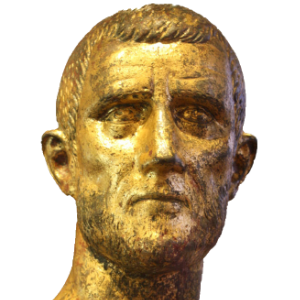
Roman emperor who established the state cult of Sol Invictus and promoted solar worship throughout the Roman Empire.
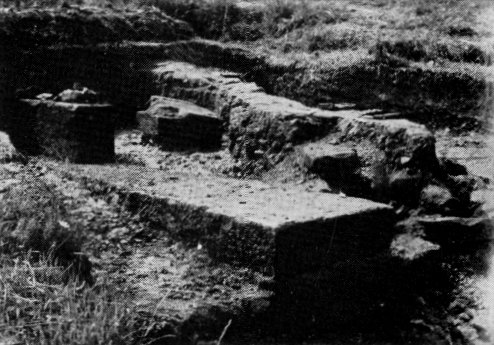
The Mackwiller Mithraeum was built in the middle of the 2nd century, during the reign of Antoninus the Pious, on the site of a spring already worshipped by the natives.
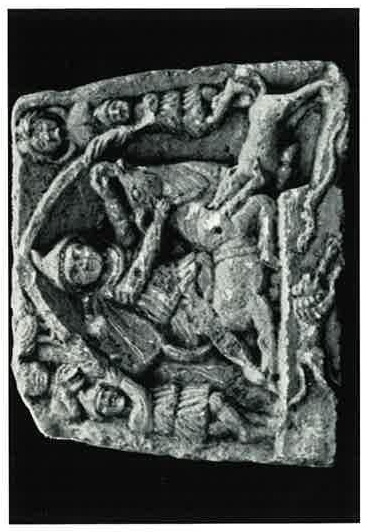
Limestone tauroctony relief from Oltenia, Dacia, of unknown exact provenance, depicting the standard bull-slaying with the full iconographic programme.
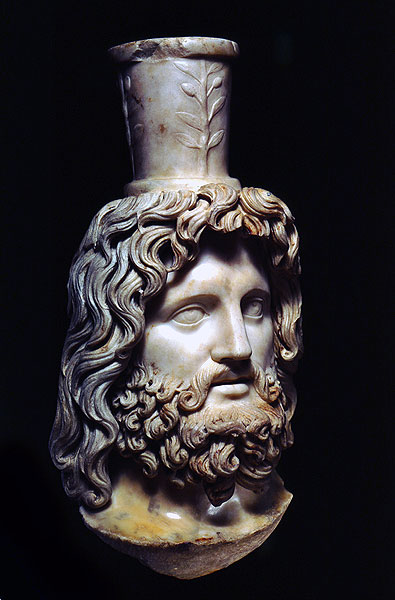
The head of Serapis found at Walbrook, London, is decorated with stylised olive branches.
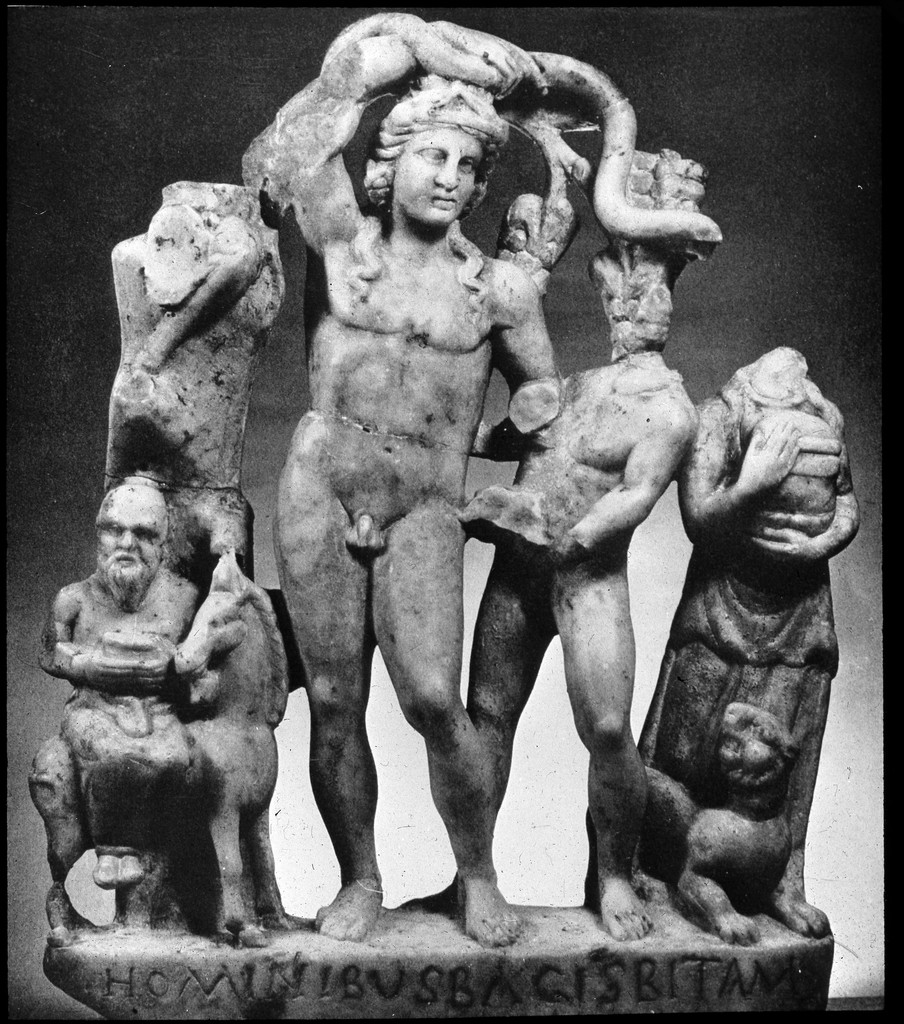
Marble group of Dionysus accompanied by a Silenus on a donkey, a satyr and a menead.
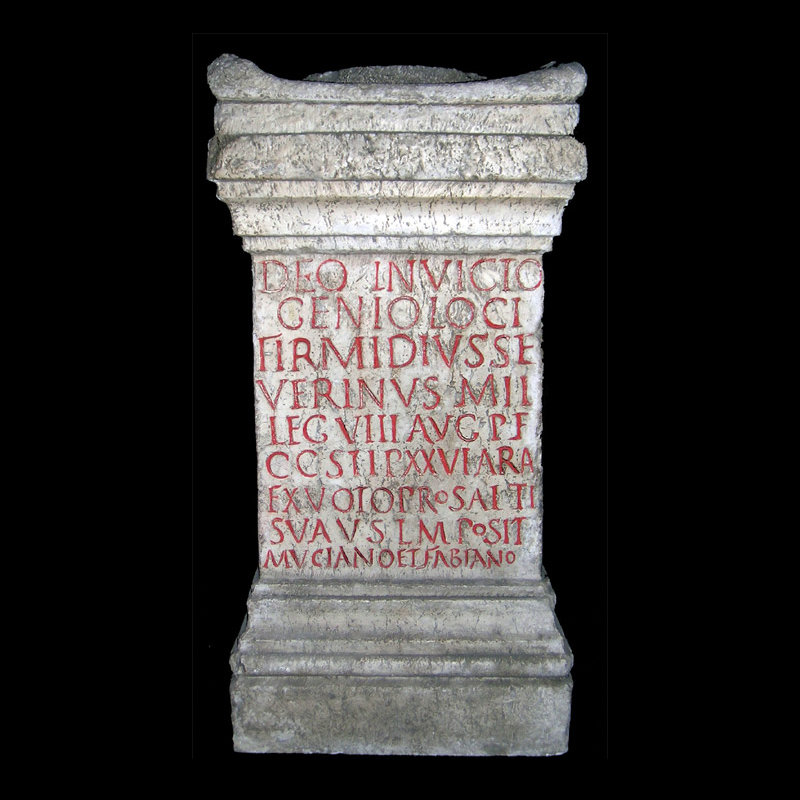
This limestone altar bears an inscription from its donor, Firmidius Severinus, in honour of Mithras after 26 years of service in the Legio VIII Augusta.
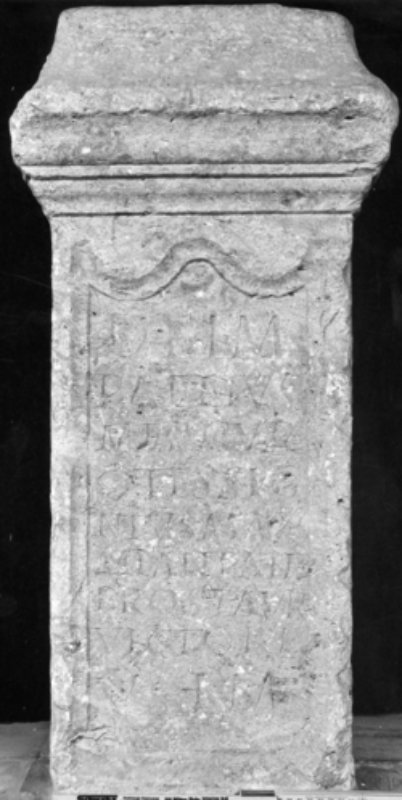
This altar to Mithras found in Aquilieia mentions several persons of a same community.
A badly damaged tauroctony relief carved in peperino, fixed high into a wall of the old farm known as Le Capanacce on the Via Cassia near Vicus Matrini in Etruria, showing Mithras as a bullkiller in a vaulted cave with serpent, the head and left arm of the god lost…
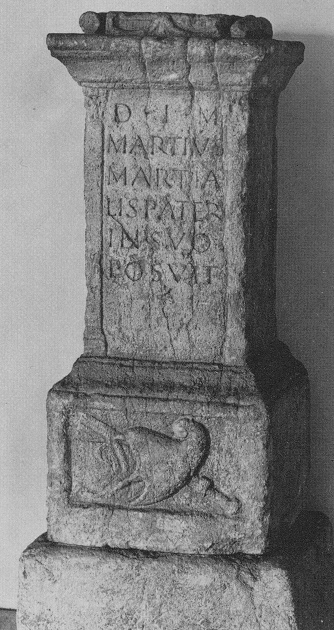
The altar with a Phrygian cap and a dagger from Trier was erected by a Pater called Martius Martialis.
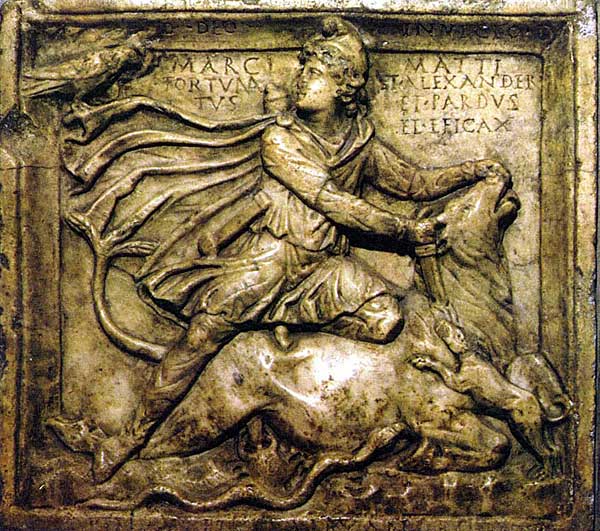
The relief marble of Mithras sacrifying the bull, exposed on the Hermitage Museum comes from Rome.
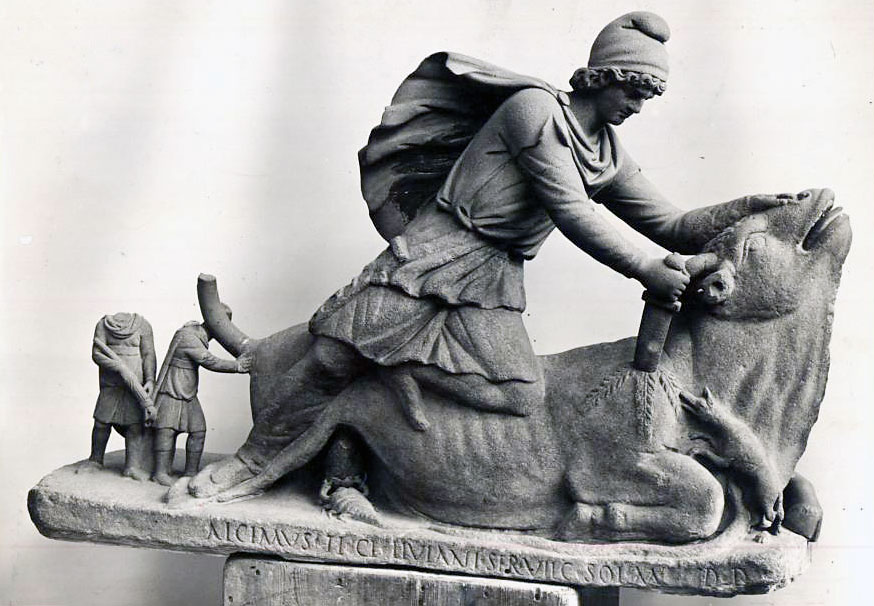
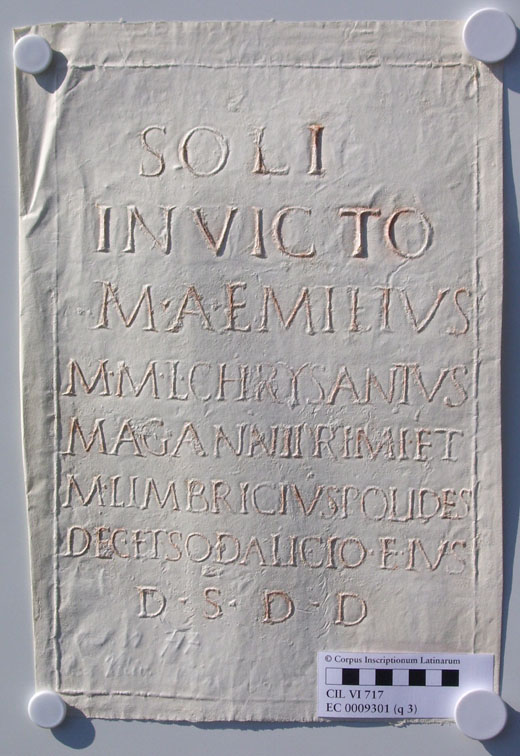
Aemilius Chrysanthus shares the expenses of this monument with a decurio named Limbricius Polides.
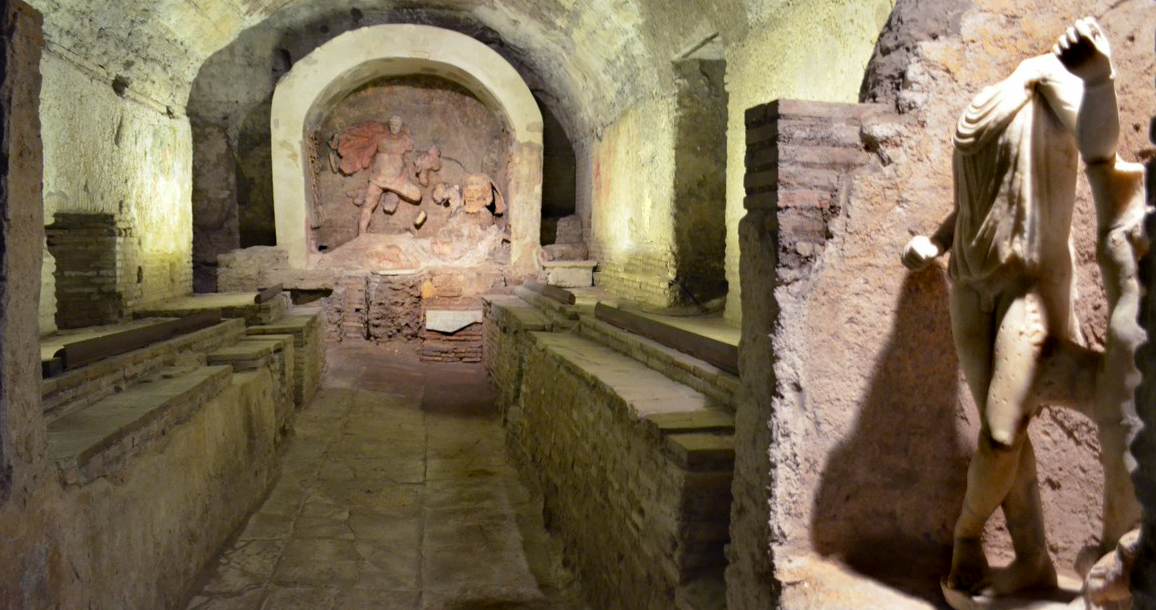
The Mithraeum of Santa Prisca houses remarkable frescoes showing the initiates in procession.
This small cippus to Zeus, Helios and Serapis includes Mithras as one of the main gods, although some authors argue that it could be the name of the donor.
