Your search for Rome gave 641 results.
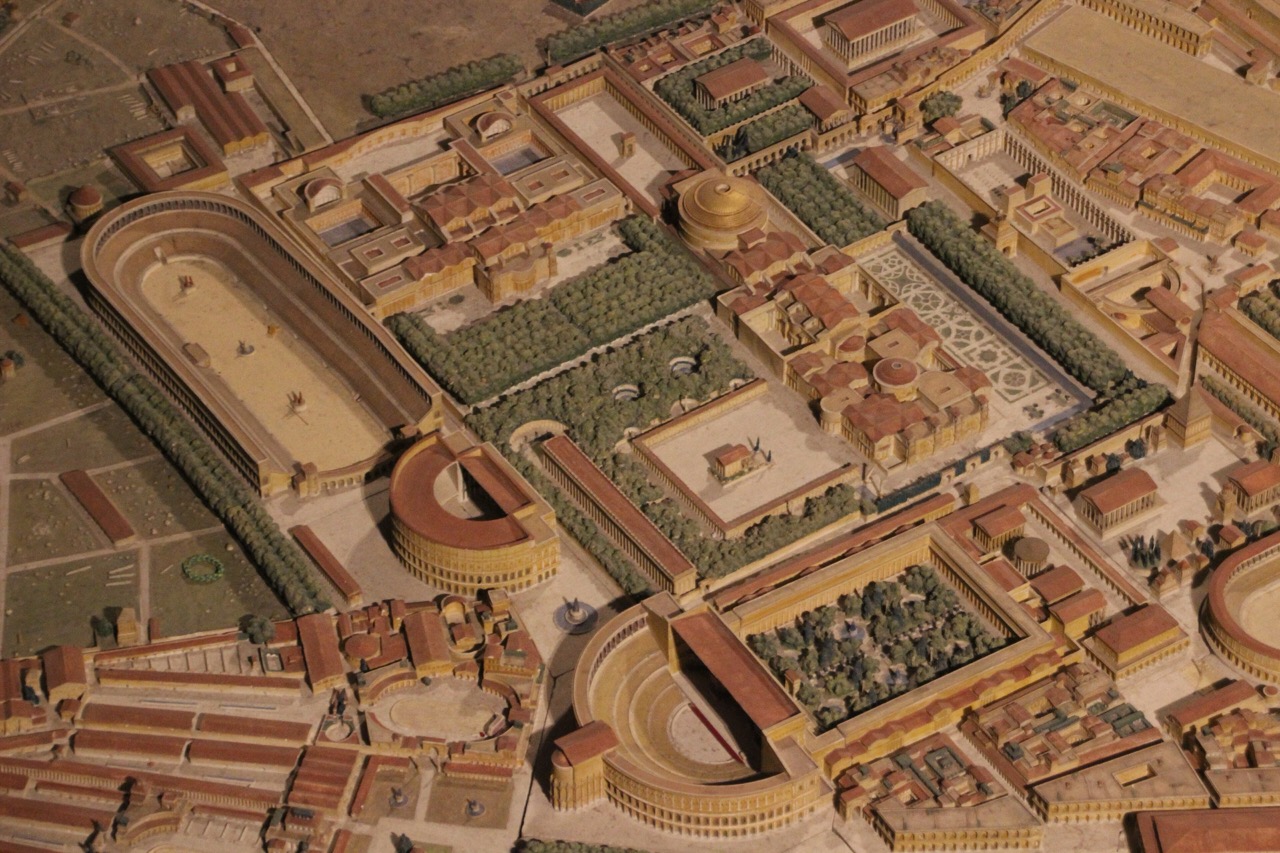
Archaeological evidence shows that the area around Rome has been inhabited since around 14,000 years ago. Excavations support the theory that Rome grew from pastoral settlements on the Palatine Hill, which was built over the area of the Roman Forum.

Guides, maps and additional information on the Basilica, the Mithraeum and the archaeological area of San Clemente.

The Mithraeum under and behind S. Prisca on the Aventine is without doubt the most important sanctuary of the Persian god in Rome.

This marble altar was found ’in the street called di Branco’, behind the palace of the Cardinal of Bologna, in Rome.

Large marble slab found in 1648 near S. Silvestro in Capite, inscribed with a Latin dedicatory poem forming a cypher-acrostic for TAMESIUS and AUGENTIUS, with records of leontica and chrysos initiations, dated to 362 A.D.
Inscription recording the transmission of the leontica grade by Nonius Victor Olympius and Aurelius Victor Augentius at the Mithraeum of Piazza S. Silvestro in Capite, dated to 359 and 358 A.D.
Inscription CIL VI 750 recording the transmission of the Persica and Heliaca grades by Nonius Victor Olympius and Aurelius Victor Augentius at the Mithraeum of Piazza S. Silvestro in Capite, dated to 358 A.D.
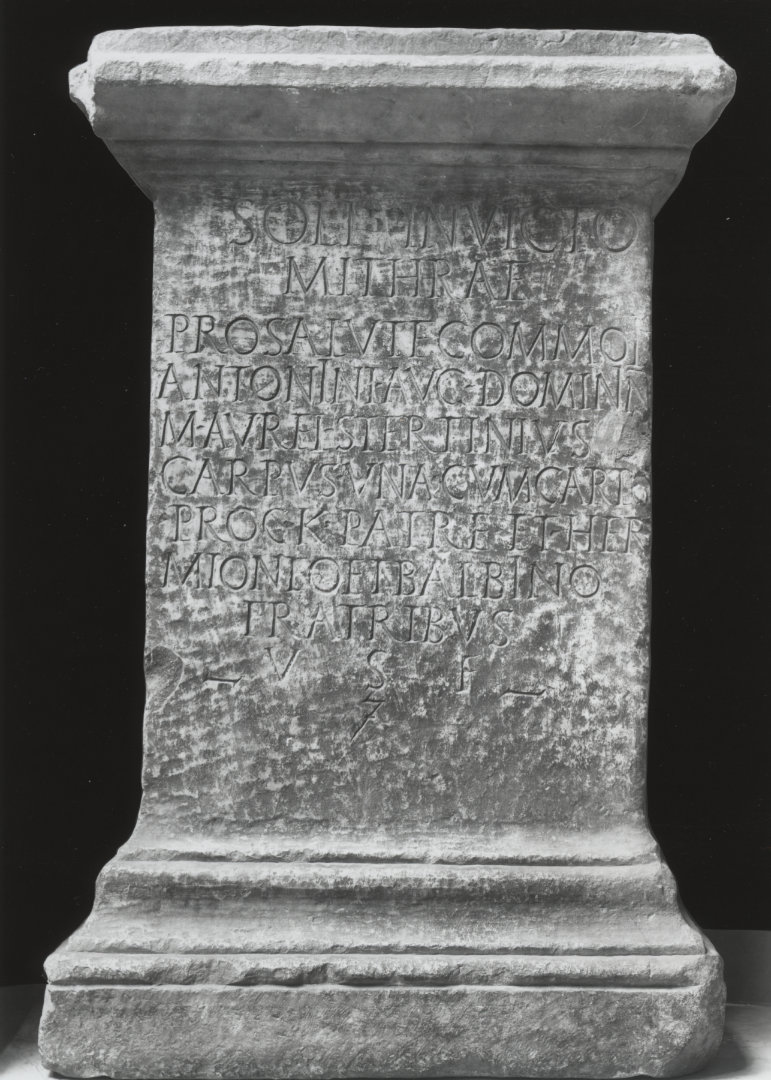
This altar bears an inscription to the health of the emperor Commodus by a certain Marcus Aurelius, his father and two other fellows.
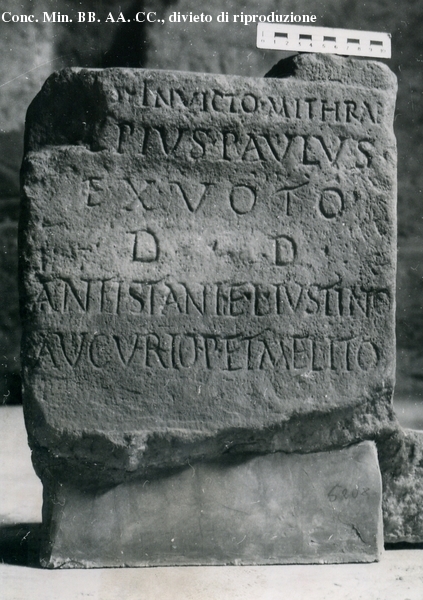
Small marble base, found in one of the private houses along the Via Sacra nearly opposite to the Basilica of Constantine, Rome.
A subterranean room with a stucco depiction of Mithras slaying the bull, probably from the fourth century, discovered at Agurzano near Ponte Mammolo on the Via Tiburtina outside Rome.
A marble inscription fragment found in the cemetery at the Duos Lauros along the Via Labicana outside Rome, commemorating a sacerdos of Sol Invictus Mithras who lived forty years.
A marble altar found in 1873 between the Baths of Diocletian and the Via di Porta Pia in Rome, dedicated to Sol Invictus Mithras by Sextus with Titus Flavius Ianuarius as antistes.
An inscription to Sol Invictus Mithras found in the Vigna Patritii outside the Porta Pia in Rome, dedicated by Aelius Victorinus, a veteran of the emperors honourably discharged, with M. Aurelius Romulus as antistes and sacerdos of the cult.
A marble slab reused as a tombstone in Comodilla's catacombs near the Via Ostiense in Rome, originally inscribed by Titus Flavius Eutychus as a gift to the Invincible and Holy god.
A marble dedication tablet found in the Vigna Curtii Palloni outside the Porta Sant'Agnese near the Praetorian Camp in Rome, recording the construction of a sacrarium dedicated to Sol Invictus by Q. Pompeius Primigenius, pater and sacerdos, under Septimius Severus and Caracalla, 199–209 AD…
A funerary inscription found in the Vigna Nari outside Rome in 1734, set up by Iunia Thallusa for her husband Equitius Arescon, who held the rank of pater sacrorum in the Mithraic mysteries.