Your search San Giovanni al Timavo gave 3645 results.

This monument bears an inscription to Mithras by a well-known general of the Roman Empire.
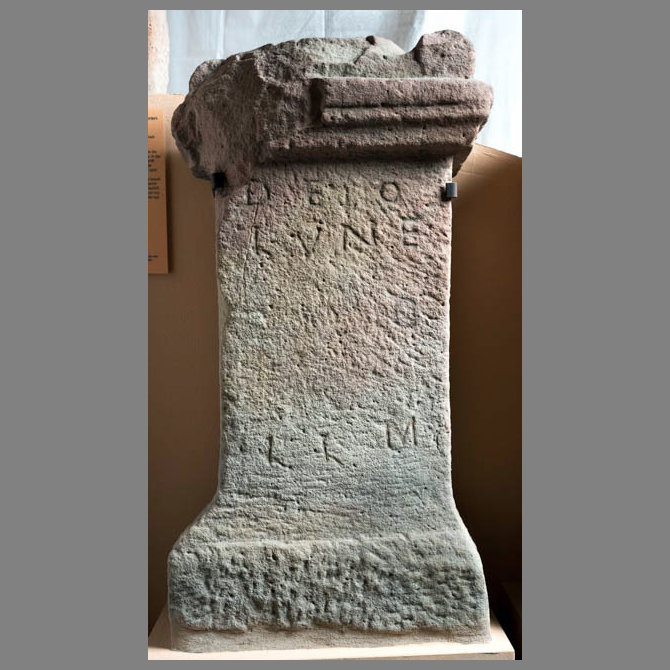
This sandstone altar was dedicated to Luna, who is mentioned as a male deity.
In this inscription, found in Angera in Lombardy, Mithras is referred to by the unicum 'adiutor'.
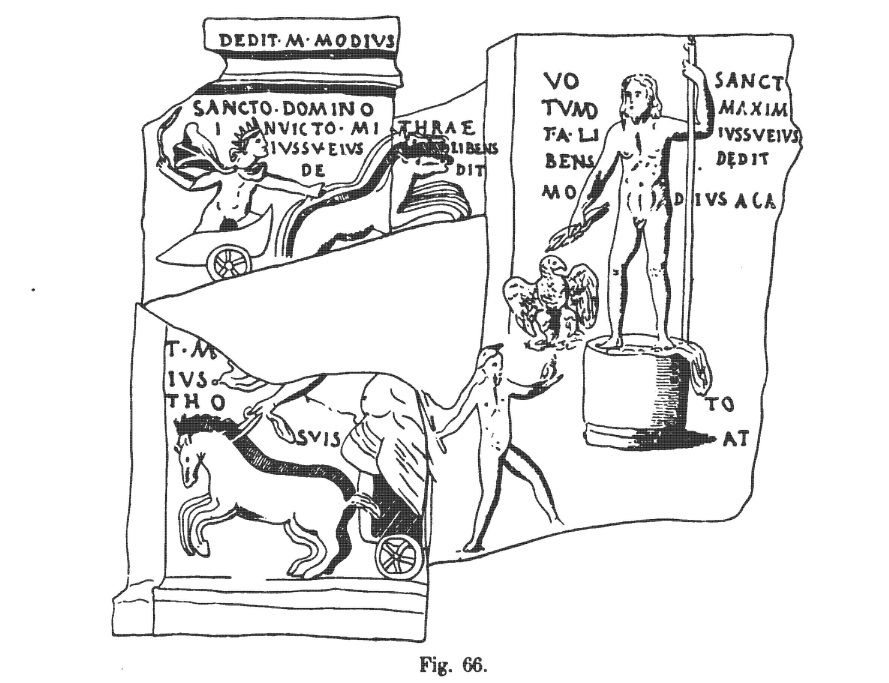
These three fragments of carved marble depict Jupiter, Sol, Luna and a naked man wearing a Phrygian cap, with inscriptions calling Mithras Sanctus Dominum.
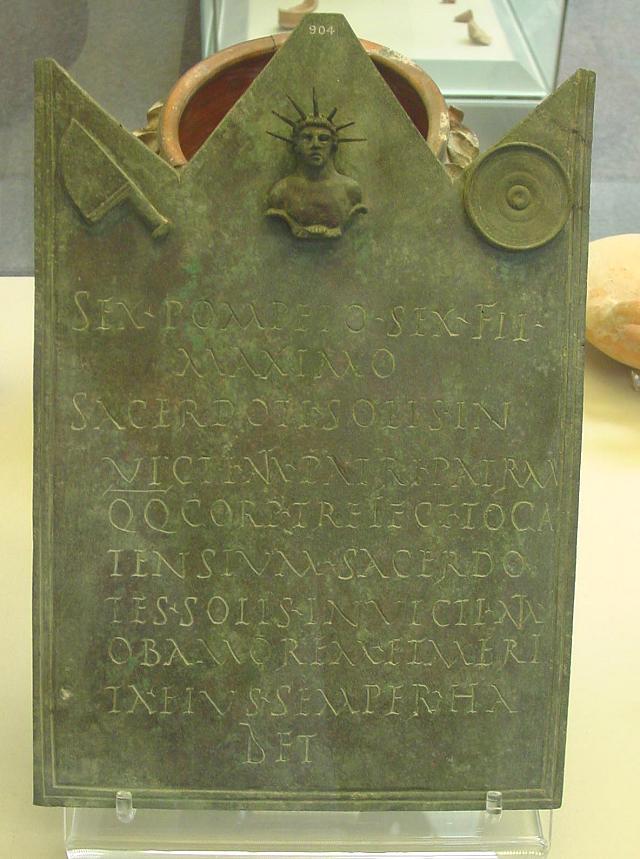
This plaque, now on display in the British Museum, may have come from the Aldobrandini Mithraeum in Ostia.
This inscription reveals the names of 36 cultori of Sentinum, one of whom bears the title of pater leonum.
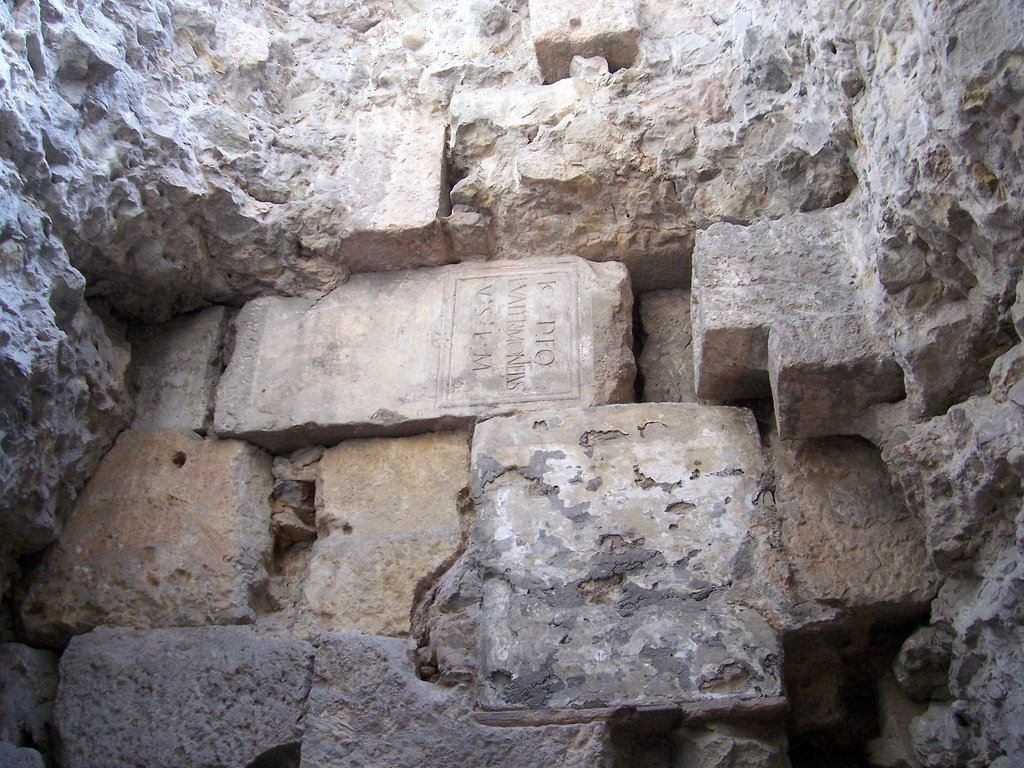
This altar was dedicated to Cautes by a certain Lucius in Baetulo (Badalona), near Barcino (Barcelona).
The altar includes a slab with an inscription for the salvation of two emperors.
This marble slab found near the Casa de Diana in Ostia bears two inscription with several names of brothers of a same community
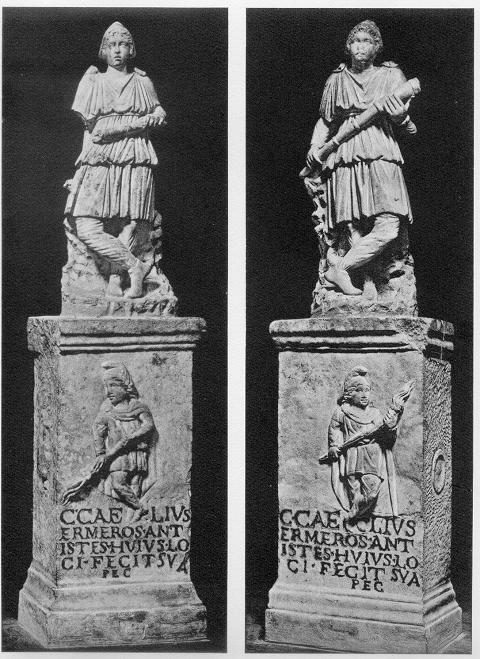
The sculptures of Cautes and Cautopates from the Mitreo del Palazzo Imperiale may have been reused from an older mithraeum in Ostia.
This altar, now lost, mentions that the Pater Patrum passed on the attributes of the sacred Corax to his son.
A small round bronze slab bearing a Medusa head, with serpents knotted below her chin and serpent heads emerging between two wings attached to the temples, with two hooks on the reverse, from the Mithraic sanctuary at Angleur near Liège in Belgica.
Four small bronze slabs with representations of zodiac signs — a leaping ram, a running lion, a scorpion, and a fish — with remnants of iron hooks, from the Mithraic sanctuary at Angleur near Liège in Belgica.
Three small bronze slabs bearing roughly modelled bearded heads of wind-gods, each with a wing on the head, with iron hooks on the reverse for fastening, found at the Mithraic sanctuary at Angleur near Liège in Belgica.
A group of bronze objects found in 1883 in a pit dug into the clay at Angleur near Liège in Belgica, proved by Cumont to have belonged to the decoration of a Mithras sanctuary, now in the Museum at Liège.
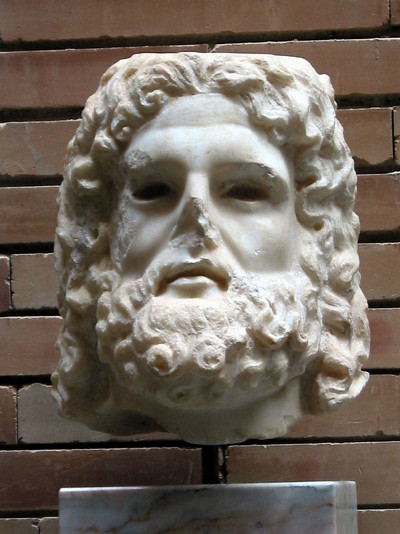
This head of Serapis from Cerro de San Albín may be unrelated to Mithras worship.
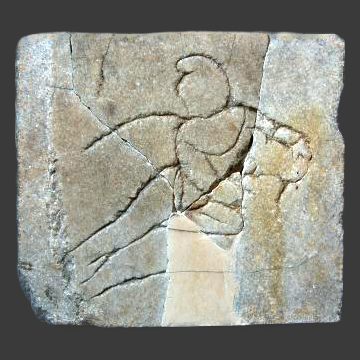
This unfinished Mithras tauroctonos without the usual surrounding animals was found in 1923 in Italica, near Seville, Spain.
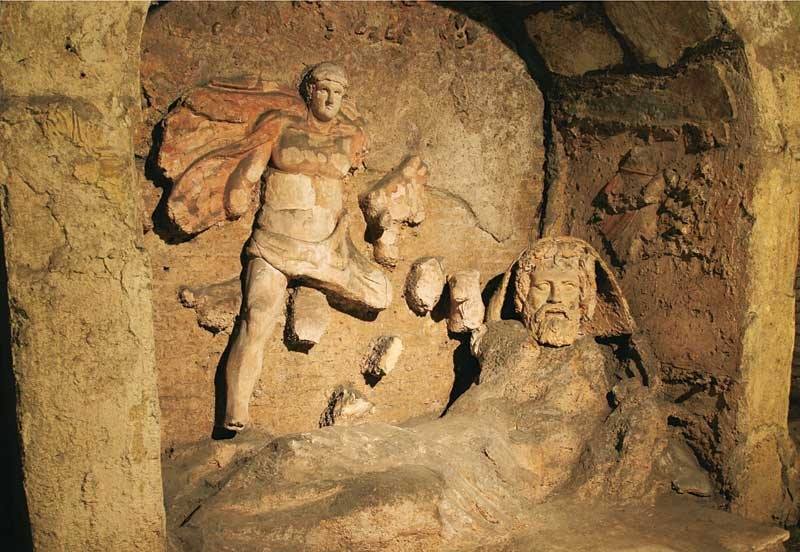
Even if only a few fragments remain, it is very likely that the main niche of the Mitreo di Santa Prisca contained the usual representation of Mithras killing the bull.
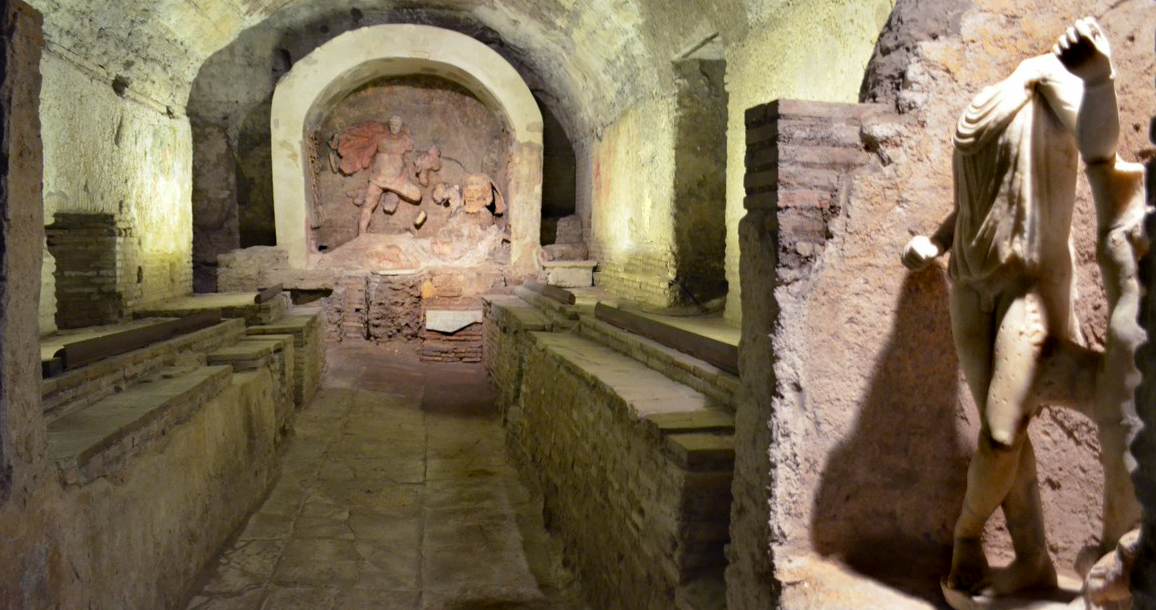
The Mithraeum of Santa Prisca houses remarkable frescoes showing the initiates in procession.
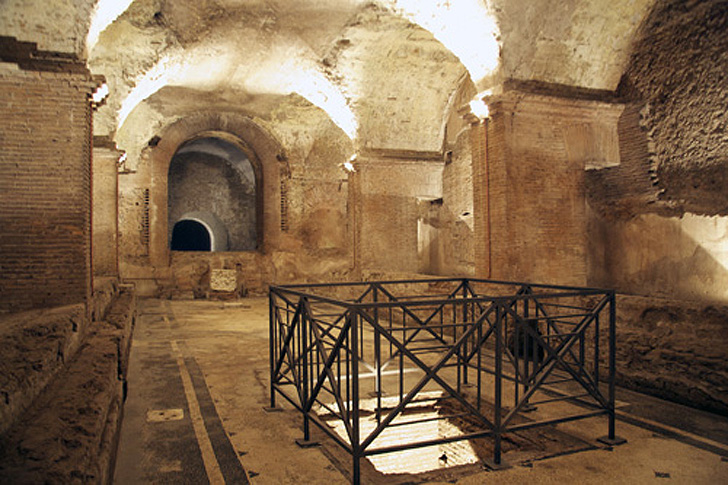
The Mitreo delle terme di Caracalla is one of the largest temples dedicated to Mithras ever found in Rome.
