Your search San Giovanni al Timavo gave 3645 results.

Epigraphic testimony catalogued in the Année Épigraphique and Lugli’s Fontes for ancient Rome.
Marble altar from Thessalonike, Macedonia, with a dedication on the front and a pedum on the left side and a caduceus on the right — attributes associated with Mithraic cult furniture.
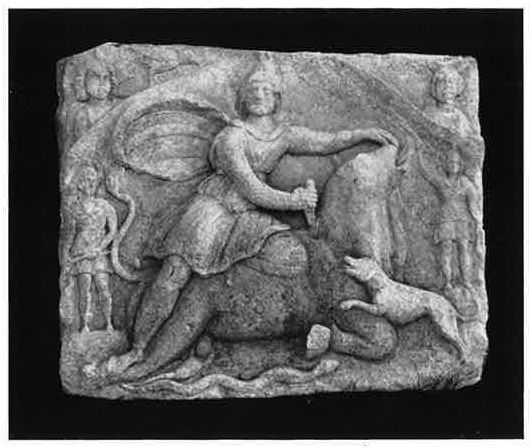
Sandstone tauroctony relief from Pritok near Bihać, Dalmatia, lost during World War II, depicting Mithras in Oriental dress killing the bull in a grotto with the bull's tail ending in corn-ears.
Small red sandstone fragment from the Mithraeum at Konjic, Dalmatia, preserving an oblong object — possibly an arm — within a border.
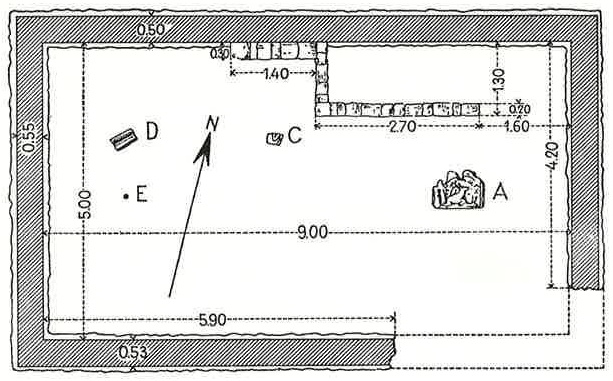
Mithraic sanctuary found in 1897 on the slope of the Repovic mountains on the right bank of the river Trstenic near Konjic in Herzegovina, Dalmatia; a limestone sanctuary with cult relief, altar, and architectural elements.
Rocky pass about twenty minutes south of Prozor, Dalmatia, containing a rock niche with a carved Mithraic scene; probably a secondary cult place related to the Vitalj sanctuary.
Foundations of a rectangular building (10 × 6 m) and a front-stone fragment at Golubić near Bihać, Dalmatia, suggesting the existence of a Mithraic sanctuary.
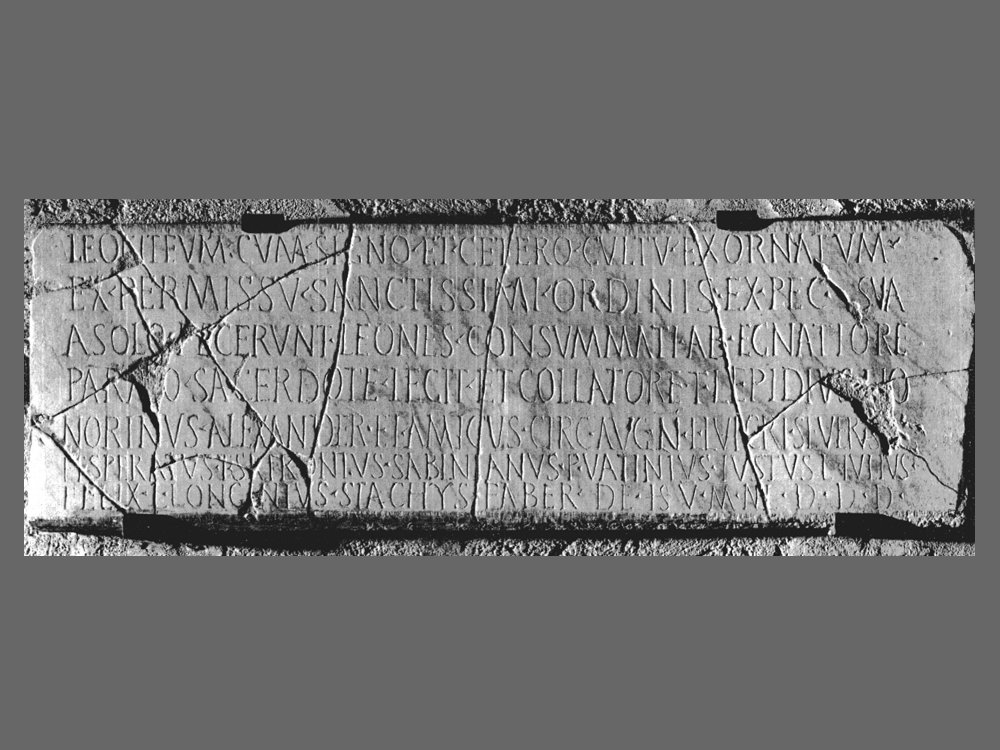
This plaque from Carsulae, in Umbria, refers to the creation of a leonteum erected by the lions at their own expense.
This lost monument from Malaga, Spain, to Dominus Invictus has been linked to the cult of Mithras, although there is not enough evidence.
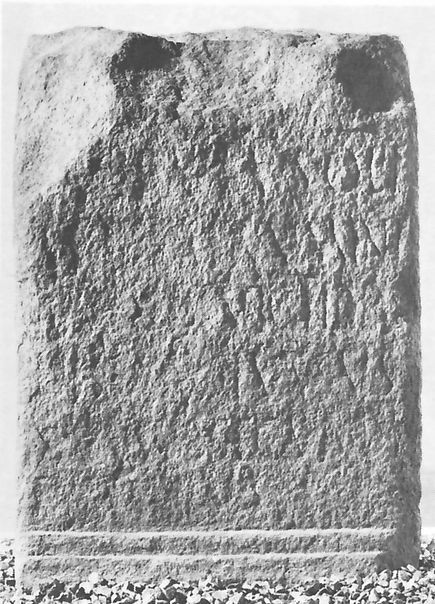
The v in this small altar found in Novaria has been interpreted by some commentators as qualifying Mithras as victorious.
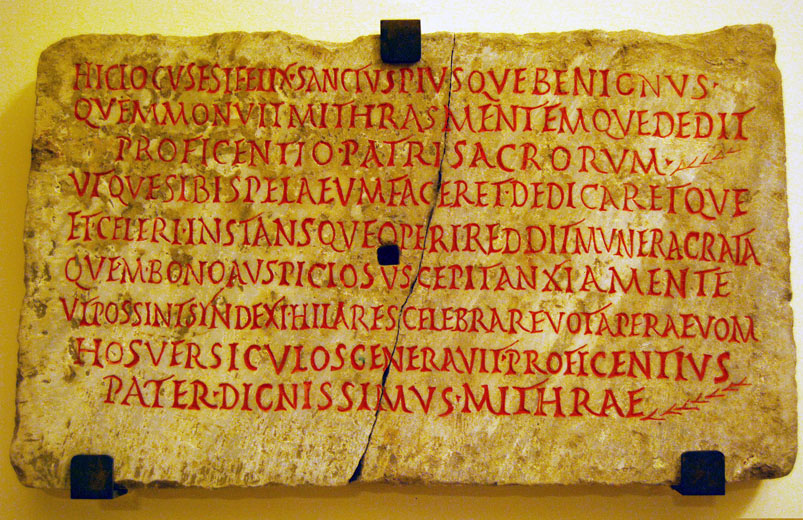
This marble slab bears an inception be the Pater Proficentius to whom Mithras has suggested to build and devote a temple.
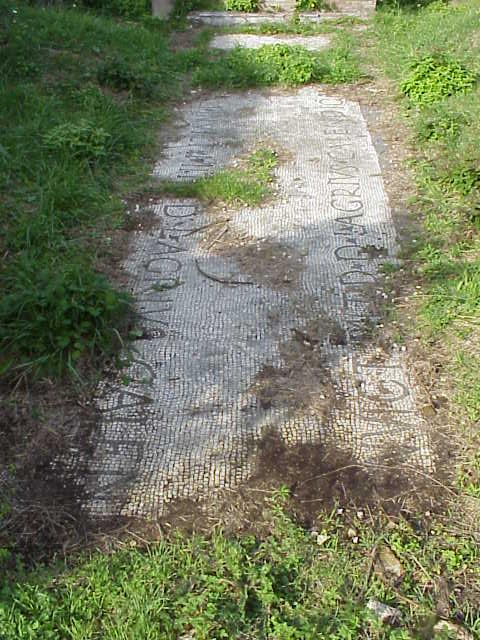
It bears an inscription repeated on each side of the podia.
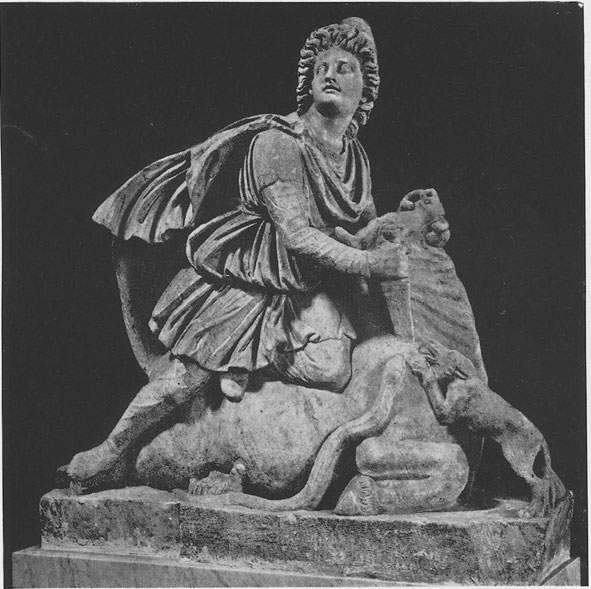
White marble statue found near the Scala Santa in Rome depicting Mithras as bull-slayer, accompanied by the dog, serpent and scorpion, with the bull’s tail ending in ears of grain.
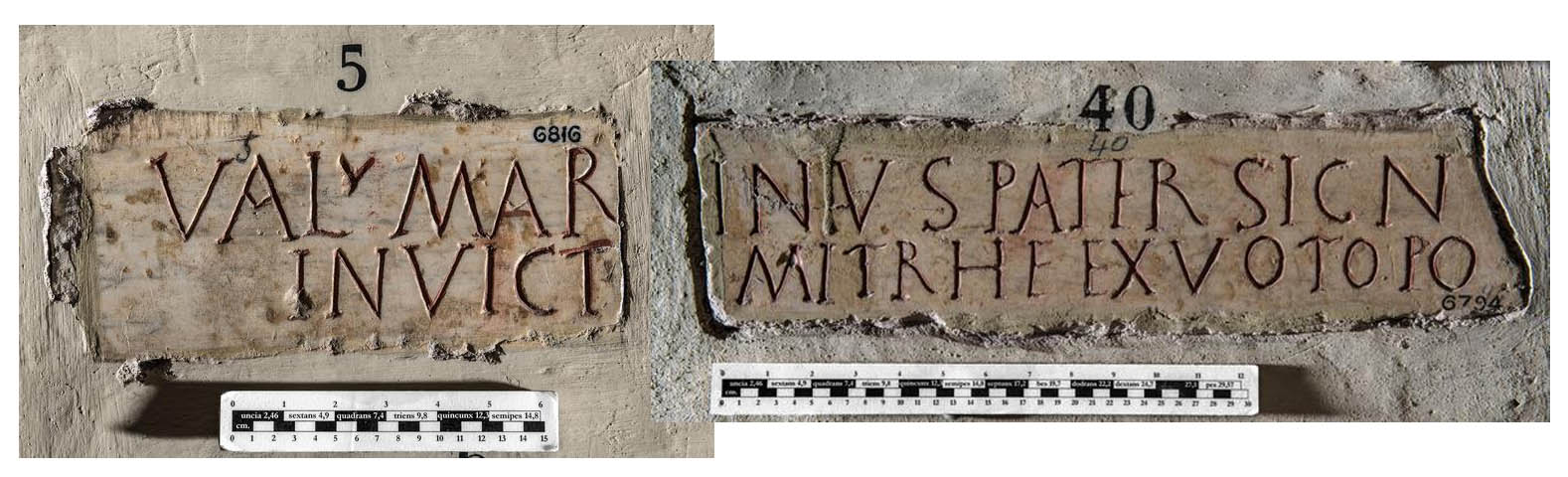
Marble inscription recording the dedication of a cult image to the unconquered Mithras by a certain pater Valerius Marinus from Rome.
This Mithraic temple, also known as the Mithraeum of the Olympii, dates to the 3rd century and was rediscovered in 15th-century Rome, but it has not been preserved.
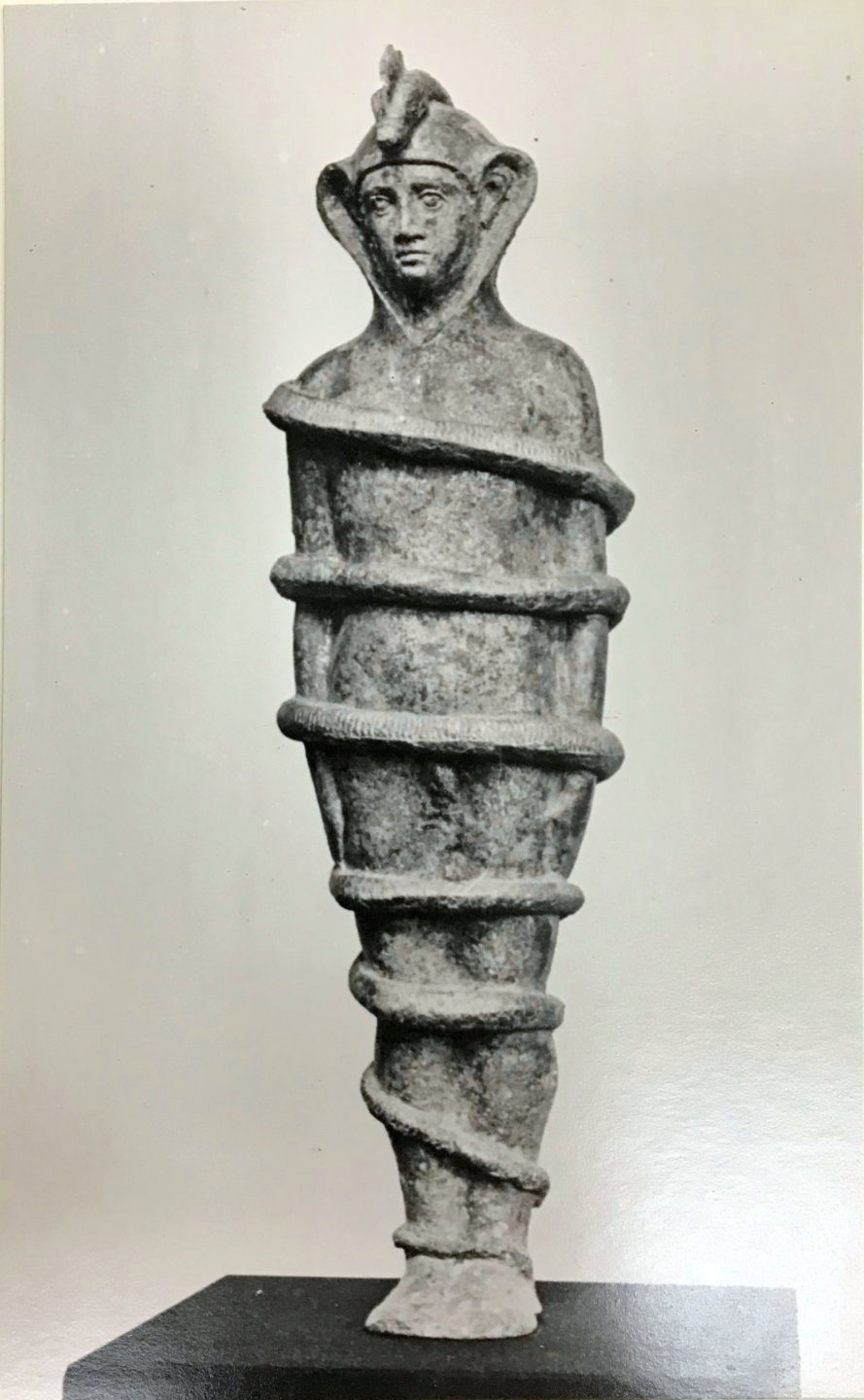
Roman relief from a sanctuary on the Janiculum Hill (Rome), showing a male figure bound by a serpent coiled seven times.
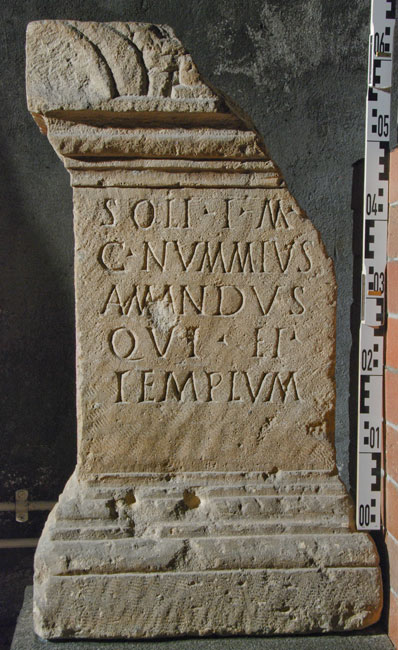
This altar dedicated to the Invincible Sol Mithra was found in 1878 in a cemetery in Alba Iulia.
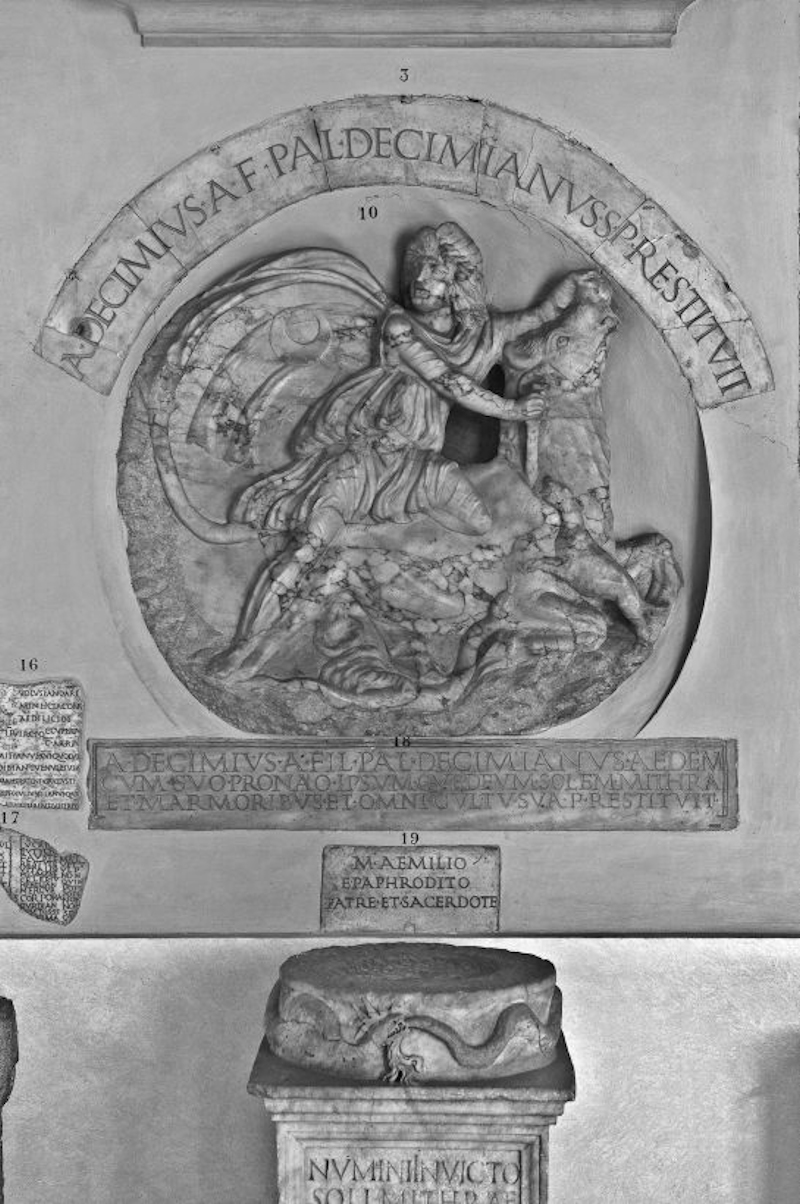
The relief of Mithras slaying the bull from the Mithraeum of the Seven Spheres was discovered in 1802 by Petirini by order of Pope Pius VII.
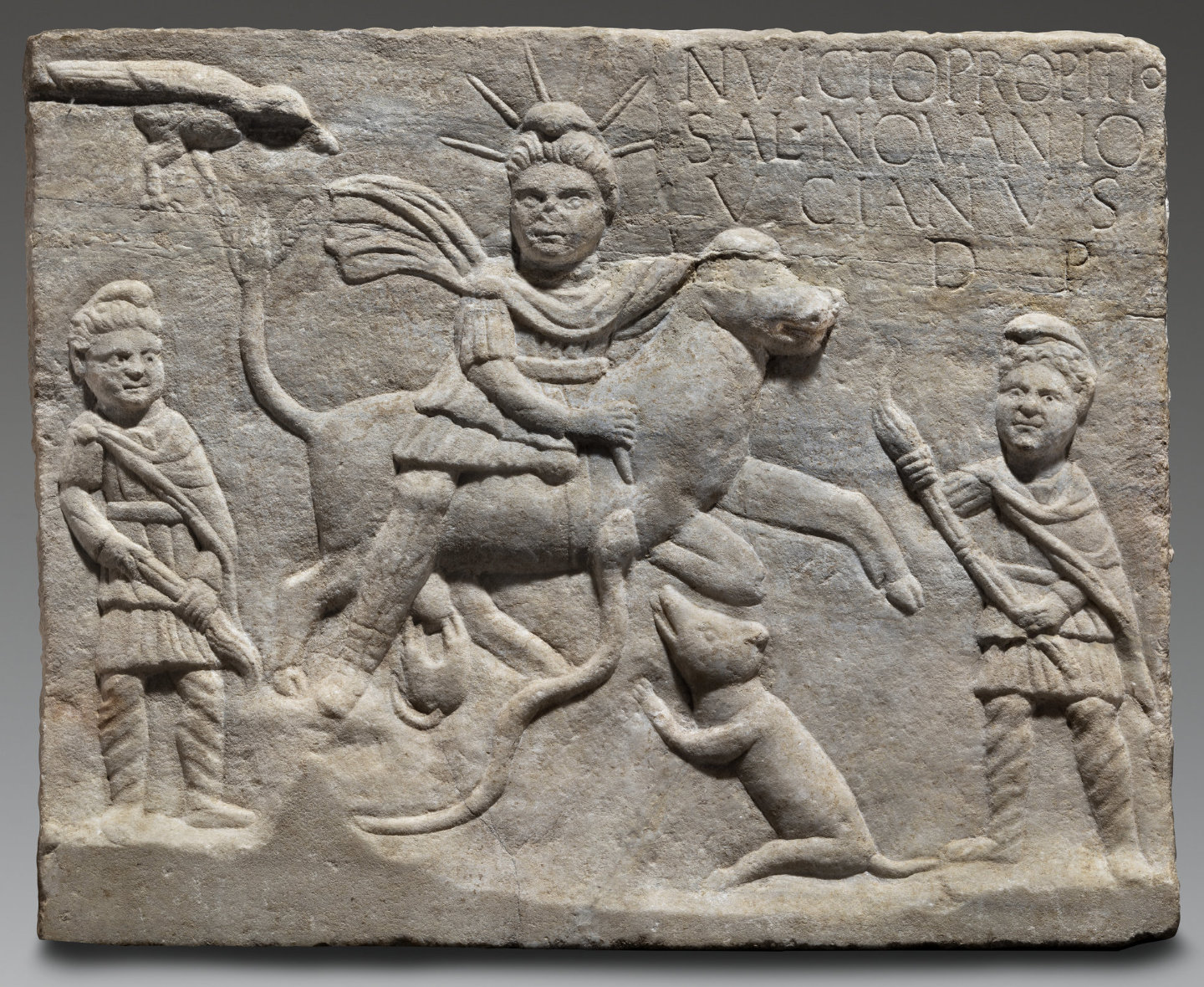
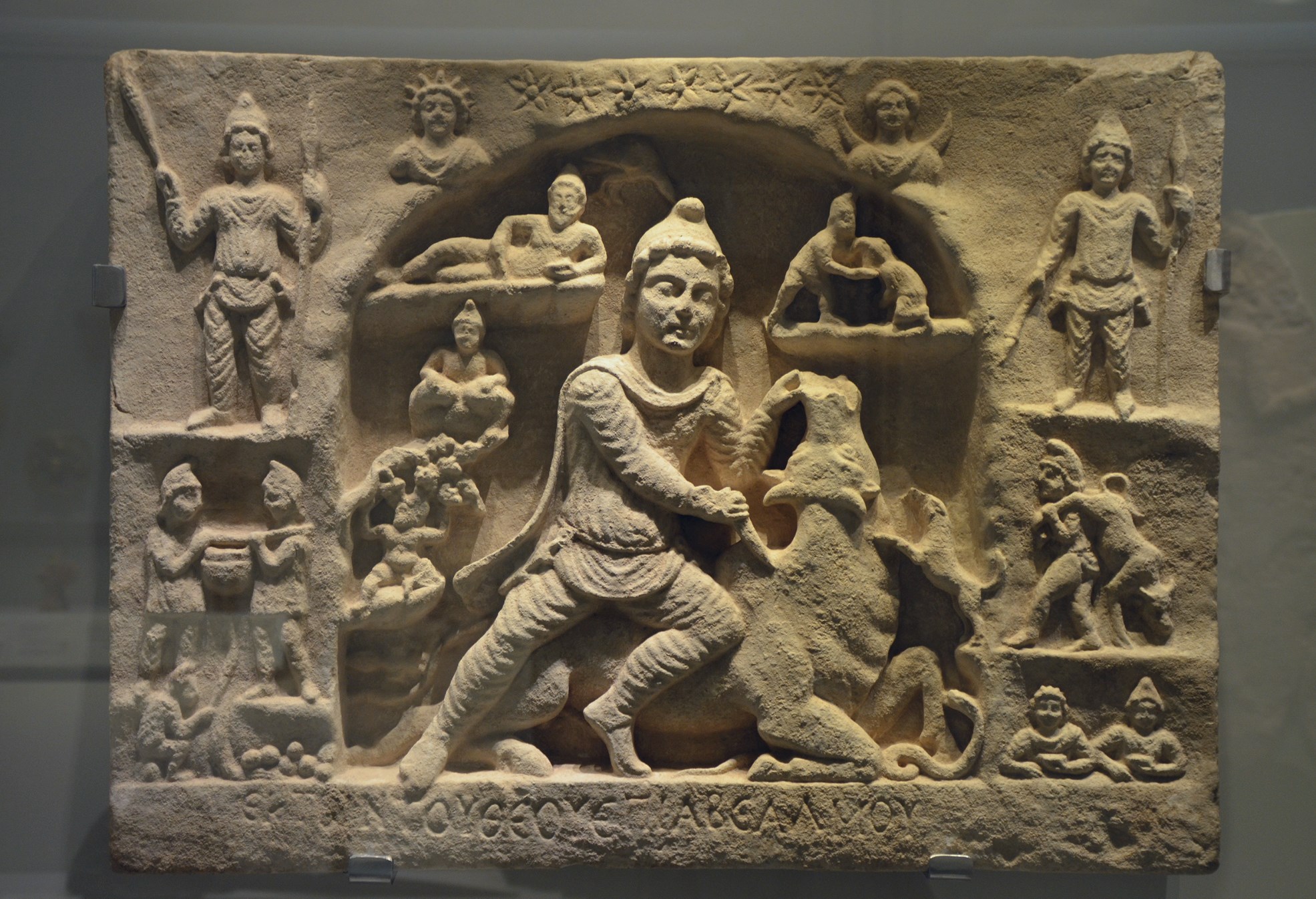
The Macerata Tauroctony shows Mithra slaying the bull with the usual Pyrigian cap and six rays around his head.
