Your search Sankt Johann im Pongau gave 1046 results.

Germania inferior preserves a strongly militarised body of Mithraic evidence from the lower Rhine frontier of the Roman empire.
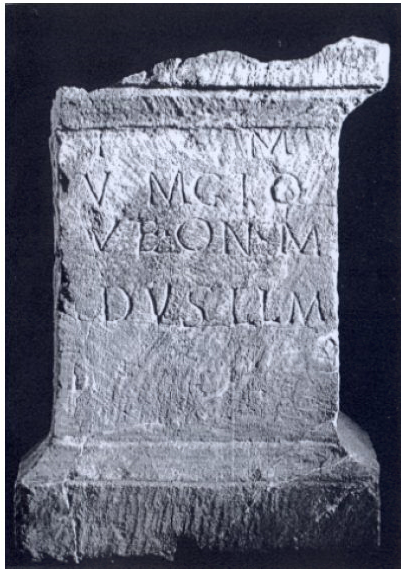
This fragmented monument bears an inscription of a certain veteran named Valerius Magio.
Histria connected the northern Adriatic to the Balkan and Danubian worlds through maritime and regional communication networks.
Transpadana occupied the northern plains of Italy where major communication routes connected the peninsula to the Alpine and Danubian worlds.
Persia occupied a central place in ancient and modern interpretations concerning the origins and eastern background of Mithraic traditions.
Aegyptus occupied a unique position within the Roman world where Mediterranean trade, Nile networks and ancient religious traditions intersected.
Liguria linked northern Italy to southern Gaul and the western Mediterranean through coastal and Alpine communication routes.
Venetia connected northern Italy to the Adriatic and Danubian worlds through trade, mobility and imperial communication routes.
Picenum connected the Adriatic coast of central Italy to inland communication routes and the wider networks of the Roman Peninsula.
Lucania connected inland southern Italy to the Tyrrhenian and Ionian maritime worlds through regional communication networks.
Apulia connected southern Italy to the Adriatic and eastern Mediterranean through maritime trade and regional urban networks.
Campania preserved a vibrant urban and maritime environment closely connected to the commercial life of Roman Italy.
At the western edge of the Roman world, Mauretania Tingitana linked North Africa to Hispania through military and maritime exchange.
Mauretania Caesariensis connected western North Africa to Mediterranean trade routes and the provincial networks of the Roman empire.
Syria-Palestina occupied a complex religious landscape shaped by imperial administration, pilgrimage and eastern Mediterranean mobility.
Syria-Coele formed one of the principal urban and cultural centres of the Roman Near East where diverse religious traditions coexisted.
Cilicia occupied a key position between Anatolia, Syria and the eastern Mediterranean maritime routes.
Lycia et Pamphylia connected southern Anatolia to the maritime networks of the eastern Mediterranean world.
Asia formed one of the most urbanised and interconnected provinces of the eastern Roman world where Mithraic cults circulated widely.
Chersonesus occupied a northern Black Sea position where Greek, Roman and frontier cultures intersected at the edges of the Mithraic world.
