Your search St Albans gave 3403 results.
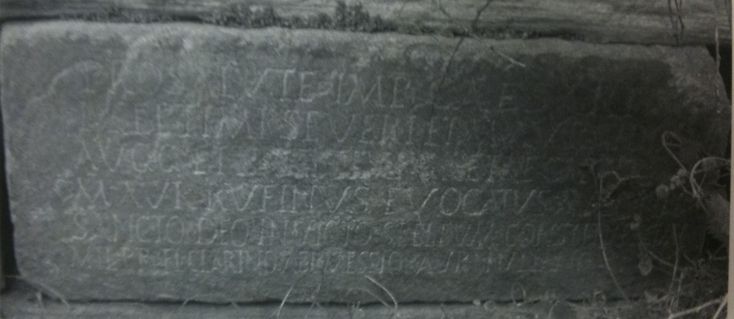
This inscription reveals the existence of a Mithraeum on the island of Andros, Greece, which has not yet been found.

This plaque, located on the western staircase of the Palace of Darius, mentions the god Mithra together with Ahura Mazda as protectors of King Artaxerxes III Ochus.
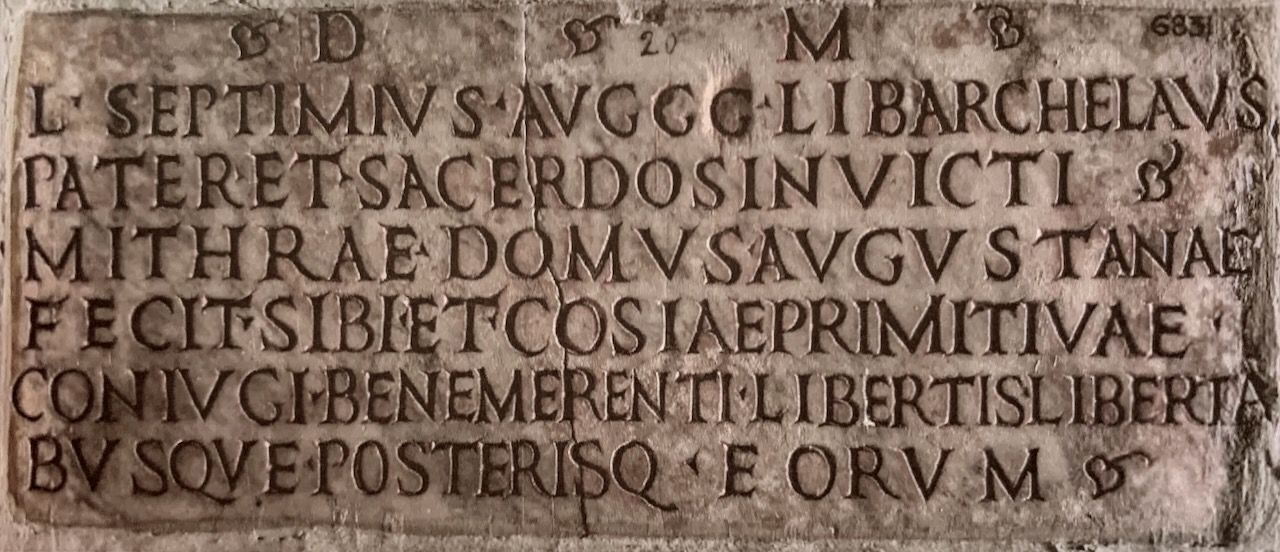
Marble funerary plaque erected by Lucius Septimius Archelaus, a Pater and priest of Mithras, for himself, his wife, and their freedmen and descendants.
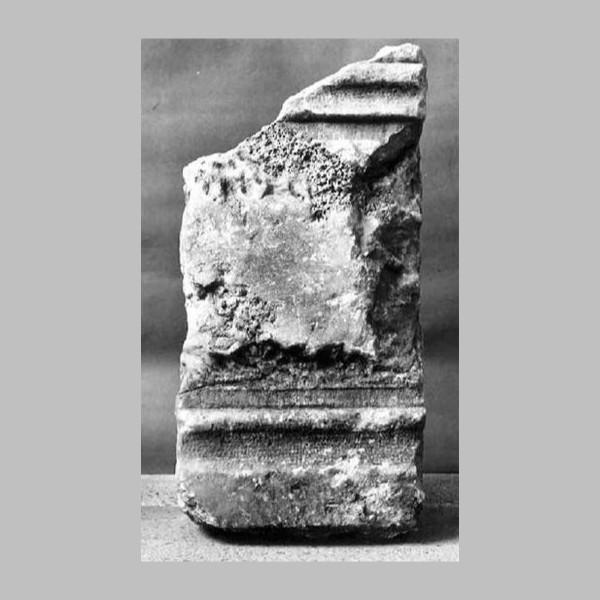
A certain Blastia or Blastianus made a dedication to Mithras and Silvanus on an altar in Emona, Italy.

This altar is dedicated to the god Sol Invictus Mithras by a certain Florus, a veteran of the Legio III Augusta.
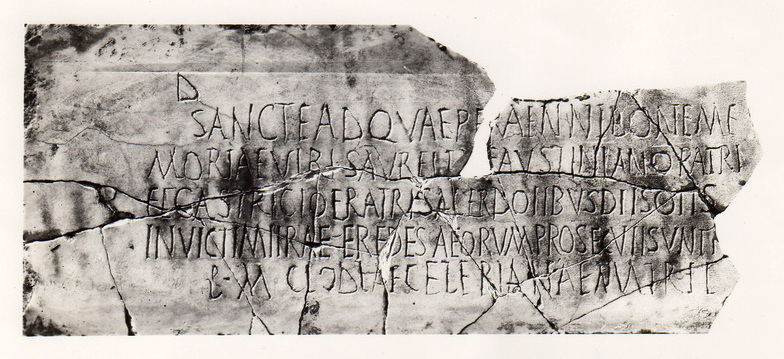
This inscription was commissioned by a family of priests of the invincible god Mithras.
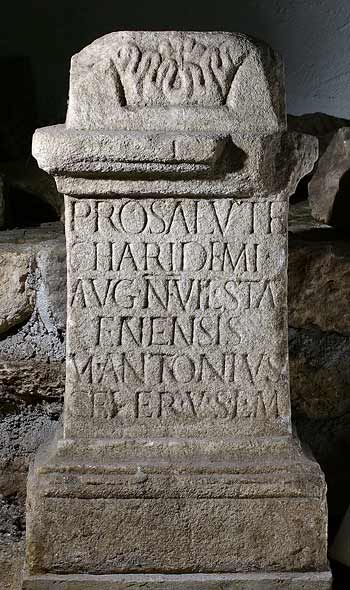
Marble votive altar with inscription to Mithras, featuring coiled, fan-like motifs above the text and associated with the statio Enensis.
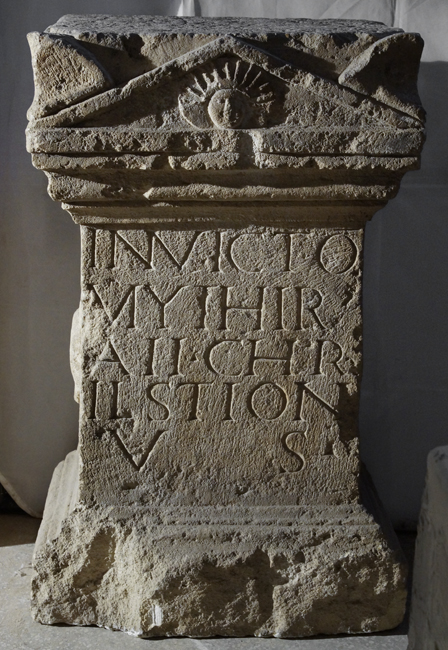
In 1852, Károly Pap, a naval captain, unearthed several Mithraic monuments in his garden at Marospartos, including this altar.
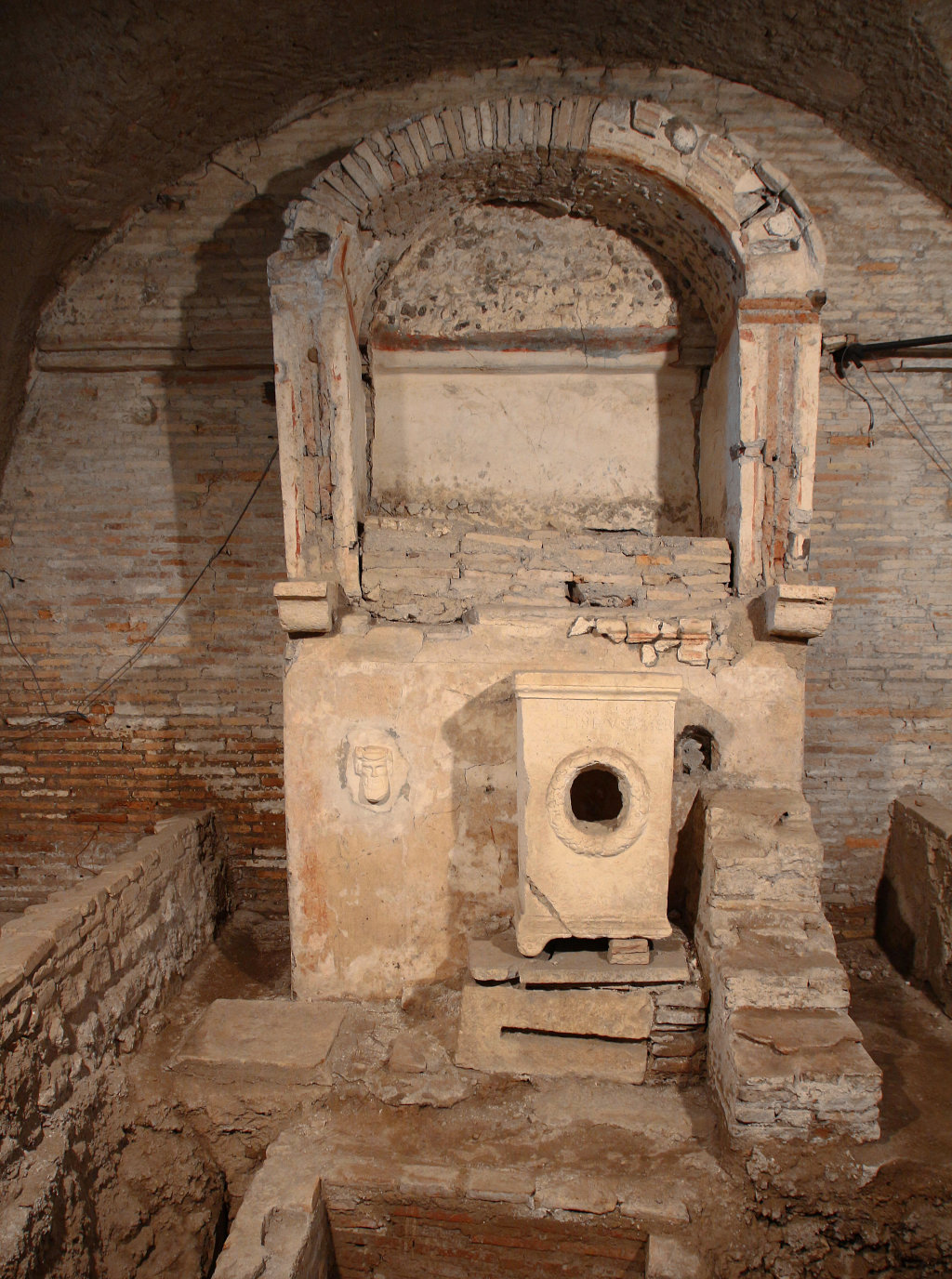
This altar was originally consecrated to Hercules and was rededicated to Mithras by Callinicus in the Mithraeum of the House of Diana.
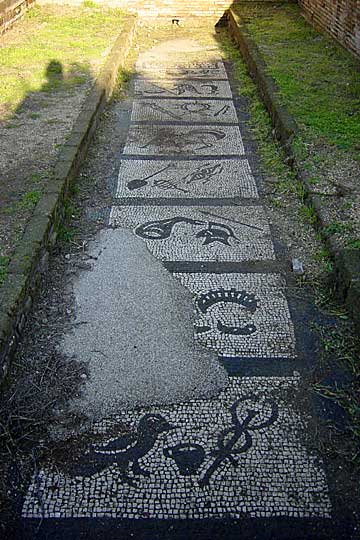
The Felicissimo Mithraeum has a floor mosaic depicting the seven mithraic grades.
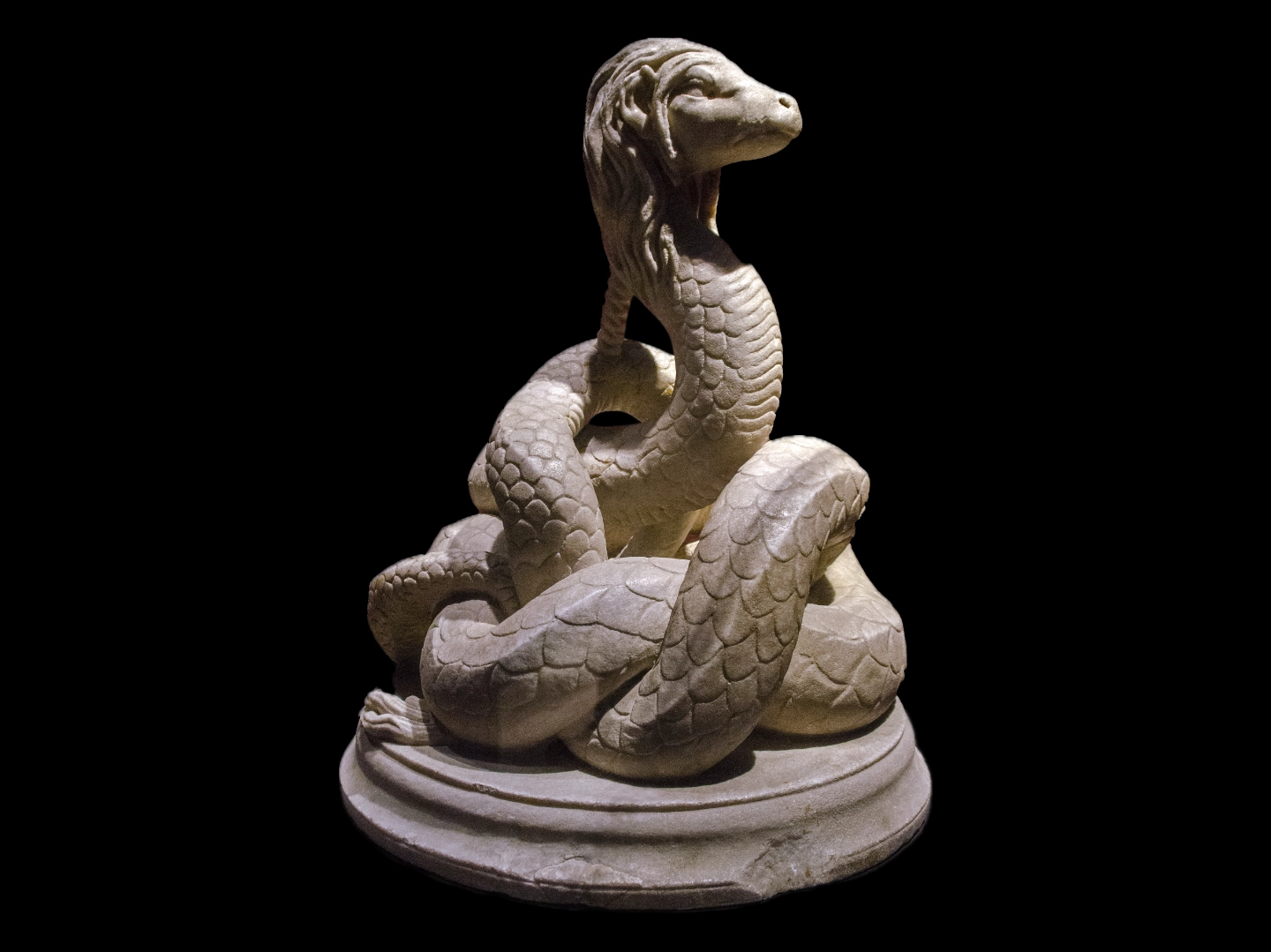
At Rome’s twilight, amid political upheaval and Christian ascendancy, Vettius Agorius Praetextatus embodied pagan intellect, virtue, and authority across senatorial, military, and mystical spheres.
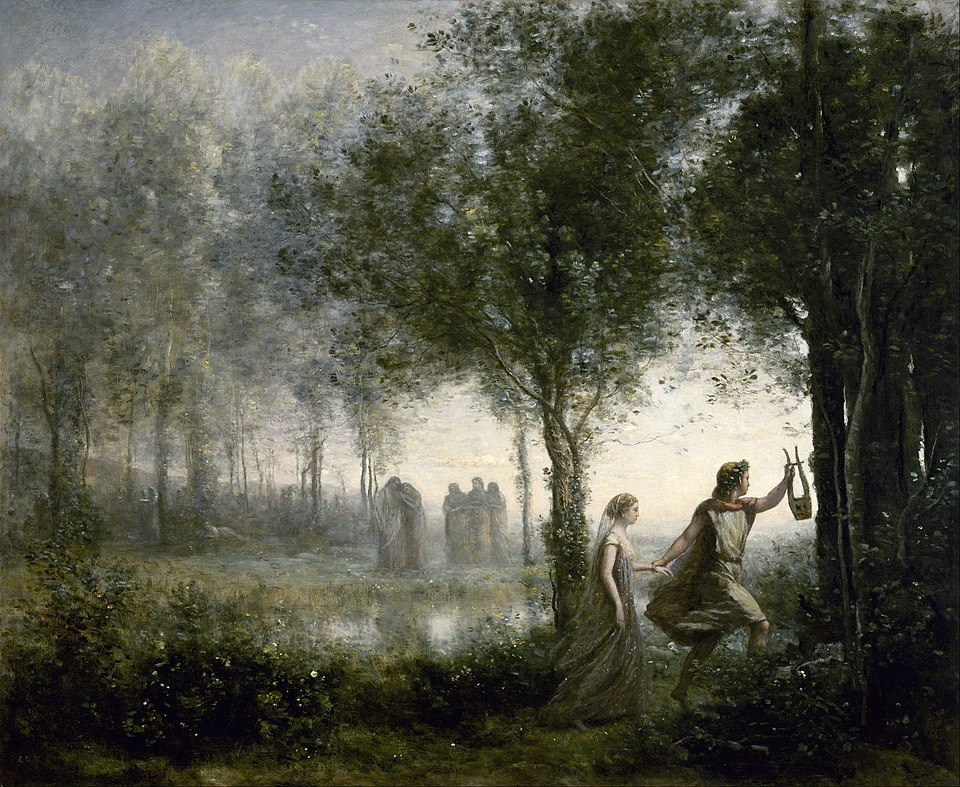
By reading Orphic theology together with Eleusinian ritual practice, the mysteries emerge as a structured mystagogy of transformation: a disciplined passage from forgetfulness (Lethe) to knowledge (aletheia), from mortality to participation in the divine.
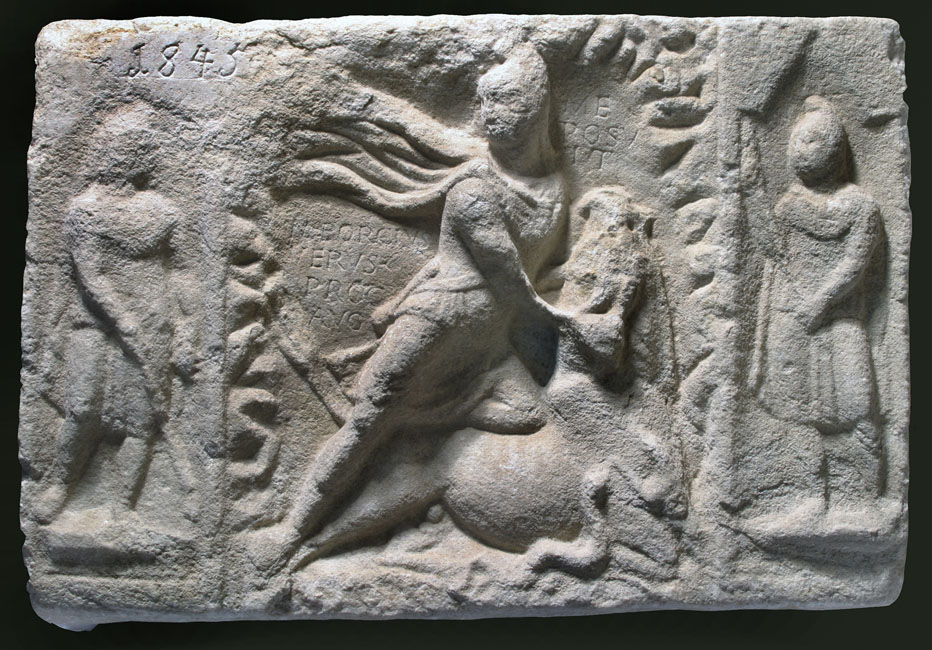
This relief of Mithras tauroctonus and other finds were discovered in 1845 in Ruše, where a Mithraeum probably existed.
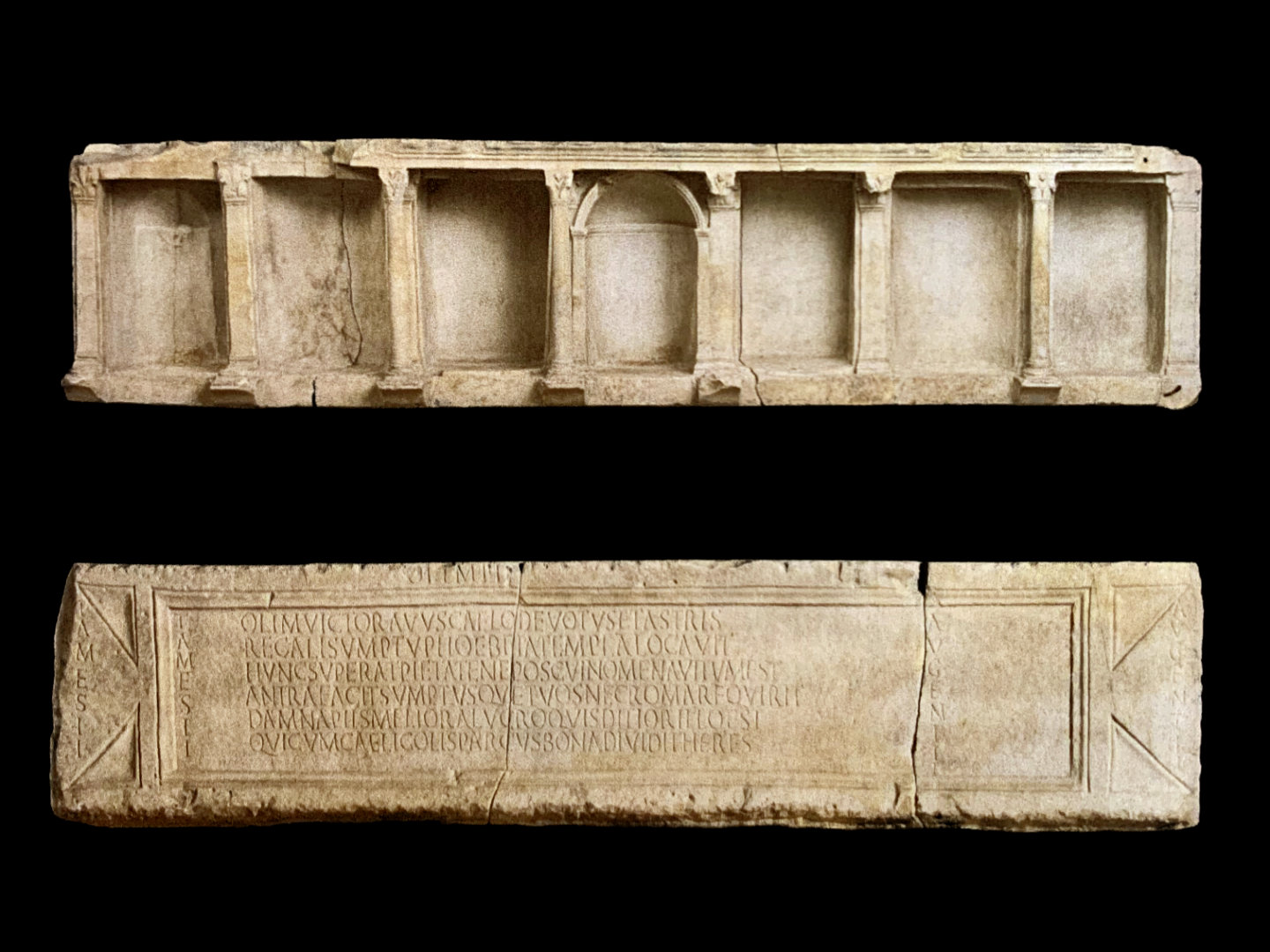
This monument is the only one still available from the disappeared Mithraeum in Piazza S. Silvestro in Capite.
Dedication from Simitthus mentioning the restoration of a monument and a vow fulfilled to Cautes and Cautopates during the reign of Caracalla and Julia Maesa.
A certain Secundinus, steward of the emperor, dedicated this altar to Mithras in Noricum, today Austria.
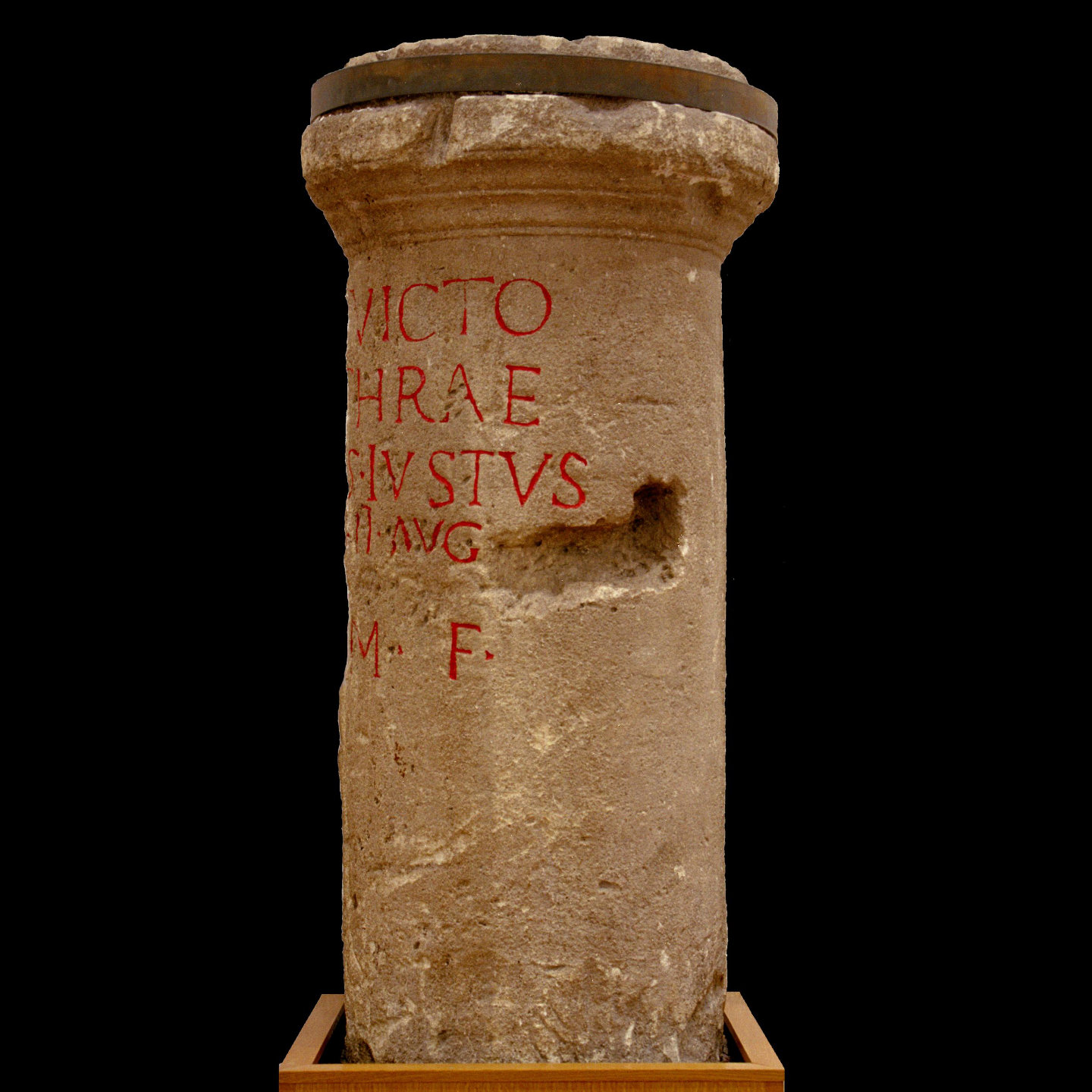
This oolite base, dedicated to the invincible Mithras, was found in the baths of the Villa de Caerleon, Walles.
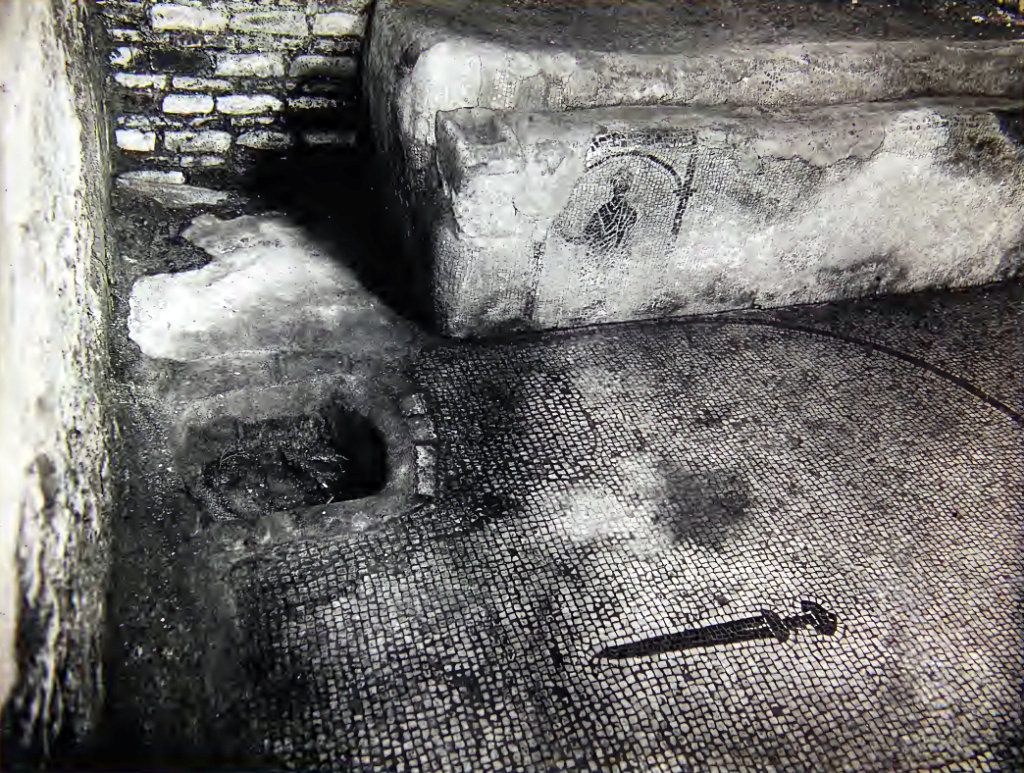
The floor mosaic of the Mithraeum of the Seven Spheres, which gives its name to the temple, depicts a dagger.
Second Mithraic monument dedicated by the Kastos family, found not far from the Arco di S. Lazzaro, in Rome.
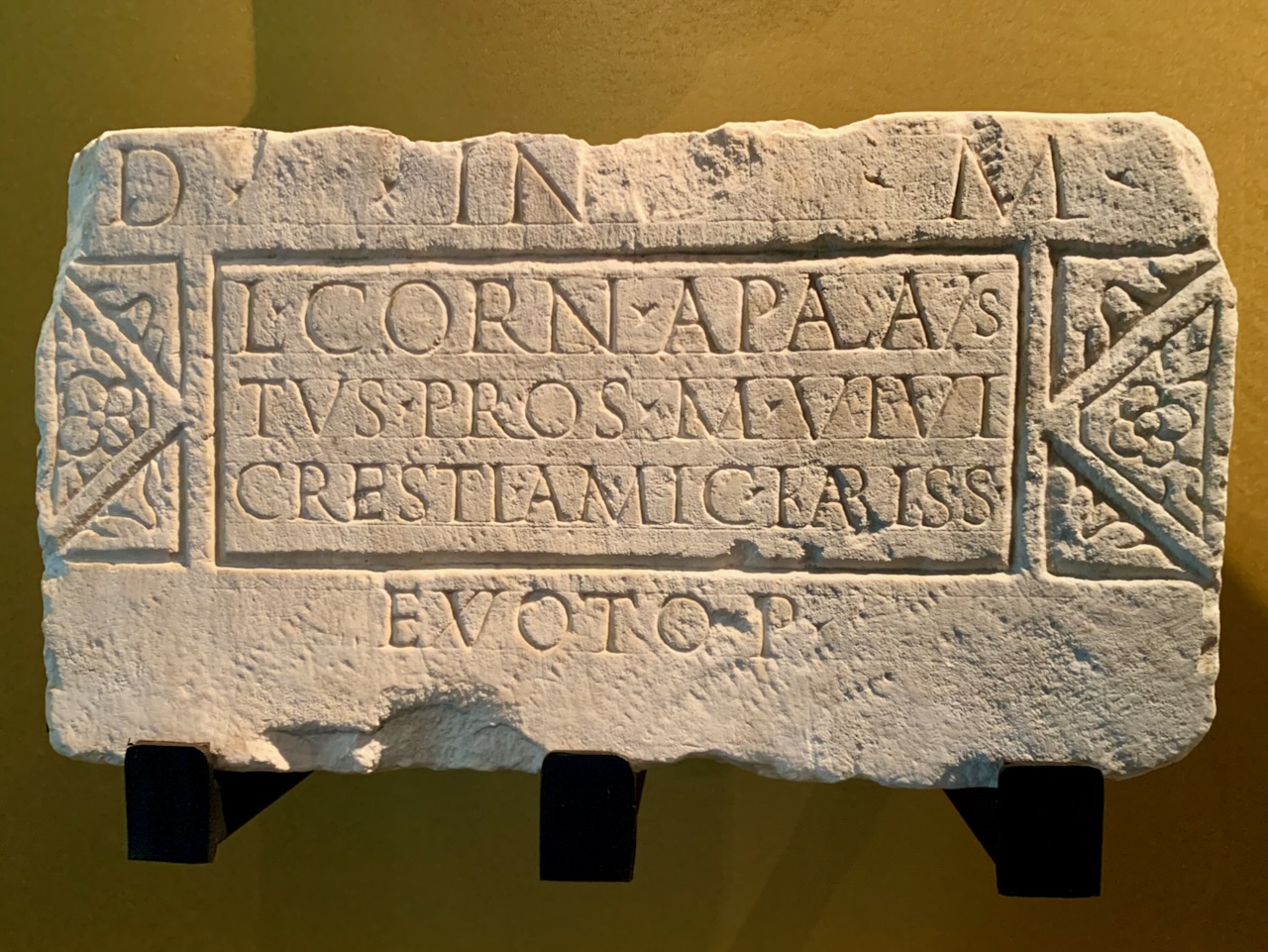
The altar that now stands in Split was dedicated to Invincible Mithras for the health of a dear friend.
