Your search St Albans gave 3403 results.

Two grey sandstone fragments of a lion statue on a base from Mithraeum I at Stockstadt, with part of the tail missing
Red sandstone relief from Mithraeum I at Stockstadt showing a male figure stooping and walking to the right with outstretched hands, head veiled
Red sandstone relief from Mithraeum I at Stockstadt depicting Epona riding a horse to the right
Sandstone relief fragment from Mithraeum I at Stockstadt showing the lower part of a naked Hercules with a club and lion's skin
Red sandstone relief fragment from Mithraeum I at Stockstadt preserving the lower part of Vulcanus with an anvil, hammer, and tongs
Red sandstone relief from Mithraeum I at Stockstadt depicting Diana in a long garment drawing an arrow from her quiver, with a deer at her feet
Sandstone relief fragment from Mithraeum I at Stockstadt depicting a standing woman in a long garment with a lance, probably Minerva
Sandstone fragment from Mithraeum I at Stockstadt preserving the lower part of a person in armour, possibly Mars
Red sandstone relief from Mithraeum I at Stockstadt depicting a standing Victoria in a long garment, left foot on a globe, writing on a shield
Fragment of a red sandstone relief from Mithraeum I at Stockstadt showing Hercules dragging a collared Cerberus from a cave while holding a club
Upper portion of a red sandstone Mercury statuette from Mithraeum I at Stockstadt, wearing a winged cap and mantle on the left shoulder
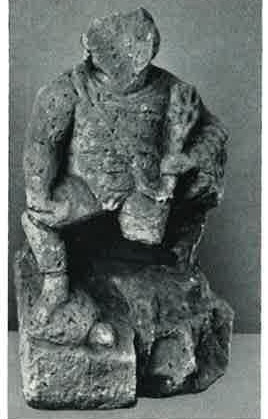
Yellow sandstone statue of a seated Mercury from Mithraeum I at Stockstadt, holding a caduceus, with his right foot resting on a tortoise
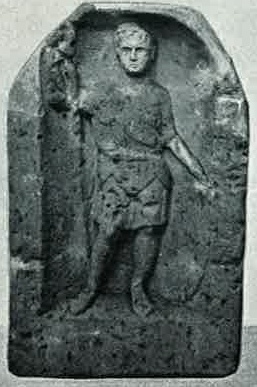
Red sandstone relief from Mithraeum I at Stockstadt depicting a standing Mars in helmet with lance and shield, head partially restored

White sandstone statuette of Mercury from Mithraeum I at Stockstadt, standing in a shoulder cape, holding a purse and wearing wings in his hair
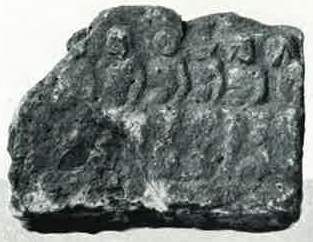
Yellow sandstone relief from Mithraeum I at Stockstadt showing six bearded, draped figures reclining at a ritual banquet
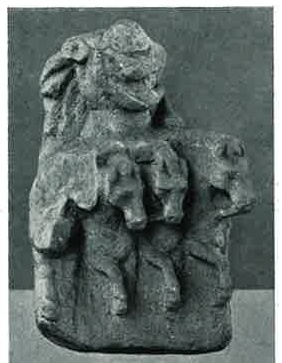
Damaged red sandstone statue from Mithraeum I at Stockstadt depicting the naked Sol standing in a four-horse chariot, head and arms lost
Red sandstone base from Mithraeum I at Stockstadt preserving the feet of a standing figure beside part of a serpent, possibly Aion
Two white sandstone fragments from Mithraeum I at Stockstadt possibly depicting a rock with part of a serpent, relating to Mithras' birth
White sandstone fragment from Mithraeum I at Stockstadt preserving the naked torso of a male with raised arms, interpreted as Mithras' rock-birth
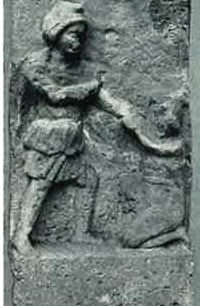
Red sandstone relief from Mithraeum I at Stockstadt depicting Mithras in Oriental dress approaching kneeling Sol with outstretched arms
