Your search Val di Non gave 2329 results.

medical doctor. Hypnotherapist. medieval art interpretation. Mithras mystery I live in Sarrebourg (France) where a marvelous mithraeum was discovered in 1890
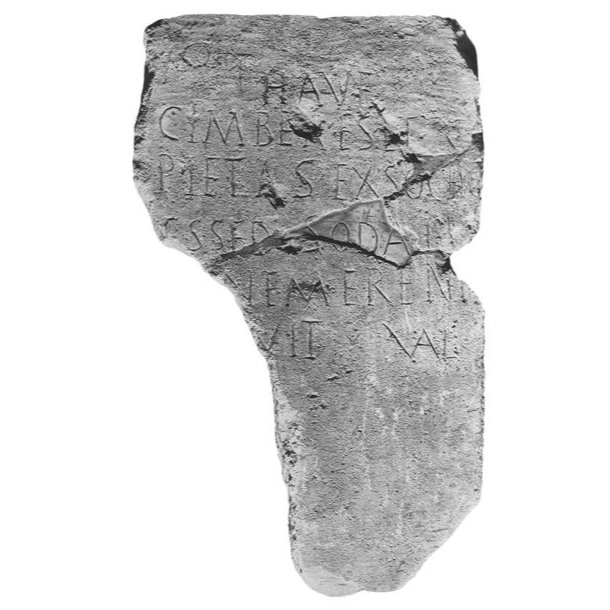
This monument with an inscription by two individuals was found in the first mithraeum of Cologne, Germany.
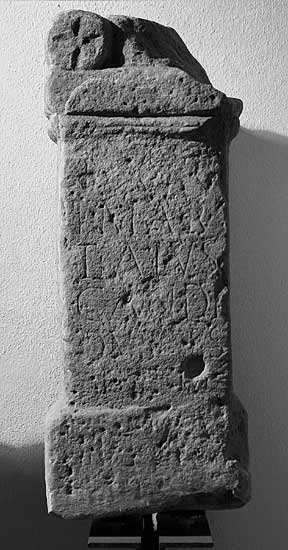
Bright red sandstone altar from Mithraeum II at Stockstadt dedicated to Deo Cauti by Titus Martialius Candidus, found near the north podium.
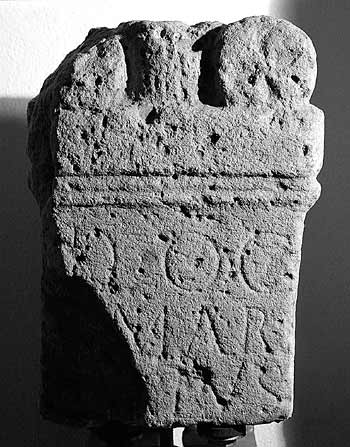
These two inscriptions by a certain Titus Martialius Candidus are dedicated to Cautes and Cautopates.
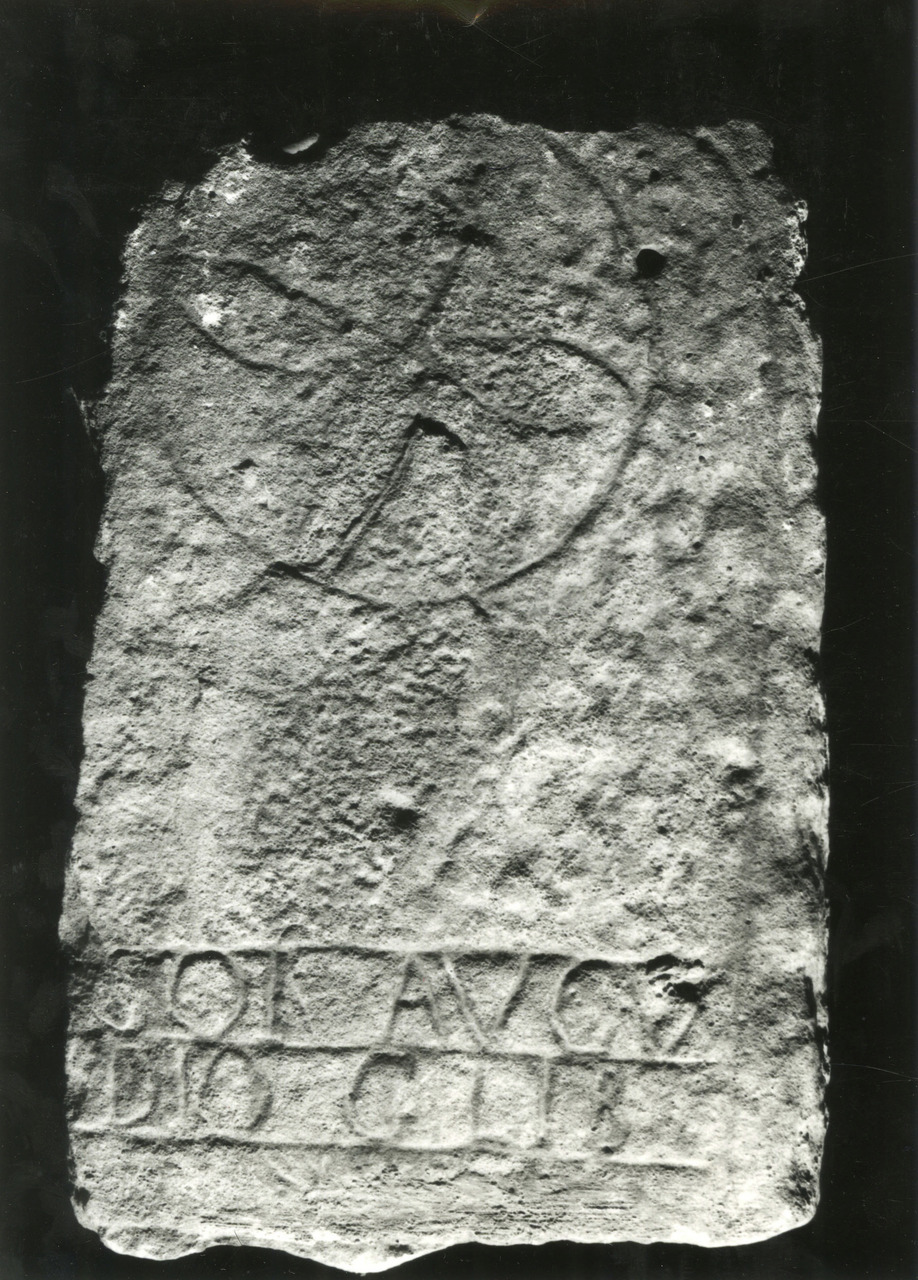
A sandstone slab found along the border of the Tagus river near Thirmarum (modern Trillo, near Cifuentes in Guadalajara), recording an inscriptoiin by a certain Cornelius, freedman of Gaius.

Governor of Numidia and prolific dedicator of monuments to Sol Mithras, Sol Invictus and other deities in late Roman North Africa.
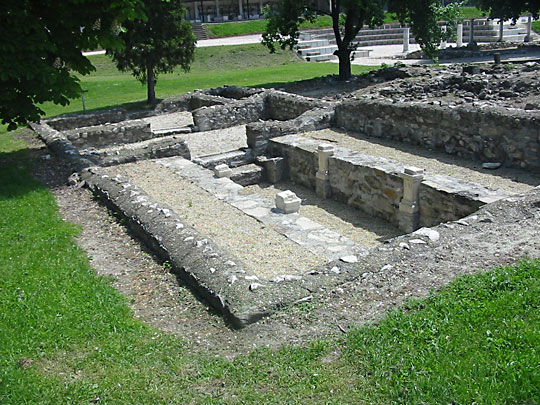
This temple of Mithras in Aquincum was located within the private house of the decurio Marcus Antonius Victorinus.

A marble fragment with an inscription in a tabula ansata from the Mithraeum at Walbrook in London, reading [Au]gggg(ustis) invicto..., a dedication to the Invincible probably addressing multiple emperors.
A brief inscription reading "Deo Invicto Mithrae", found in the ruins of the Castello di Tuenno near San Zeno at the entry to the Tovel valley in Trentino, alongside the decorated relief No. 723.
A torch end held by a hand in the pose of a dadophore, and another hand holding a small offering, found at the south-east cemetery adjacent to the Mithraeum of Les Bolards (ancient Venetonimagus) in Lugdunensis.
A fine white marble bust of Venus, a head of a helmeted deity possibly Minerva, small female heads, and bronze eye-plaques analogous to those from the temples of Sequana and Apollo Vindonnus, found at the building south-west of the Mithraeum at Les…
Architectural elements including marble plaques, mouldings, entablature sections, and acanthus friezes, found in a building about 30–40 metres south-west of the Mithraeum at Les Bolards (ancient Venetonimagus) in Lugdunensis, suggesting the possible existence of a second sanctuary…
A small white marble column decorated in high relief with spiral oak-leaves and acorns, together with fragments of two legs and two hands holding votive offerings, found at the Mithraeum of Les Bolards (ancient Venetonimagus) in Lugdunensis.
Fragmentary remains of a statuette of Cautopates in a short tunic, including a thigh, knee, and hand holding the end of a torch, found near the entrance of the Mithraeum at Les Bolards (ancient Venetonimagus) in Lugdunensis.
A white marble statue from the Mithraeum at Walbrook in London, depicting Bonus Eventus standing in a long hanging cloak, leaning on a ship's stem, holding a cornucopia against his shoulder and a patera above a burning altar from the back of which a…
An inscription from the vicus Vicciomitum in Milan (ancient Mediolanum), recording a votive dedication to the Invincible Mithras by L. Atilius Pupinius on a site granted by decree of the town council.

Roman settlement of Dacia superior located in the area of present-day Sibiu in Romania. The site became an important urban and military centre, later developed into the medieval city known as Hermannstadt in German and Nagyszeben in Hungarian.
Preliminary readings of the painted Mithraic texts later revised after additional research and restoration.
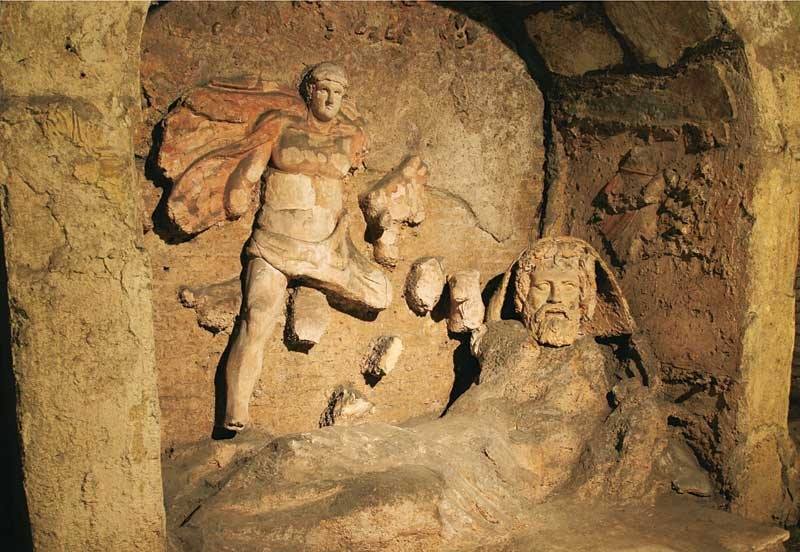
Even if only a few fragments remain, it is very likely that the main niche of the Mitreo di Santa Prisca contained the usual representation of Mithras killing the bull.
The fragmented tauroctony of the Mitreo di Santa Prisca rests on the naked figure of a bearded man, probably Ocean or Saturn.
