Your search Vid gave 175 results.

Moesia preserves a strongly militarised body of Mithraic evidence along the Danubian frontier of the empire.
Noricum preserves Mithraic evidence shaped by Alpine routes, military circulation and Danubian connections.
Galatia preserves Mithraic evidence shaped by central Anatolian routes and eastern provincial networks.
Crete and Cyrene connect Mithraic evidence to island, North African and eastern Mediterranean networks.
Cappadocia preserves evidence shaped by military movement, eastern frontier dynamics and Anatolian religious landscapes.
Dalmatia preserves Mithraic evidence shaped by Adriatic routes, military movement and provincial urban centres.
Roman Aegyptus preserves a distinctive body of Mithraic evidence shaped by Alexandria and the religious diversity of the eastern Mediterranean.
Roman Asia preserves a rich and diverse body of Mithraic evidence connected to the major cities of western Anatolia.
Bithynia and Pontus preserve important evidence for the diffusion of Mithraic cults across the Black Sea and northwestern Anatolia.
Achaea preserves some of the earliest and most culturally complex evidence for Mithraic activity in the Greek-speaking eastern Mediterranean.
The Alpine regions preserve scattered Mithraic evidence associated with military circulation and strategic routes across the western empire.
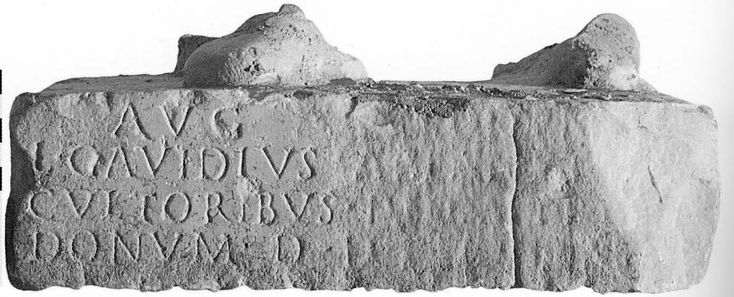
This inscription on white marble by Lucius Gavidius uses the term ther cultores to refer to his Mithraic community in Stabiae, Italy.

Public lecture by David Ulansey on Mithraism, based on his book The Origins of the Mithraic Mysteries: Cosmology and Salvation in the Ancient World.