This site uses cookies to offer you a better browsing experience.
Find out more on how we use cookies in our privacy policy.

 
Support The New Mithraeum The New Mithraeum is an independent, non-profit project dedicated to Mithraic studies, ancient religions and classical culture. Developed and maintained independently since 2007, the site exists without advertising, paywalls or institutional funding. If you have found value in its articles, interviews, photographs or database, please consider supporting the project with a contribution. Every contribution helps keep The New Mithraeum open, free and alive. Thank you.
Support us →
Regio

Mithras in Noricum

Noricum preserves Mithraic evidence shaped by Alpine routes, military circulation and Danubian connections.

The Mithraic evidence documented in Noricum reflects the province’s intermediary position between Italy, the Alps and the Danubian frontier. The material illustrates the movement of Mithraic practices through military environments, urban settlements and communication corridors crossing the central European provinces.

Mithraic monuments of Noricum

See all Mithraic monuments in Noricum

Provinces of Noricum


Noricum

Noricum formed a key link between the Alpine world and the Danubian frontier where Mithraic cults spread through military and urban environments.

Places in Noricum


Ad Enum

Rosenheim is a city in Bavaria, Germany.


Aguntum

Aguntum became an important urban centre of Roman Noricum near the eastern Alpine routes.


Bedaium

Bedaium occupied a position near the Chiemsee lake region within the northern Alpine frontier zone.


Celeia

Celeia developed into one of the principal urban centres of Roman Noricum.


Commagena

Commagena occupied a strategic position on the Danube frontier of Noricum.


Esca

The Bad Ischl area has been inhabited since the time of the prehistoric Hallstatt culture. Documentary evidence of the settlement dates back to 1262, when it was referred to as Iselen.


Flavia Solva

Flavia Solva became one of the principal urban centres of southern Noricum.


Hoče

Hoče lies within the southeastern Alpine region historically associated with Roman Noricum.


Iuvavum-Ovilava

Iuvavum and Ovilava formed two important urban centres connected by the Norican road network.


Lauriacum

Lauriacum served as a major legionary base on the Danube frontier.


Lentia

Lentia occupied an important position along the Danubian communications corridor.


Moosham

The Moosham area lies within the Alpine territory historically connected with Roman Noricum.

See all Mithraic sites in Noricum

Inscriptions from Noricum

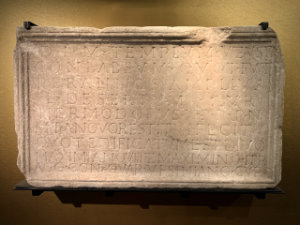
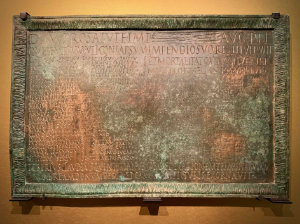
Plaque with the list of worshippers of Virunum

D[eo] i[nvicto] M[ithrae] pro salute imp[eratoris] [[Commodi]] Auglustil pii / qui templum vii conlapsum impendio suo restituerunt / et mortalitat8is] causa convener[unt] / Marullo
et Aeliano coln/s[ulibus] VI k[alendas] lulias.

[There follows, in four columns, a list of 98 names, all masculine, with the first 34 in the same hand.]

Tiberius Claudius Quintilianus ob dedicationem templi tabulam / aeream donum dedit et camaram picturis exornavit.
To the invincible god Mithras, for the well-being of the emperor Commodus Augustus pius, those who restored at their own expense the temple that had collapsed, and who had gathered with mortality as their reason, during the consulship of Marullus and Aelianus, on the 6th day before the kalends of July. […] Tiberius Claudius Quintilianus, on the occasion of the dedication of the temple, offered this bronze plaque as a gift, and decorated the chamber with paintings.

Inscription of the praeses Aurelius Hermodorus

D[eo] i[nvicto] M[ithrae] templum vetusta[te] / conlabsum quot [sic] fuit / per annos amplius / L desertum, Aur[elius] / Hermodorus v[ir] p[erfectissimus] pr[aeses] pr[ovinciae] N[orici] / M[edi]t[erranei] a novo restitui fecit. / Quot edificatum est divo / Maximiano VIII et Maximino it[e]r[um] / A[u]gg[ustis] con[sulibus] Quar [tinio] Ursiniano cur [ante].
To the invincible god Mithras. This temple that collapsed because of age, which was abandoned for more than 50 years, Aurelius Hermodorus, a most perfect man, governor of the province of Mediterranean Noricum, restored from scratch. This construction was done during the eighth consulship of the divine Maximianus Augustus and second consulship of Maximinus Augustus, with Quartinius Ursinianus overseeing the work.

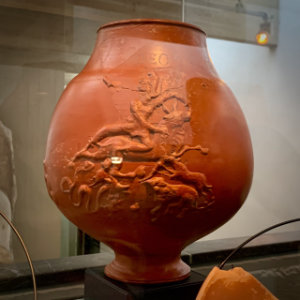
Mithraic vase of Mühltal

Deo invicto Mitr[a]e Ma[rt- or -tern]inus.
To the invincible god Mithras, Ma[rtinus or Matern]inus.

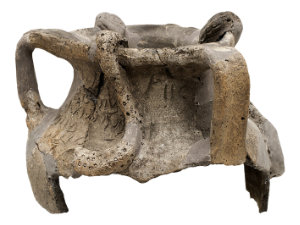
Cult vessel with snake representations of St. Egyden

[---?] D[eo?] d[onum?] || fec[erunt] / [---?] / [Pet?]ronius / Maximinu/s / [A?]cilius / Vibio.
[—] gave a gift to the god; [—], Petronius Maximinus, and Acilius Vibius made (this).

Plaque of Milan by Ulbius Gaianus

Invicto / patrio / Ulb[ius] Gaianus / praef[ectus] vehic[ulorum].

Slab of S. Urban by Ursinus

Deo invic/to Metras / Ursianus do/num posuet.
To the invincible god Mithras, Ursianus deposited this offering.

Altar of Secundinus from Bad Ischl

D[eo] I[nvicto] M[ithrae] / Secun/dinus Aug[usti] n[ostri] v/il[icus] sta/t[ionis] Esc[ensis] vo/t[um] ret[tulit] l[ibens] l[aetus] m[erito].
To the Unconquered God Mithras, Secundinus, the steward of our Emperor’s estate at the station in Esca, willingly, joyfully, and deservedly fulfilled his vow.
Back to Top