Your selection in monuments gave 431 results.
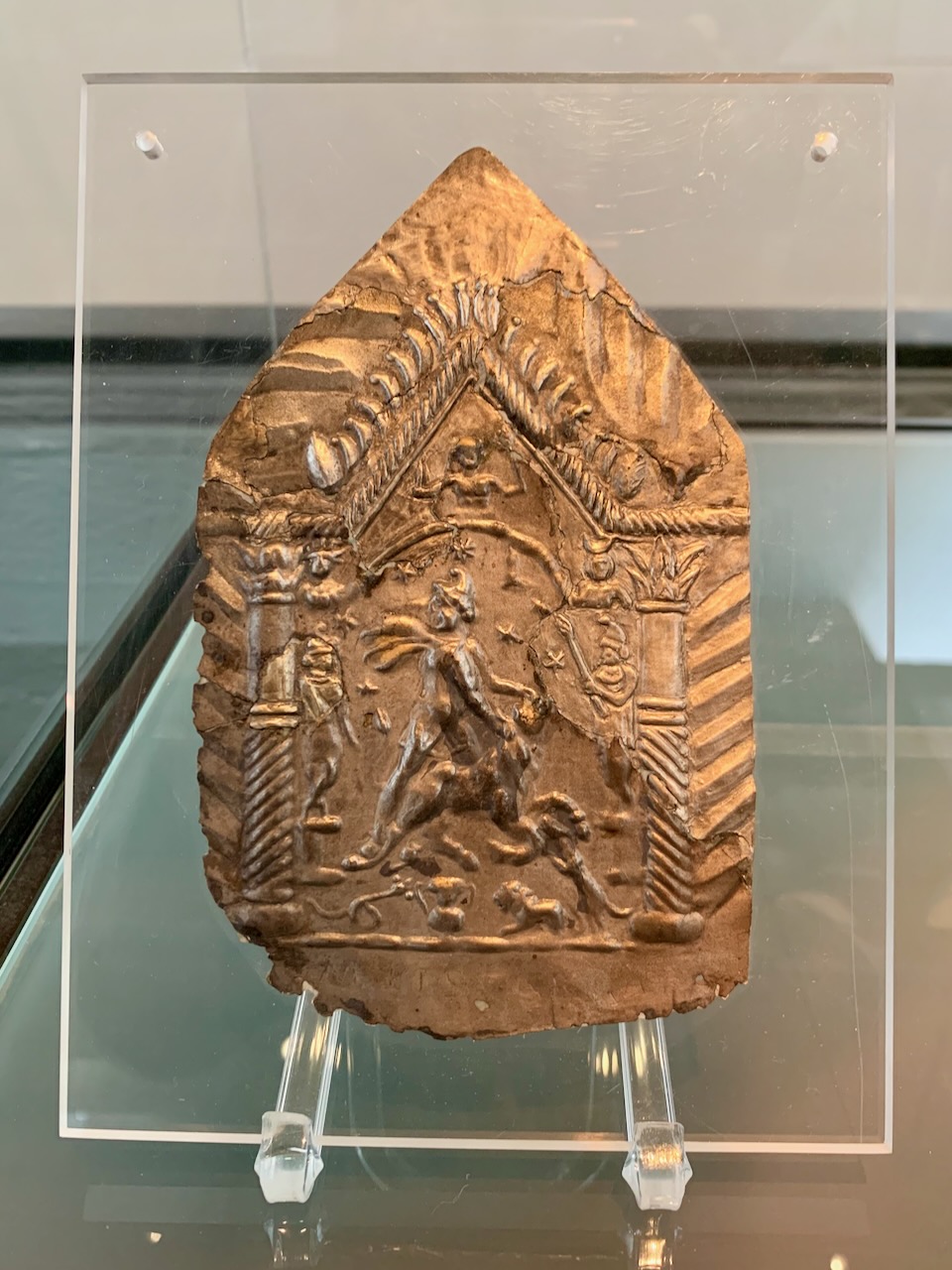
This plaque was found in Mithraeum I at Stockstadt broken into pieces inserted between the blocks of the socle of the cult relief, in the manner of a votive deposit.
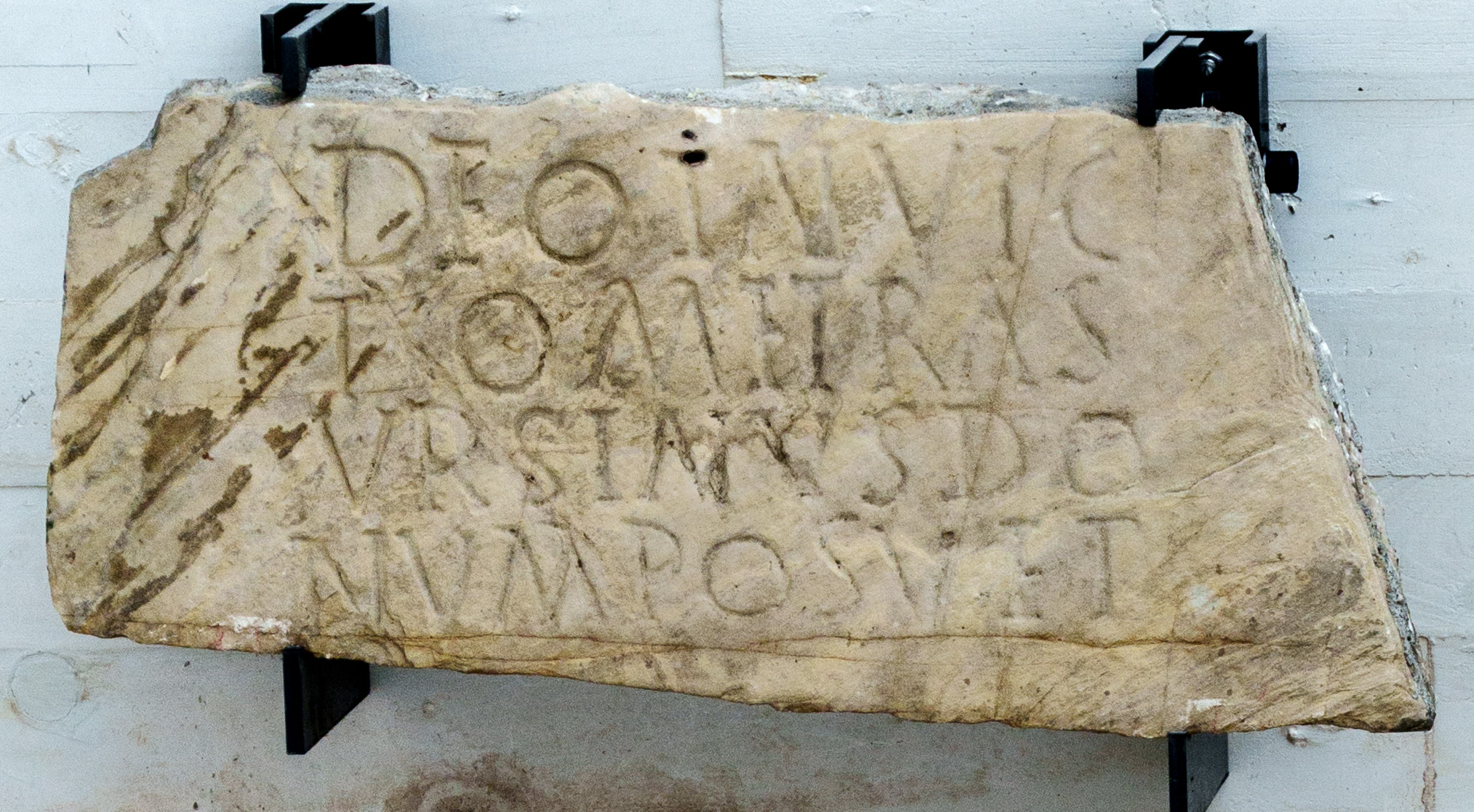
Marble plaque with inscription by a certain Ursinus found in Virunum in 1838.
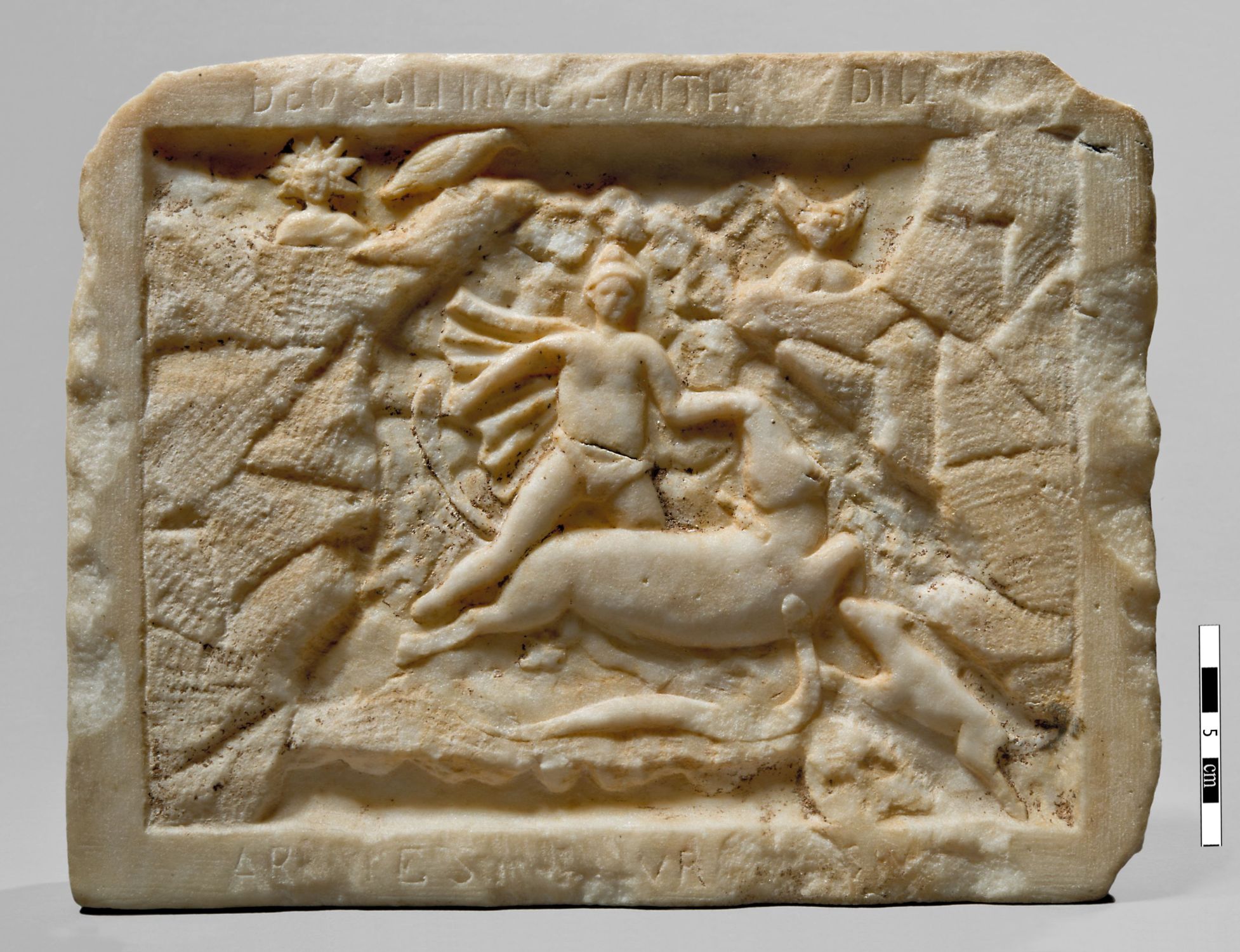
White marble relief depicting Mithras as bull-slayer in a grotto from the Froehner collection, now in the Cabinet des Médailles, Paris.
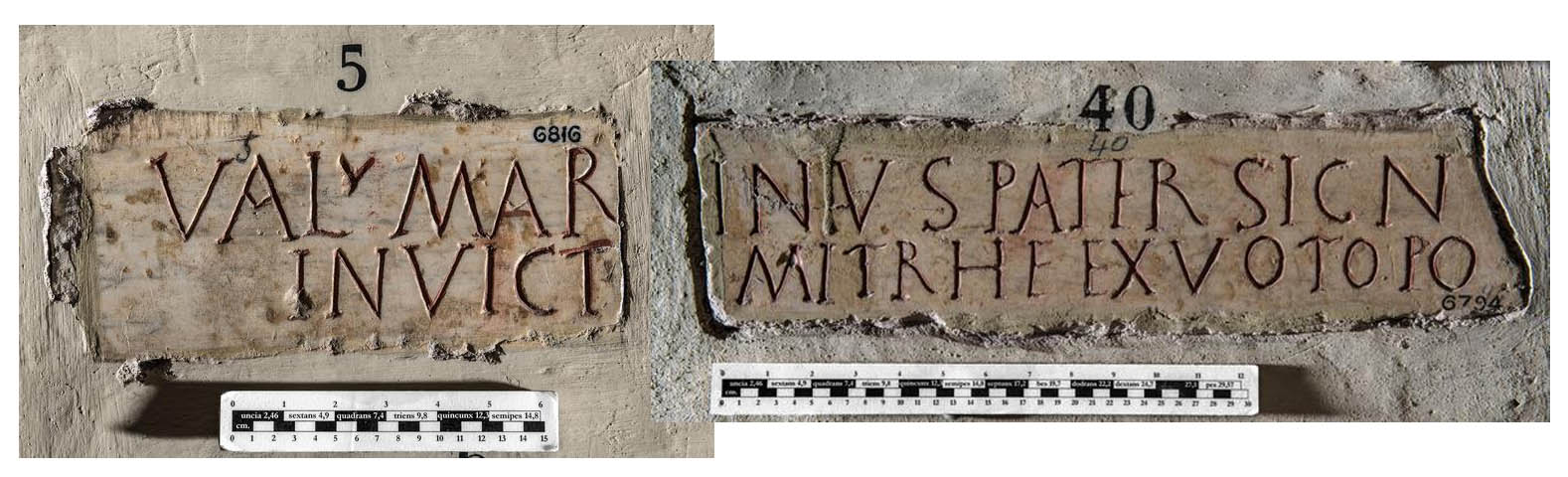
Marble inscription recording the dedication of a cult image to the unconquered Mithras by a certain pater Valerius Marinus from Rome.
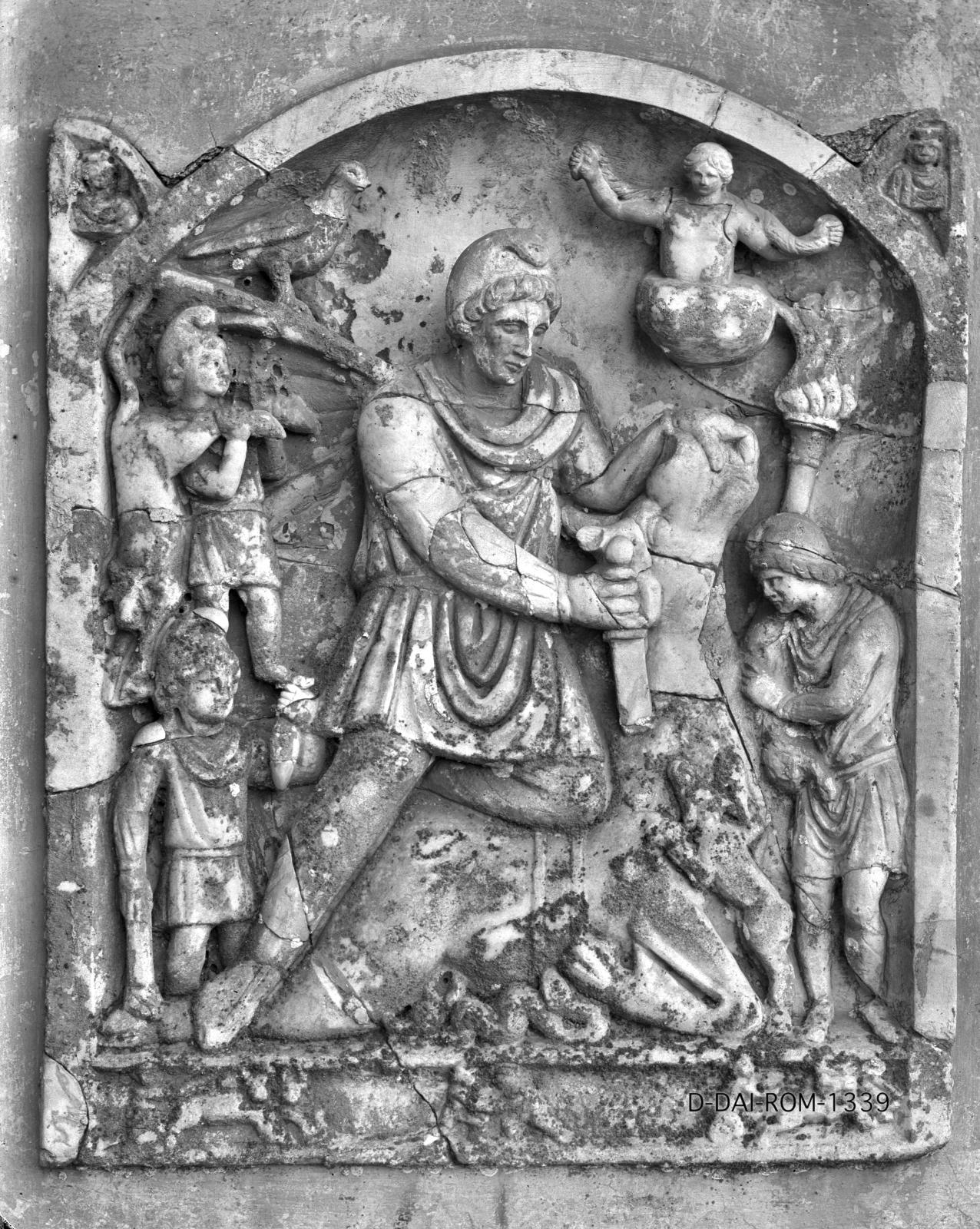
Currently in the Musei Vaticani, this Tauroctony includes Mithras’s birth restored as Venus anaduomene.
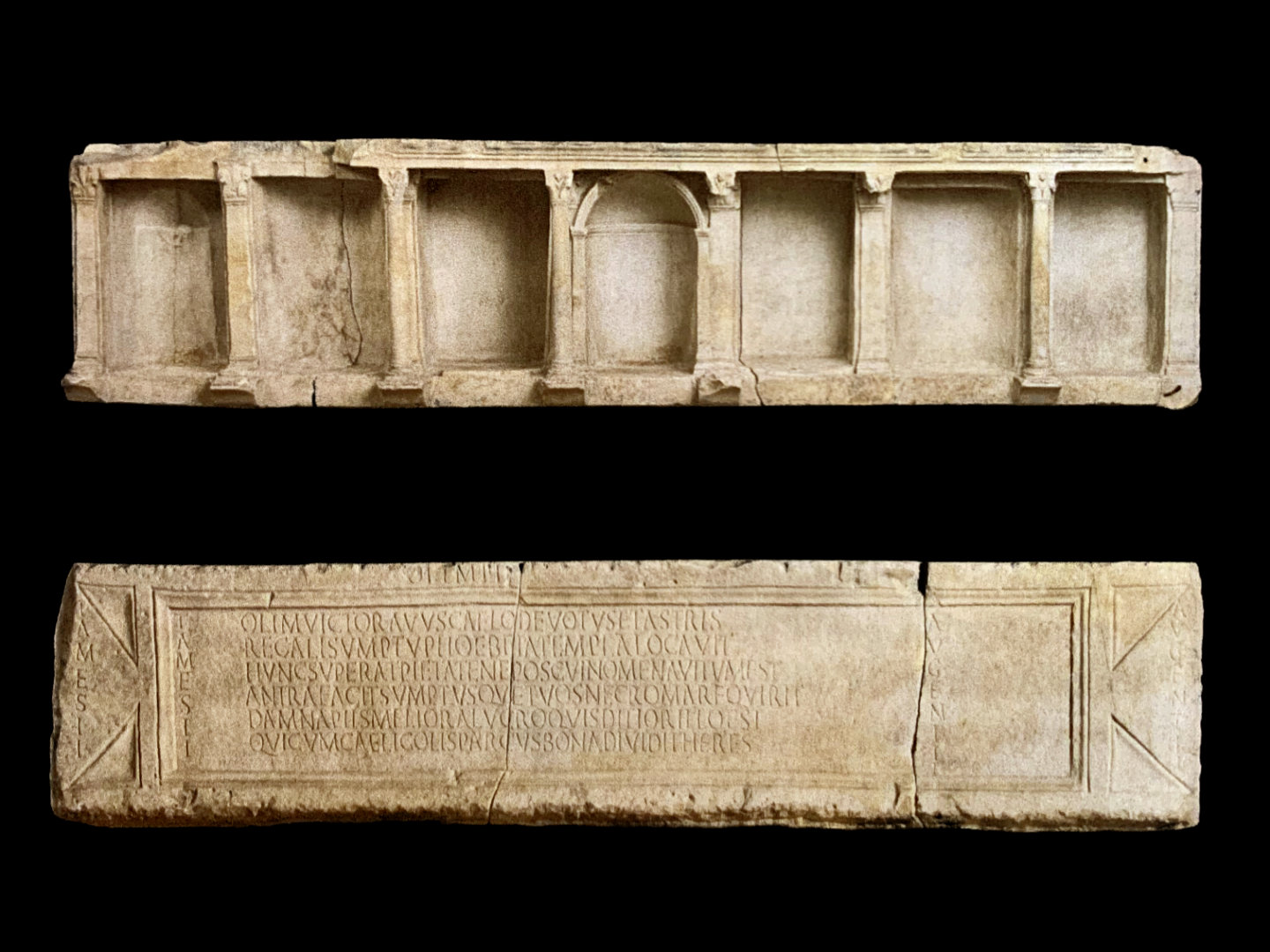
This monument is the only one still available from the disappeared Mithraeum in Piazza S. Silvestro in Capite.
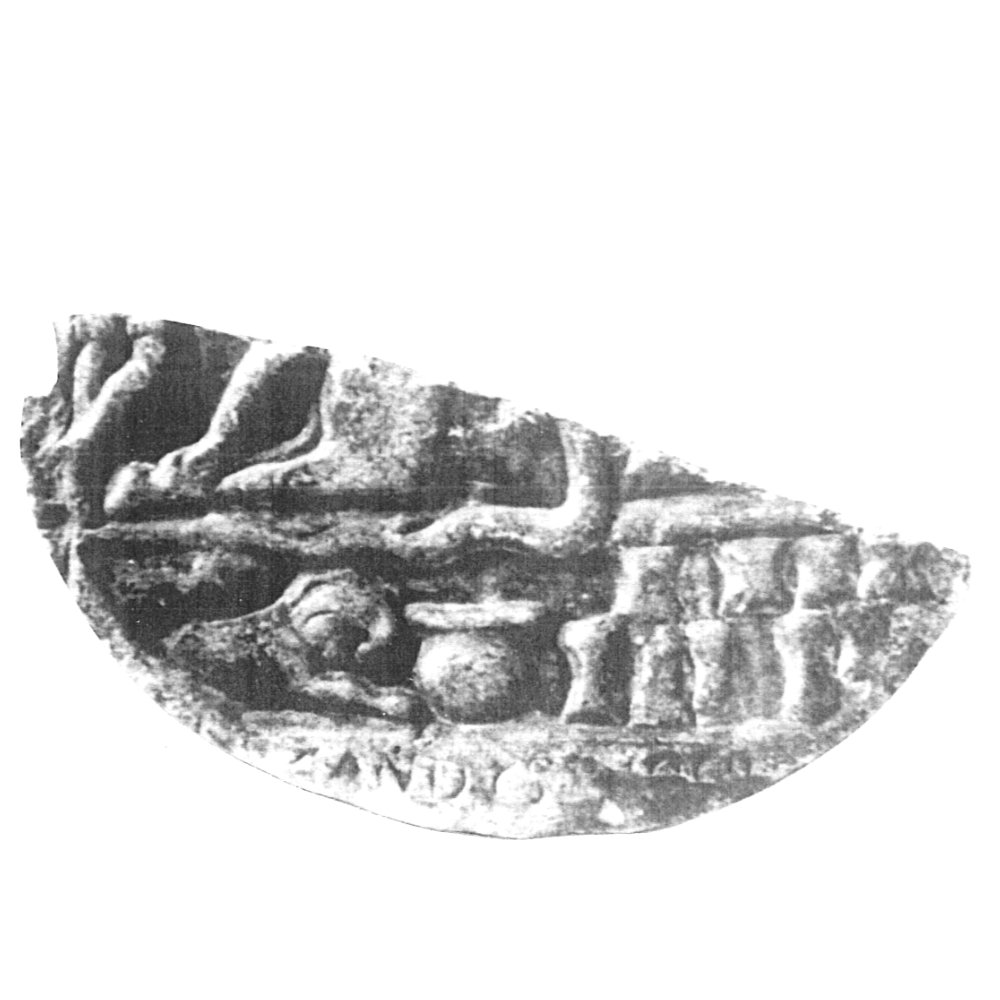
This tauroctony may have come from Hermopolis and its style suggests a Thraco-Danubian origin.

Fragmentary relief corner depicting Mithras as bull-slayer, preserving the bull’s hindquarters, scorpion, serpent and part of a torchbearer, with a partial inscription.

Emperor Julian may have been initiated into the cult of the god Mithras at the Mithraeum of Vienne, France, according to Turcan.
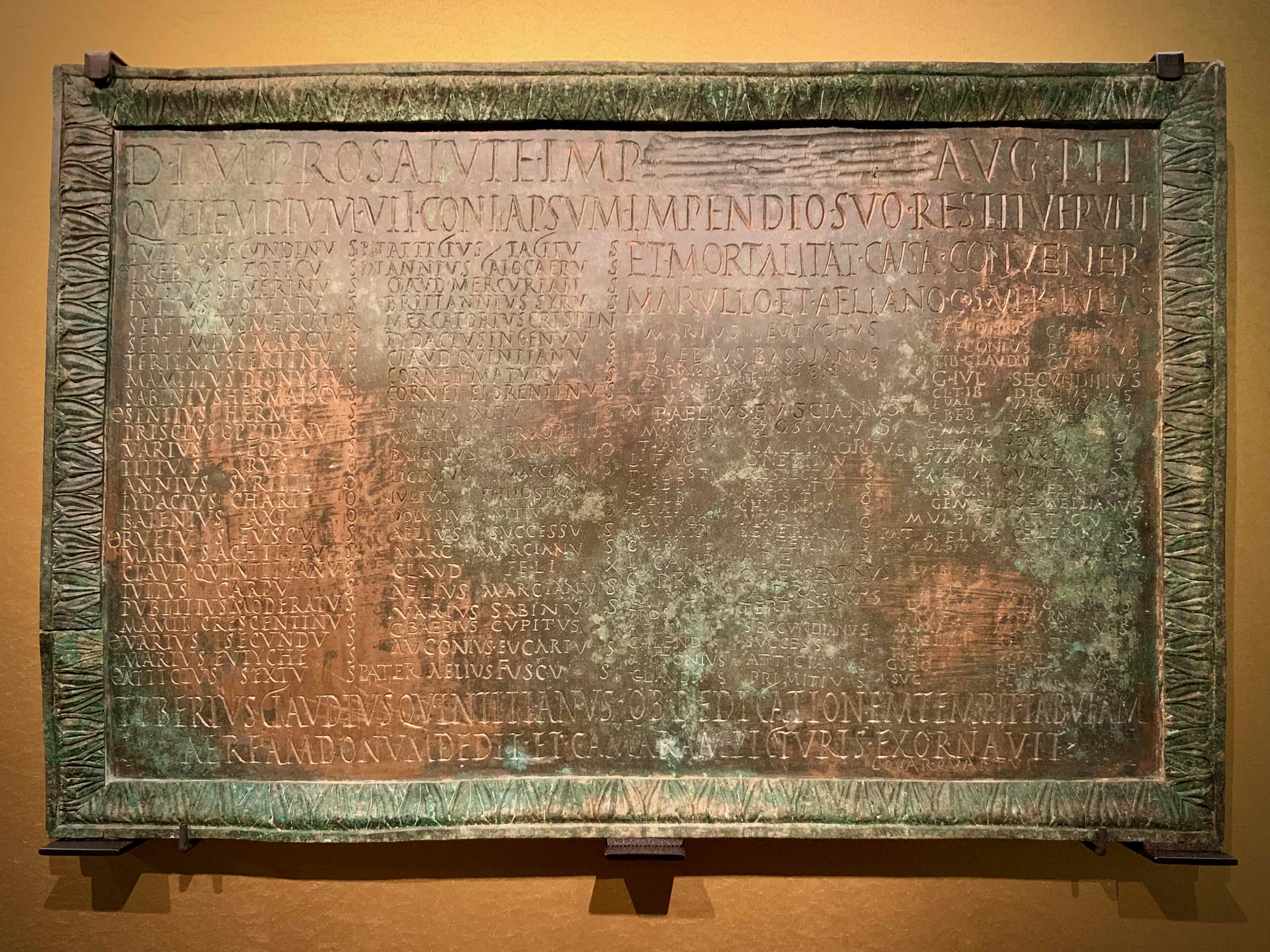
The bronze bears the dedication of a restoration of a Mithraeum carried out in 183.
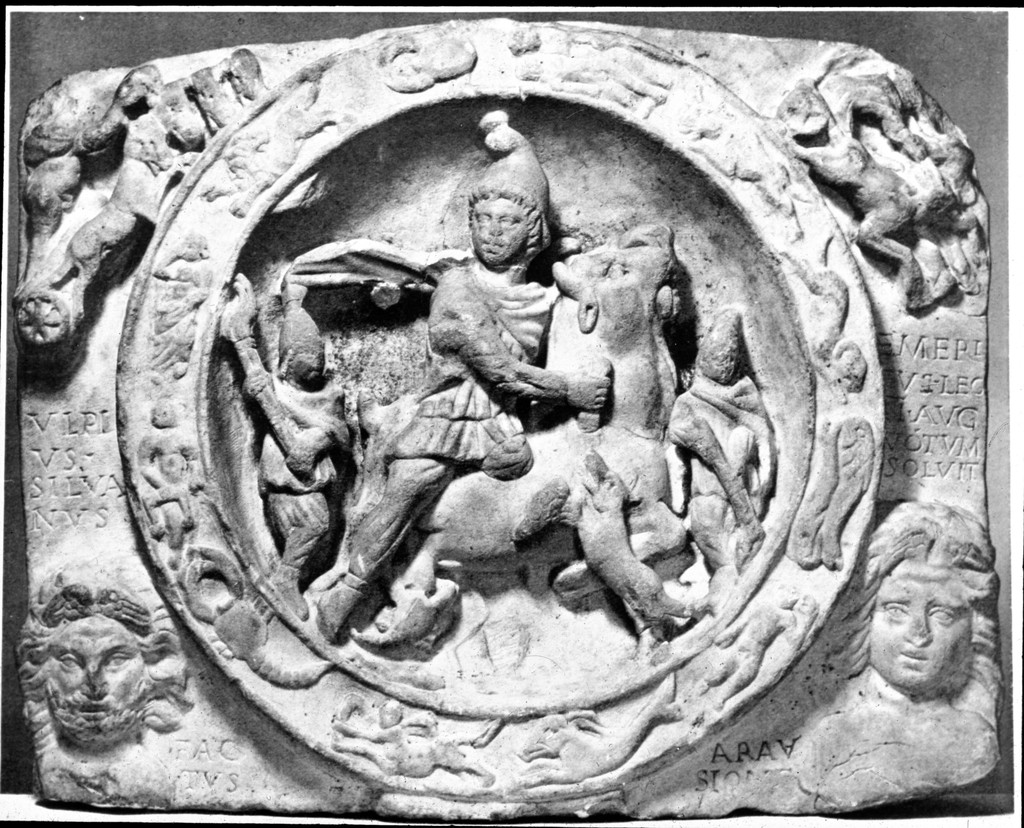
The image of Mithras killing the bull, found near Walbrook, is surrounded by a Zoadiac circle.
This graffito seems to be an account of offerings made by Mithras worshippers in the Cassegiato di Diana.
Statue of a standing person in eastern attire in red, local limestone with inscription.
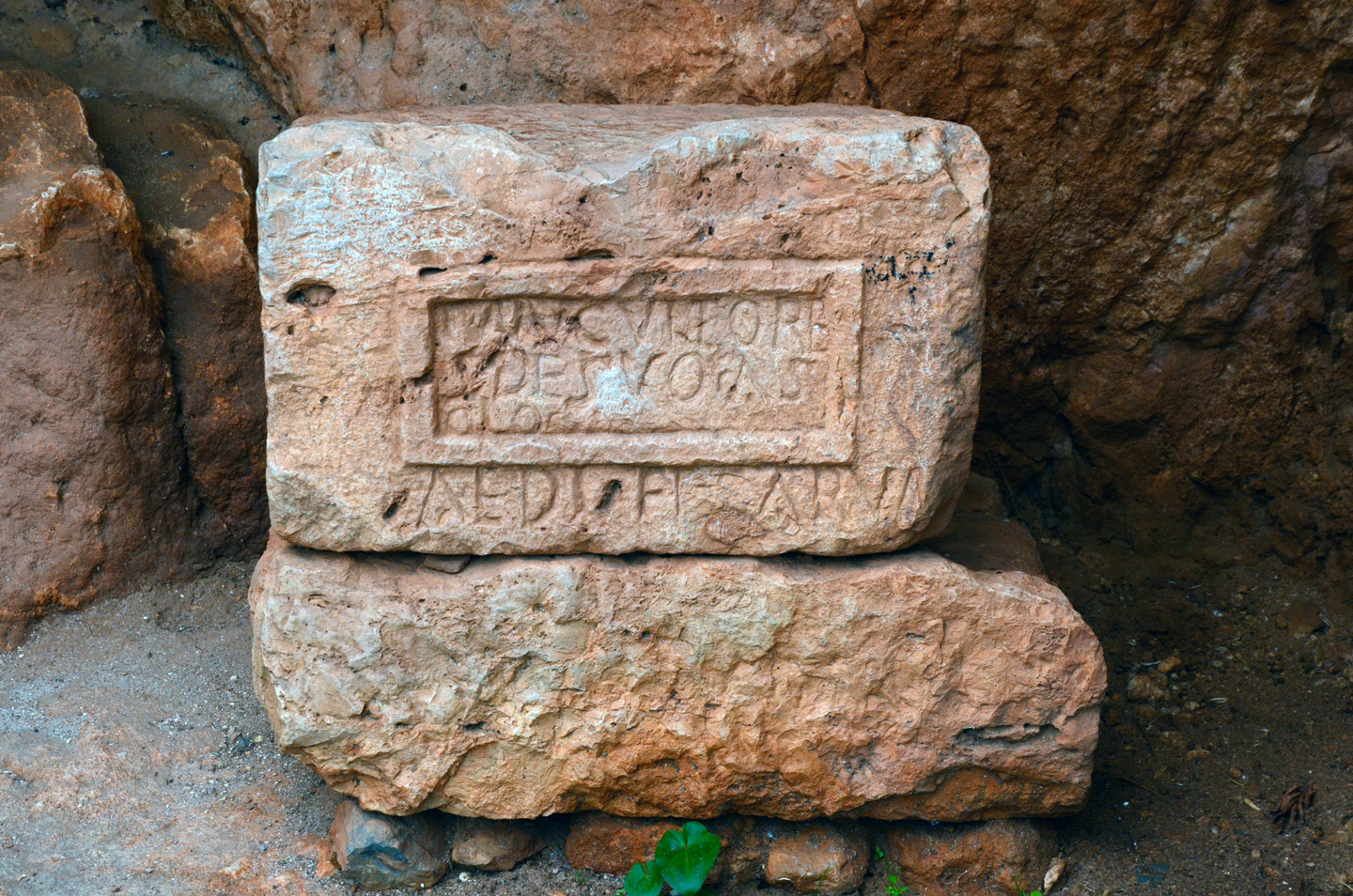
Inscription recording the dedication of a mithraeum at Tiddis by a group of cultores who built the sanctuary at their own expense.

An inscription mentioning a speleum decorated by Publilius Ceionius suggests the location of a mithraeum in Cirta, the capital of Numidia.
Dedication from Simitthus mentioning the restoration of a monument and a vow fulfilled to Cautes and Cautopates during the reign of Caracalla and Julia Maesa.
Callimorphus dedicated this image of the sun god to the invincible sun ’Mythra’.
This inscription, which doesn’t mention Mithras, was found near the church of Santa Balbina on the Aventine in Rome.
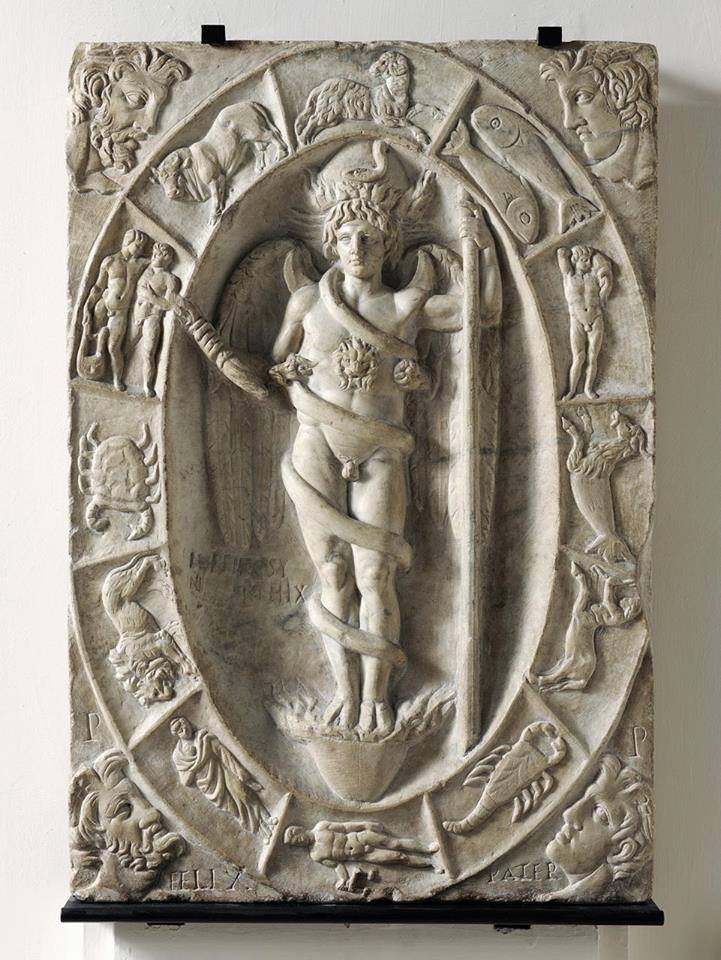
The Aion / Phanes relief, currently on display in the Gallerie Estensi, Moneda, is associated with two Eastern mysteric religions: Mithraism and Orphism.
