Your selection in monuments gave 384 results.

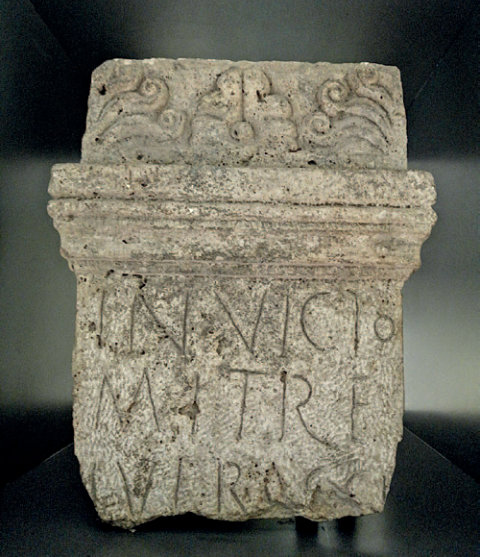
This altar, dedicated to Sol Invictus Mithras by a certain Eutyches for the health of the Emperor Caracalla, was found in Sisak, Croatia, in 1899.
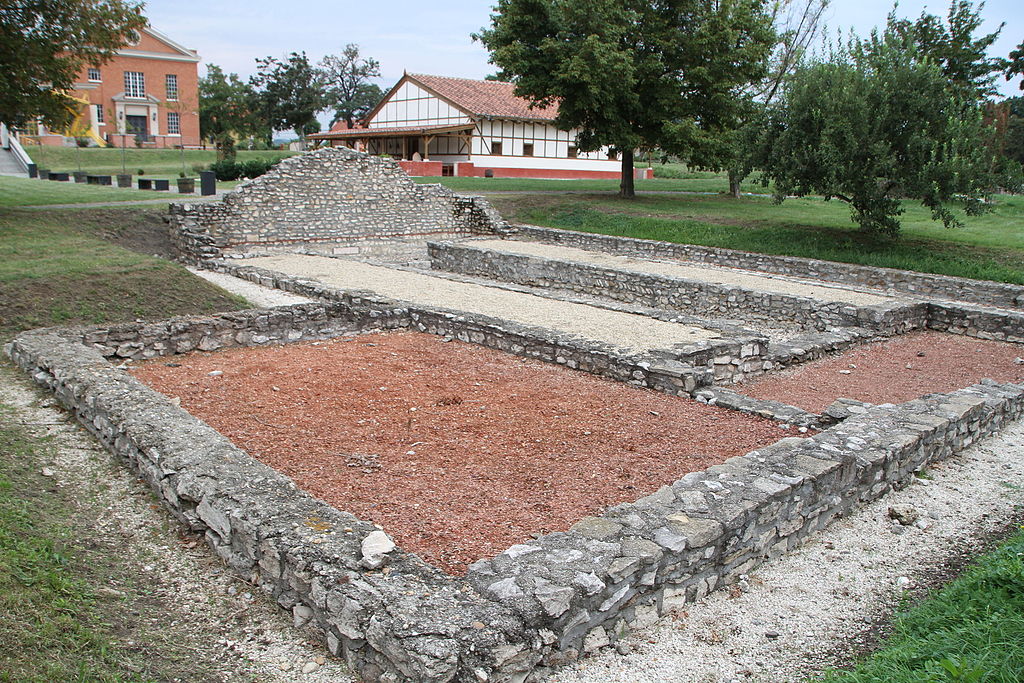
The Mithraeum of Symphorus and Marcus, in Óbuda, Budapest, has been restored to public view in 2004 and, while well presented, it has been heavily restored.
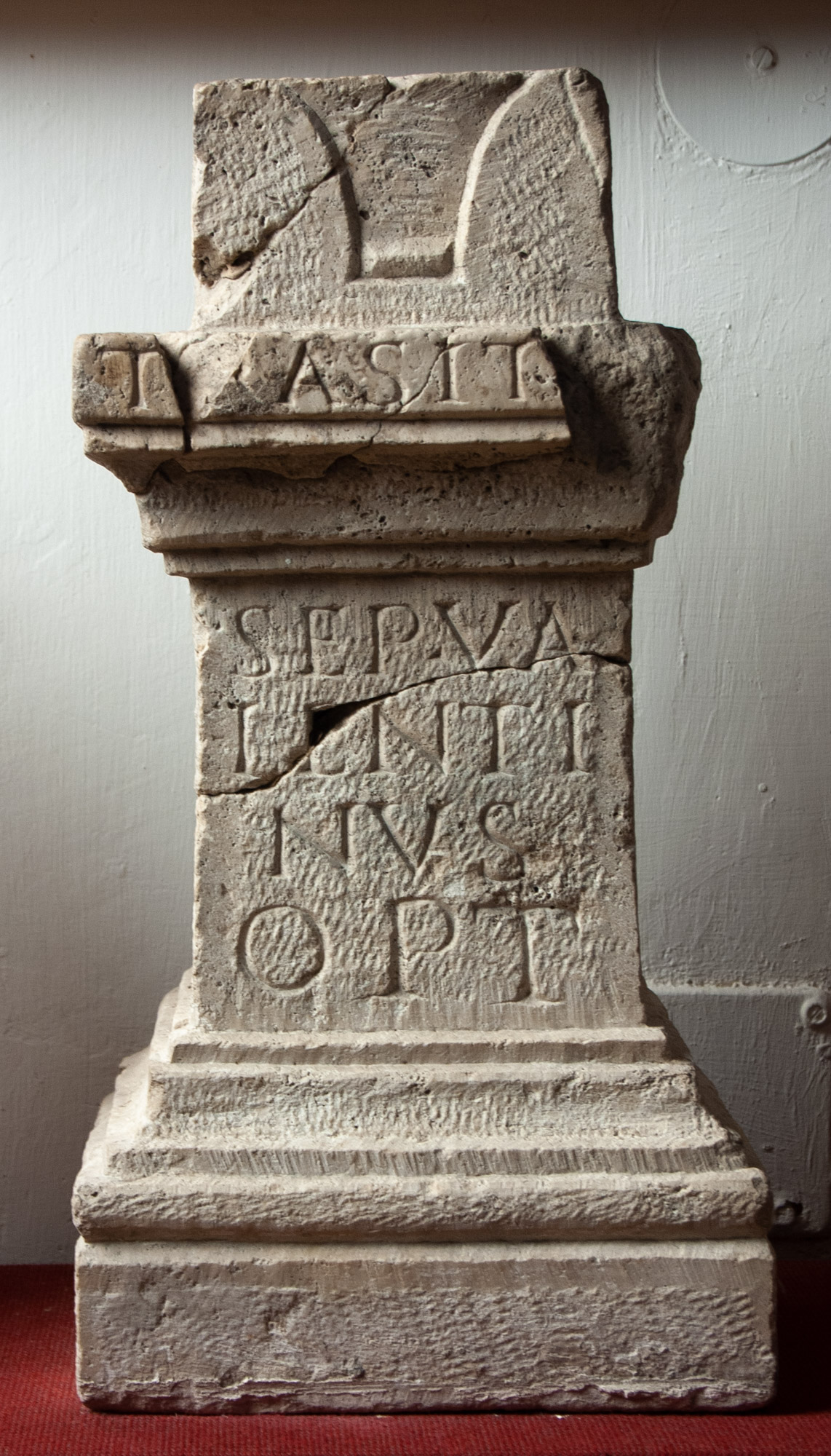
This is one of the altars erected by Septimius Valentinus, in this case, to the transitus of Mithras.
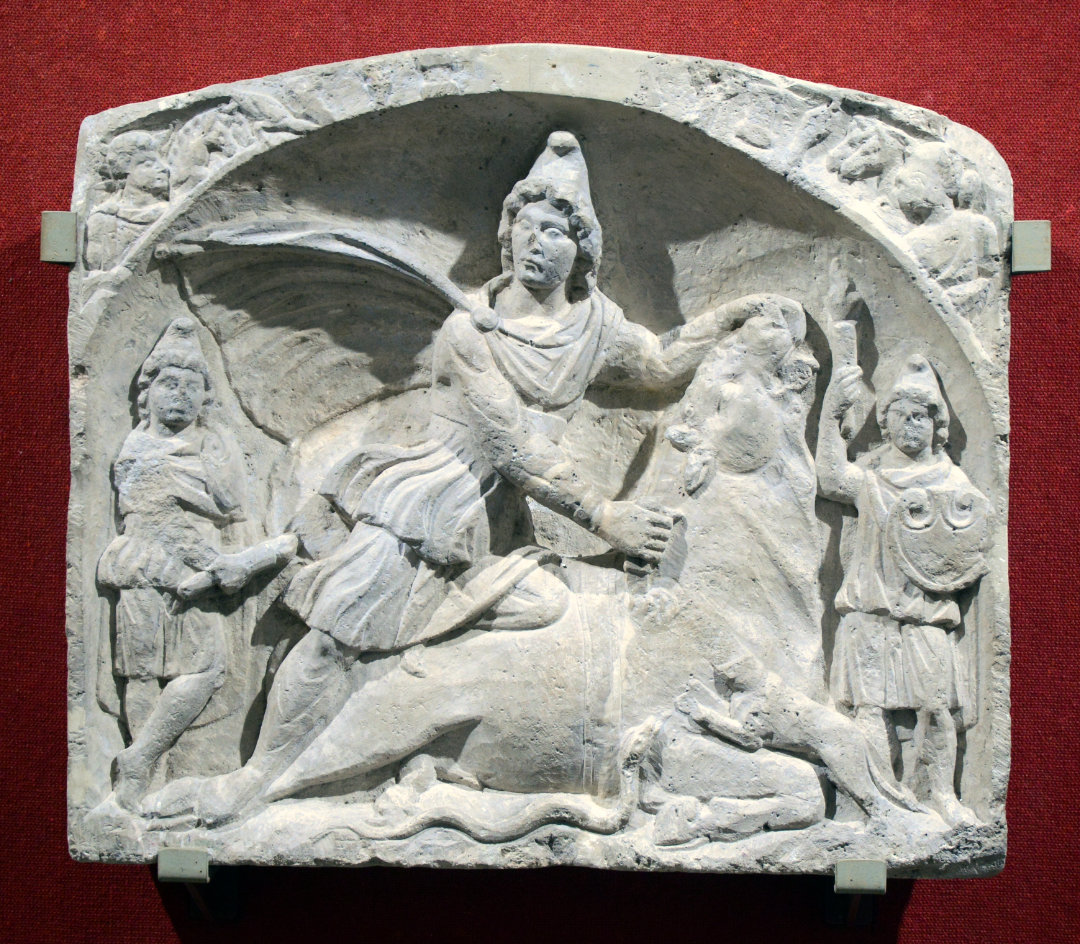
In this relief found in the Sárkeszi Mithraeum, Cautes and Cautopates hold an Amazon shield.
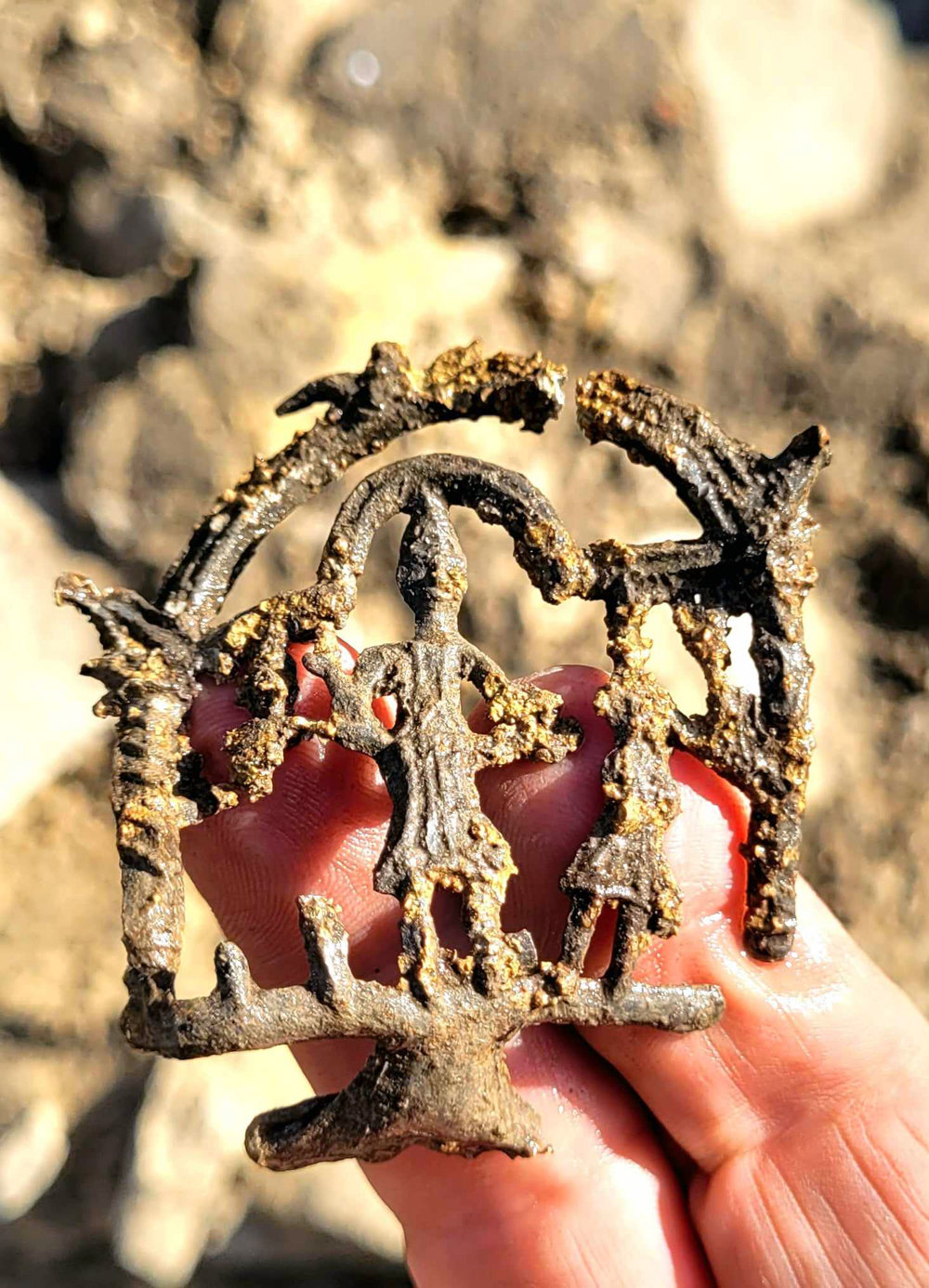
A sixth temple dedicated to Mithras has been identified for the first time in the military sector of the ancient Roman city of Aquincum.
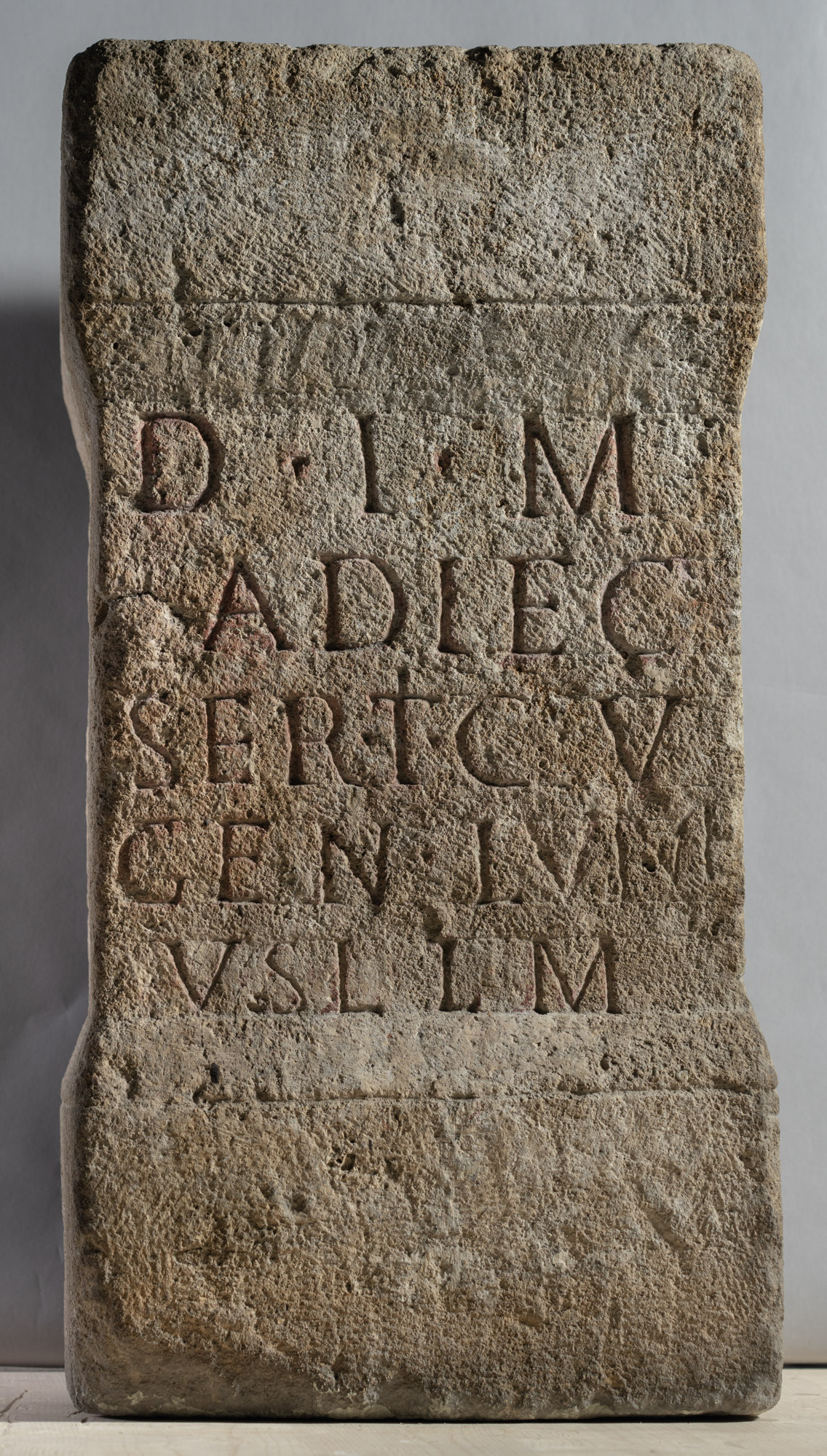
There is no consensus as to whether the altar of the slave Adiectus from Carnuntum is dedicated to a Mithras genitor of light.
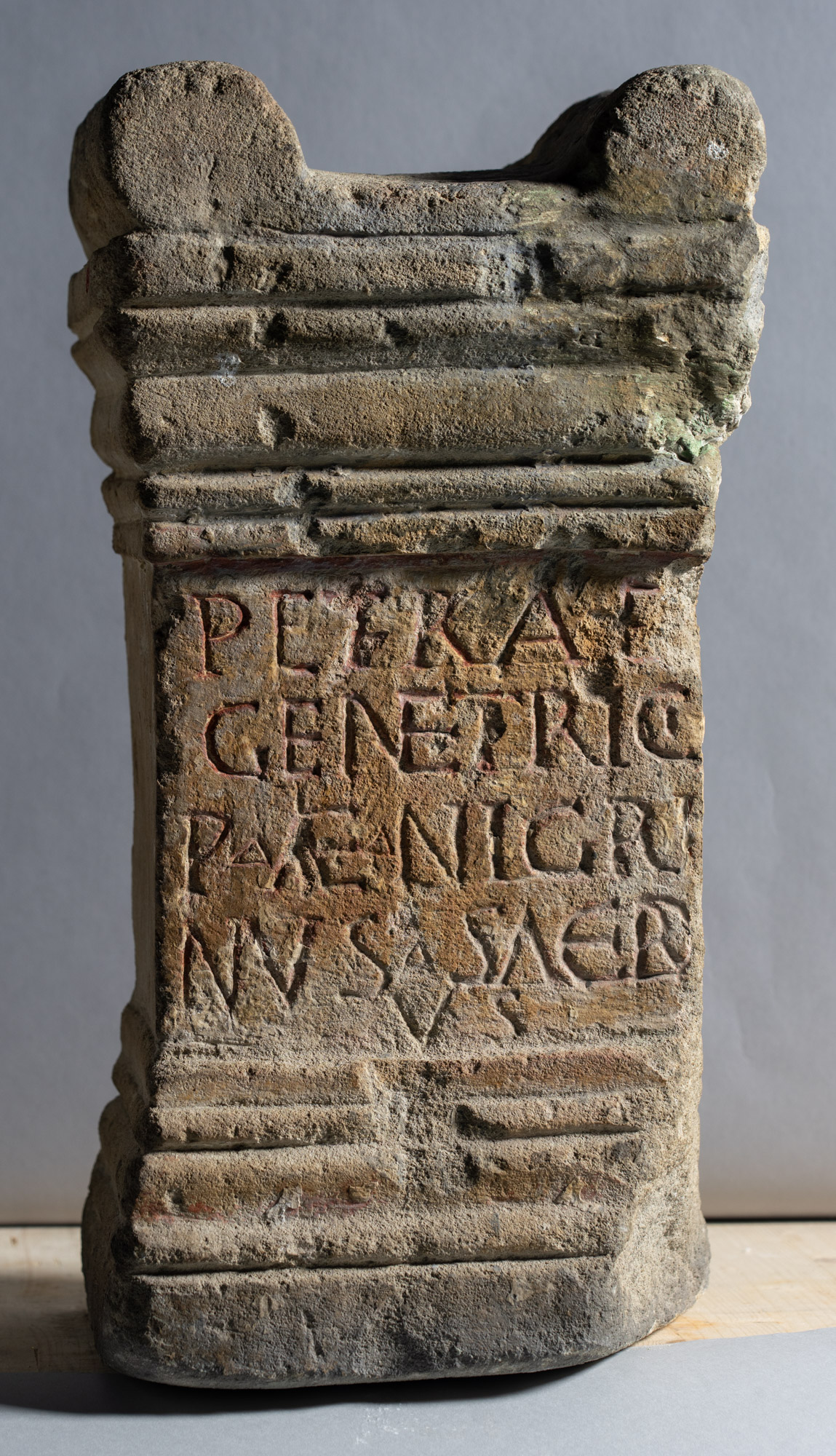
Aelius Nigrinus dedicated this small altar in Carnuntum to the rock from which Mithras was born.
This Mithraic altar of a certain Iulius Rasci or Racci was found in 1979 in a field in Borovo, Croatia, in the area of the Roman fort of Teutoburgium.

This limestone altar dedicated to Mithras by a certain Veturius Dubitatus was found in Dalj, Croatia, in 1910.
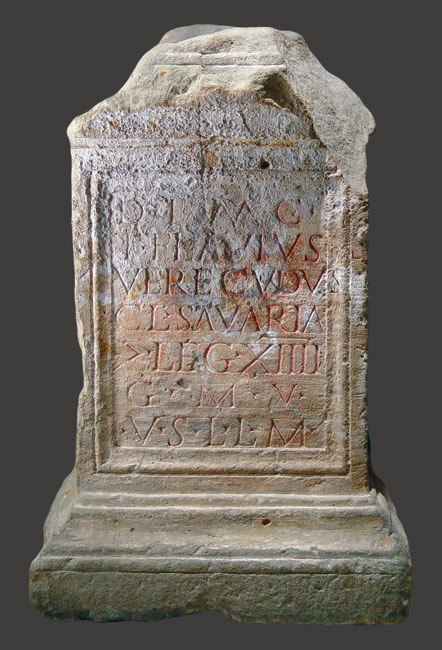
This monument to Mithras and Cautes (or Cautopates) was erected in Carnuntum by the centurion Flavius Verecundus of Savaria.
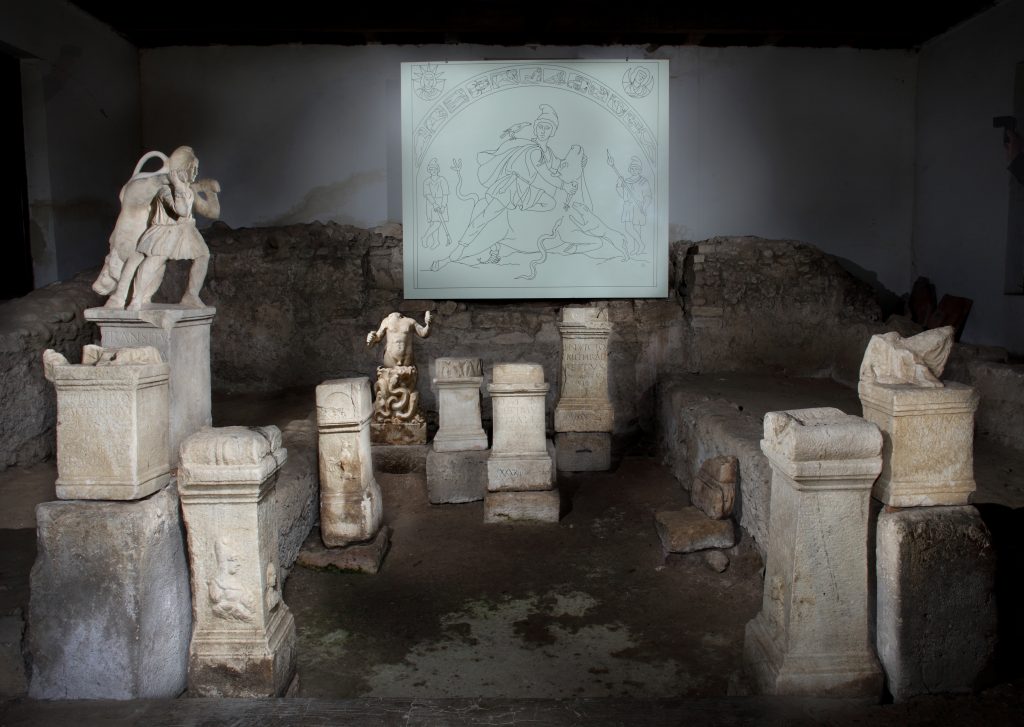
The Mithraeum I of Ptuj contains the foundation, altars, reliefs and cult imagery found in it.
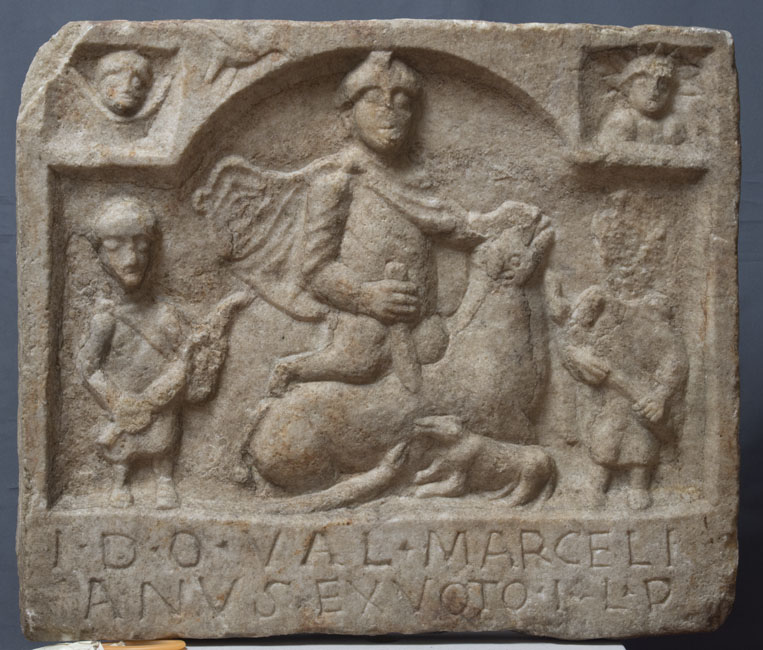
This primitive relief of Mithras as a bullkiller is signed by a certain Valerius Marcelianus.
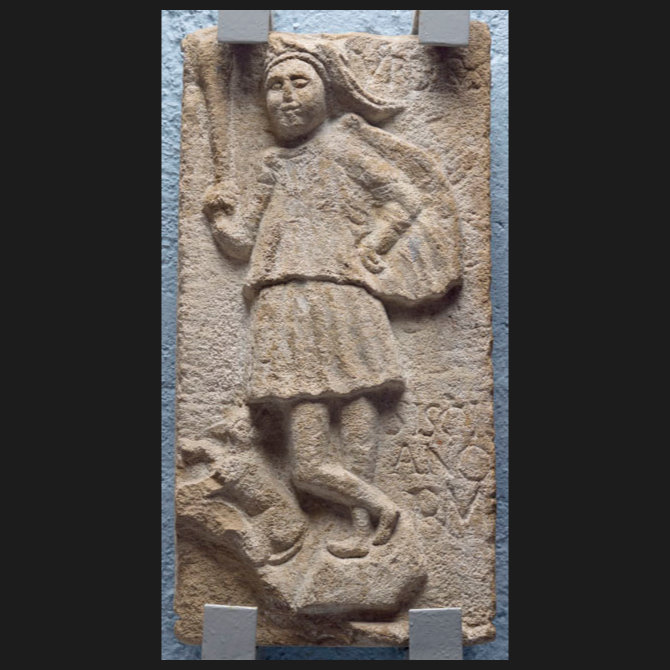
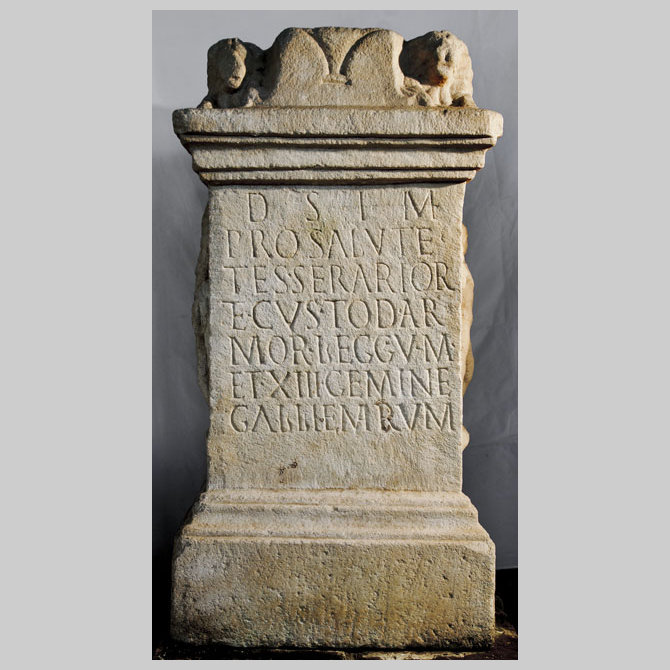
This altar, found in the 3rd mithraeum of Ptuj, bears an inscription and a relief of Sol and a person with a cornucopia.
This base was found in the 18th century and bears an inscription to the god Arimanius.
According to the scarcely detailed design of von Sacken, the lay-out of the temple must have been nearly semi-circular.
The second temple devoted to Mithras in Carnuntum is situated besides a Jupiter's temple.
Mithraeum III found in the west part of Petronell near Hintausried in August 1894 by J. Dell and C. Tragau.
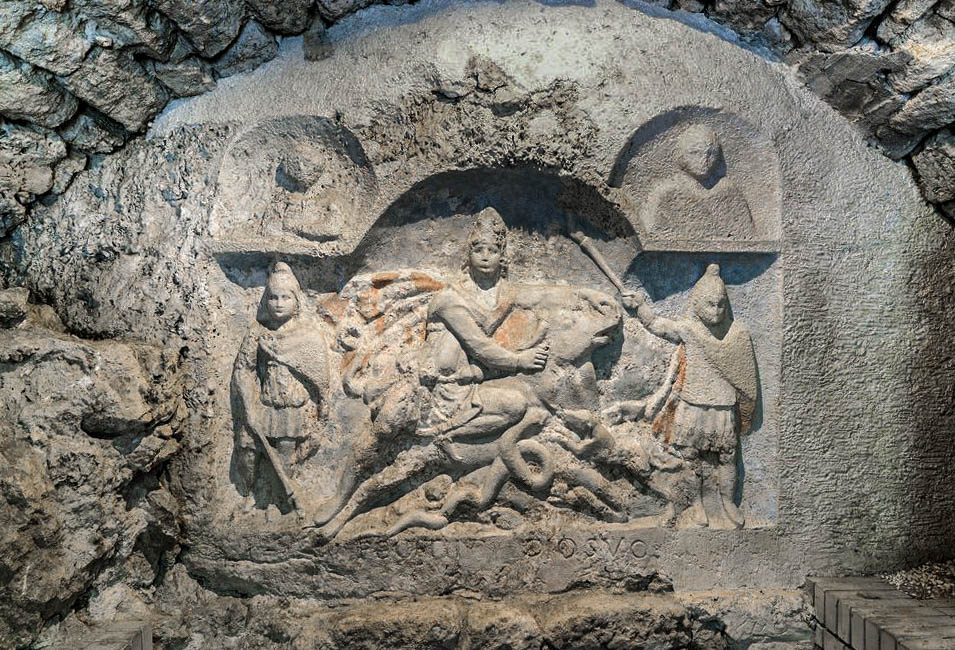
The main cultic relief of Mithras slaying the bull of Fertorakos was carved into the rock face.
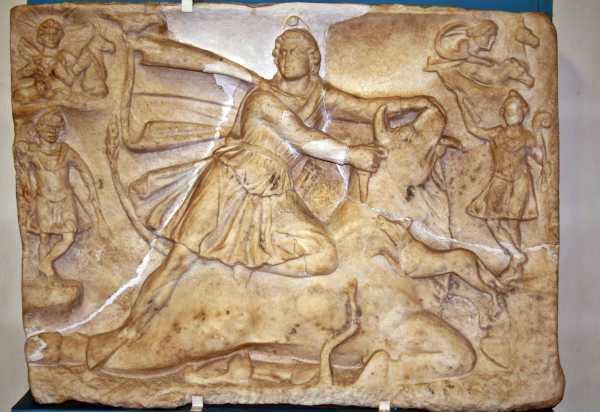
The relief of Mithras slaying the bull of Danaújváros was found broken into three parts in a tomb looted in antiquity.
