
Rough limestone tauroctony relief probably from Troesmis, Moesia Inferior, depicting the standard bull-slaying with the greater part of the bull's head lost.
Right upper corner of a tauroctony relief from Troesmis, Moesia Inferior, now in Paris, preserving part of the bull-slaying scene.
Fragmentary inscription from Troesmis, Moesia Inferior, dedicating to Soli and a deity or epithet beginning Zo-.
Head in a radiate crown — probably Sol — from Troesmis, Moesia Inferior, with a partly legible inscription below.
Limestone tauroctony relief from Iglița, ancient Troesmis in Moesia Inferior, found in 1882, depicting the standard bull-slaying with serpent, scorpion, and a partial dog; the raven is lost.
Inscription from Axiopolis, Moesia Inferior, recording a dedication by a vir perfectissimus dux limitis provinciae Scythiae.
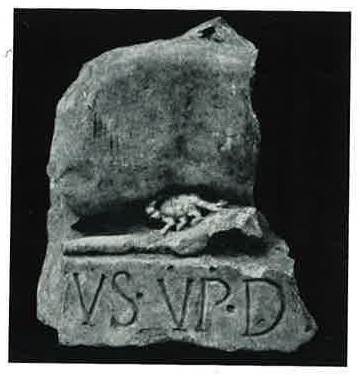
Marble tauroctony fragment from Axiopolis, Moesia Inferior, preserving only a small part of Mithras's knee, the hind part of the bull, and the scorpion.
Fragment of the border of a marble vase from Axiopolis, Moesia Inferior, bearing an inscription dedicated to Deo Soli invicto Mithrae.
Limestone altar fragment from the apsidal construction at Ulmetum, Moesia Inferior, bearing a partially preserved inscription mentioning fonte dei — the spring of the god; the Mithraic attribution is uncertain.
Inscription from Ulmetum, Moesia Inferior, preserving only the opening of a dedication to Deo bono invicto.
Marble tauroctony relief fragment from the Byzantine camp at Pontelimonul de sus, ancient Ulmetum in Moesia Inferior, found reused in the masonry; the subject is partly identifiable.
Altar from Durostorum, Moesia Inferior, dedicated to Invicto Mithrae by Cornelius Faustus, centurion of Legio XI Claudia.

Marble tauroctony relief in five fragments from Ruse, ancient Sexantaprista in Moesia Inferior, found near the confluence of the river Lom with the Danube, depicting the standard bull-slaying.
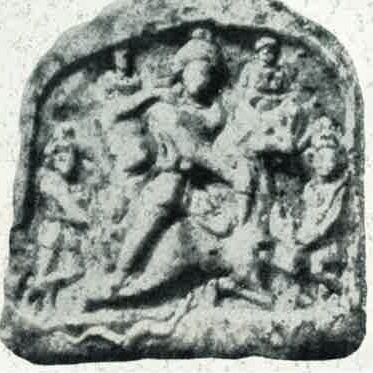
Small marble tauroctony relief from the Roman castellum near Soukhin-Dol, Moesia Inferior, in an arched circular composition depicting the standard bull-slaying scene.
Damaged limestone tauroctony relief fragment from near Utum, Moesia Inferior, of disputed exact provenance — either Utum or Chemlievo — depicting part of the standard bull-slaying scene.
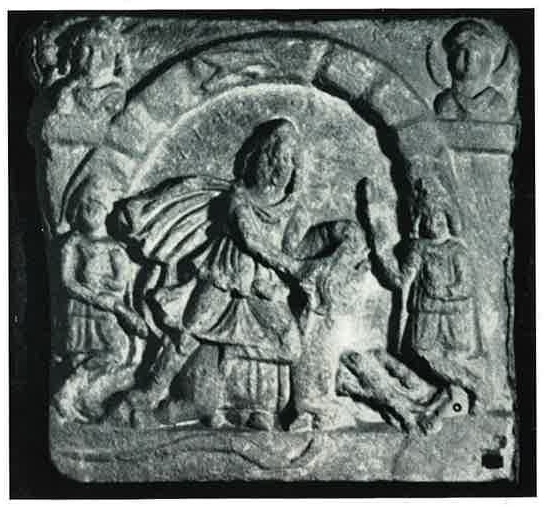
Marble tauroctony relief from Plevna (Pleven), Moesia Inferior, found between the remnants of a demolished church, depicting the standard bull-slaying in a grotto with dog, serpent, and scorpion.
Circular Mithraic relief from Oescus, Moesia Inferior, mentioned by LeRoy Campbell; no further details are available to the author.
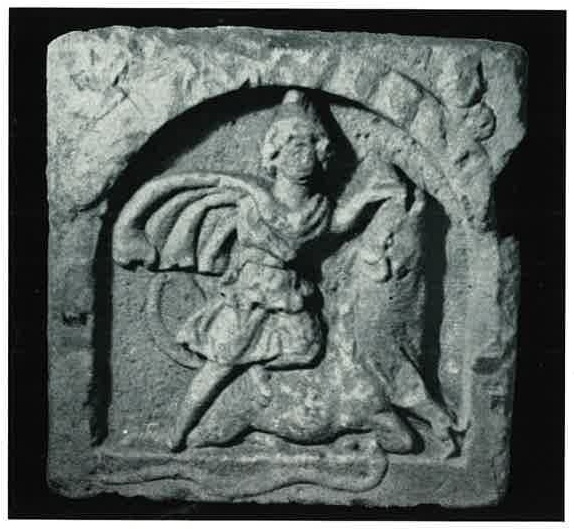
Limestone tauroctony relief from Bechli, 8 km from Ghighen, ancient Oescus in Moesia Inferior, depicting the standard bull-slaying scene in a grotto.
Limestone altar from Oescus, Moesia Inferior, dedicated to Deo invicto by Tettius Plotus, veteran of Legio IIII Flavia Fidelis and pater sacrorum — one of the clearest grade attributions from Moesia Inferior.
Large marble altar from Ghighen, ancient Oescus in Moesia Inferior, dedicated to Deo invicto Mithrae by Marcus Titius Maximus, duumviralis of the Colonia, with Aelianus as scribe.
