Your selection in monuments gave 133 results.
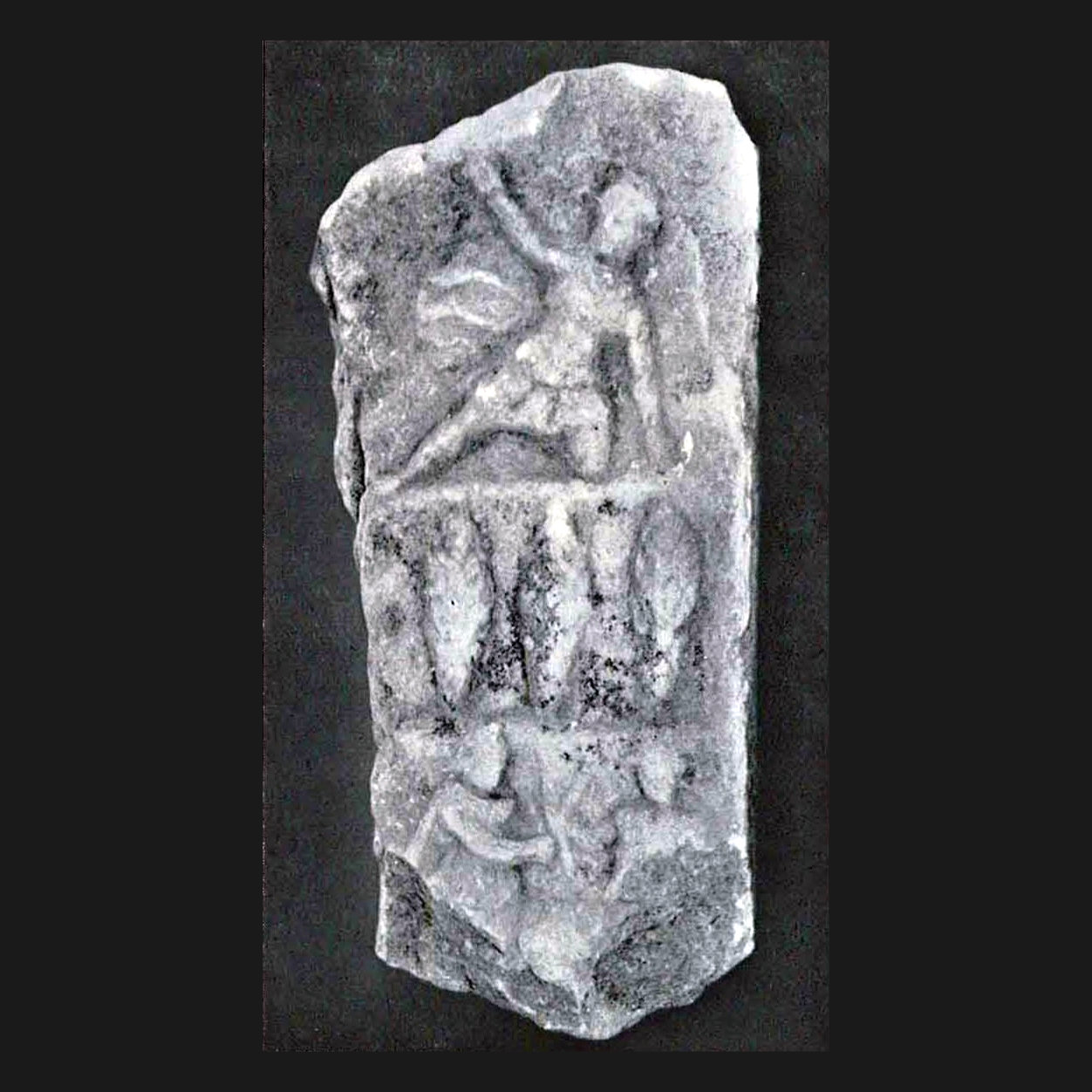
These fragments of a cult relief of Mithras were found at the Mithraeum II of Ptuj, Slovenia.
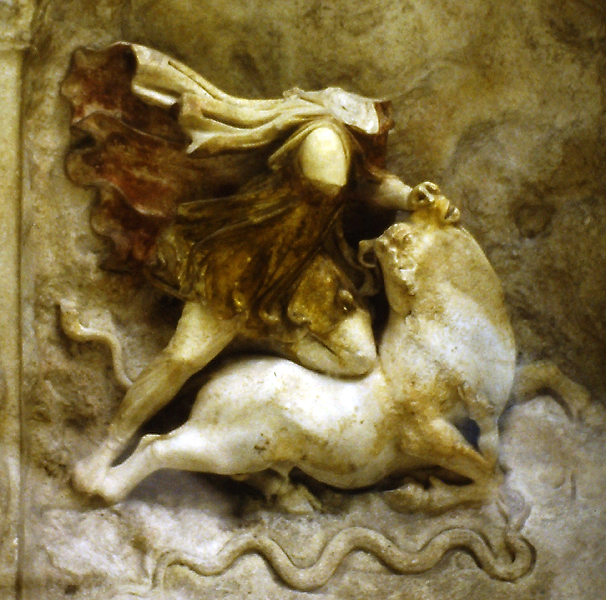
In the Tauroctony of Hermopolis, Cautes and Cautopates are placed over two columns at each side of the sacrifice.
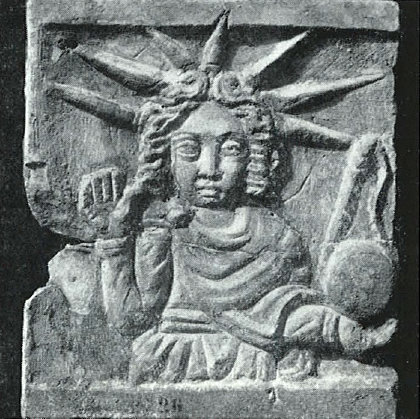
The relief of Sol was found during the construction of Piazza Dante in Rome in 1874.

White marble relief, found near Aix "a la Torse dans un enclos ayant appartenu à la famille de Colonia".
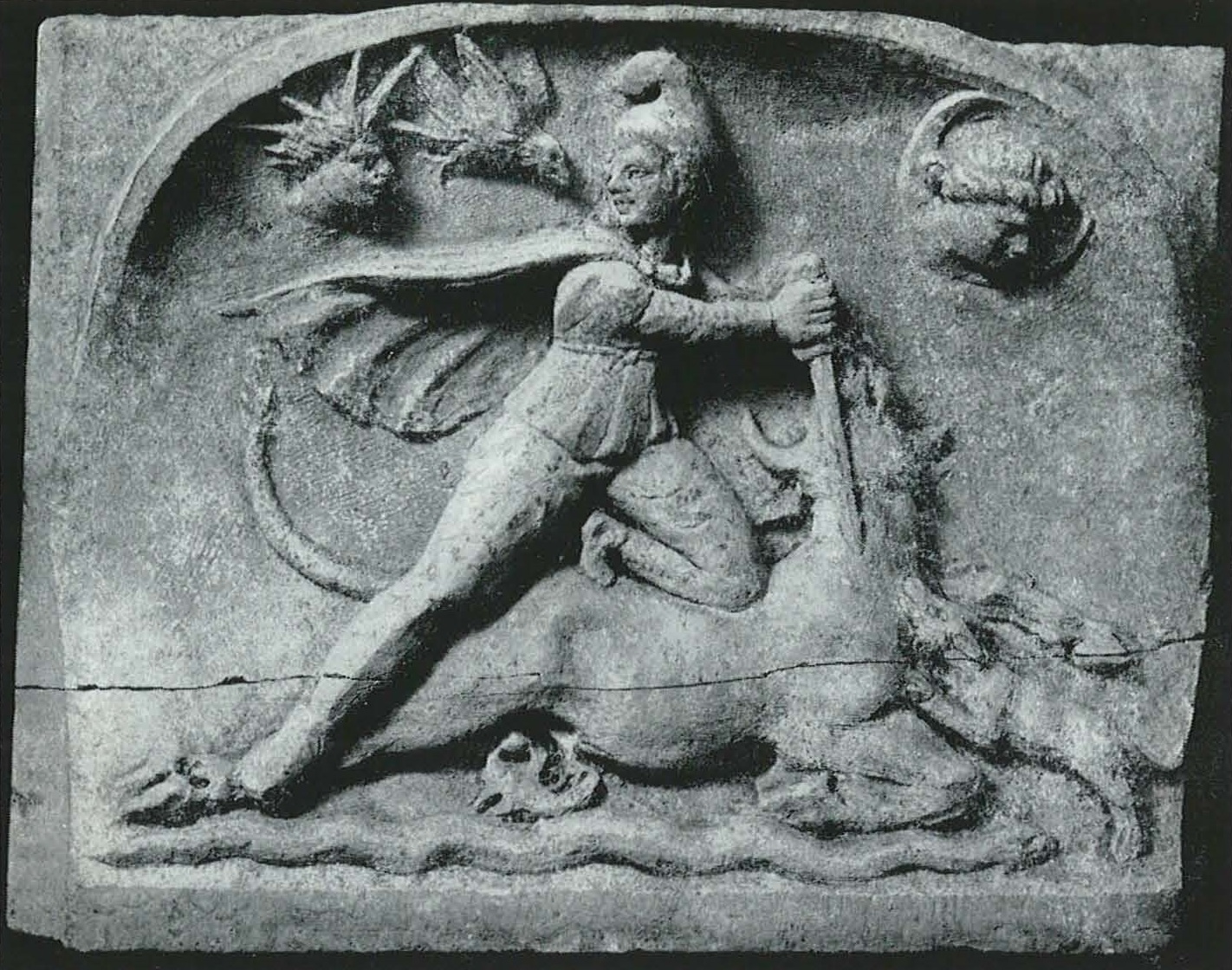
This simple relief of Mithras killing the bull without his companions Cautes and Cautopates was found in the so-called Mithraeum of the Esquilino, Rome.
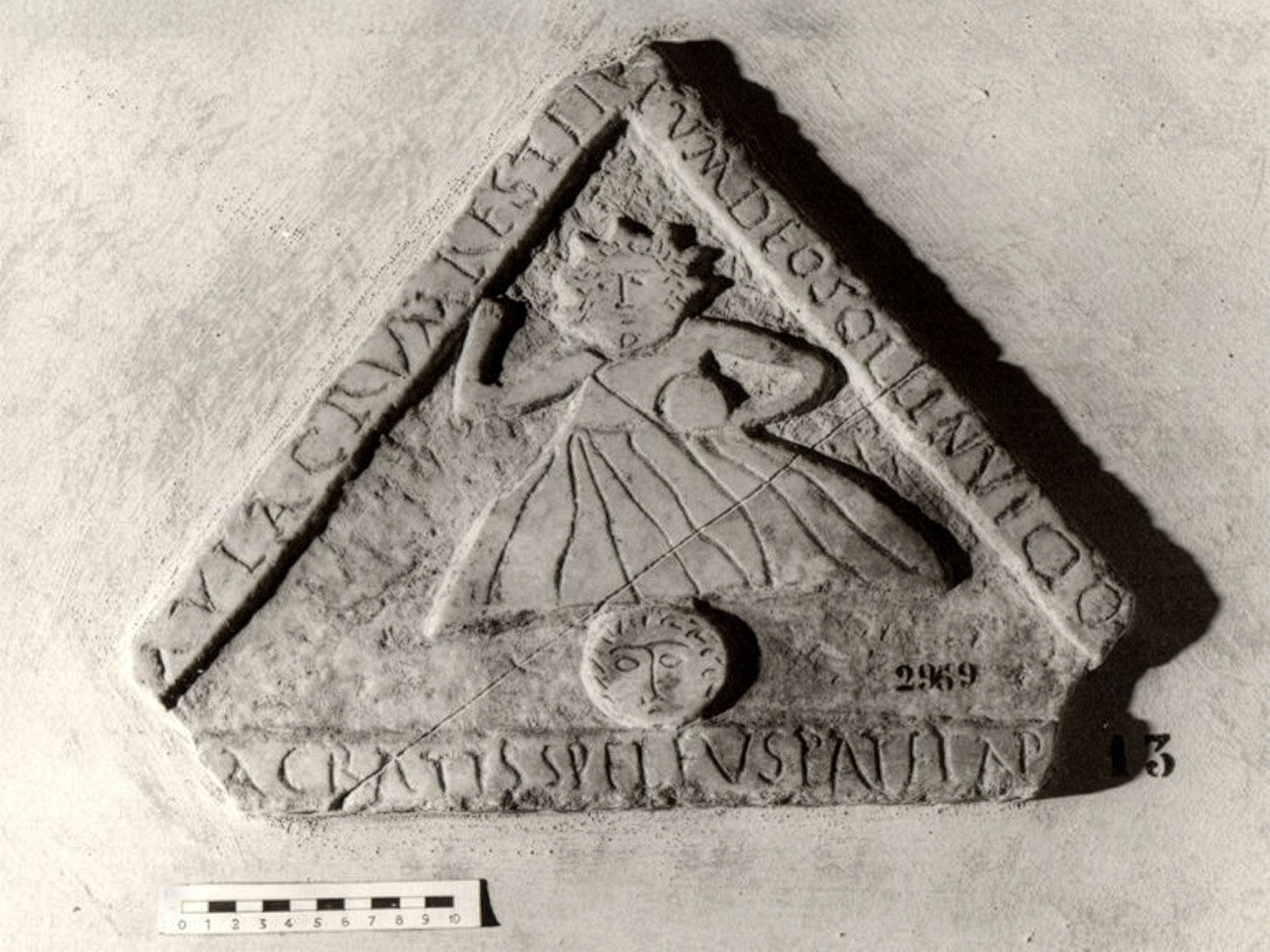
Small triangular slab bearing a Latin inscription referring to Sol Invictus and to a sacred cave, probably dating to the 4th century AD.
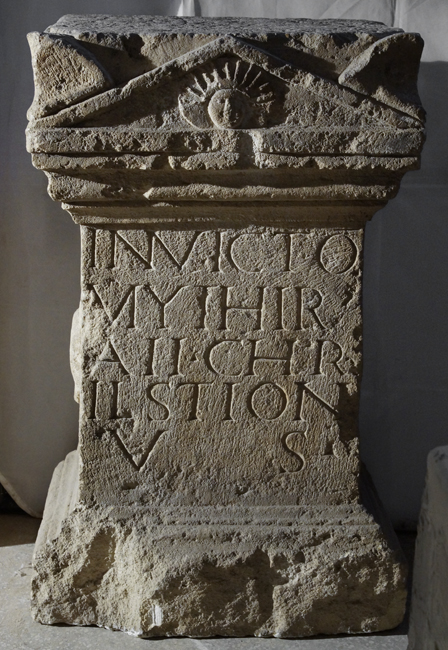
In 1852, Károly Pap, a naval captain, unearthed several Mithraic monuments in his garden at Marospartos, including this altar.

This remarkable double-sided relief depicts the myth of Mithras and the Tauroctony on one side, and a scene of Mithras the hunter and the banquet of Mithras and the Sol on the other.

The importance of the Mithraeum of Marino lies in its frescoes, the most significant of which is that of Mithras slaying the bull, surrounded by mythological scenes.
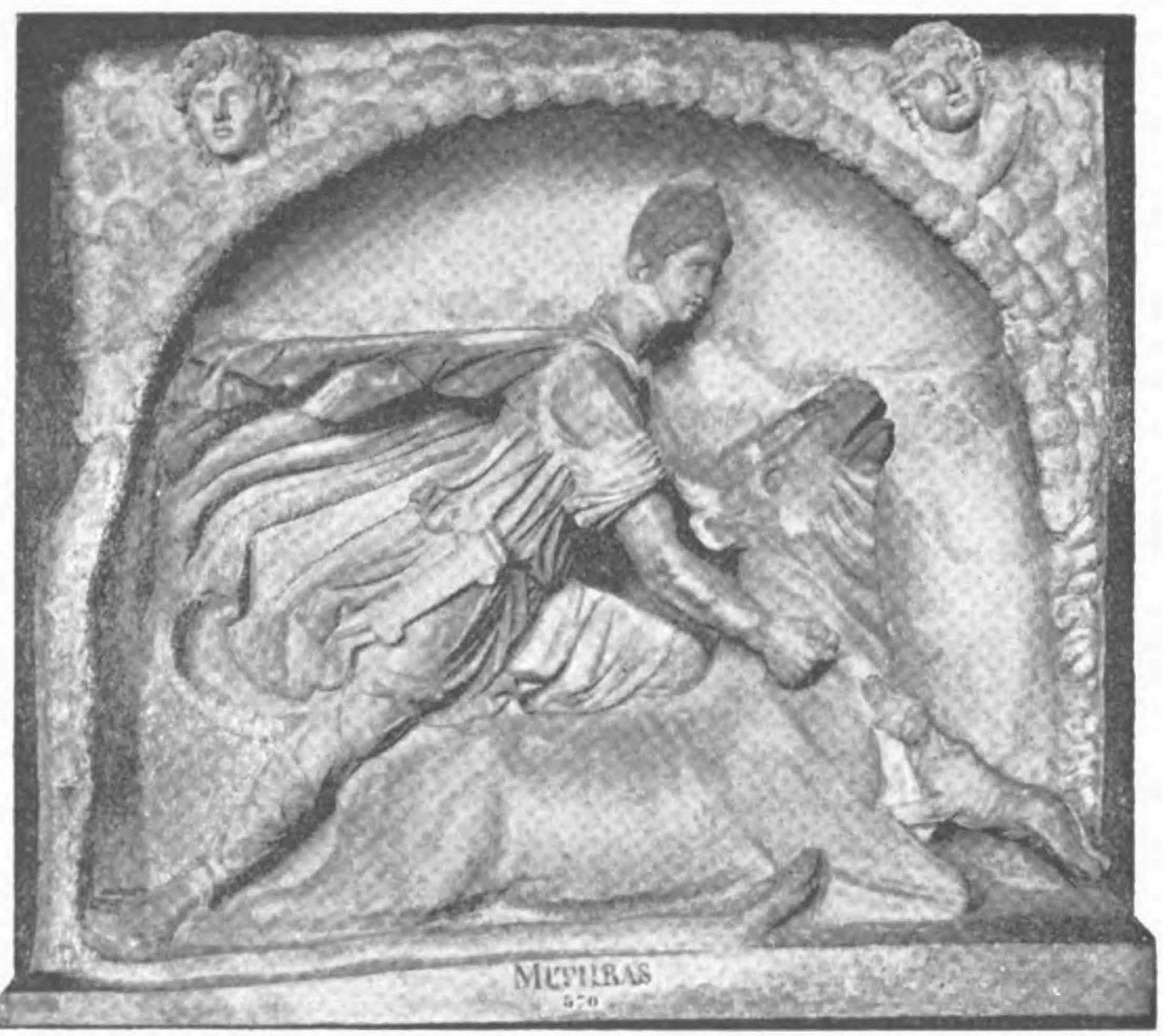
This is one of the three reliefs depicting Mithras killing the bull that the Louvre Museum acquired from the Roman Villa Borghese collection.
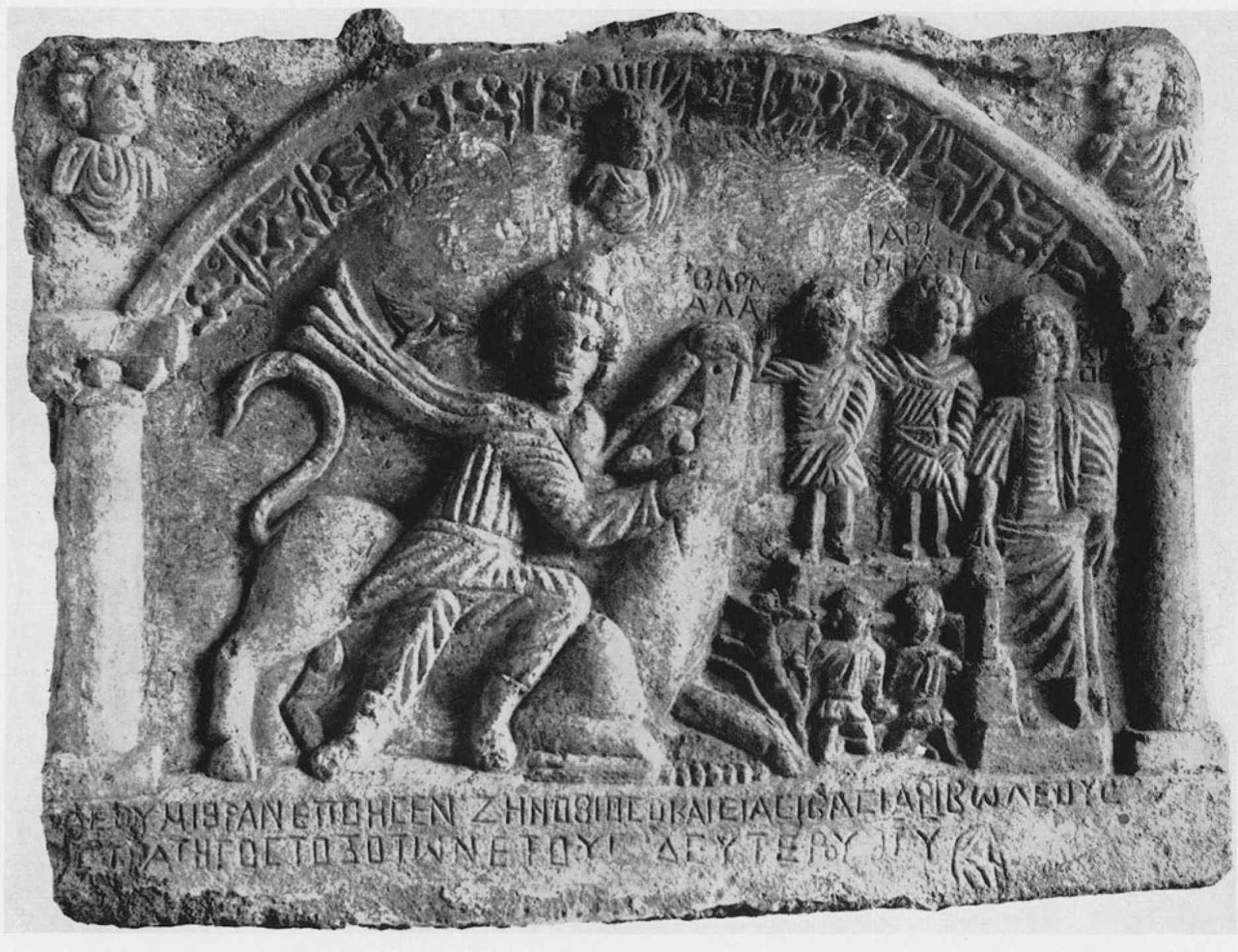
The main relief of Mithras killing the bull from the Mithraeum of Dura Europos includes three persons named Zenobius, Jariboles and Barnaadath.
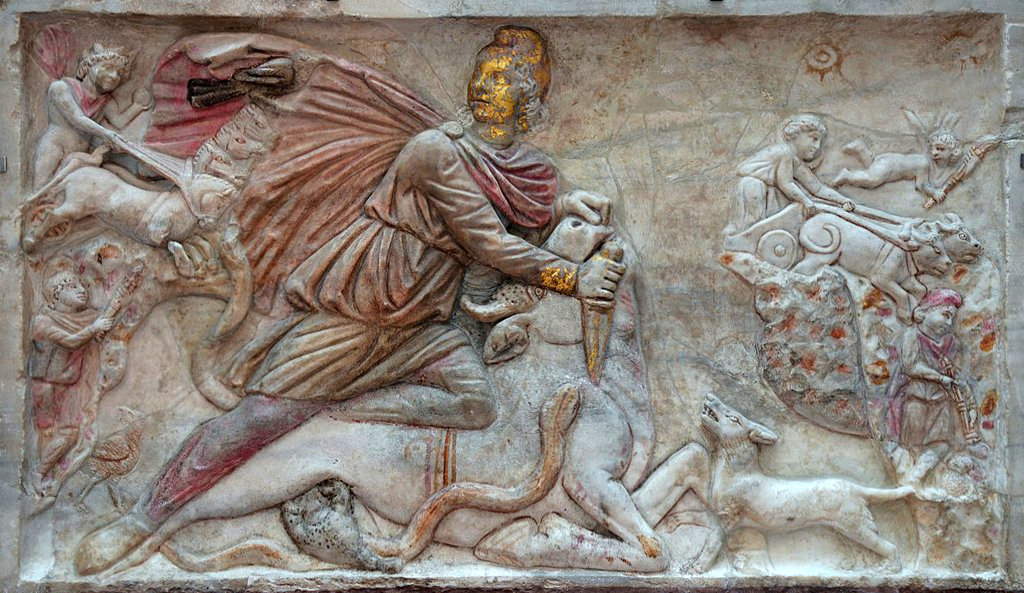
The relief of Mithras killing the bull of Stefano Rotodon preserves part of his polycromy and depicts two unusual figures: Hesperus and an owl.
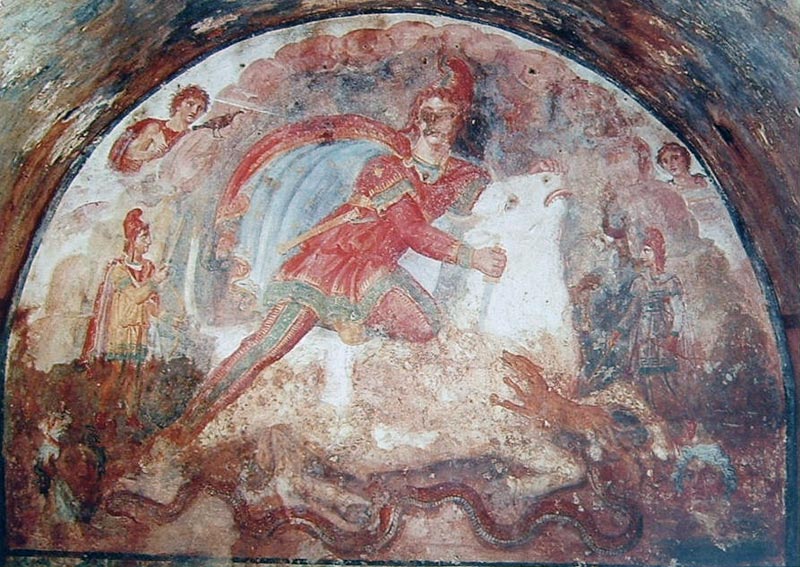
The main fresco of the Mithraeum of Santa Maria Capua Vetere portrays Mithras slaughtering a white bull.
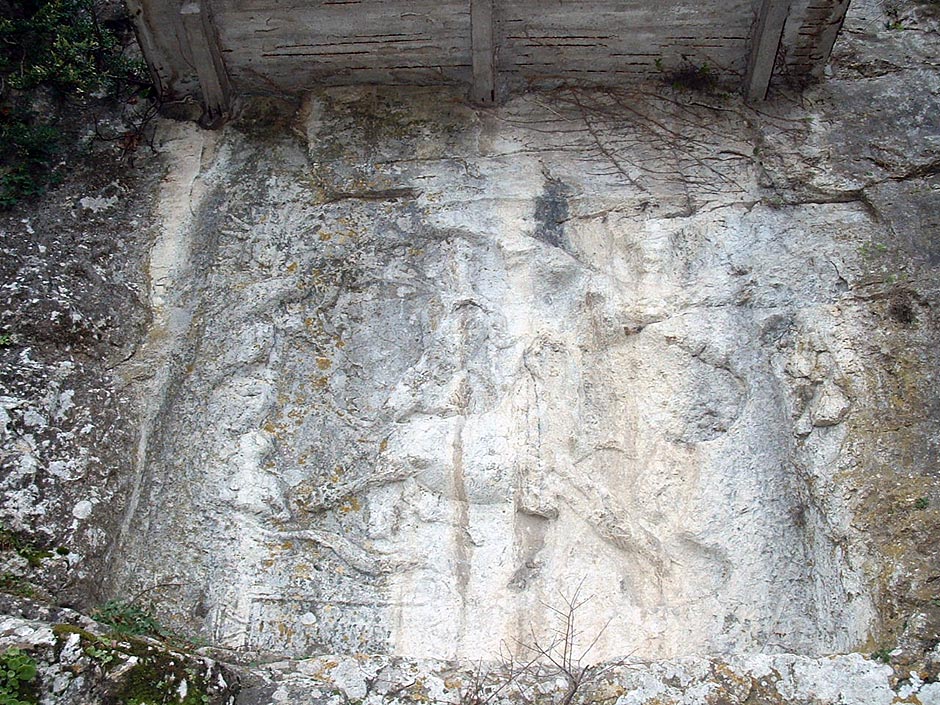
The low relief of Bourg-Saint-Andéol depicting Mithras killing the bull has been chiseled on the rock.
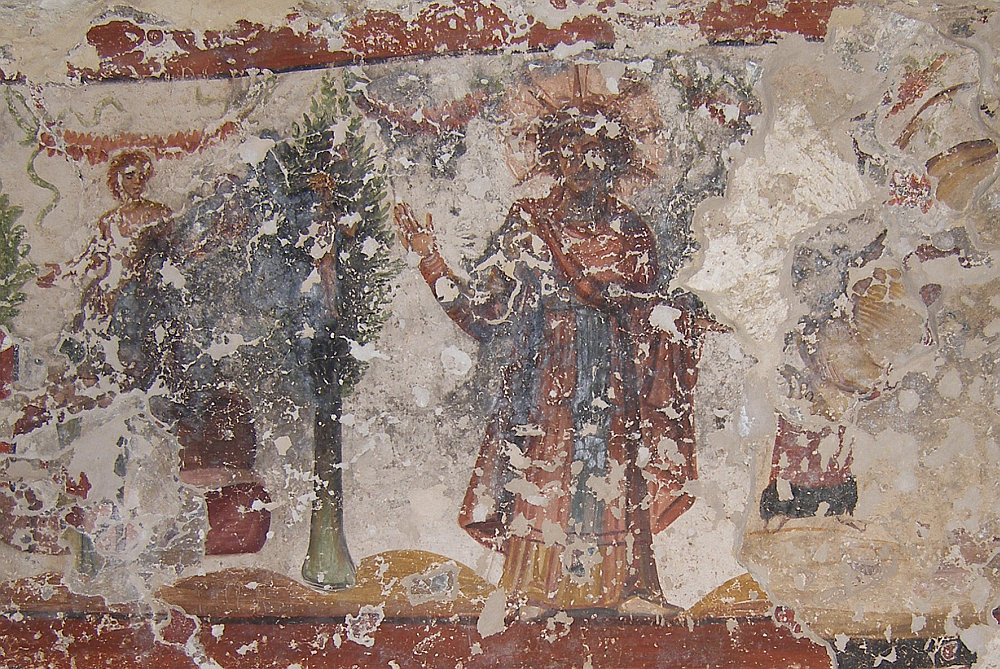
In one of Hawarte’s frescoes, the rock birth of Mithras is preceded by Zeus and followed by the young Persian god suspended from a cypress tree.

Around the relief with Mithras as a bullkiller, a number of scenes from the Mithras Iegend have been painted in the Mithraeum of Dura Europos.
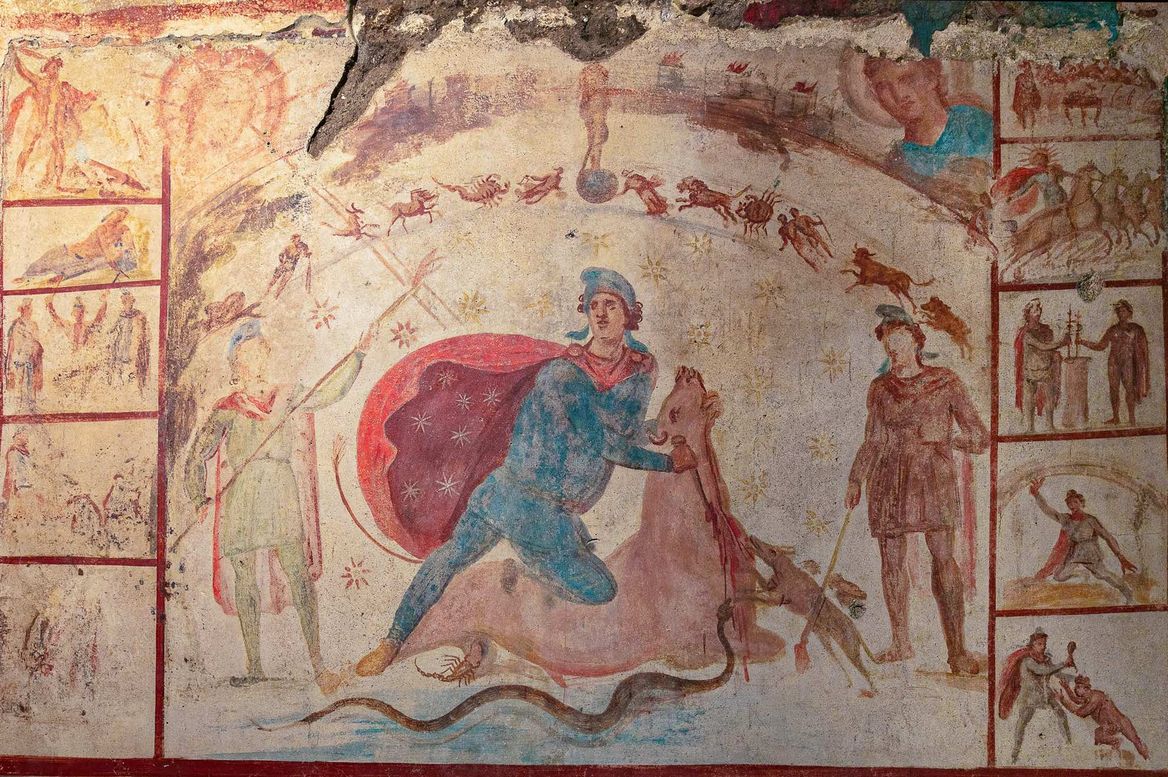
The votive fresco from the Mithraeum Barberini displays several scenes from Mithras’s myth.

Continuation of the frescoes depicting an initiation into the Mithras cult, where two attendants present a repast to Mithras and Sol.

Limestone altar from the Trier baths, carved on four sides with a lion and serpent, flanked by Sol and Luna, and likely linked to a Mithraic context involving Hekate.

This marble relief, found in Sisak, Croatia, shows Mithras killing the bull in a circle of corn ears, gods and some scenes from the Mithras myth.
