Your selection in monuments gave 458 results.

Upper part of a small marble column with late 2nd- or 3rd-century lettering, bearing a dedication to Sol Invictus Mithras and his sodality by actors from the Forum Suarium, excavated on the Esquiline.
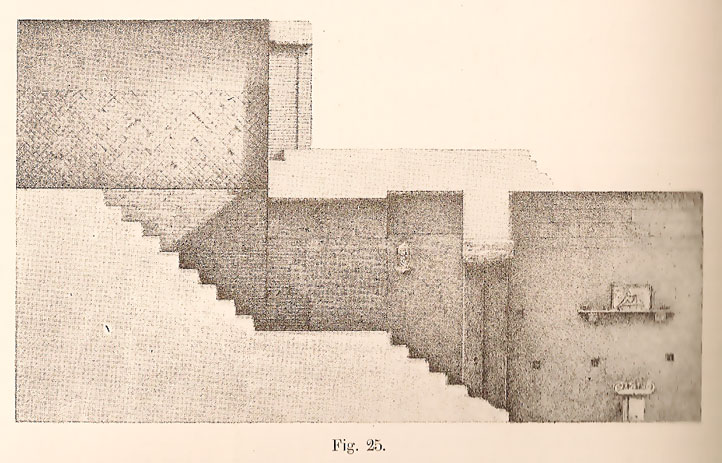
In a house from the time of Constantine, a Lararium was found with a statue of Isis-Fortuna. The Mithraeum was a door next to it, on a lower room.
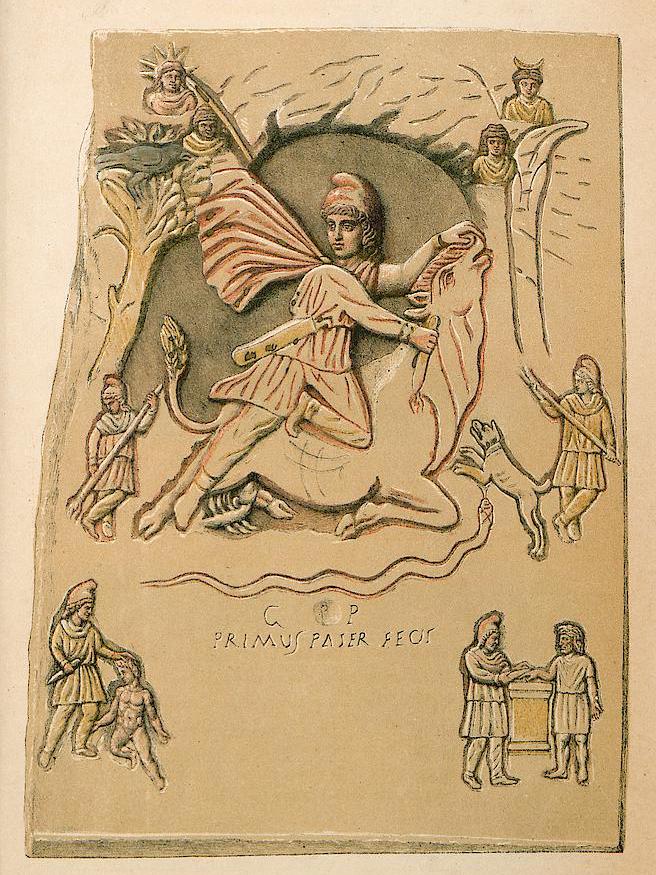
The relief of Mithras slaying the bull found on the Esquiline Hill includes two additional scenes with Mithras and two other figures.

This unusual mural depicting Mithras killing the bull was found near the Colosseum in 1668.
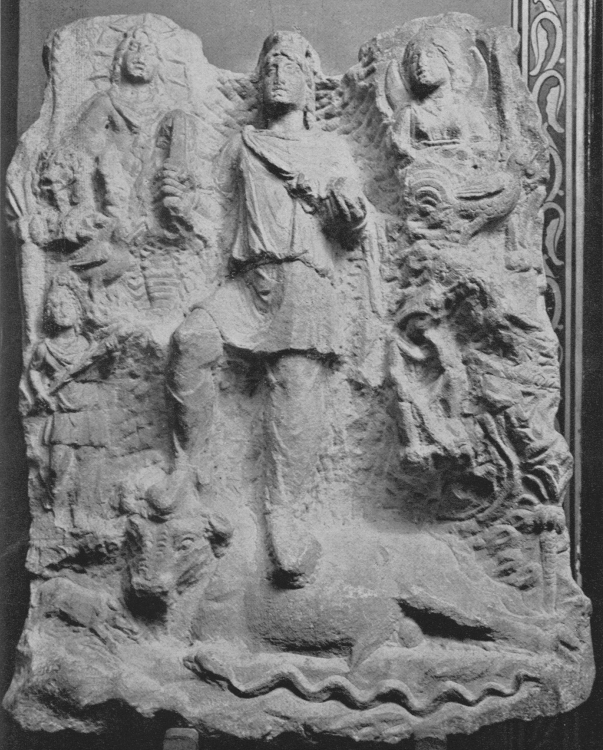
This unusual representation of Mithras standing on a bull was kept in the Casino di Villa Altieri sul Monte Esquilino until the 19th century.
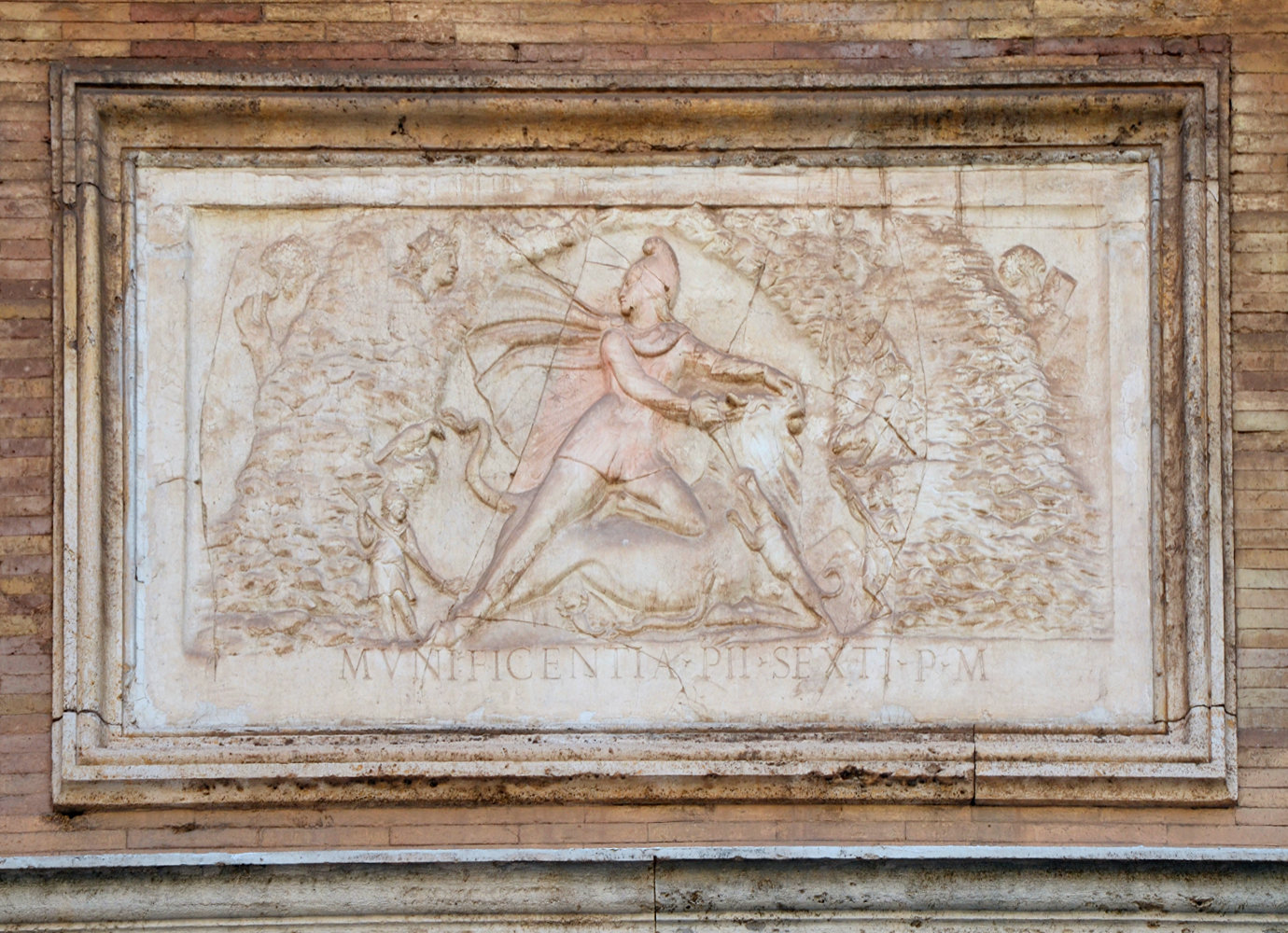
The Tauroctony relief of Mithras killing the bull walled in the Cortile of the Belvedered, Vatican City, was found by Fagan near Ostia.
Graffito on a wall of the Caseggiato del Sole adjacent to the Mitreo dei Serpenti at Ostia, reading "Dominus Sol hic avitat" (Lord Sun dwells here).
Fragment of a bull-killing relief showing Mithras, the torchbearer Cautes with upraised torch, and the bust of Luna, found at Labicum in the ruins of a Roman villa.
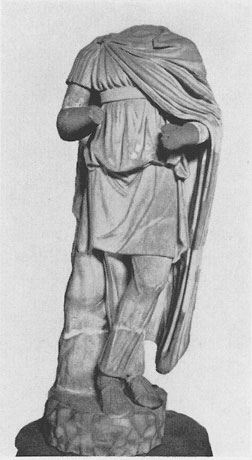
Penthelic marble statue of a standing torchbearer in Eastern attire, cross-legged, with head and torch arm broken off, probably 2nd century A.D., found at Antium (modern Anzio).
Marble relief showing Mithras slaying the bull inside a vaulted cave accompanied by Sol, Luna and the torchbearers.
A statue found along the Via Cassia about six kilometres from Rome, tentatively identified as an Aion entwined by a serpent but possibly representing Atargatis according to Vermaseren, now in the Museo Nazionale delle Terme.
A white marble relief fragment found with its companion piece near Nomento on the Via Nomentana, showing only the lower body of a cross-legged torchbearer in a short tunic, now in the storerooms of the Museo Nazionale in Rome.
A white marble tauroctony relief fragment found at the hill known as Carnale near Nomento on the Via Nomentana, about twenty kilometres from Rome, now in the storerooms of the Museo Nazionale in Rome, dated to the third century AD.
A marble cippus from Rome bearing two inscriptions: the upper dedicated to Deus Sol Invictus Mithras and Cautopates, the lower by Flavius and companions.
A badly damaged marble torso from Rome, carved from Luna marble, possibly representing a Mithraic torchbearer dressed in tunic, long cloak and anaxyrides.
A marble relief depicting Cautopates as a standing cross-legged torchbearer in Eastern attire with his burning torch pointing downwards, found in Rome near the Via Appia and now in the Museo Nazionale delle Terme, the head and much of the torch lost.
A marble relief depicting Cautes as a standing cross-legged torchbearer in a short tunic and Phrygian cap with torch upraised and left hand lost, found in Rome near the Via Appia and now in the Museo Nazionale delle Terme.
A cippus found in a vineyard near the Via Salaria by the Coemeterium Priscillae outside Rome, inscribed by Q. Hostilius Euplastus, a leo of the Mithraic mysteries, dedicating a gift to the god.
A white marble tauroctony statue found in 1925 at the ancient site of Lorium near the eleventh milestone on the Via Aurelia outside Rome, showing Mithras slaying the bull with dog, serpent and scorpion, accompanied by Cautes and Cautopates; now in the Palazzo Doria…
A lost Mithraic relief acquired near Rome and formerly held by the Lyceum Hosianum of Braunsberg in East Prussia, known only through a 1910 communication to Cumont; possibly identical with the relief from Macerata.
