Filtering by Cautes in monuments gave 148 results.
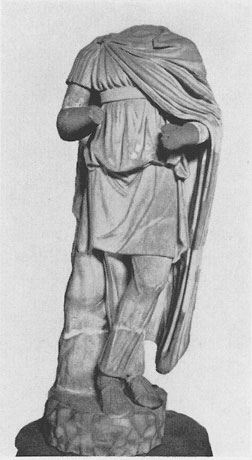
Penthelic marble statue of a standing torchbearer in Eastern attire, cross-legged, with head and torch arm broken off, probably 2nd century A.D., found at Antium (modern Anzio).
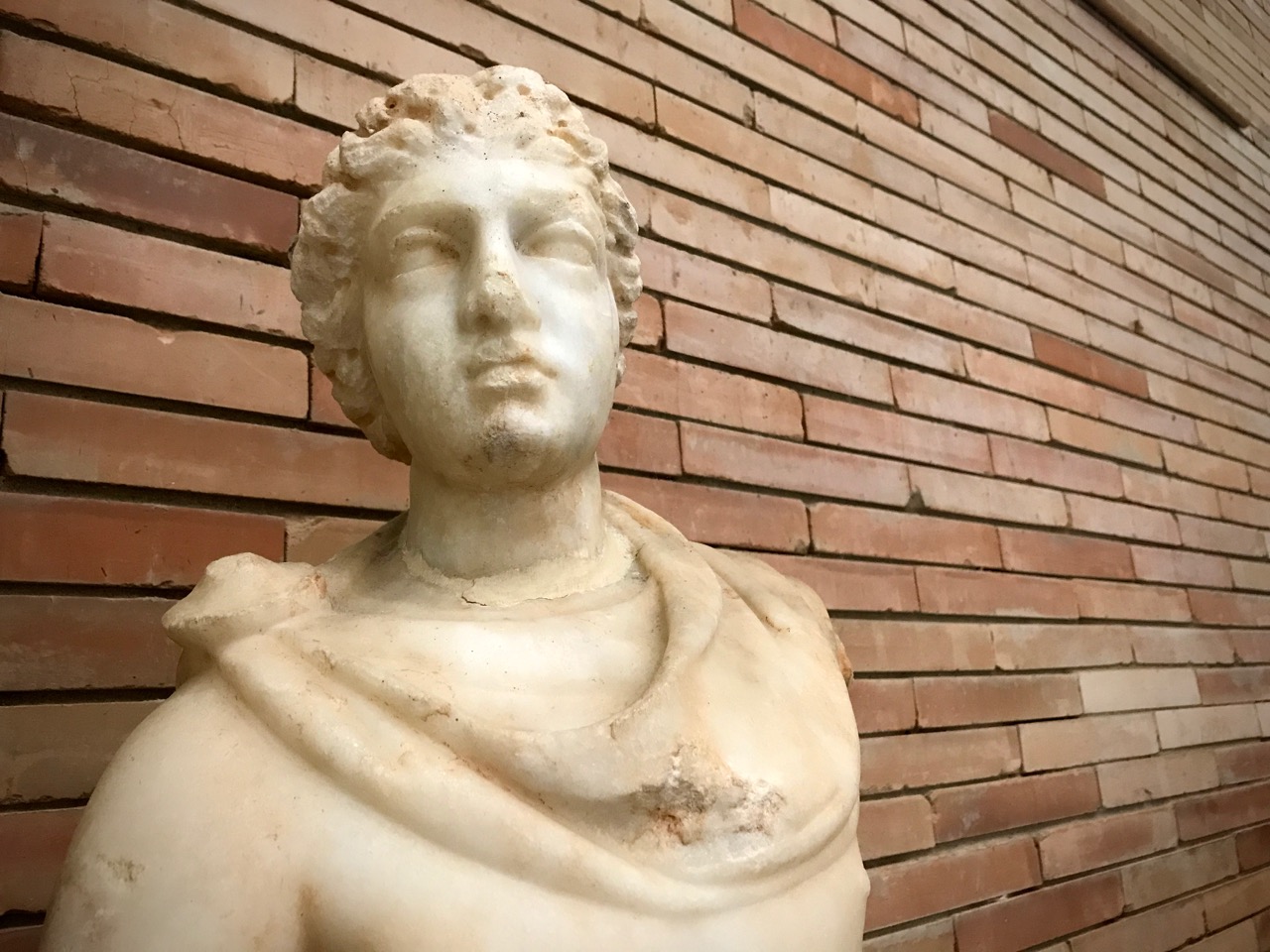
Marble statue of a naked young man from Mérida, variously identified as a Mithraic torchbearer, a solar figure or a newly initiated member of the cult.

White marble base from Mithraeum I at Ptuj, ancient Poetovio, with an inscription and the preserved foot and lower garment of a Cautes statue.
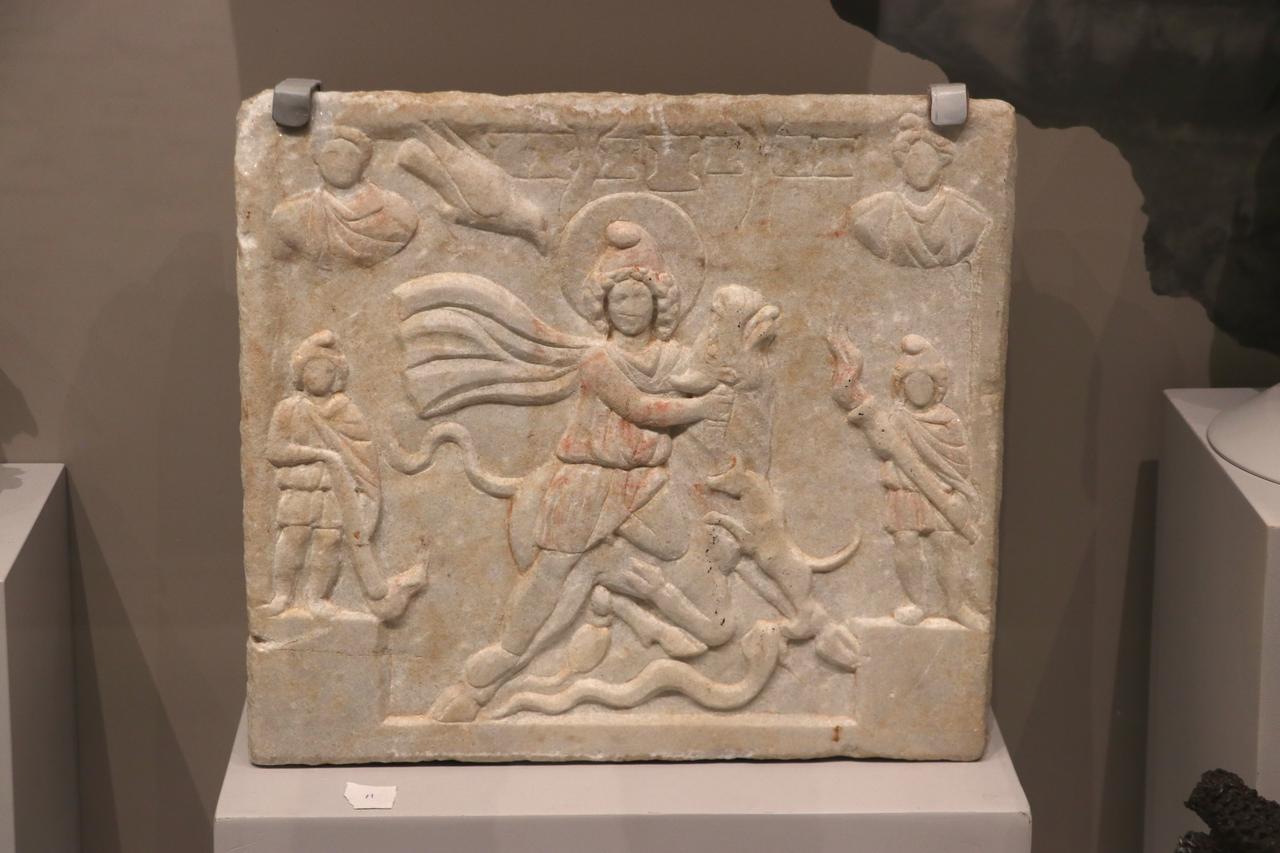
A marble tauroctony discovered in the military quarter of ancient Zeugma, providing the first known evidence for the cult of Mithras at the city.
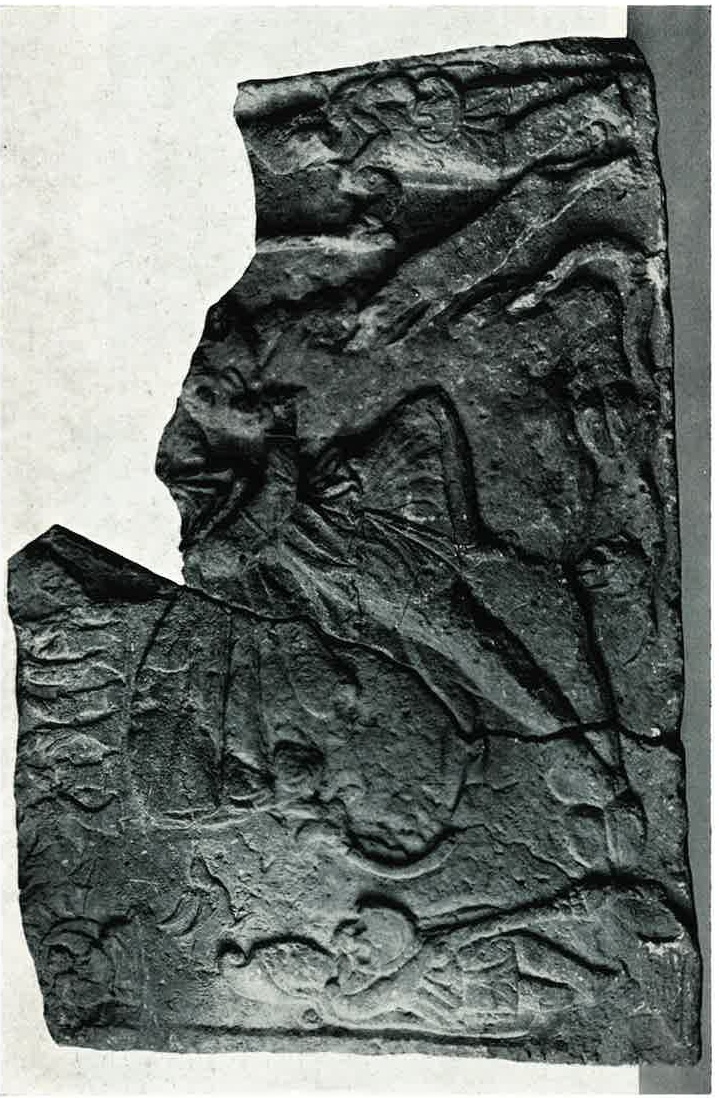
Marble relief from the Mithraic sanctuary founded by brothers Marcus Aurelius Frontinianus and Marcus Aurelius Fronto.
Pair of limestone torchbearer statues from Aquincum representing Cautes and Cautopates; Cautes preserves a pelta in his left hand.
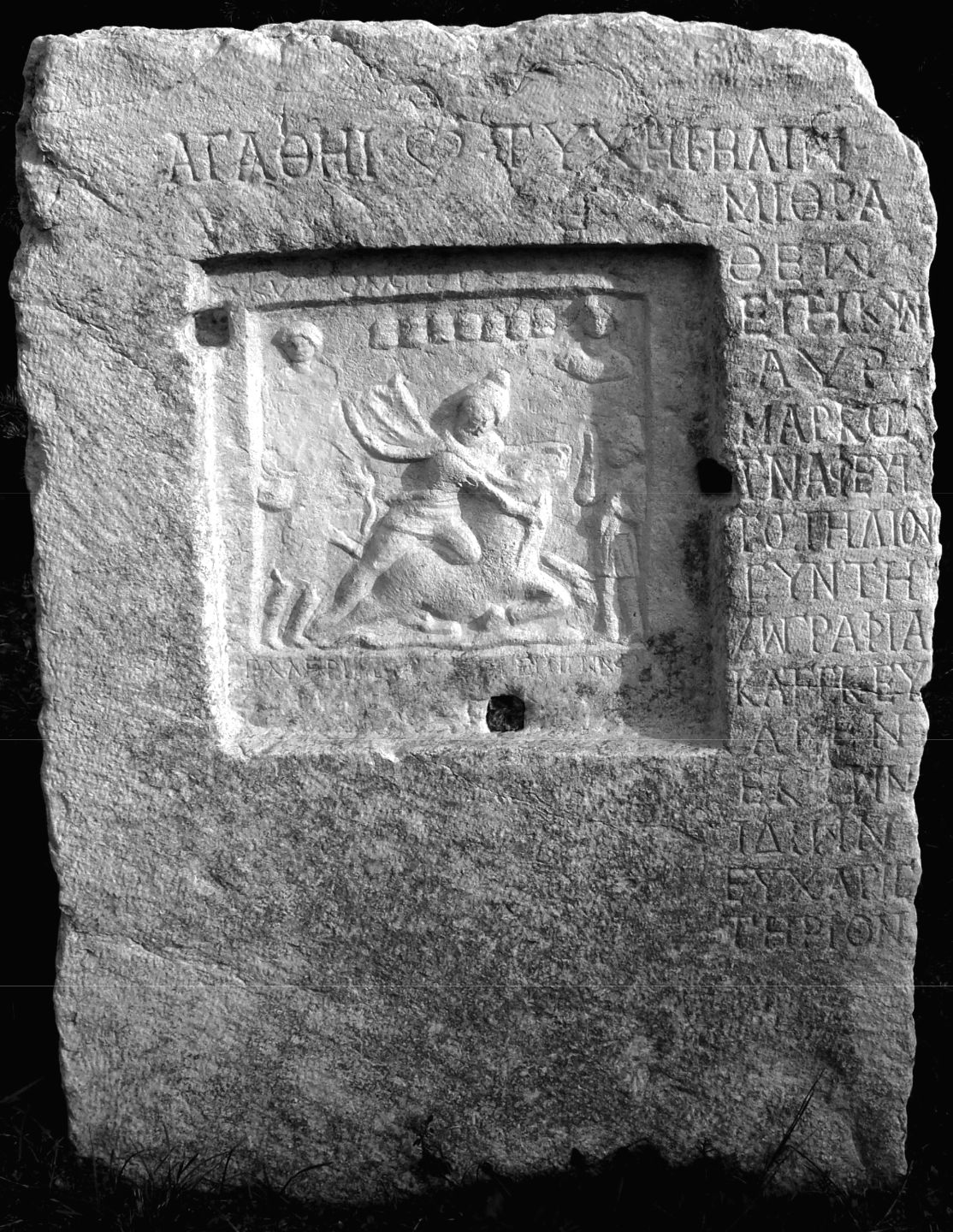
The Tauroctony of Nicopolis ad Istrum is a rare Mithraic stele bearing two Greek dedications from different phases of its use.
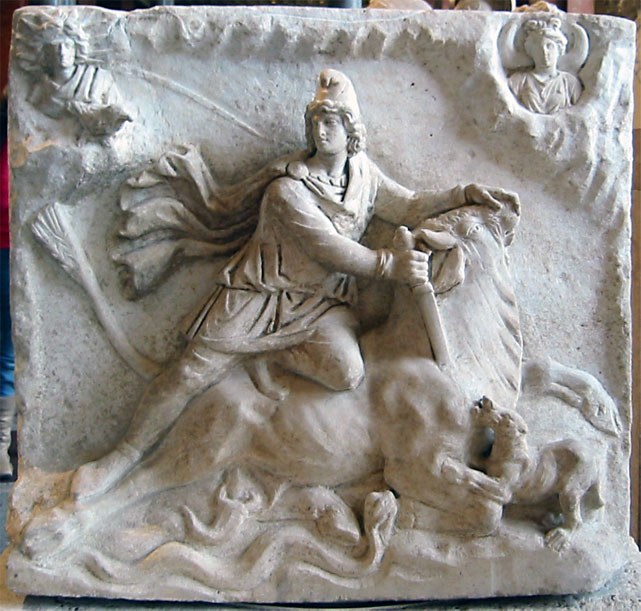
The marble shows Mithras slaying the bull, on one side, and Sol and Mithras feasting on a bull skin, on the other.
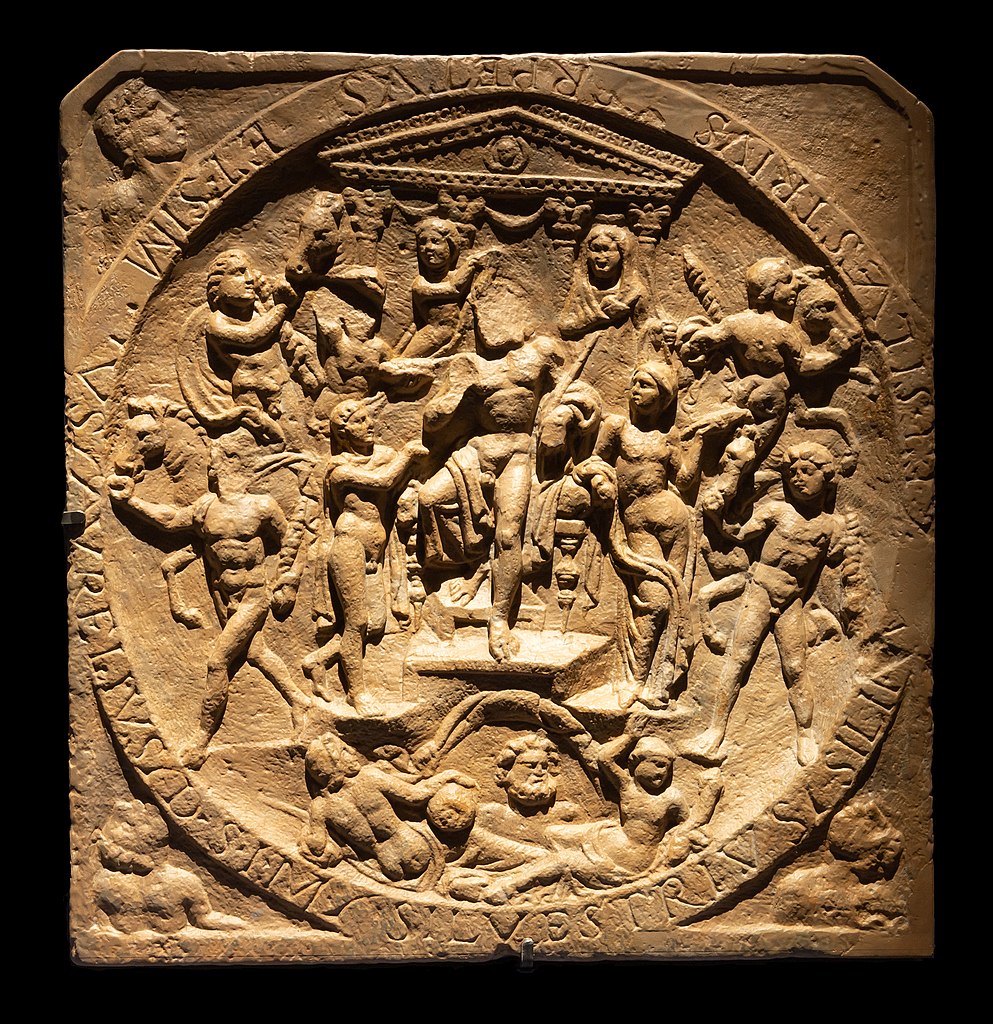
The relief of Dieburg shows Mithras riding a horse as main figure, surrounded by several scenes of the myth.
Relief of bluish marble in the Casino of the Villa Doria Pamphili showing Mithras slaying the bull with the usual animals, cross-legged torchbearers, and Sol in a quadriga and Luna in a biga in the upper corners.
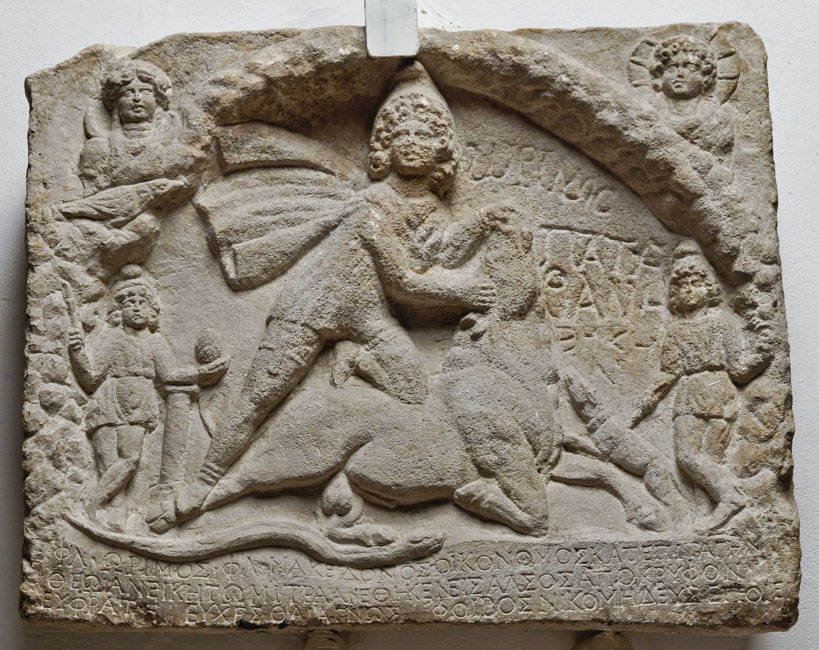
This limestone relief of Mithras killing the bull bears an inscription by a certain Flavius Horimos, consecrated in a ’secret forest’ in Moesia.
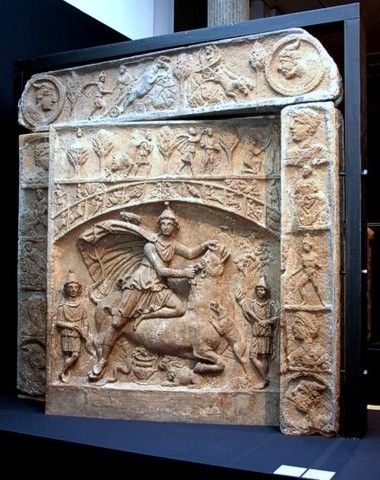
This relief is so well-known that it has been reproduced in nearly every handbook of archaeology and of history of religions.
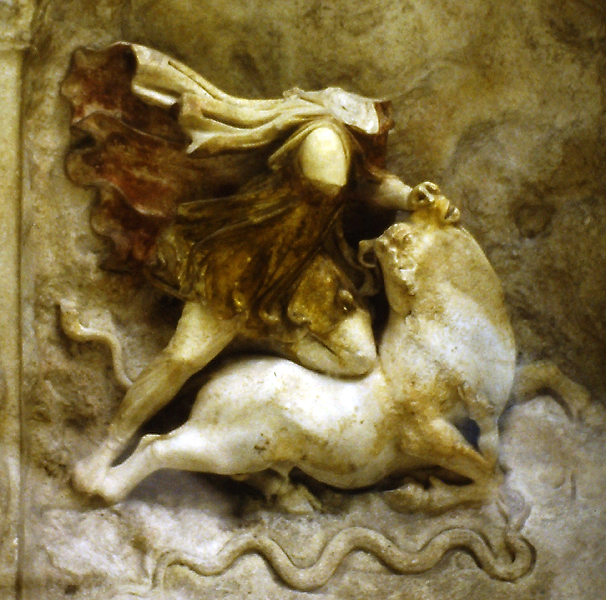
Marble tauroctony relief from the Mithraeum of Memphis, depicting Mithras slaying the bull within an architectural niche framed by Cautes and Cautopates.
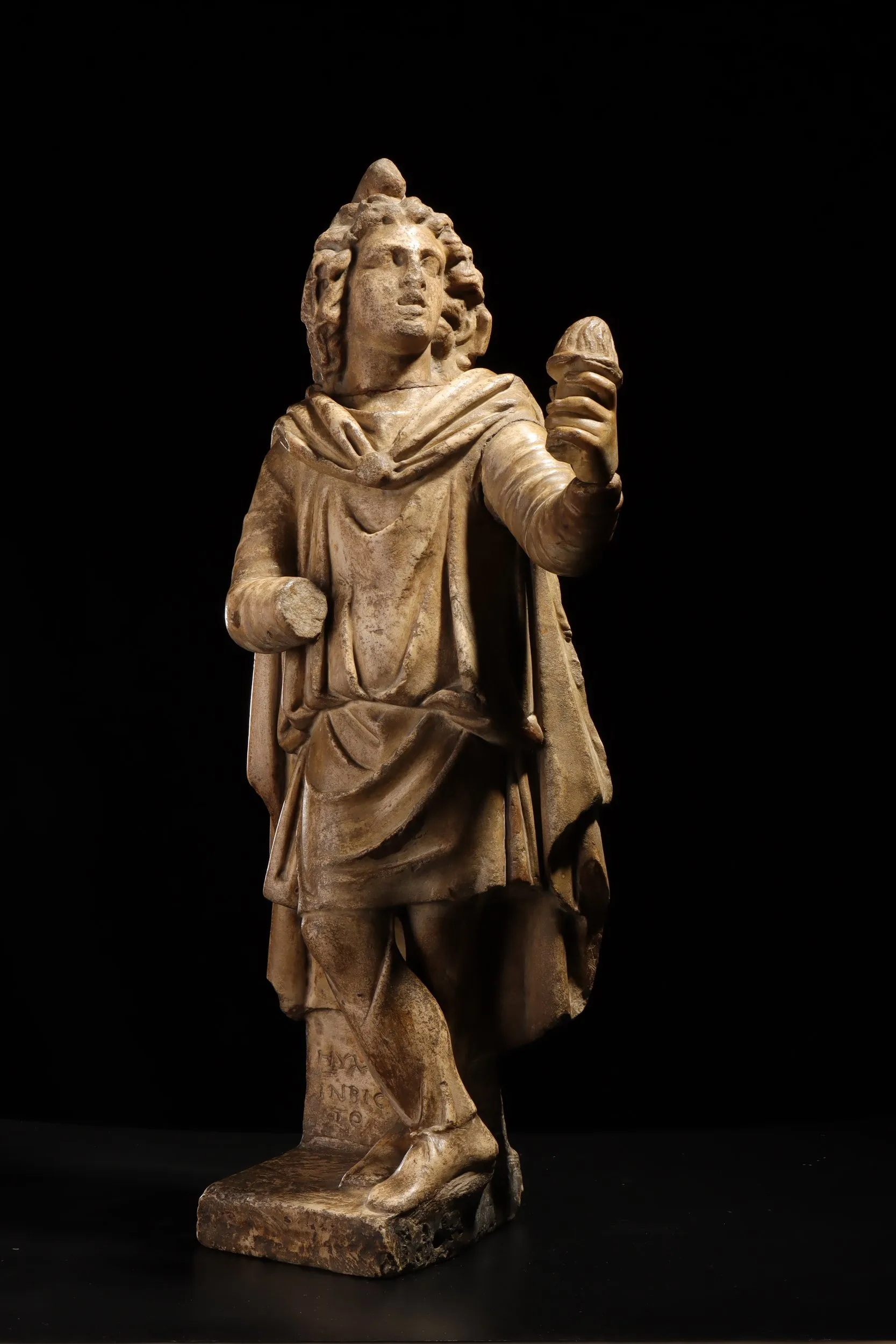
Marble statuette of the torchbearer Cautes bearing the votive inscription HYMNUS INBICTO, probably produced during the second or third century CE and preserved in an old European collection.
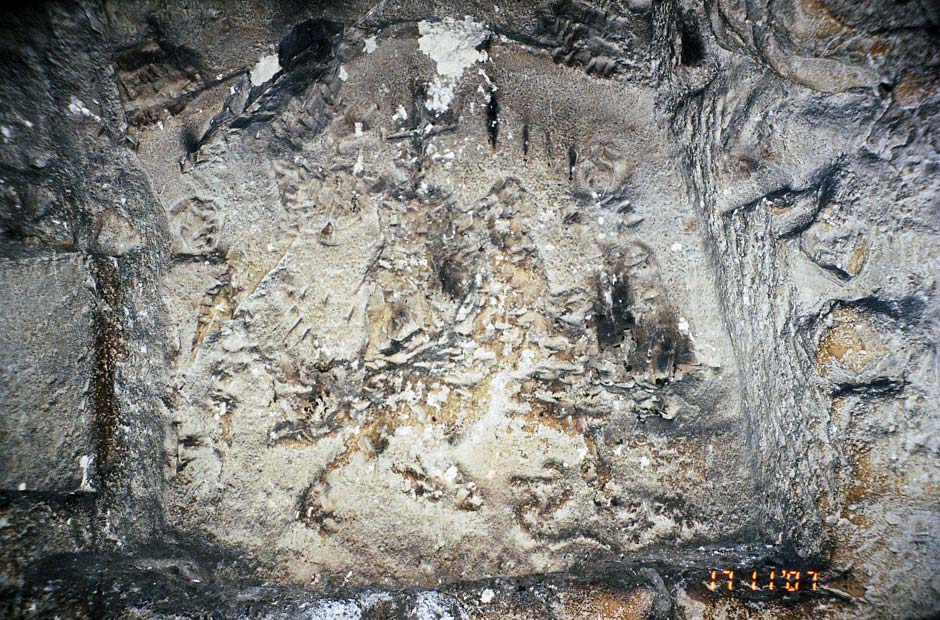
Rock-cut tauroctony forming the cult image of Mithraeum I at Doliche, later deliberately defaced by Christian iconoclasts.
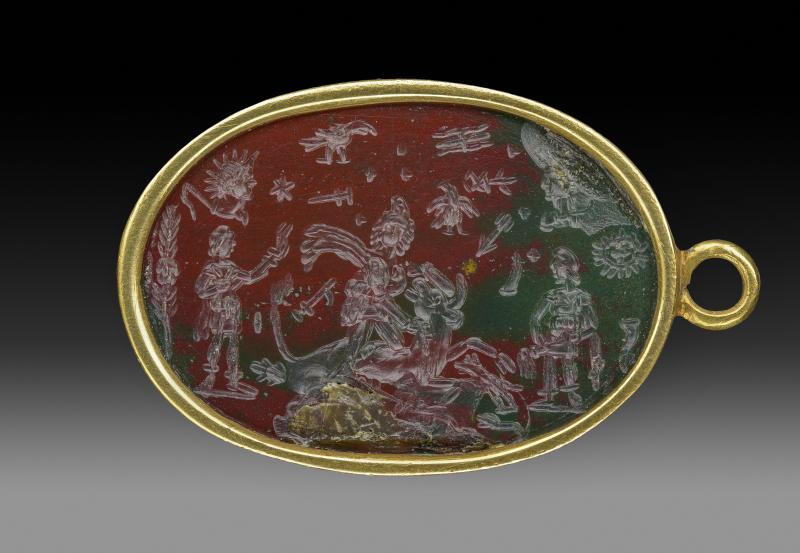
This intaglio portrays Mithra slaying the bull on one side, and a lion with a bee, around seven stars, and inscription, on the other.
This small white marble cippus bears an inscription of a certain Pater Antoninus to Cautes.
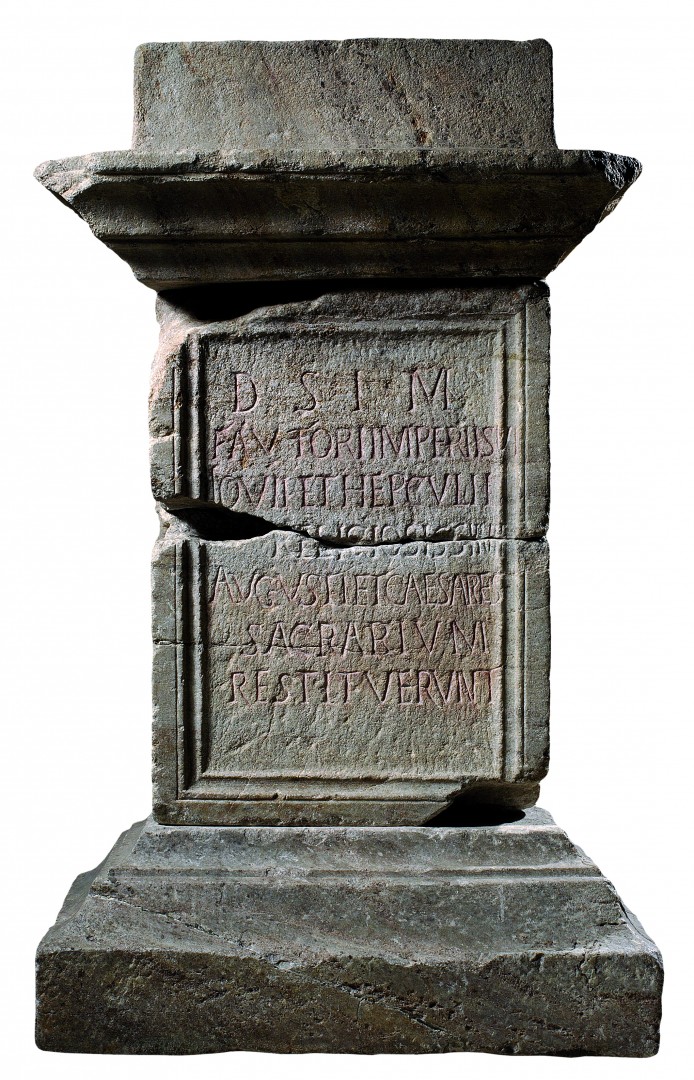
Altar with Cautes and Cautopates dedicated to Sol Invictus Mithras as protector of the Tetrarchy in 3rd-century Carnuntum.
Upper fragment of a marble relief depicting Cautes, discovered in the Forum of Caesar in Rome.
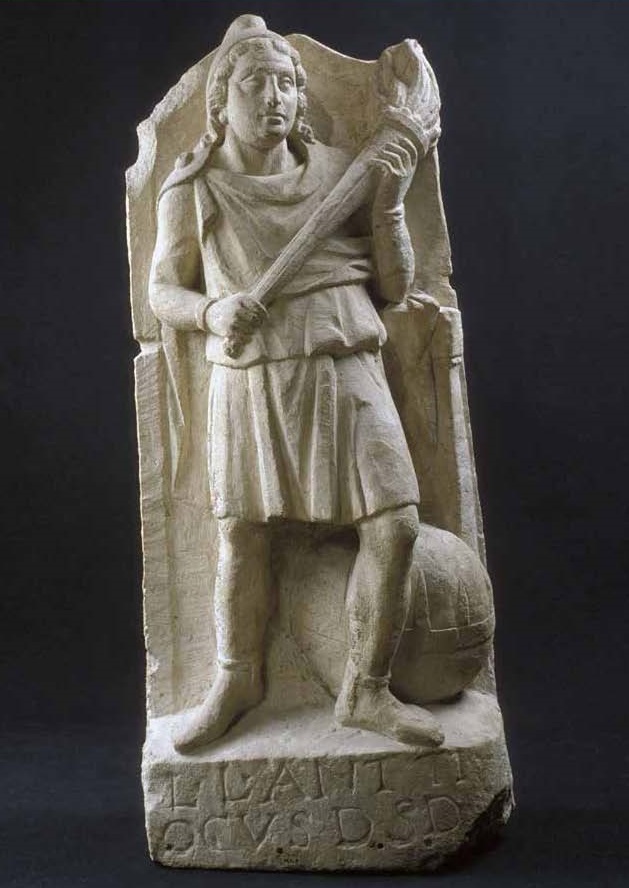
This monument representing Cautes with uncrossed legs was consecrated by a certain Anttiocus.
