The material documented in Umbria reflects the movement of Mithraic cults through inland communication routes, urban settlements and regional exchange networks connected to central Italy. The province occupied an intermediary position within the Italian Peninsula.


People attested in Umbria



Places in Umbria
Carsulae
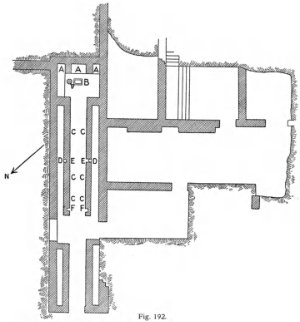
Carsulae was a Roman municipium in the region of Umbria, now preserved as an archaeological site, about 4 km north of the small town of San Gemini. Its foundation dates back to 220 BC with the construction of the Via Flaminia.
Ocrea
An ochrea, also spelled ocrea, is a plant structure formed of stipules fused into a sheath surrounding the stem.
Spoletium
Spoleto is an ancient city in the Italian province of Perugia in east-central Umbria on a foothill of the Apennines.
Inscriptions from Umbria
Inscription on the leonteum of Umbria
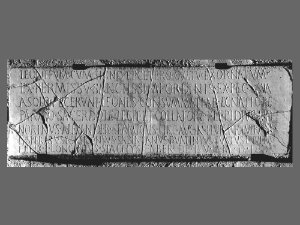
Leonteum cum signo et cetero cultu exornatum / ex permissu sanctissimi ordinis ex pec[unia] sua / a solo fecerunt leones, consummati ab Egnatio Re/parato sacerdote legit[imo] et collatore, T[itus] Lepidius Ho/norinus Alexander et Amicus circ[itores] Aug[usti] n[ostri], L[ucii duo] Vicri[i] Severus / et Speratus, T[itus] Satronius Sabinianus, P[ublius] Vatinius Tustus, L[ucius] Tulius / Felix, L[ucius] Longinius Stachys faber de [sestertiis quinque] m[ilibus] n[ummum]. L[ocus] d[atus] d[ecurionum] d[ecreto].
The leonteum, adorned with a statue and other cultic elements, with the permission of the most sacred municipal ordo, the Lions erected it at their own expense from the ground, they who were initiated [consummati] by Egnatius Reparatus, legitimate priest [legitimus] and contributor: Titus Lepidius Honorinus, Alexander and Amicus, imperial [slaves], guardians, the two Lucii Vicrii, Severus and Speratus, Titus Satronius Sabinianus, Publius Vatinius Iustus, Lucius Tulius Felix, Lucius Longinius Stachys, craftsman, for a sum of 5,000 sesterces. Location given by decree of the decurions.
Inscription on restauration of the Mitreo de Carsulae
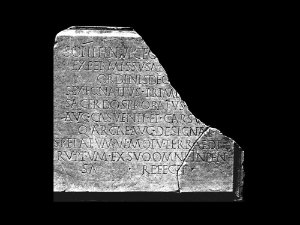
Soli et invicto [deo Mithrae]. / Ex permissu san[ctissimi] / ordinis dec[ur[ionum]] / Sex[tus] Egnatius Primitivus / sacerdos probatus sevir / Aug[ustalis] Casuenti et Carsulis, / q[uaestor] arcae Aug[ustalium] designat[us] / spelaeum vi motu terrae di/ruptum ex suo omni inpen/sa refecit.
To Sol and the invincible [god] [Mithras]. With the permission of the [most] sacred order of decurions, Sextus Egnatius Primitivus, approved priest [sacerdos probatus], Augustal serf at Casuentum et Carsulae, appointed quaestor of the Augustus treasury, has restored the crypt destroyed after an earthquake, entirely at his own expense.
References
- Aleš Chalupa (2023) Římský kult boha Mithry. Atlas lokalit a katalog nálezů I
- Jaime Alvar Ezquerra (2008) Romanising Oriental Gods Myth Salvation and Ethics in the Cults of Cybele Isis and Mithras
- Laurent Bricault & Philippe Roy (2021) Les cultes de Mithra dans l’Empire romain
- Manfred Clauss (1992) Cultores Mithrae. Die Anhängerschaft des Mithras-Kultes.
