Your selection in monuments gave 81 results.
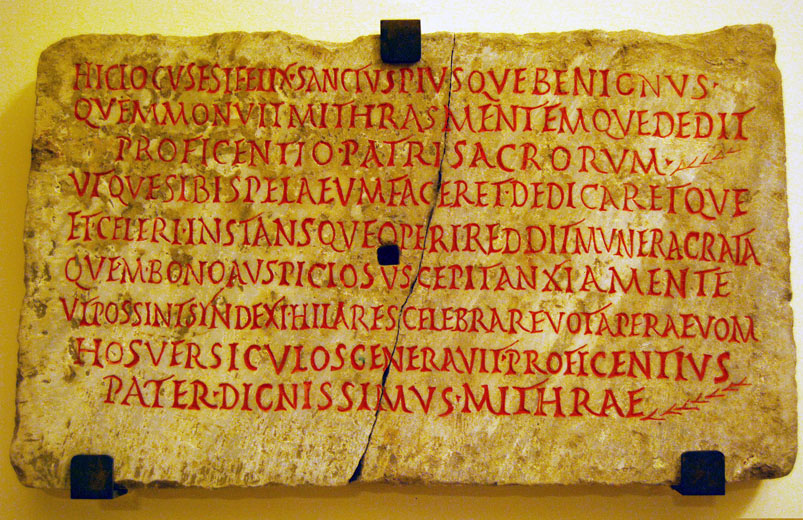
This marble slab bears an inception be the Pater Proficentius to whom Mithras has suggested to build and devote a temple.
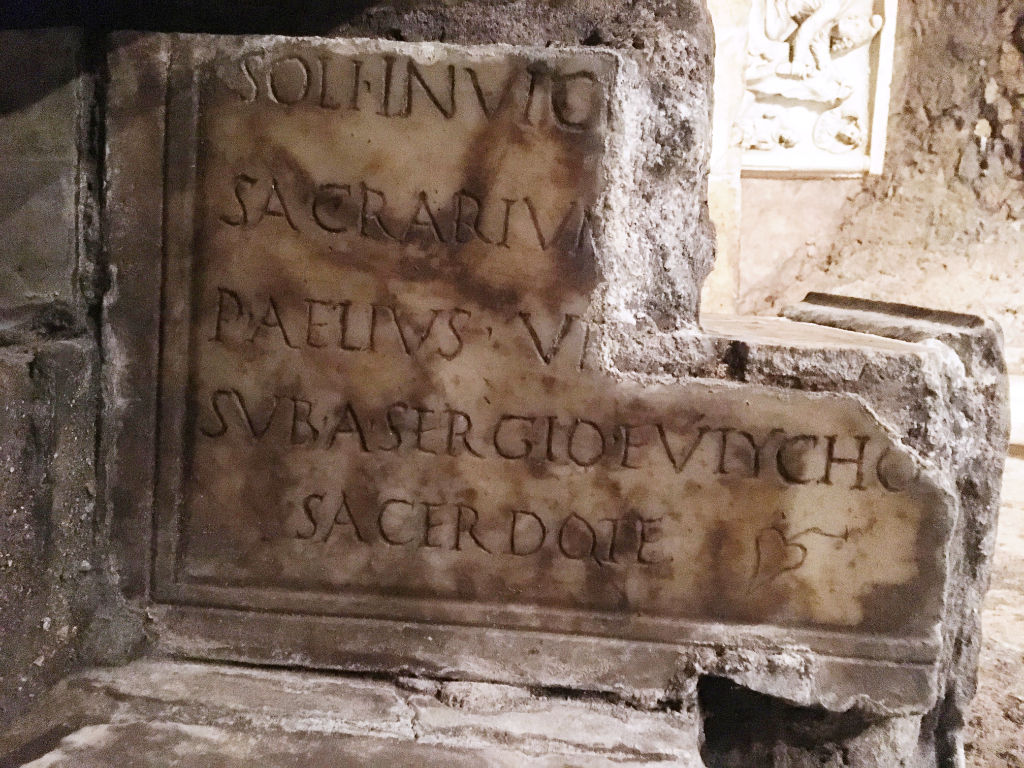
The Mithraic fellow P. Aelius Urbanus mentions that he built the sacred area of the Mithraeum Circo Massimo.
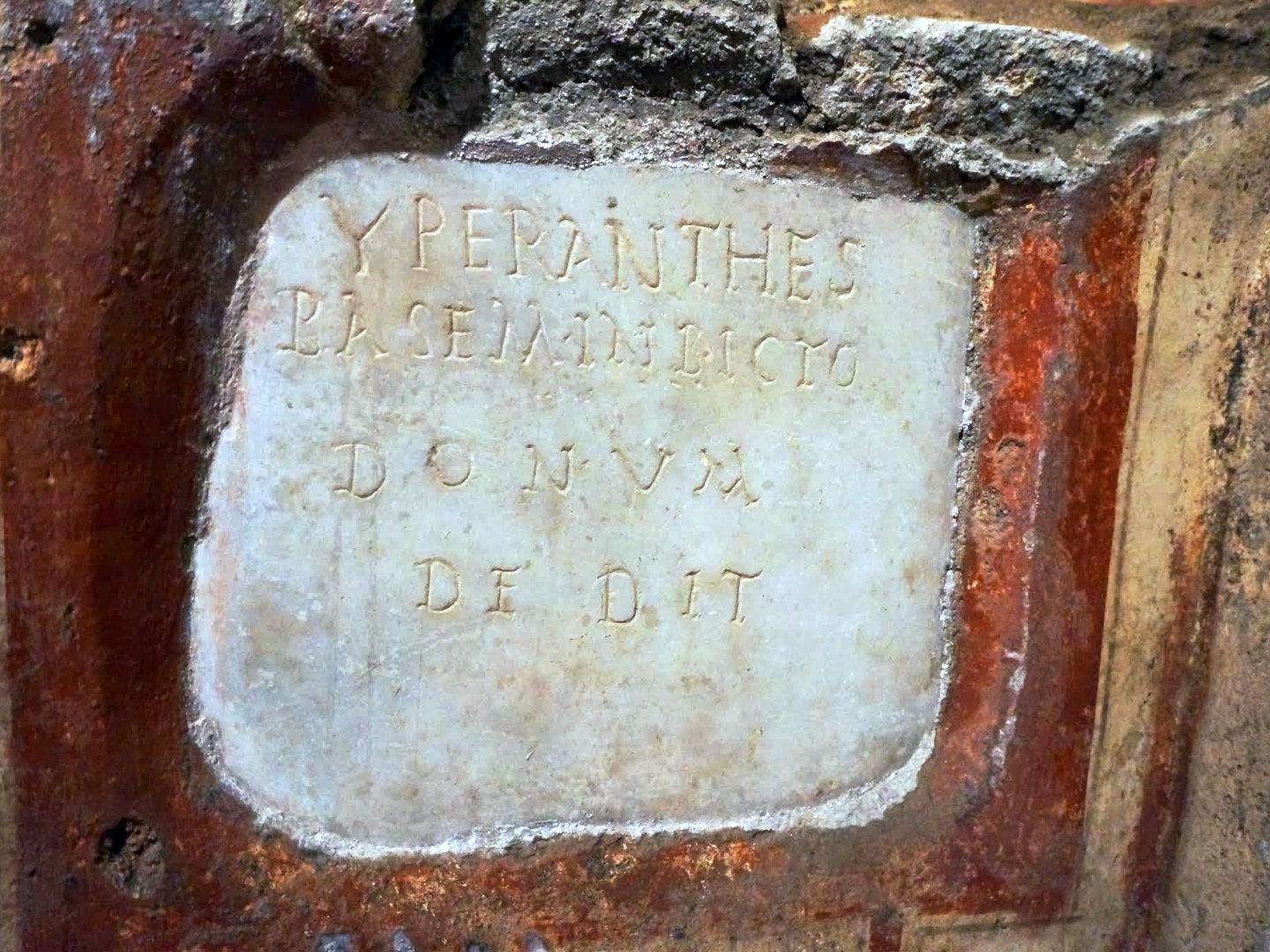
The inscription mentions the name of the donor, Yperanthes, of Persian origin.

This inscription mentions a Pater for the first known time.
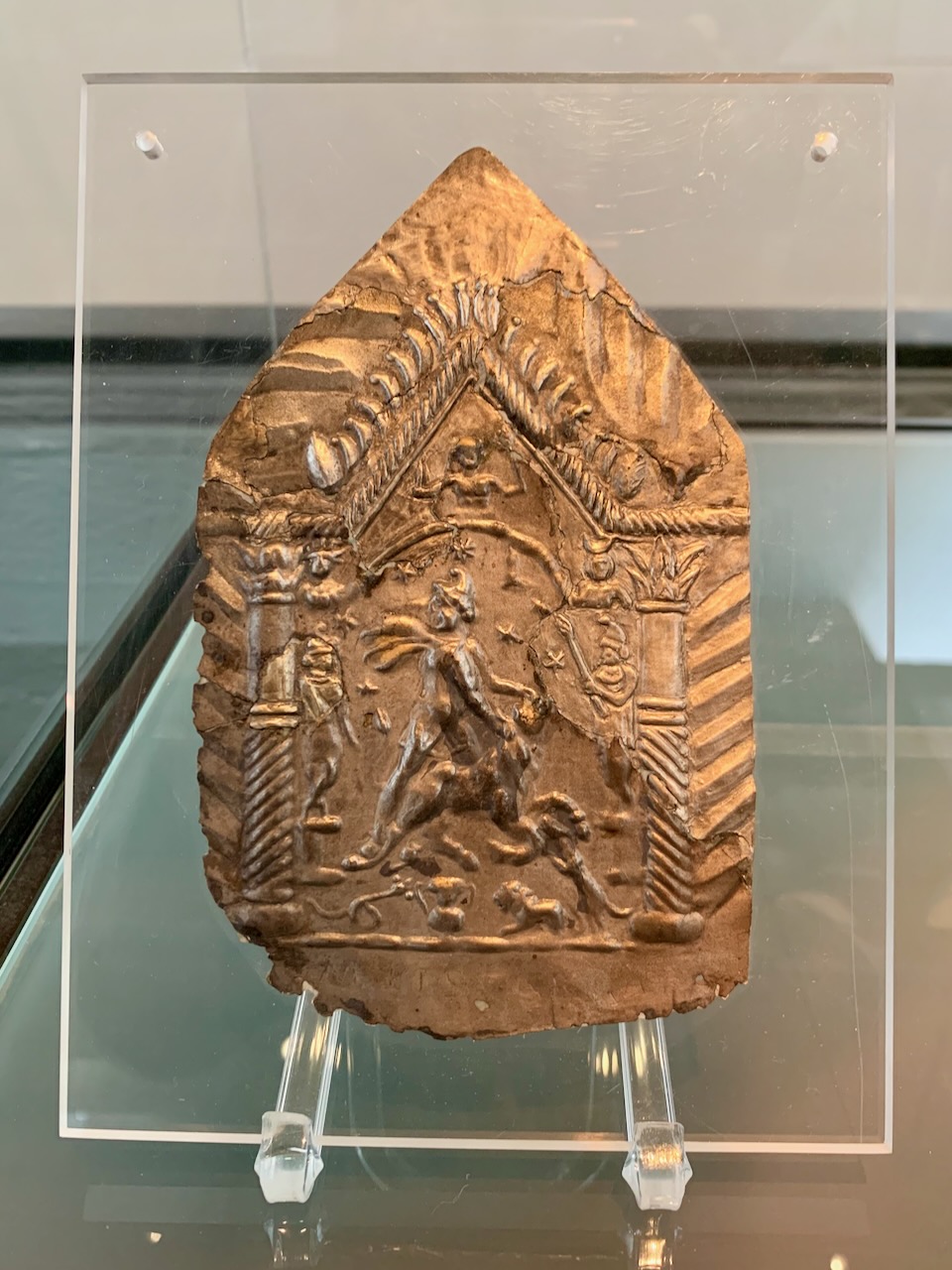
This plaque was found in Mithraeum I at Stockstadt broken into pieces inserted between the blocks of the socle of the cult relief, in the manner of a votive deposit.
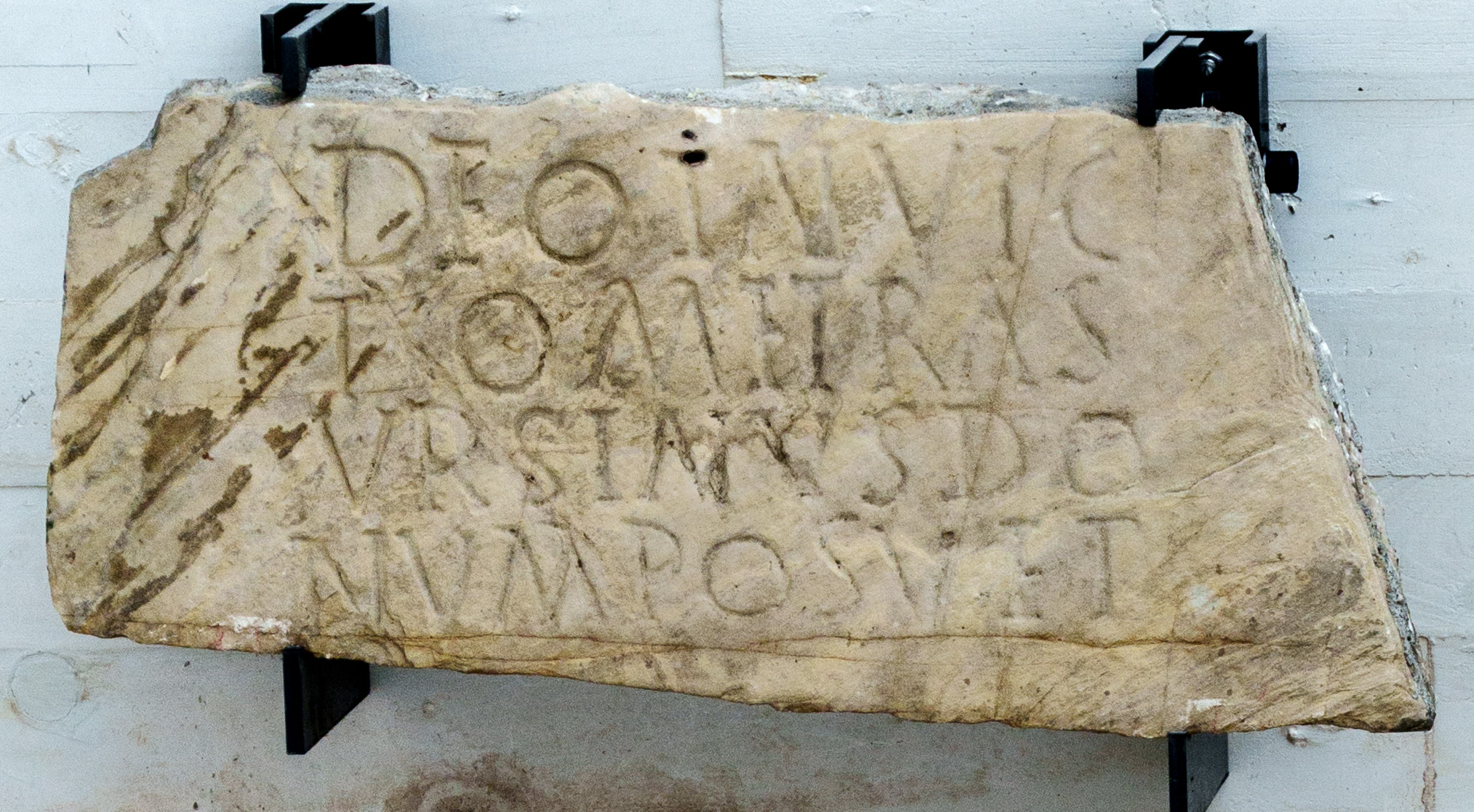
Marble plaque with inscription by a certain Ursinus found in Virunum in 1838.
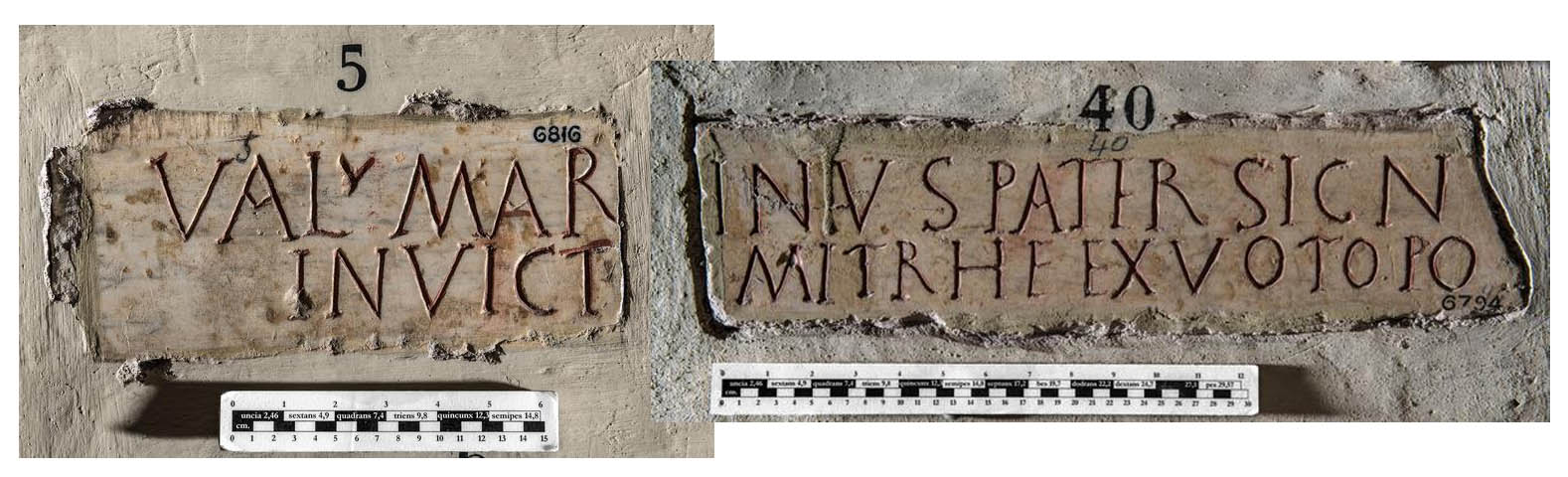
Marble inscription recording the dedication of a cult image to the unconquered Mithras by a certain pater Valerius Marinus from Rome.
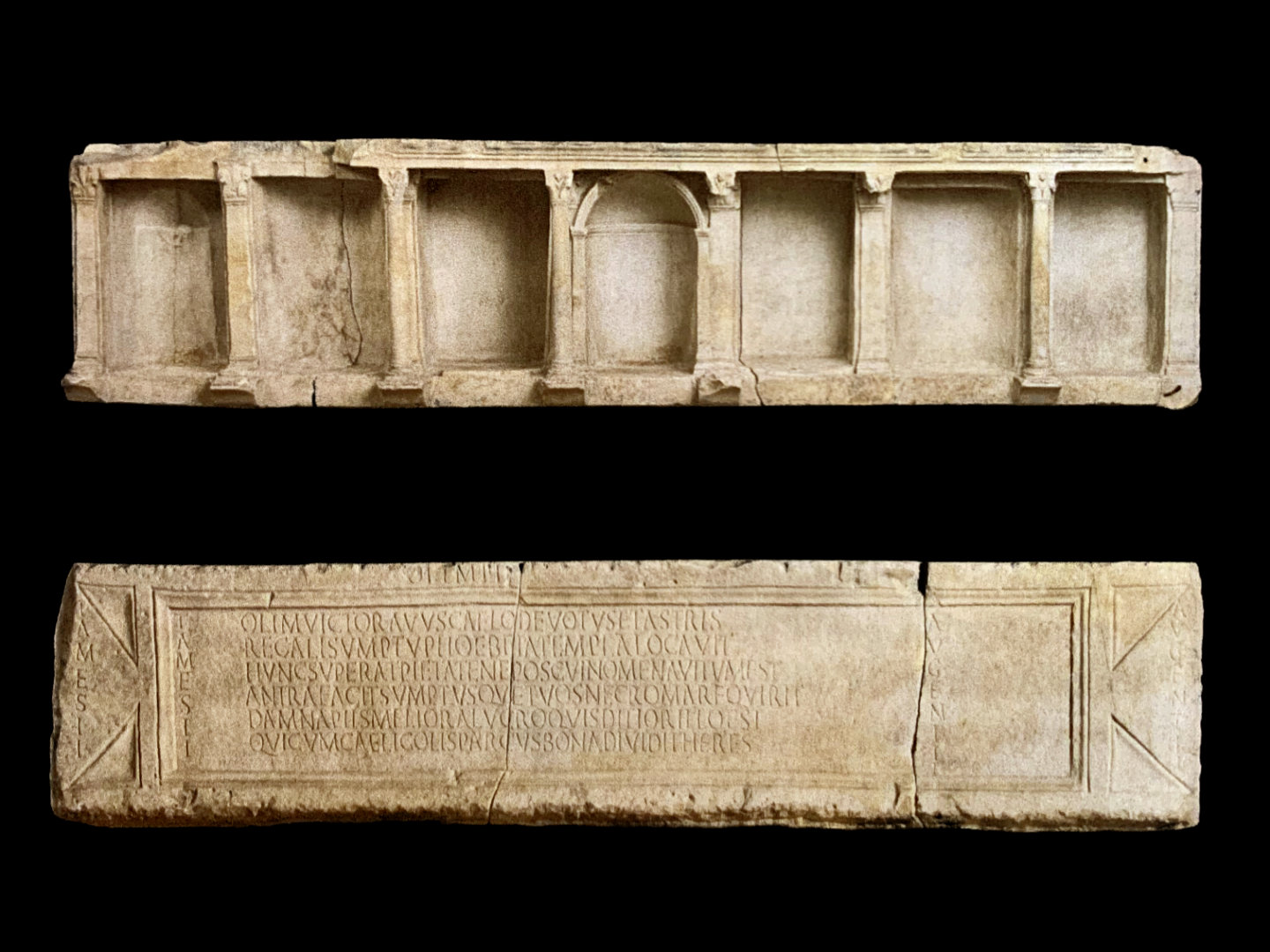
This monument is the only one still available from the disappeared Mithraeum in Piazza S. Silvestro in Capite.
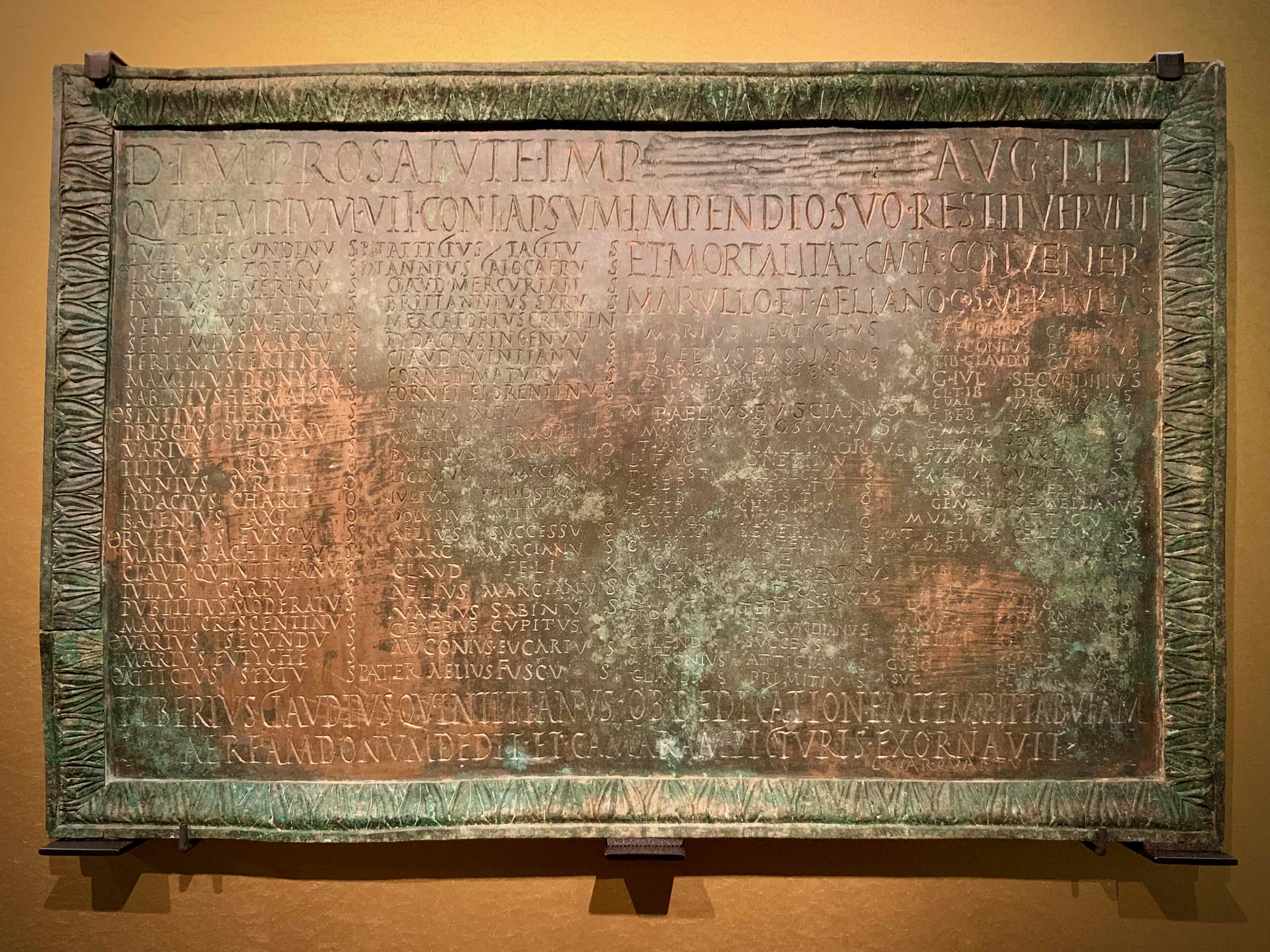
The bronze bears the dedication of a restoration of a Mithraeum carried out in 183.
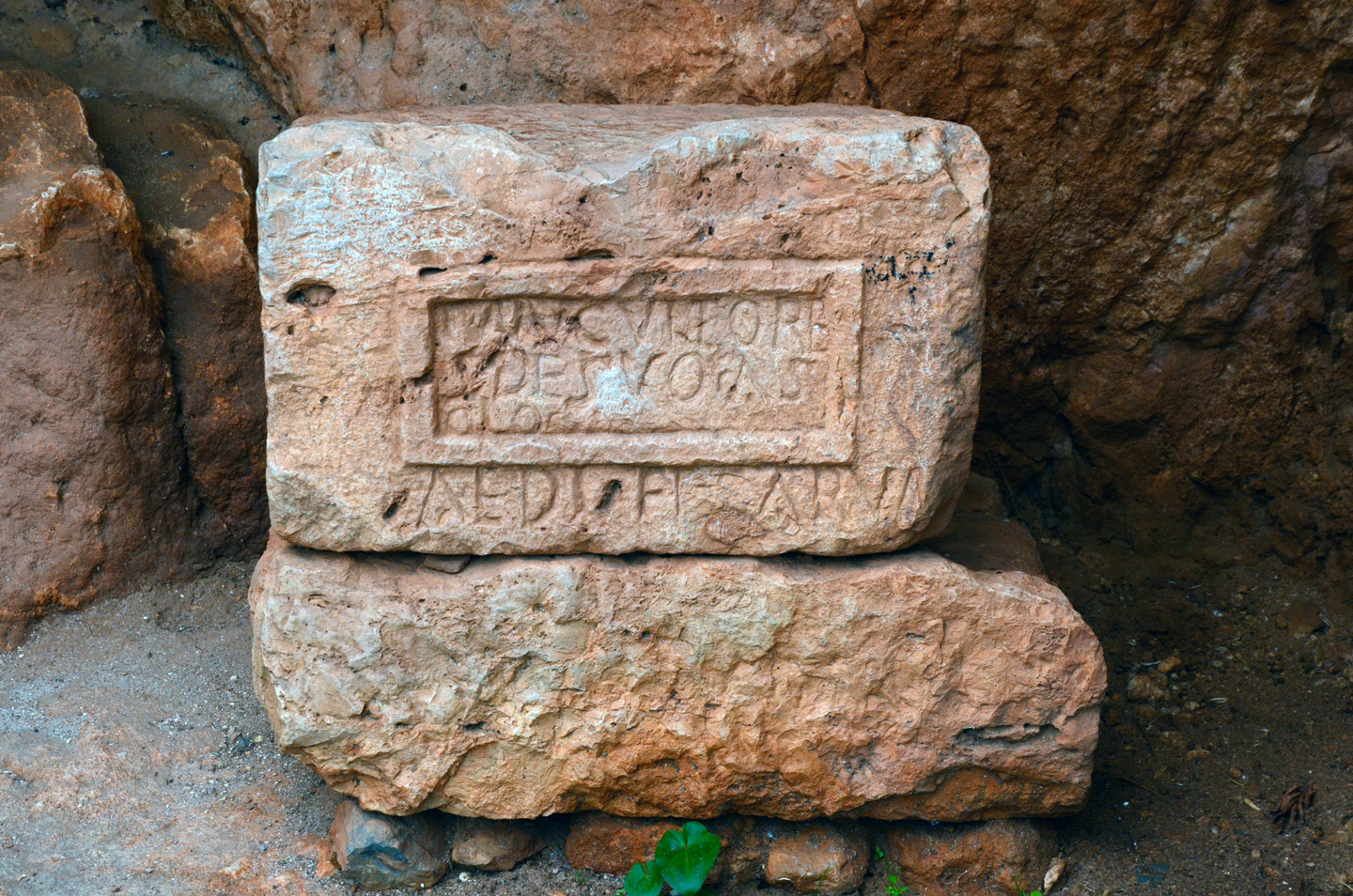
Inscription recording the dedication of a mithraeum at Tiddis by a group of cultores who built the sanctuary at their own expense.
Dedication from Simitthus mentioning the restoration of a monument and a vow fulfilled to Cautes and Cautopates during the reign of Caracalla and Julia Maesa.
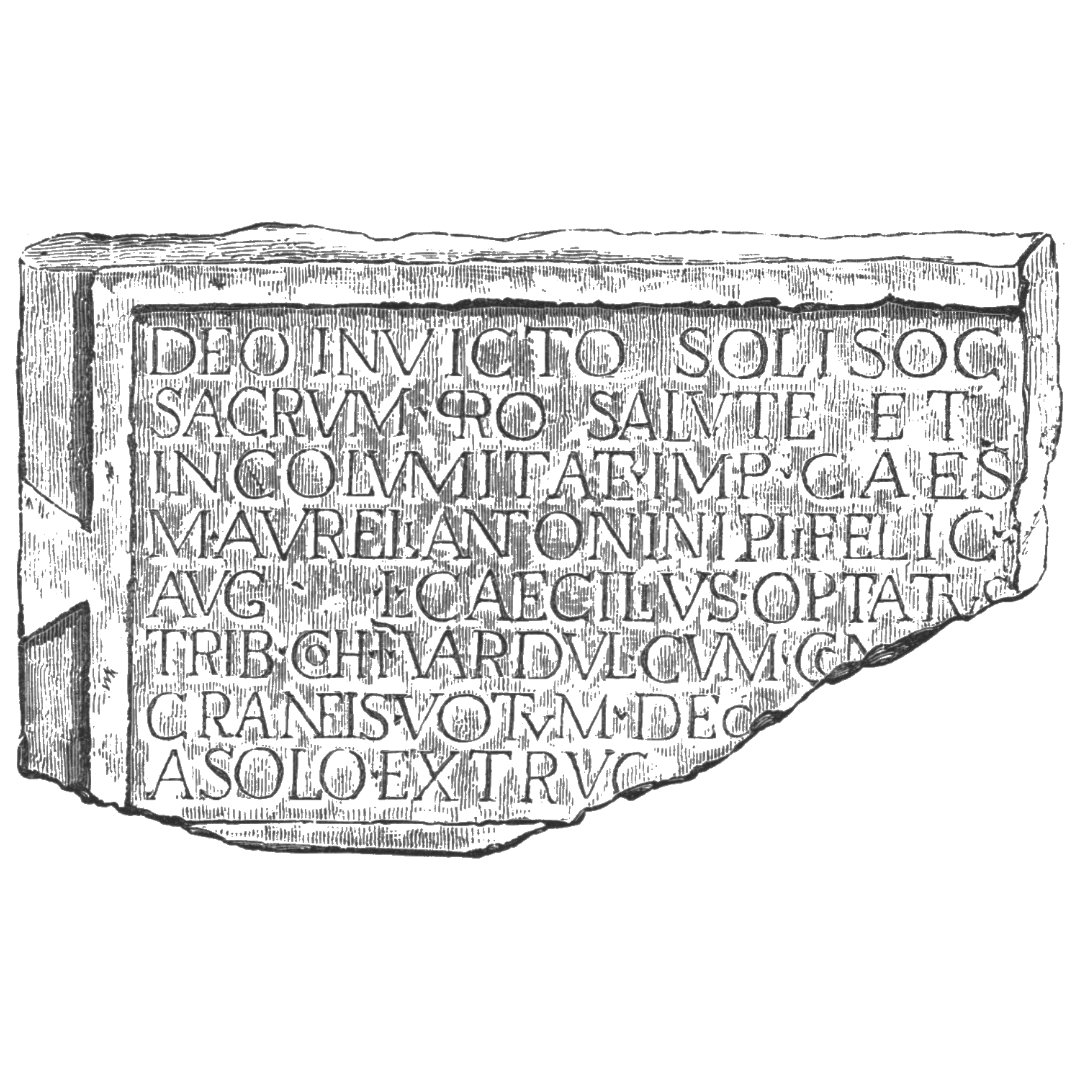
This inscription commemorates the building of a mithraeum in Bremenium with fellow worshippers of Mithras.
This inscription found in the Mithraeum Aldobrandini informs us of certain restorations carried out in the temple during a second phase of development.
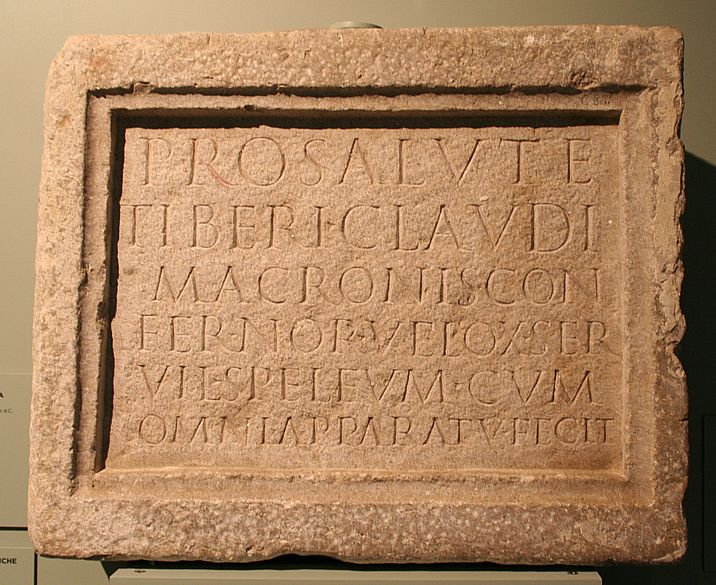
Marble slab with inscription by Velox for the salvation of the chief of the iron mines of Noricum.

This fine Roman marble slab of the killing bull of Mithras belongs to a private owner, most recently from Los Angeles, USA.
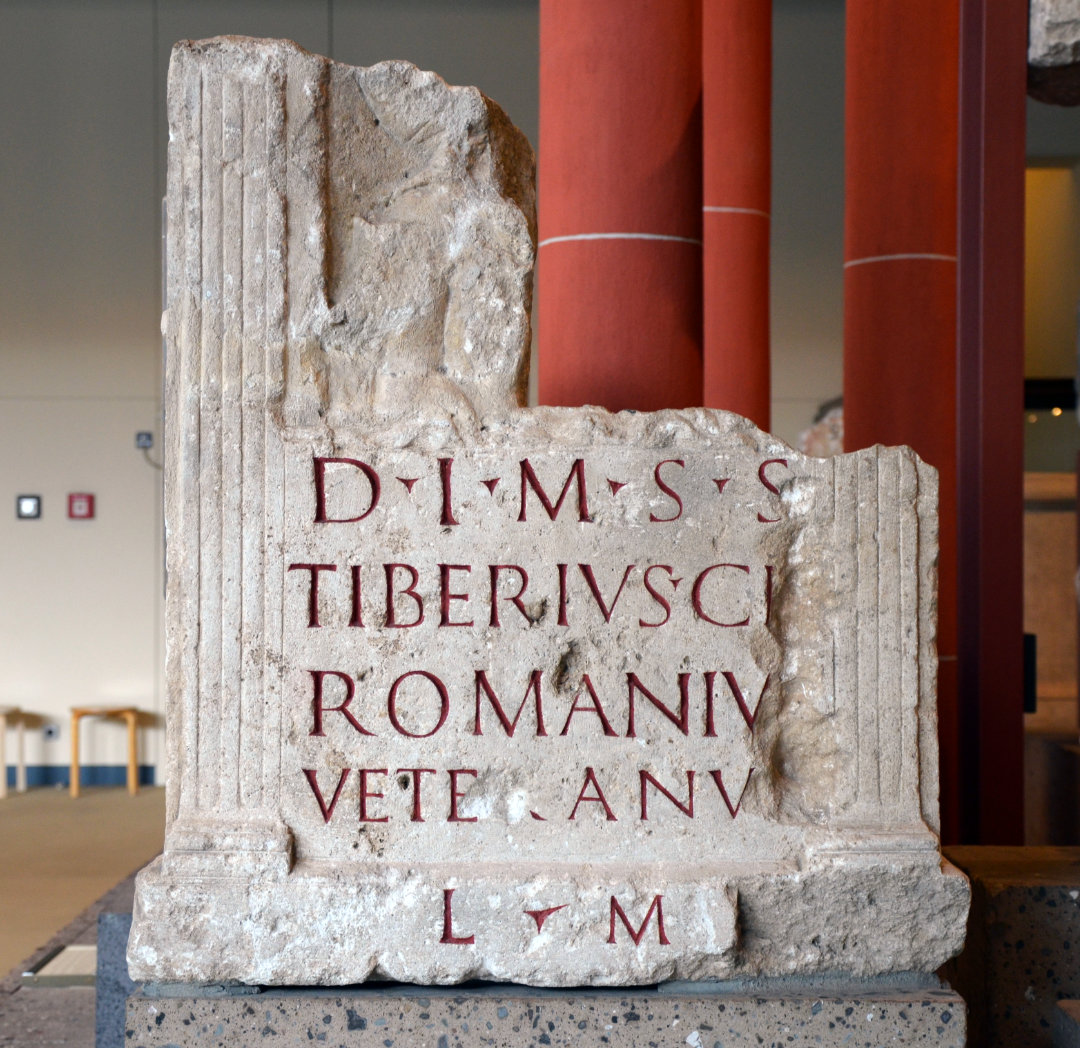
Votive inscription dedicated to Mithras by the veteran soldier Tiberius Claudius Romanius, from the Mithraeum II Köln, 3rd century.
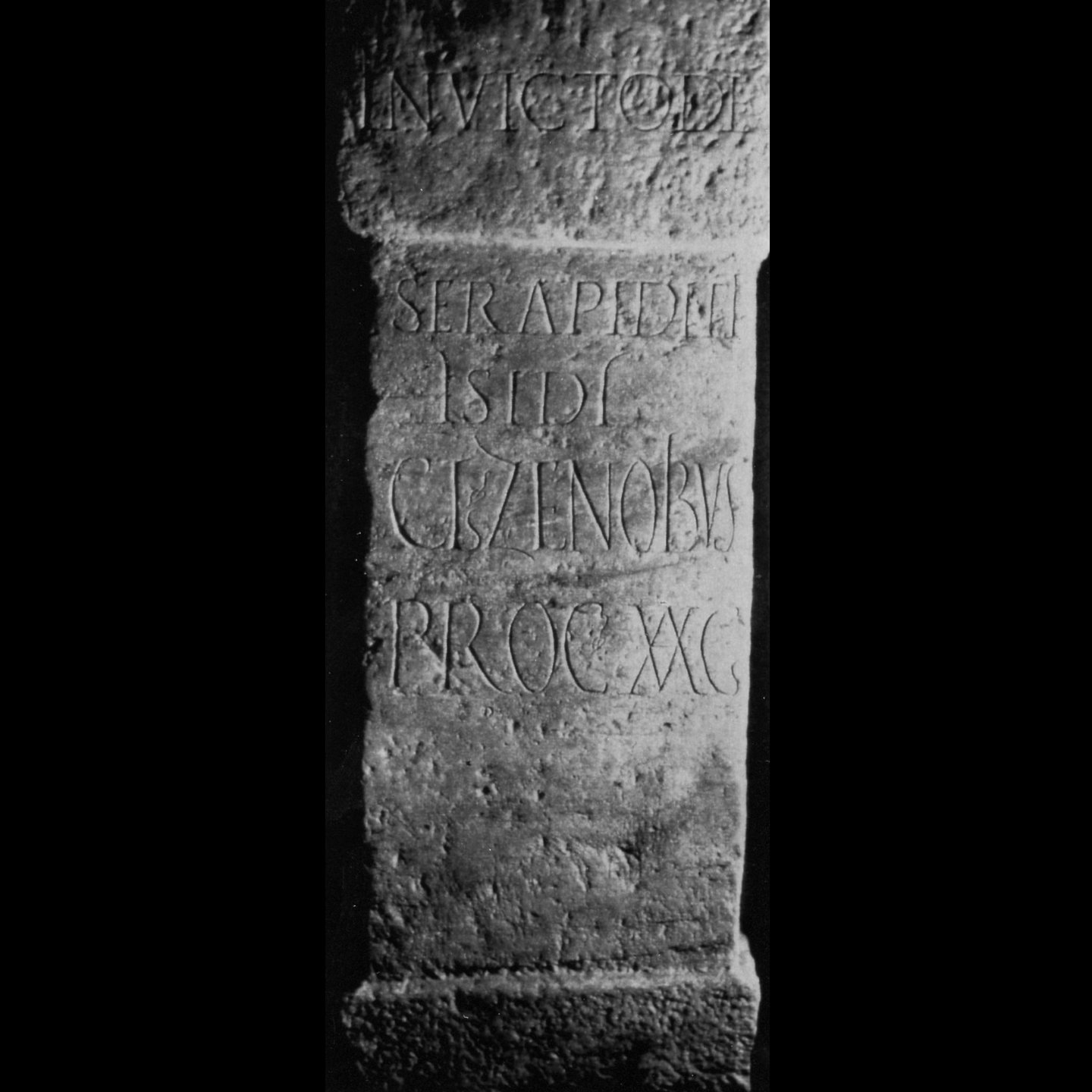
This slab dedicated to the invincible god, Serapis and Isis by Claudius Zenobius was found in 1967 in the walls of the city of Astorga, Spain.
This marble slab, found in the Mithraeum of San Clemente, bears an inscription by a certain Aelius Sabinus for the health of the Emperor Antoninus Pius and his sons.
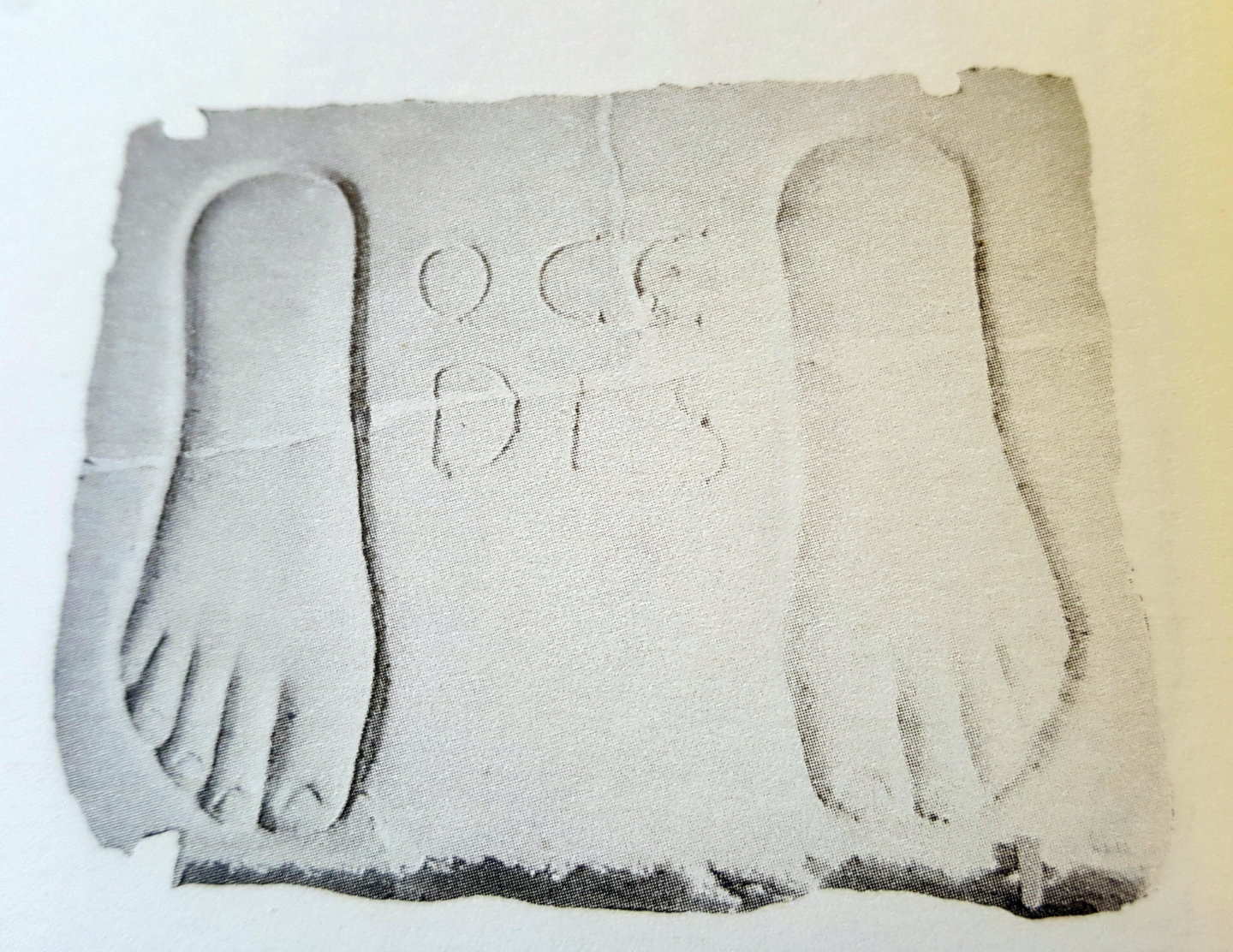
Recent interpretations link this marble inscription to the cult of the goddess Nemesis.
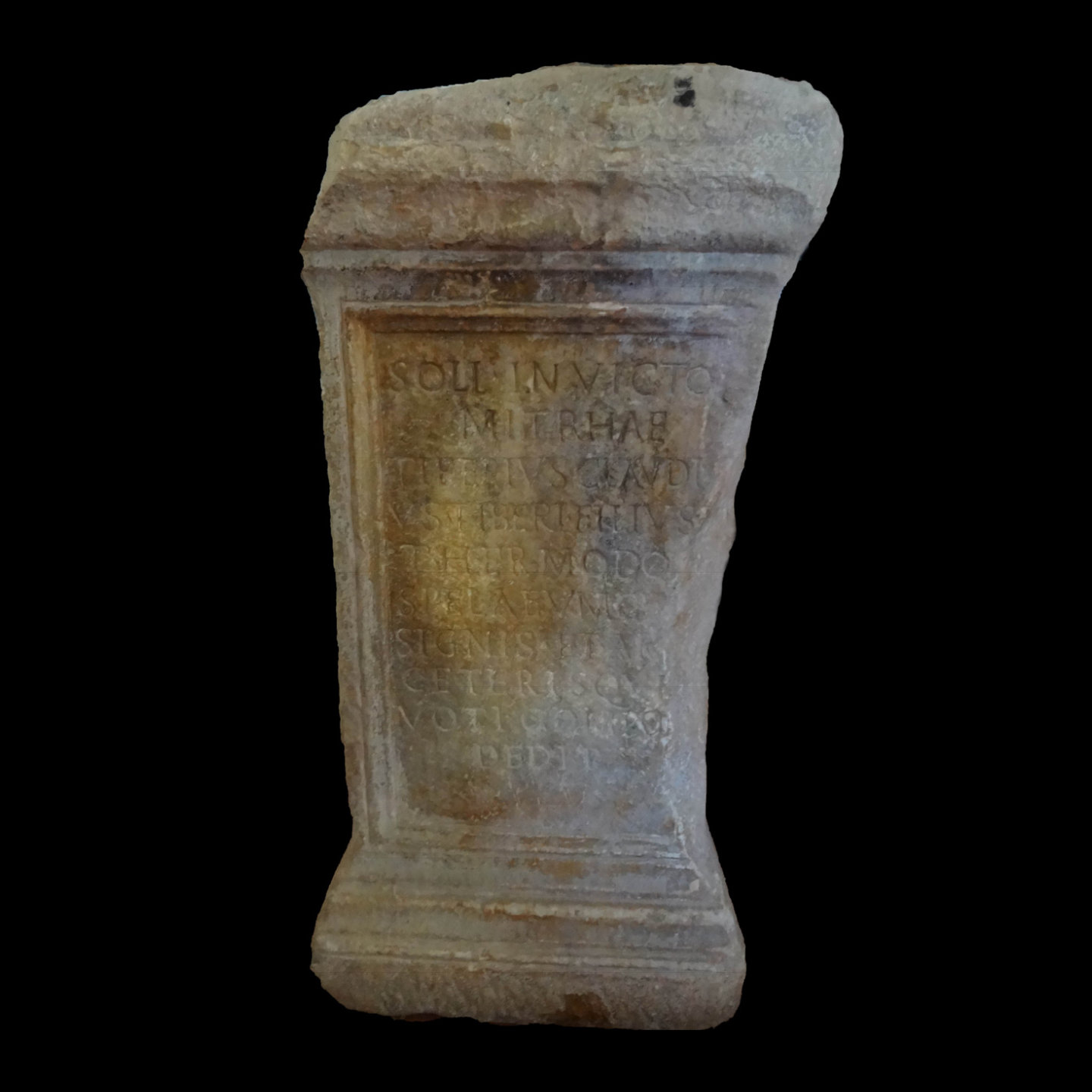
The donor of this Mithraic inscription from Bolsena, a certain Tiberius Claudius Thermoron, is known from two other monuments.
