Your search Arsha wa Qibar gave 1657 results.

Greek graffiti scratched on wall plaster, recording a list of everyday expenses from Dura-Europos, Roman Syria.
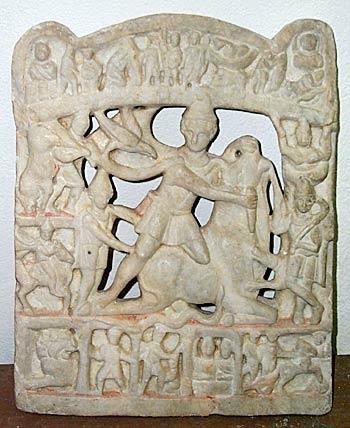
This Mithraic relief of the Danubian type was found in 1940 in the old town of Plovdiv.
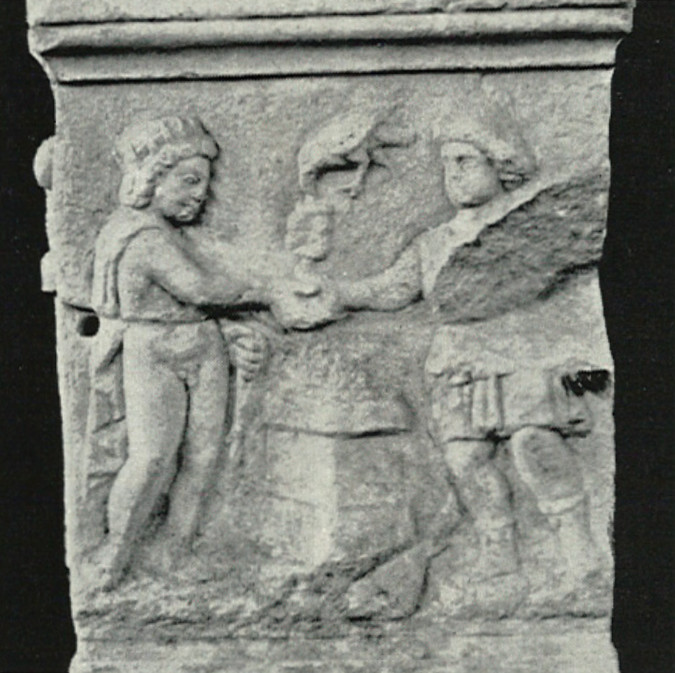
The altar of Ptuj depicts Mithras and Sol on the front and the water miracle on the right side.
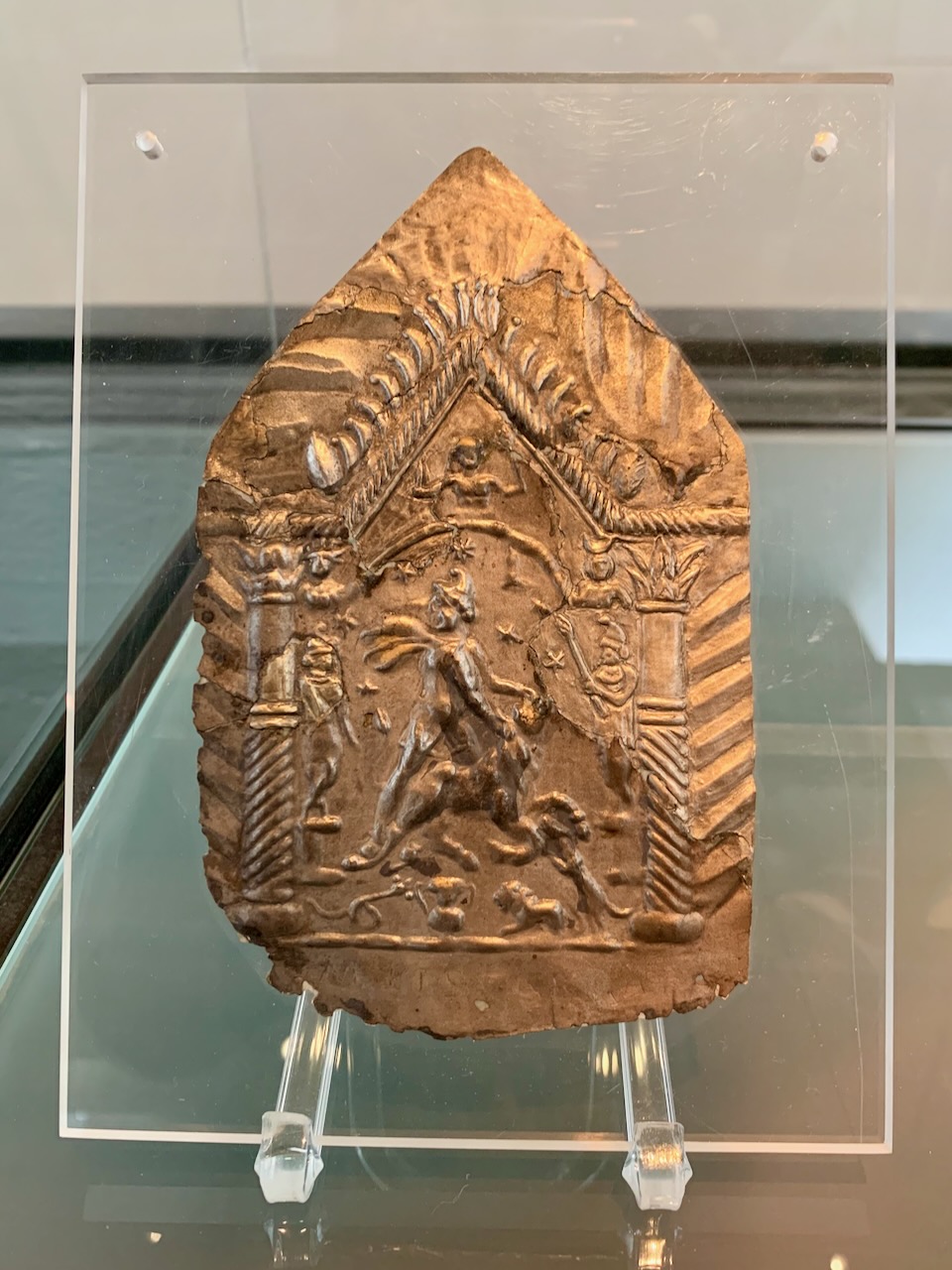
This plaque was found in Mithraeum I at Stockstadt broken into pieces inserted between the blocks of the socle of the cult relief, in the manner of a votive deposit.
The Mithraeum II in Stockstadt was in fact the first one known built in the vicus. It was destroyed by fire around 210.
Sandstone statue of Cautopates holding two downward-pointing torches, from the Ober-Florstadt Mithraeum.
Fragmentary sandstone relief from Rückingen showing a male figure walking right and holding a kantharos. Traces on the chest may indicate a torques or shoulder-cape.
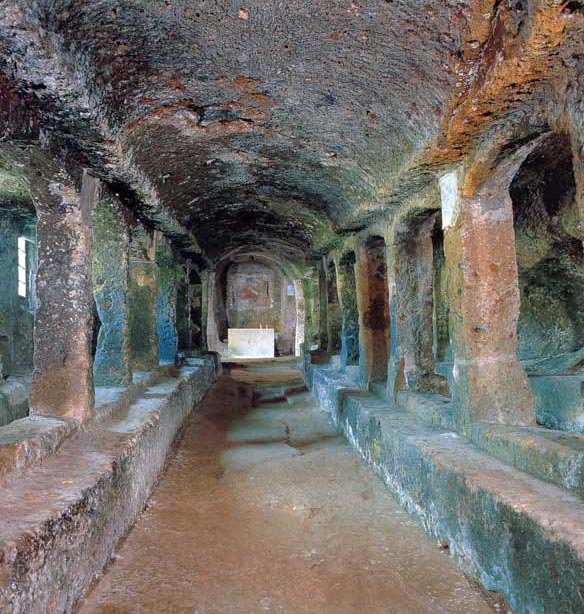
The Mithraeum of Sutri was built inside a rocky hill that also hosted the Roman theatre of the city.
This Mithraic temple, also known as the Mithraeum of the Olympii, dates to the 3rd century and was rediscovered in 15th-century Rome, but it has not been preserved.
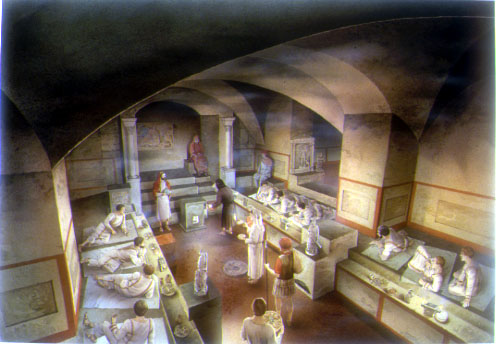
The Mithraeum of the Crypta Balbi was locted in the middle of a densely populated insula near the theatre of Cornelius Balbus.
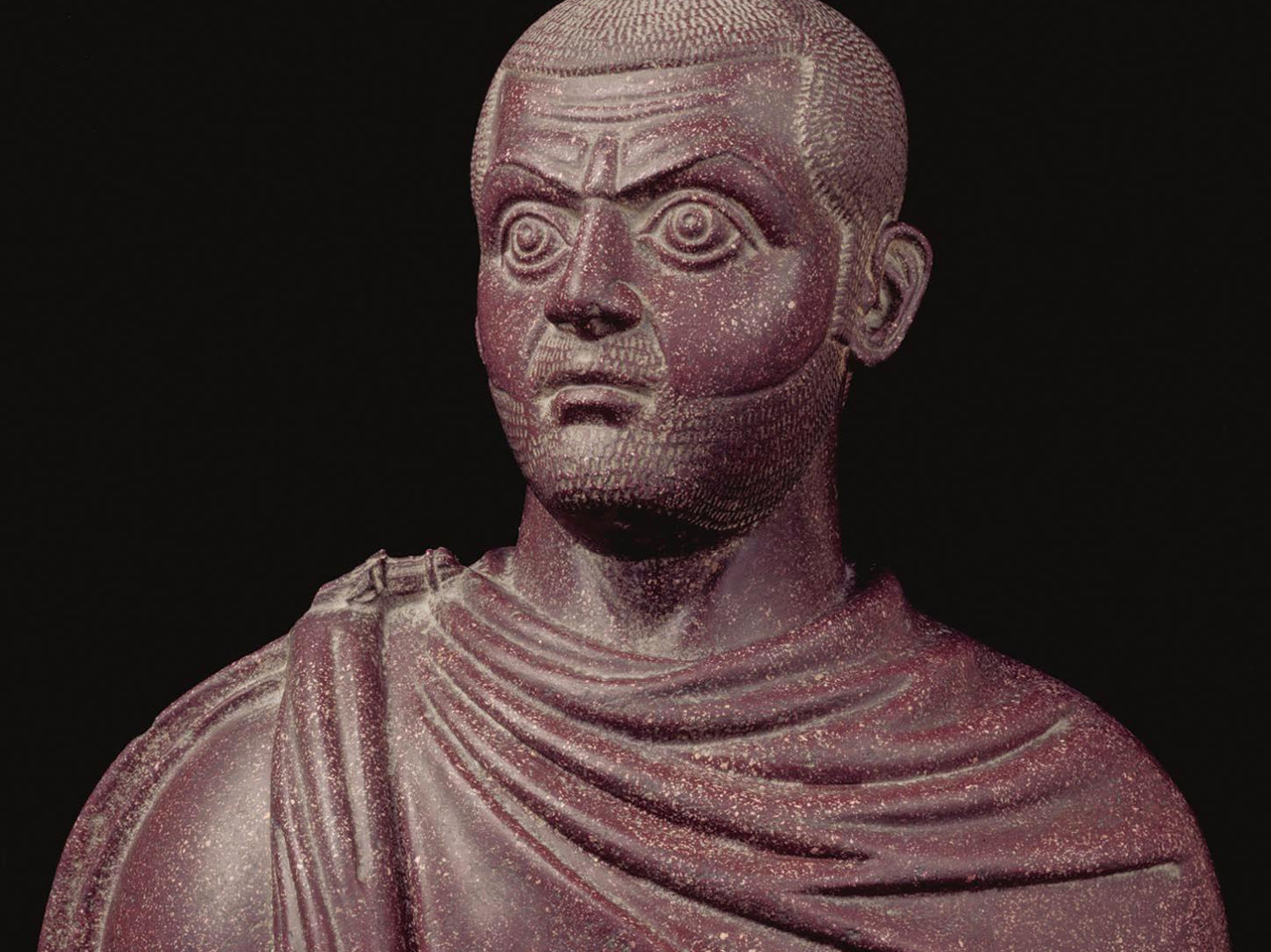
In the eighteenth year of Diocletian’s reign, Galerius Maximianus, persuaded by the sorcerer Theoteknos, consulted demonic oracles in a cave and was urged to initiate the persecution of the Christians.
Standing stone statuette of Cautopates, the downward-torch bearer, found at Bordeaux and kept in the city’s museum of antiquities (musée d’Aquitaine ?).
This collective volume explores the ways ancient peoples interacted with divine powers through prayer, magic, and the interpretation of the stars. Drawing on evidence from Mesopotamia to Late Antiquity, it situates these practices within broader religious and cosmological systems…

Followers of a revived version of Mithraism in contemporary Italy threaten to overthrow the government and destroy the Vatican. Rome is in chaos. Earthquakes shake the city. The Pope is in a coma.

In their groundbreaking new book, Mushrooms, Myths & Mithras, classics scholar Carl Ruck and friends reveal compelling evidence suggesting that psychedelic mushroom use was equally influential in early Europe, where it was central to initiation cerem

David Ulansey argues that Mithraic iconography was actually an astronomical code, and that the cult began as a religious response to a startling scientific discovery.
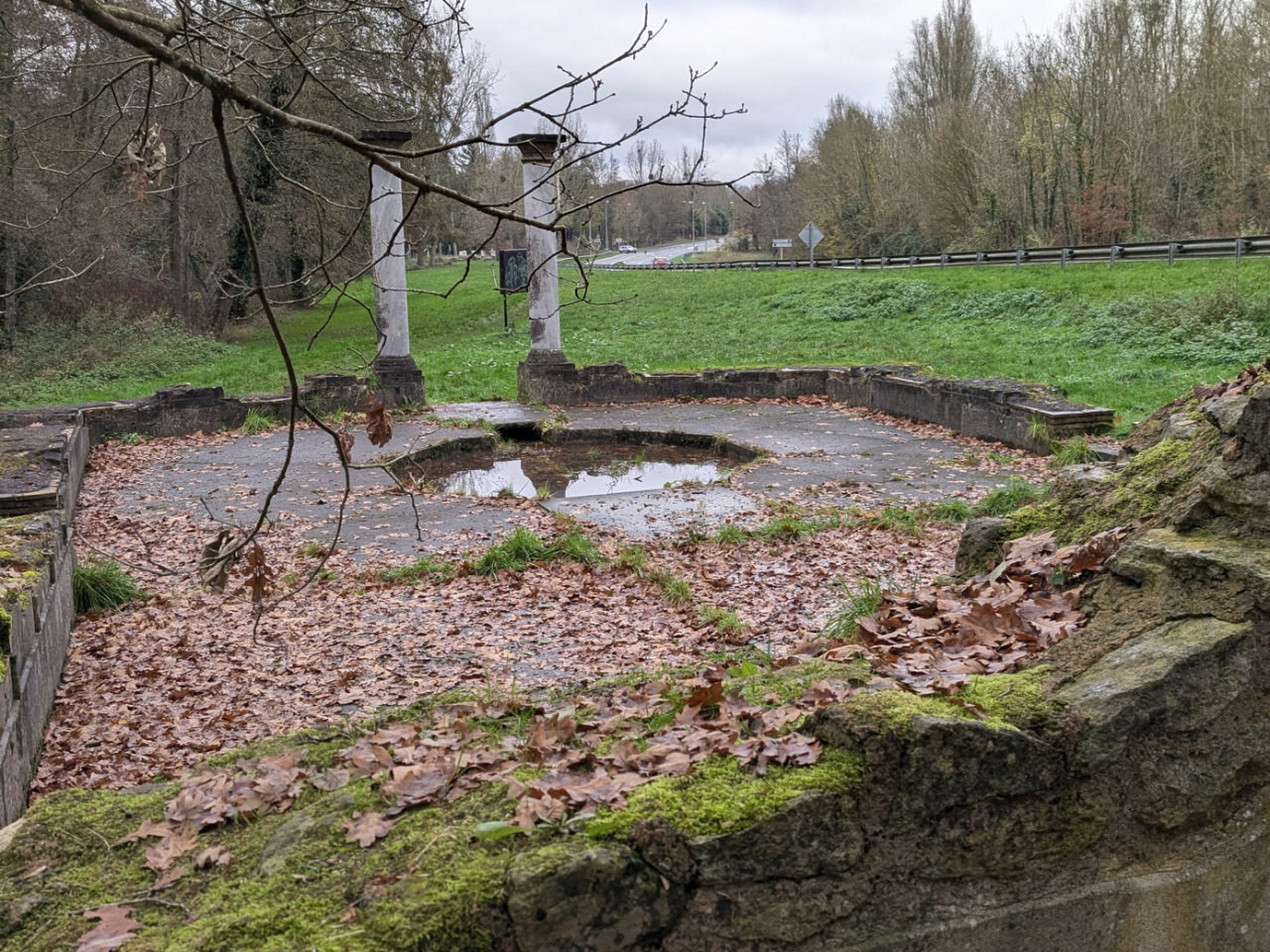
In the second half of the 4th century, a Mithraic temple was established within an earlier spring sanctuary at Septeuil, where the cult of the nymphs and Mithraic practices appear to have coexisted.
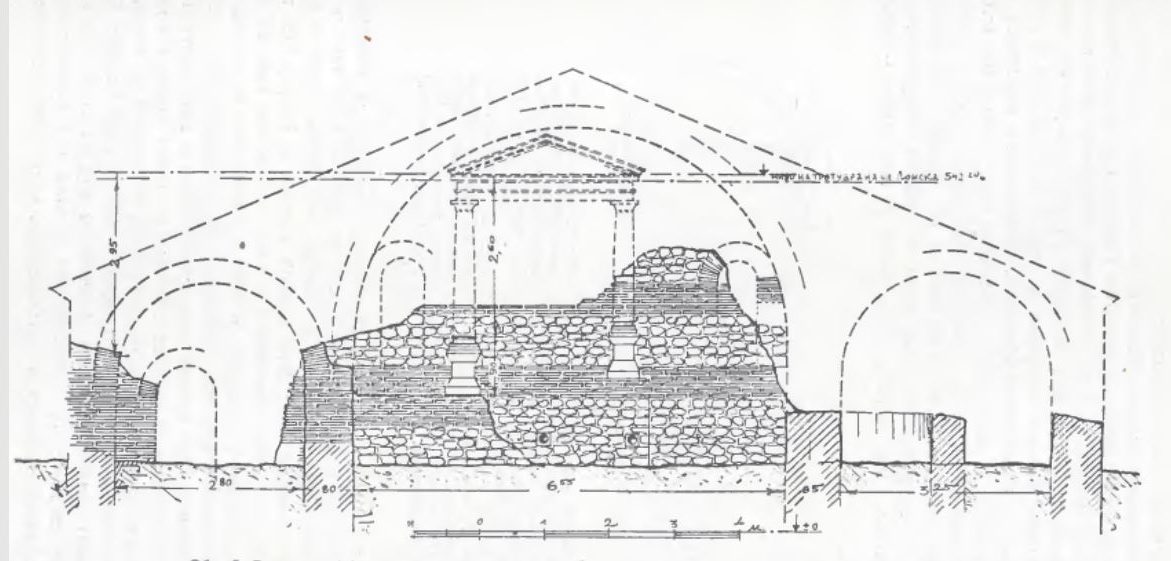
The Mithraeum of Serdica was found in the fortified area of the ancient city of Serdica, now Sofia, Bulgaria.
This inscription, which doesn’t mention Mithras, was found near the church of Santa Balbina on the Aventine in Rome.
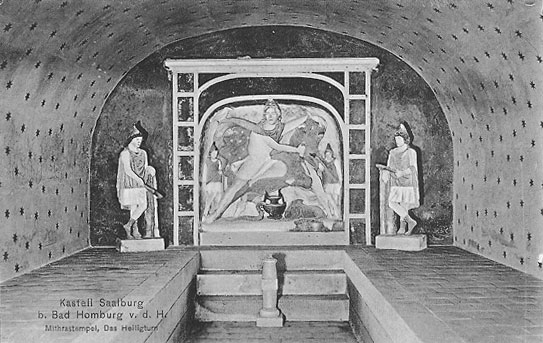
In the 1900s a model Mithraeum was built in Saalburg in the mistaken belief that there was an original temple of Mithras in an ancient Roman building.
