Your search Bad Ischl im Salzkammergut gave 2085 results.
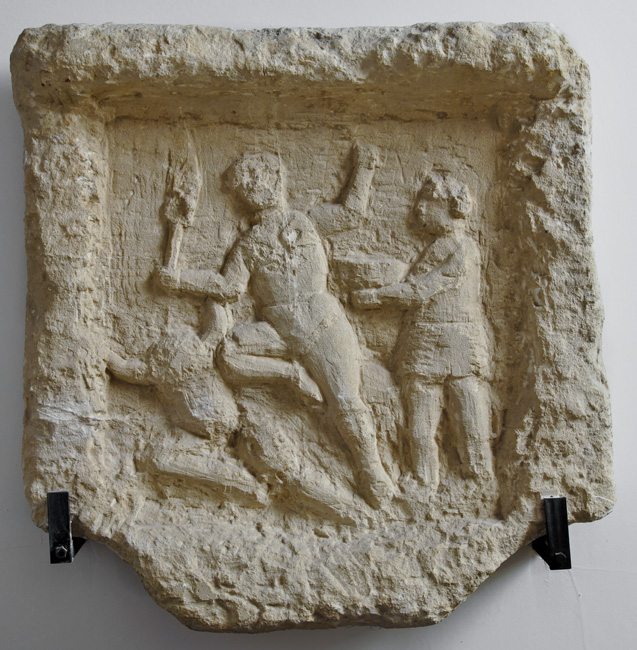
Possibly a Mithraic scene discovered in Mödling, Austria.
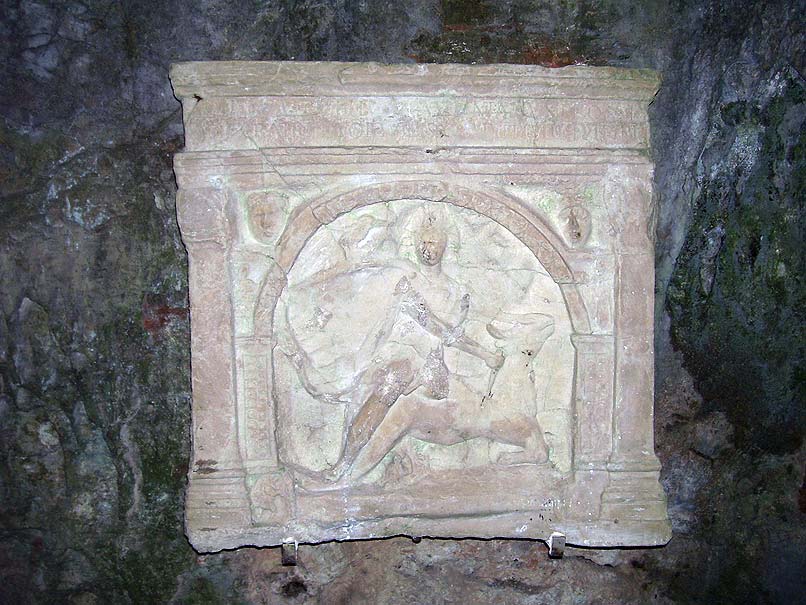
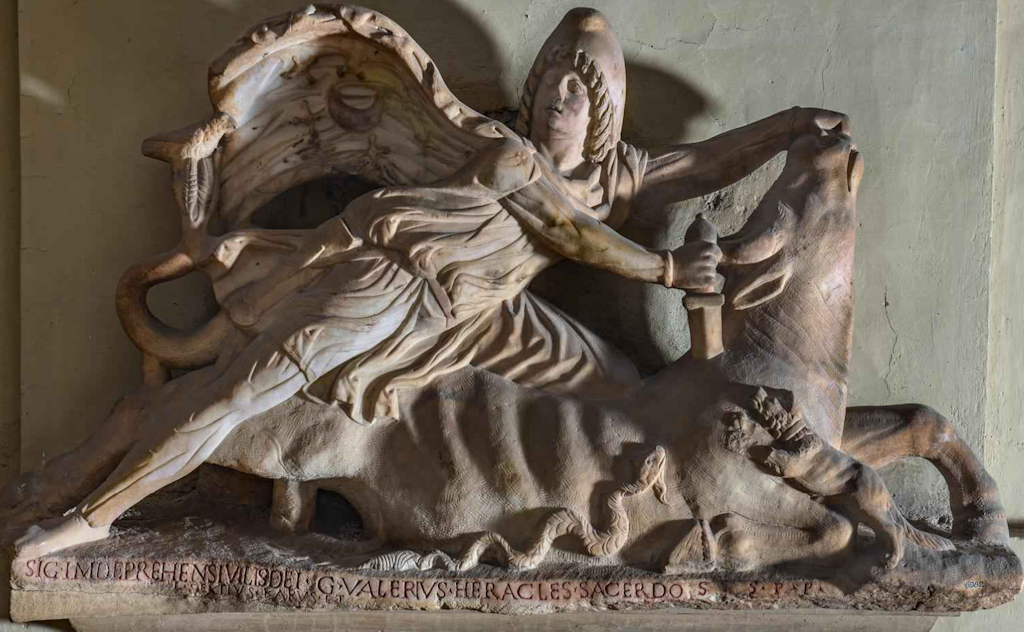
This sculpture of Mithras killing the bull was dedicated to the “incomprehensible god” by a certain priest called Gaius Valerius Heracles.

Antistes and patron of the Mithraea of the Painted Walls and the Imperial Palace at Ostia.

Benefactor of the Imperial Palace Mithraeum and possible member of Ostia’s African community.
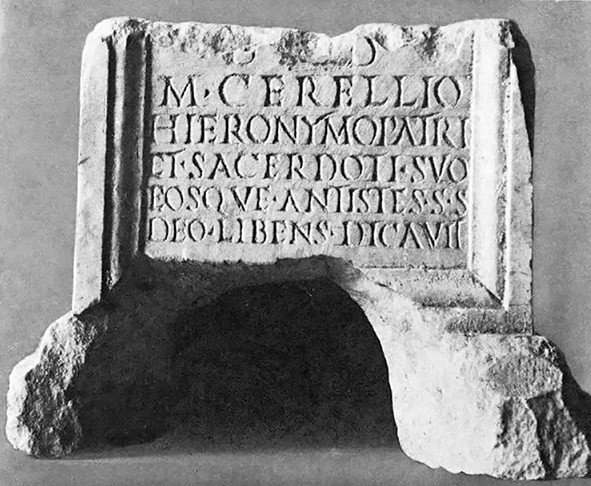
Small marble base recording a donation to M. Cerellio Hieronymo, pater and sacerdos, on behalf of an antistes who dedicated objects to the god, from the Mitreo degli Animali at Ostia.
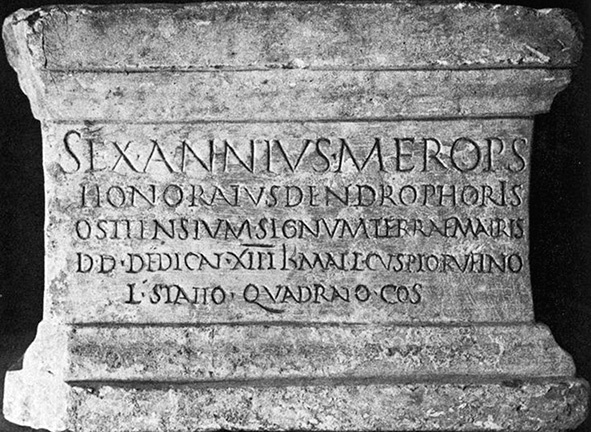
Small marble base dedicated by Sex. Annius Merops, honoured Dendrophoros, to the image of Terrae Matris, from the Mitreo degli Animali at Ostia, dated to 142 A.D.

Marble head of Helios-Mithras with curly hair and seven holes for fastening rays, from the Mitreo degli Animali at Ostia, Lateran Museum.


An imperial freedman who restored the Mithraeum of Sabazeus for the Mithraic brethren.
Altar from Vratnik near Senia, Dalmatia, dedicated to Soli invicto Mithrae by Faustus, slave of Tiberius Saturninus, for himself and his family.

Donor of the monumental tauroctony that served as the central cult image of Mithraeum IV in Aquincum.

An imperial slave and customs administrator of the Illyrian tax system, he financed and built a Mithraic temple in Moesia Superior.
Praeses of the Noric Mediterranean province, of equestrian rank, restaured the Mithraeum of Virunum in 311.
A pater of the Ostian Mithraic community and member of the guild of carpenters.
A Mithraic pater at Ostia associated with the dedication of an image of Arimanius in the Casa di Diana mithraeum.
Syndexios in Ostia, his name Marsus suggests that he was a snake-charmer.
Late Roman senator and governor of Numidia whose inscriptions present him as a Mithraic pater and initiate in several mystery cults.

Governor of Numidia and prolific dedicator of monuments to Sol Mithras, Sol Invictus and other deities in late Roman North Africa.
