Your search Boulogne-sur-mer gave 591 results.
Carved directly into the rock of the Rožanec sanctuary, this tauroctony relief preserves an unusually complete composition.
Roman Sicilia preserves Mithraic evidence shaped by Mediterranean mobility and the island’s strategic position between east and west.
The evidence from Roman Africa reflects the implantation of Mithraic cults within prosperous urban centres of the western Mediterranean.
Roman Syria preserves a major eastern corpus of Mithraic evidence within one of the empire’s most interconnected regions.
Pannonia preserves one of the most important frontier corpora of Mithraic evidence in the Roman world.
Roman Asia preserves a rich and diverse body of Mithraic evidence connected to the major cities of western Anatolia.
Bithynia and Pontus preserve important evidence for the diffusion of Mithraic cults across the Black Sea and northwestern Anatolia.
A probable Mithraic sanctuary at Poetovio, identified by Vermaseren as the so-called Mithraeum IV on the basis of four associated inscriptions.
This inscription probably belonged to the fourth mithraeum of Poetovio and records the restoration of a Mithraic temple by the dux Aurelius Iustinianus.
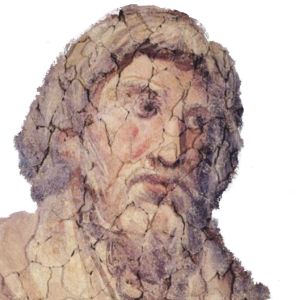
North African author, Platonic philosopher and rhetorician associated with the Mithraic milieu of Ostia.

An imperial slave and customs administrator of the Illyrian tax system, he financed and built a Mithraic temple in Moesia Superior.
One of the clearest examples of the late Roman aristocracy’s involvement in the mysteries of Mithras and other initiatory cults during the fourth century.
The remains of this Mithraeum were discovered in 1930 in the Cetatea district of Alba Iulia, ancient Apulum.
This finely carved marble tauroctony from Interamna features an unusual series of altars and ritual vases surrounding the scene.
This eulogy of Saint Eugene of Trapezos tells how, in the time of Diocletian, he and two other Christian fellows destroyed a statue of Mithras.
This stele found at the foot of the Aventine bears an inscription of Kastos father and son, and mentions several syndexioi who shared the same temple.
The lion-headed marble from Muti's gardens has a serpent entwined in four coils around his body.
Fragment of an alabaster relief from Cologne with part of a tauroctony scene. Only the tip of Mithras’ Phrygian cap and small narrative details above are preserved.
Sepulchral limestone inscription from the vicinity of the Mithraeum at Colonia Agrippina (Germania Inferior), mentioning the Mithraic grade Corax.
Gnostic amulet found in the ancient Agora of Athens, depicting Abraxas on one side and a Mithraic inscription on the other.
