The Mithraic evidence documented in Roman Africa is concentrated primarily in urban environments connected to commerce, administration and imperial infrastructure. The material illustrates the western diffusion of the cult across North Africa, particularly within cities integrated into the economic and maritime networks of the Roman Mediterranean.

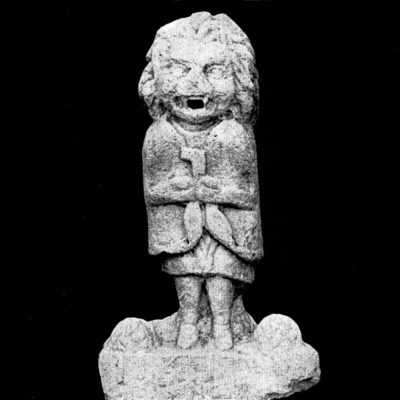

People attested in Africa
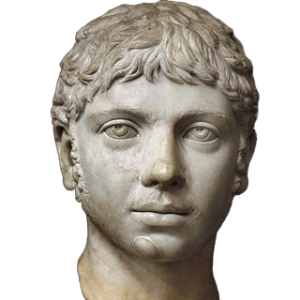









Provinces of Africa
Africa Proconsularis
Africa Proconsularis formed one of the principal urban and administrative centres of Roman North Africa where Mithraic cults circulated through prosperous civic networks.
Numidia
Numidia occupied a frontier and military landscape where Mithraic cults circulated through urban settlements and imperial infrastructure.
Tripolitania
Tripolitania connected the southern Mediterranean coast to caravan routes and maritime exchange networks of Roman North Africa.
Places in Africa
Cuicul
Roman colonial city of Numidia, later known as Djémila, renowned for its exceptionally well-preserved late antique urban remains.
Castellum Tidditanorum
Settlement in inland Numidia associated with the mountainous region south of Cirta and the wider network of North Africa.
Cirta
Cirta, also known by various other names in antiquity, was the ancient Berber and Roman settlement which later became Constantina, Algeria.
Diana Veteranorum
Diana Veteranorum, today a village called Ain Zana, was an ancient Roman-Berber city in Algeria.
Gholaia
The frontier site of Gholaia formed part of the defensive and logistical system of the Limes Tripolitanus in the Libyan desert.
Icosium
Icosium was a Berber city that was part of Numidia which became an important Roman colony and an early medieval bishopric in the casbah area of actual Algiers.
Lambaesis
Lambaesis, Lambaisis or Lambaesa, is a Roman archaeological site in Algeria, 11 km southeast of Batna and 27 km west of Timgad, located next to the modern village of Tazoult.
Leptis Magna
Leptis or Lepcis Magna, also known by other names in antiquity, was a prominent city of the Carthaginian Empire and Roman Libya at the mouth of the Wadi Lebda in the Mediterranean.
Madauros
Madauros was a Roman-Berber city in Numidia, in present-day Algeria, renowned in antiquity as an important intellectual and educational centre of Roman North Africa.
Oea
Oea was an ancient city in modern-day Tripoli, Libya, founded by the Phoenicians in the 7th century BC. It became a Roman-Berber colony in the second half of the 2nd century BC.
Inscriptions from Africa
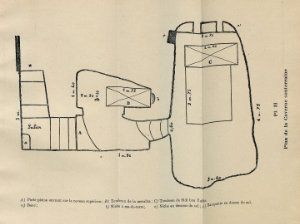
Mithraeum of Cirta
A cave with signs and ornaments, dedicated by Publilius Ceionius Caecina Albinus, a man of eminent standing.
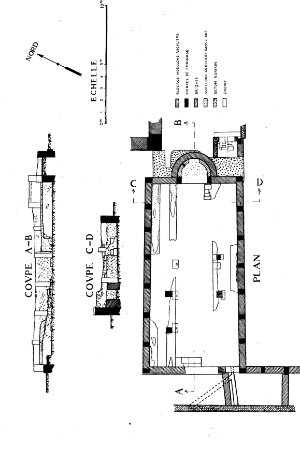
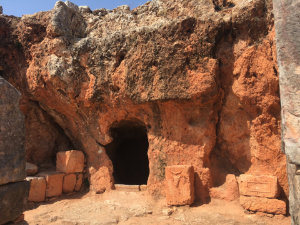
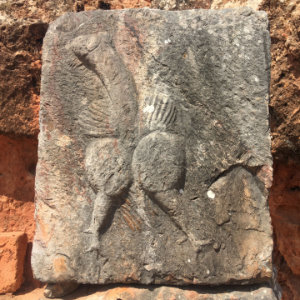
Mithraeum of Tiddis
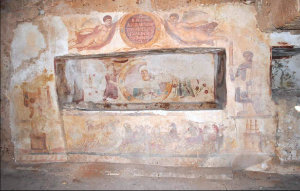
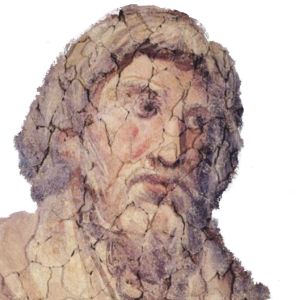
Frescoes from the tomb of Aelius Magnus and Aelia Arisuth in Oea
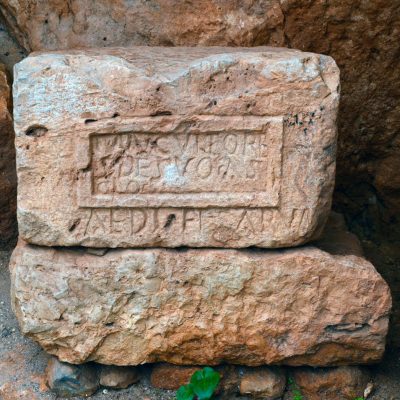
Cultores Inscription from Tiddis
Inscription by Numidius Decens from Lambaesis
Inscriptions of Valerius Maximianus at Lambaesis
Altar from Lambaesis by Florus
Inscription of Aphrodisius
Altar from Lambaesis by Celsianus
Altar from Ain-Zana
pe/regrinorum / votum solvit.
Plaque of Meknès
Altar from Lambaesis by Aurelius Sabinus
References
- Aleš Chalupa (2023) Římský kult boha Mithry. Atlas lokalit a katalog nálezů I
- David Walsh (2018) The Cult of Mithras in Late Antiquity. Development, Decline and Demise ca. A.D. 270-430
- Fahim Ennouhi (2025) Le culte de Mithra en Afrique du Nord antique. Etude épigraphique et archéologique.
- Laurent Bricault & Philippe Roy (2021) Les cultes de Mithra dans l’Empire romain
