Your search Bu Njem gave 1882 results.
On the occasion of the discovery of a Mithraeum in Cabra, Spain, we talk to Jaime Alvar, a leading figure in the field of Mithraism. With him, we examine the testimonies known to date and the peculiarities of the cult of Mithras in Hispania.

This inscription reveals the names of 36 cultori of Sentinum, one of whom bears the title of pater leonum.
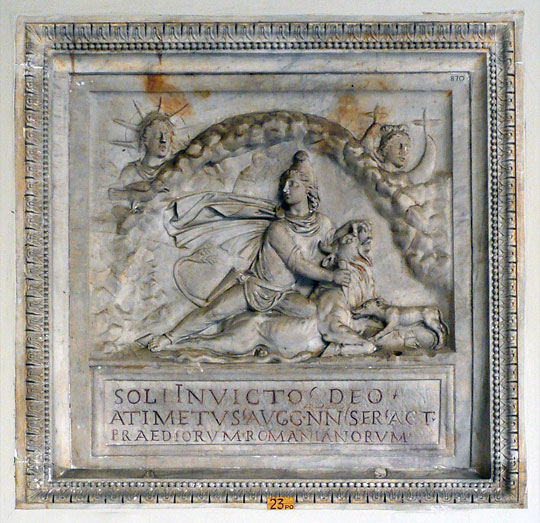
White marble relief depicting Mithras slaying the bull, dedicated by Atimetus.
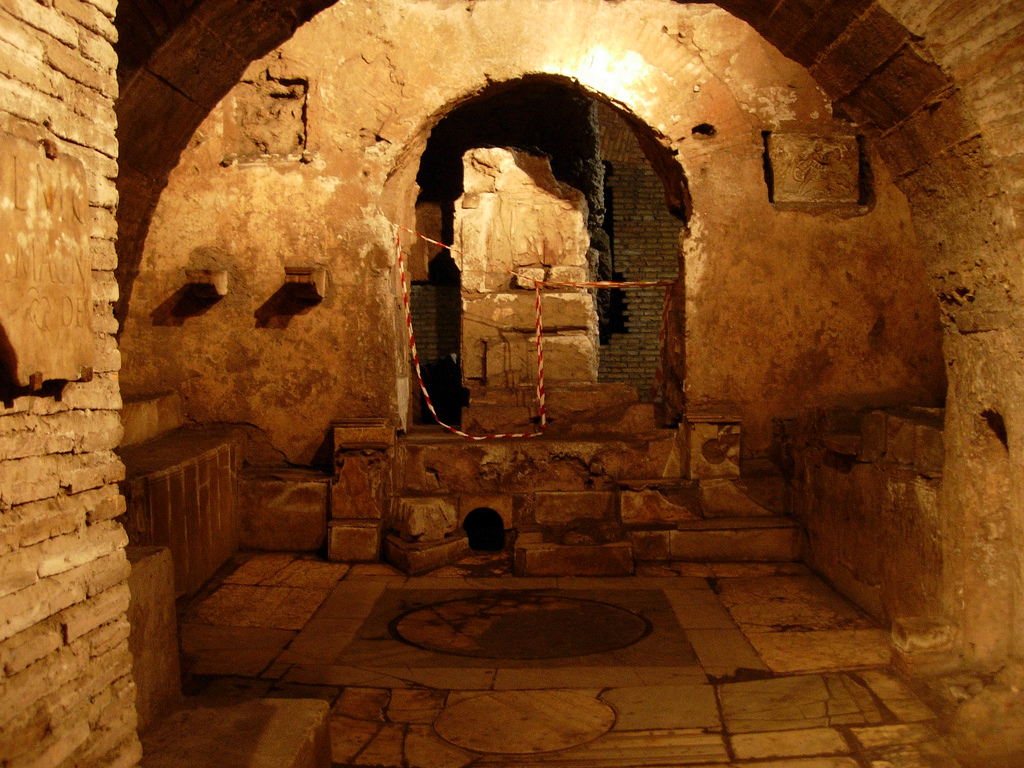
The Mithraeum of the Circus Maximus was discovered in 1931 during work carried out to create a storage area for the scenes and costumes of the Opera House within the Museums of Rome building.
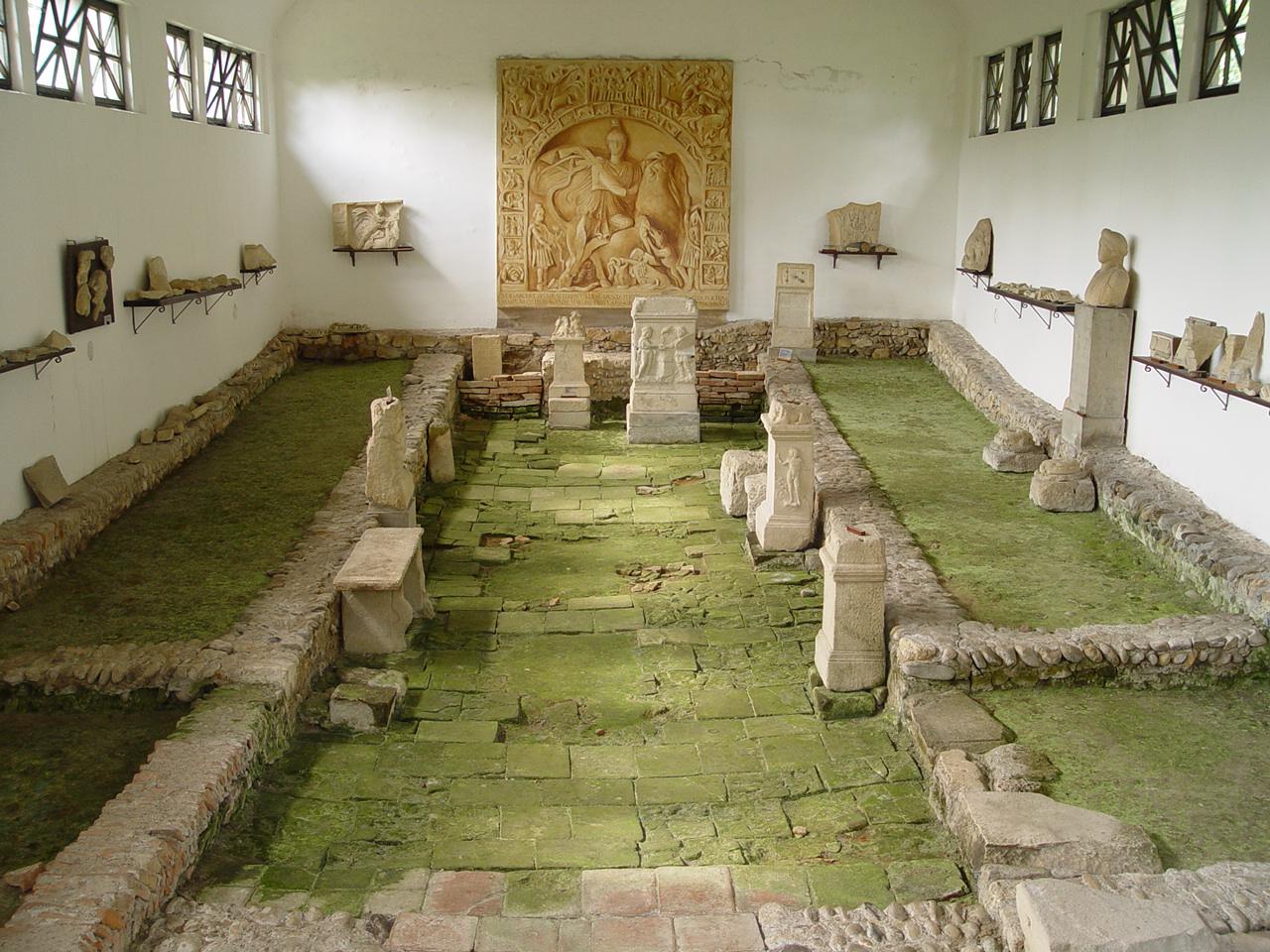
Mithraeum III in Ptuj was built in two periods: the original walls were made of pebbles, while the extension of a later period was made of brick.
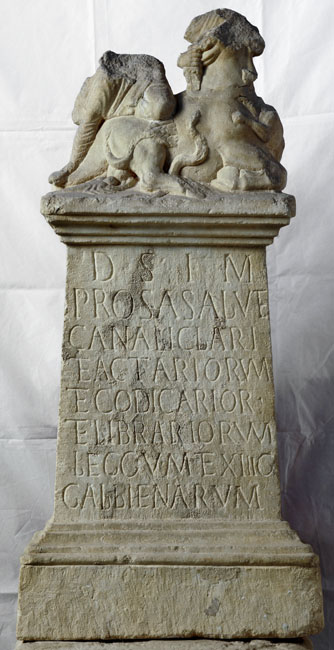
Remarkable fragmentary sculpture of Mithras slaying the bull on an inscribed altar found in Mithraeum III at Ptuj.
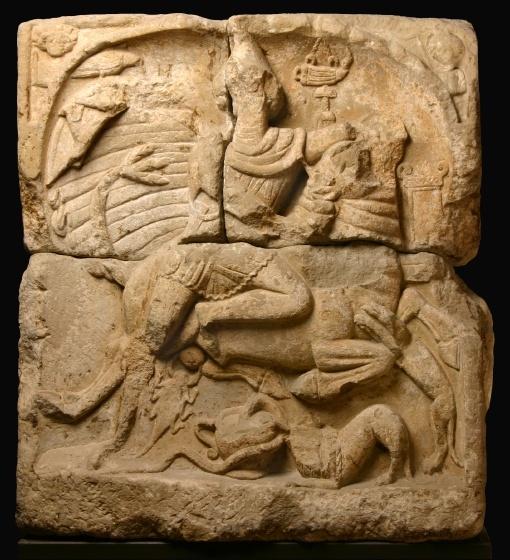
This relief of Mithras killing the bull, now on display in Stuttgart, includes a small altar with a sacrificial knife and an oil lamp.
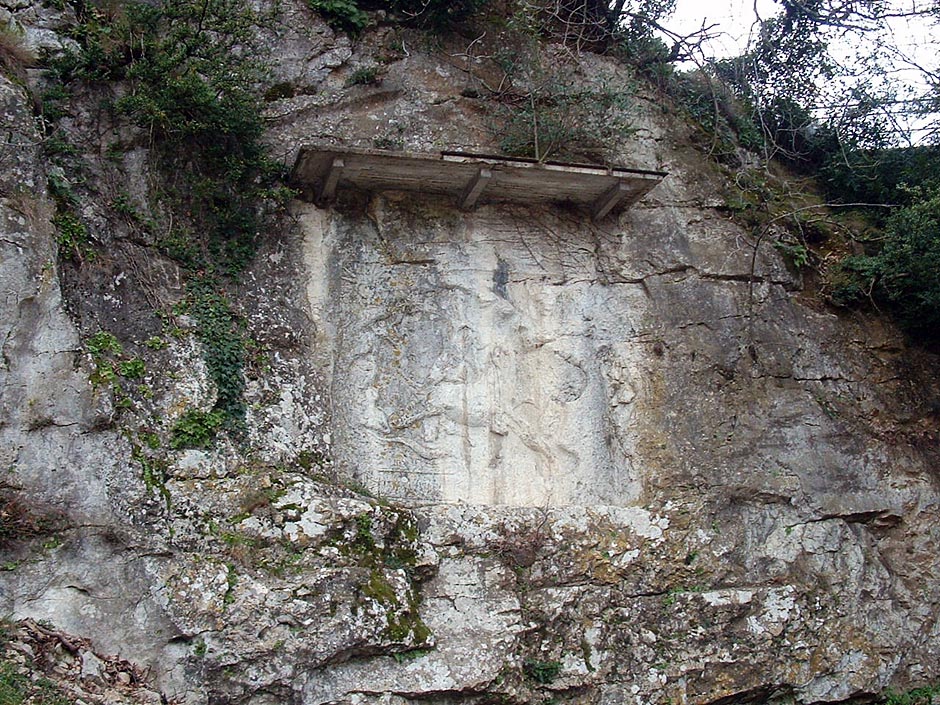
The Mithréum de Bourg-Saint-Andéol was built against a rock where the main Tauroctony was chiseled.
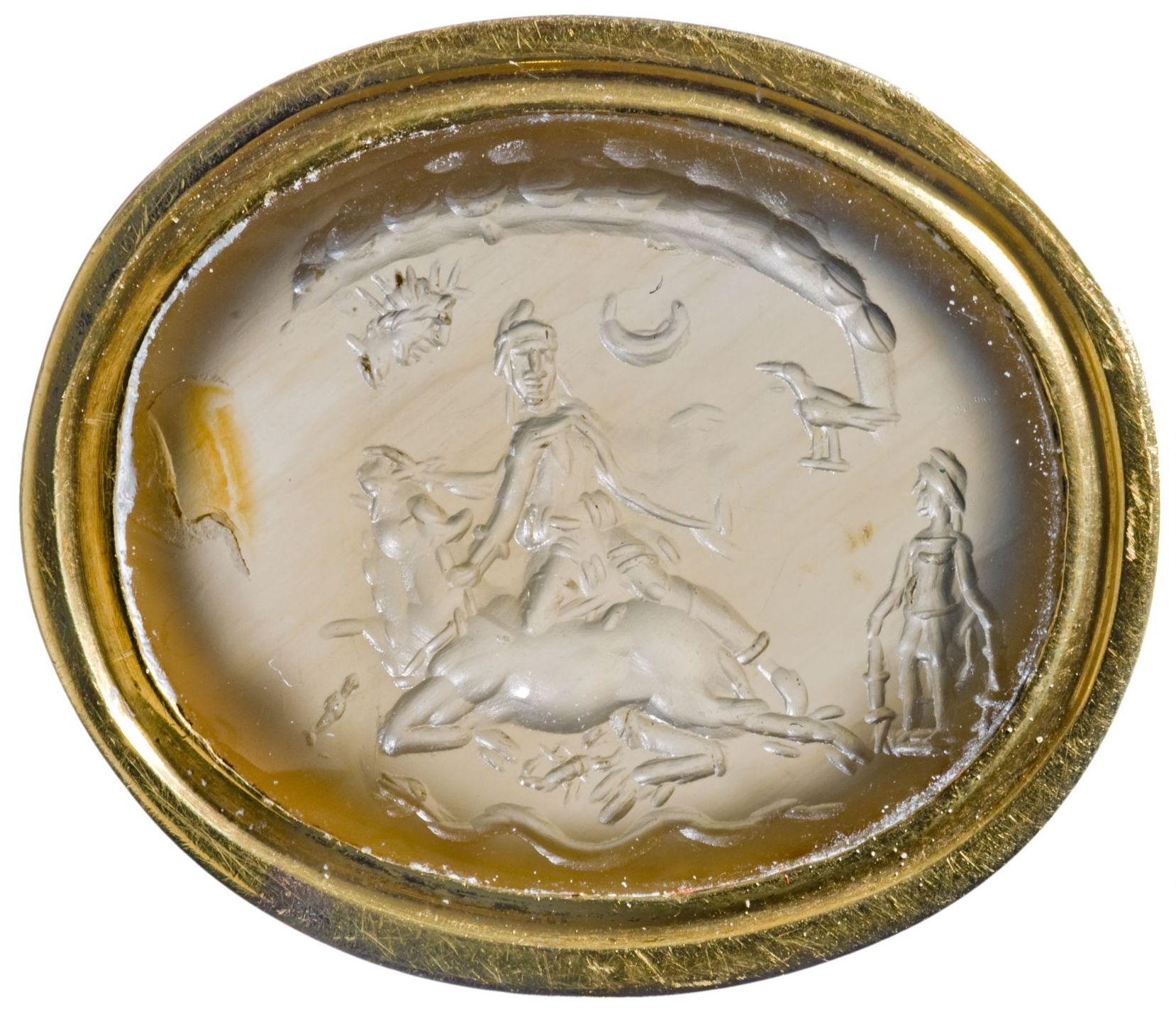
This intaglio depicting Mithras killing the bull is preserved at the Bibliothèque national de France.
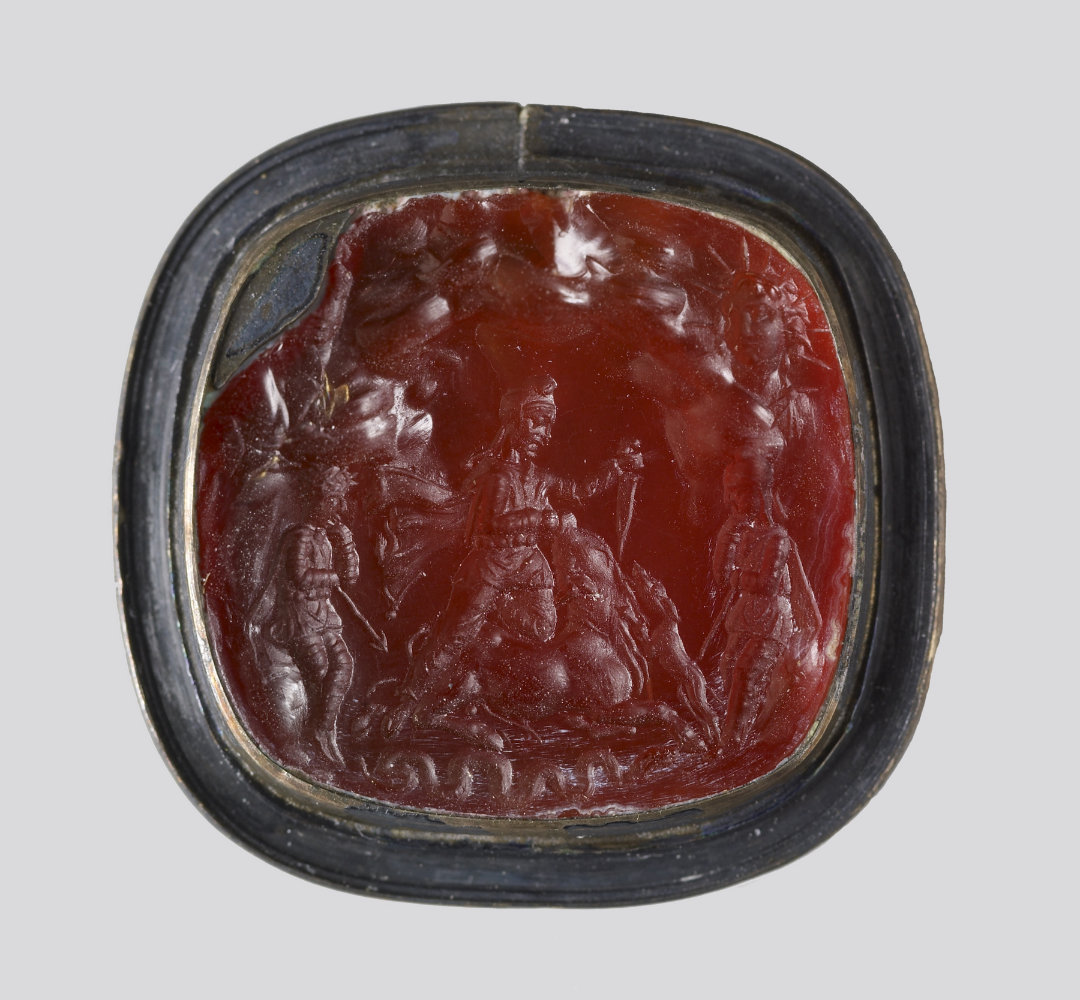
This ancient carnelian intaglio mounted in gold depicts Mithras slaying the bull surrounded by his companions Cautes and Cautopates.
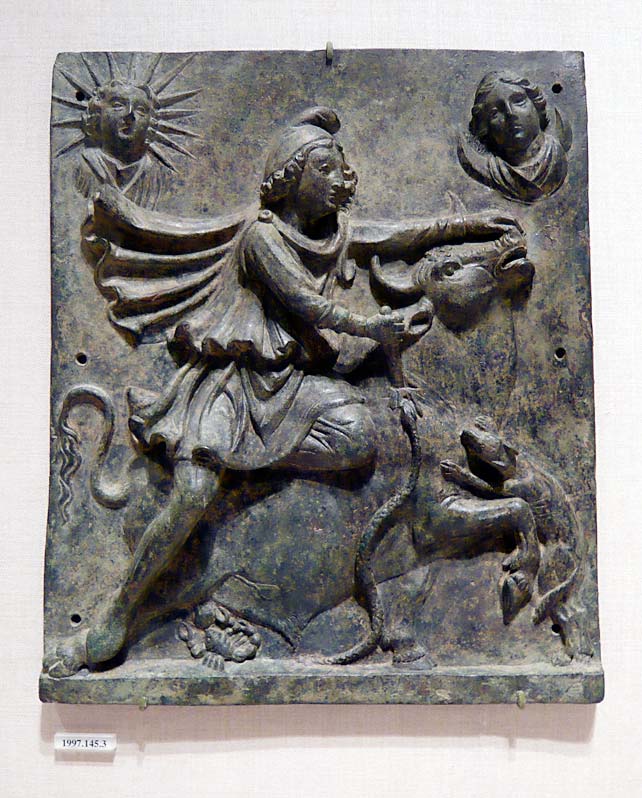
Mithras Tauroctony on bronze exposed at the Metropolitan Museum of New York.
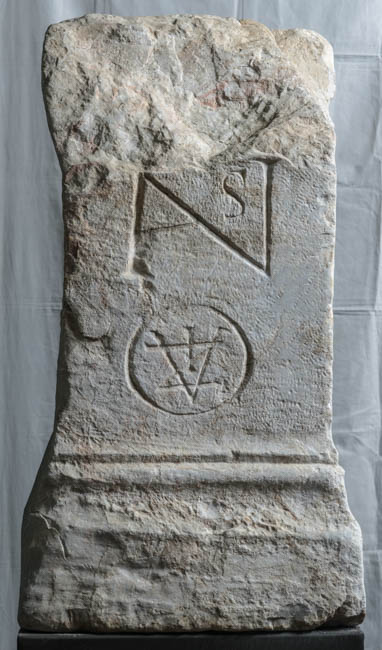
The limestone altar at Klechovtse in North Macedonia bears an inscription to the invincible Mithras.
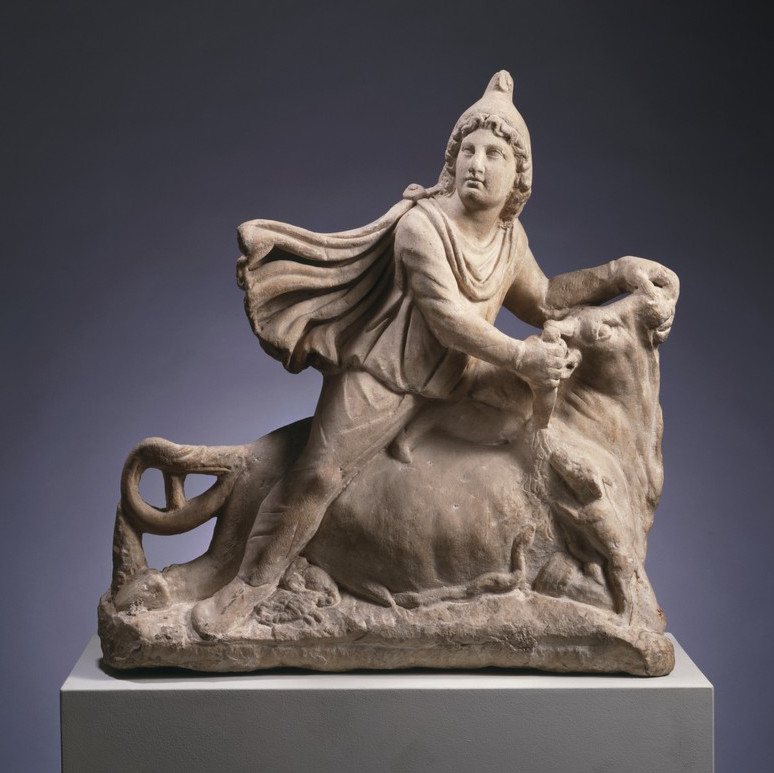
This sculpture of Mithras killing the bull may come from Rome, probably found in 1919.
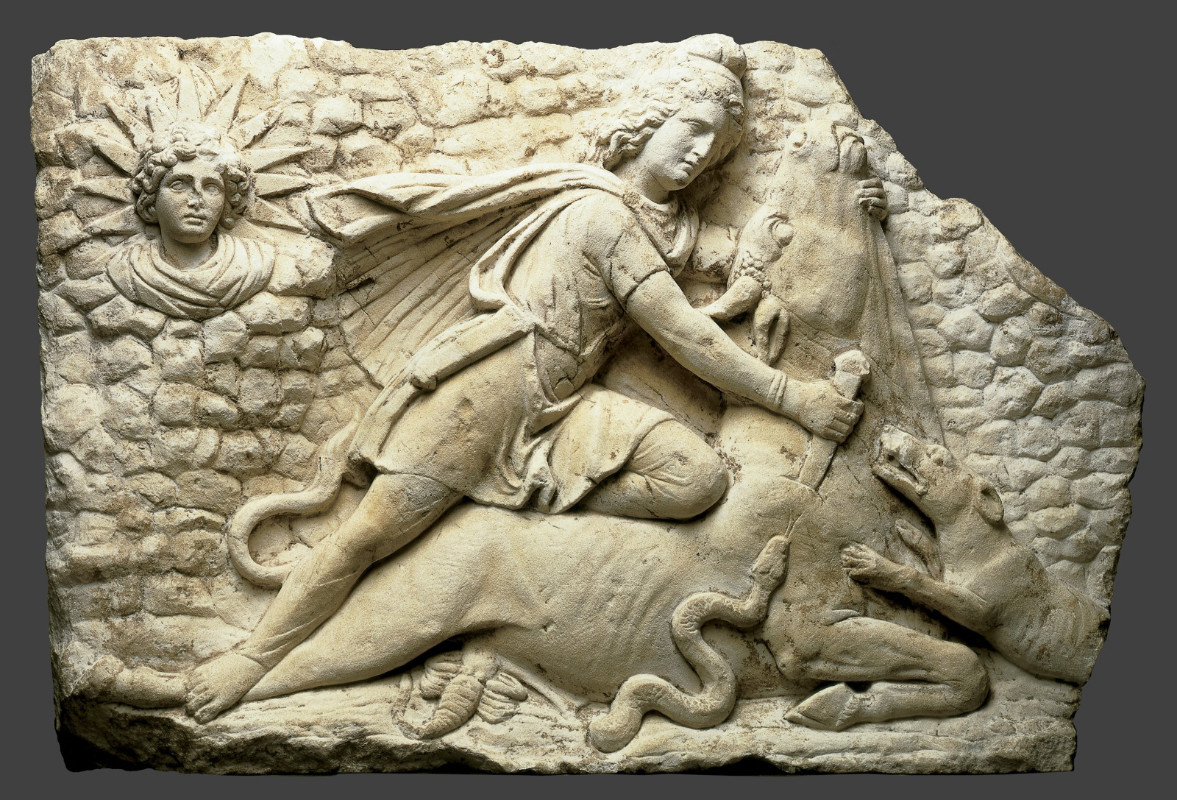
In the tauroctonic relief on display at the Cincinnati Art Museum, Mithras slaughters the bull over a rocky background.
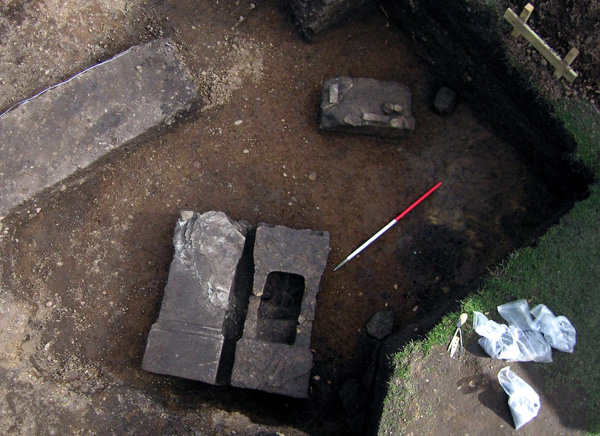
The Mithraeum of Inveresk, south of Musselburgh, East Lothian, is the first found in Scotland, and the earliest securely dated example from Britain.
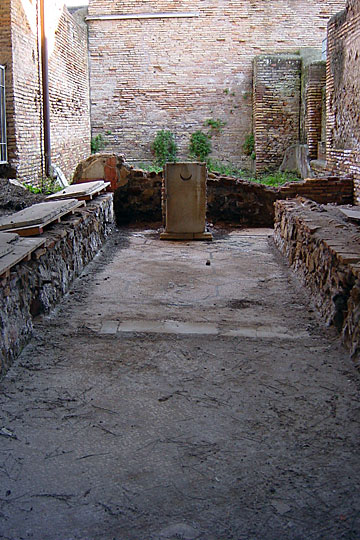
The Mithraeum of Lucretius Menander was installed in the early 3rd century in an alley to the east of a Hadrianic building named after the solar god temple.
A bronze plaque records the existence of a mithraeum at Virunum that collapsed and was rebuilt by members of the community.
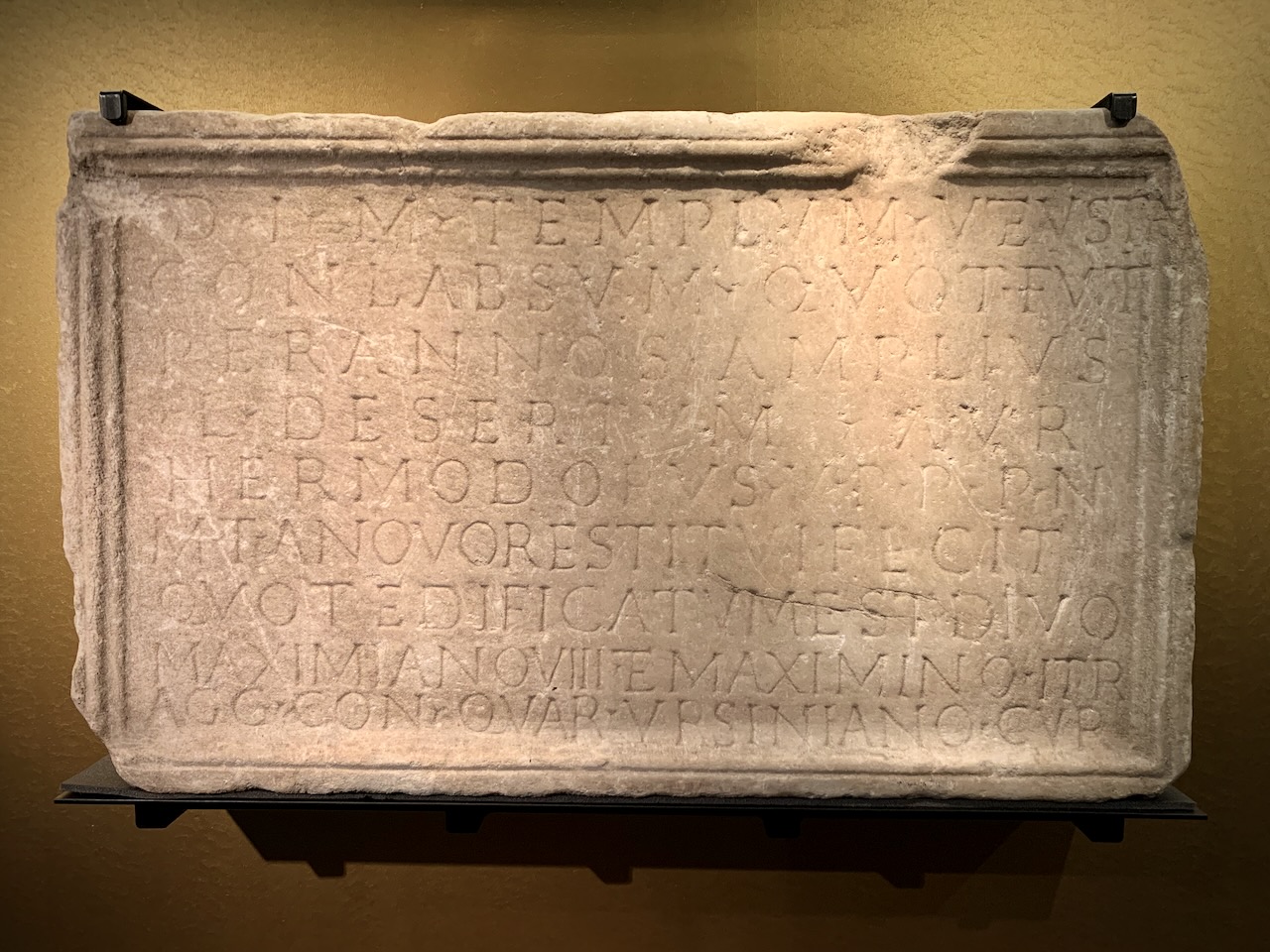
This marble gives some details of the reconstruction of the Virunum Mithraeum.
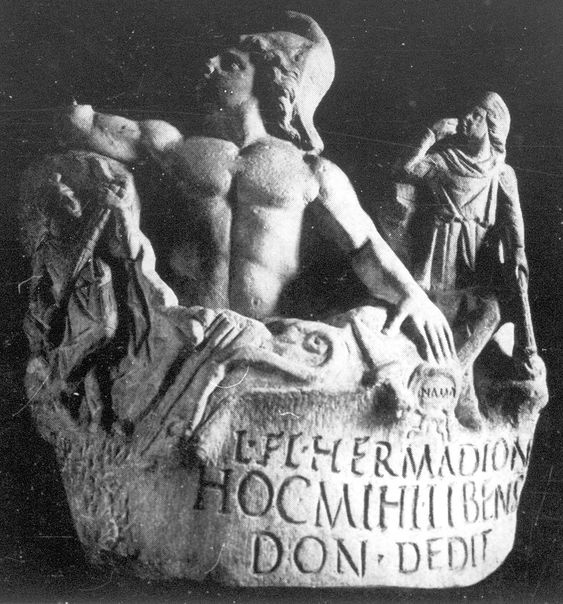
Mithras rock-born from Villa Giustiniani was holding a bunch of grapes in its raised right hand instead of a torch, probably due to a restoration.
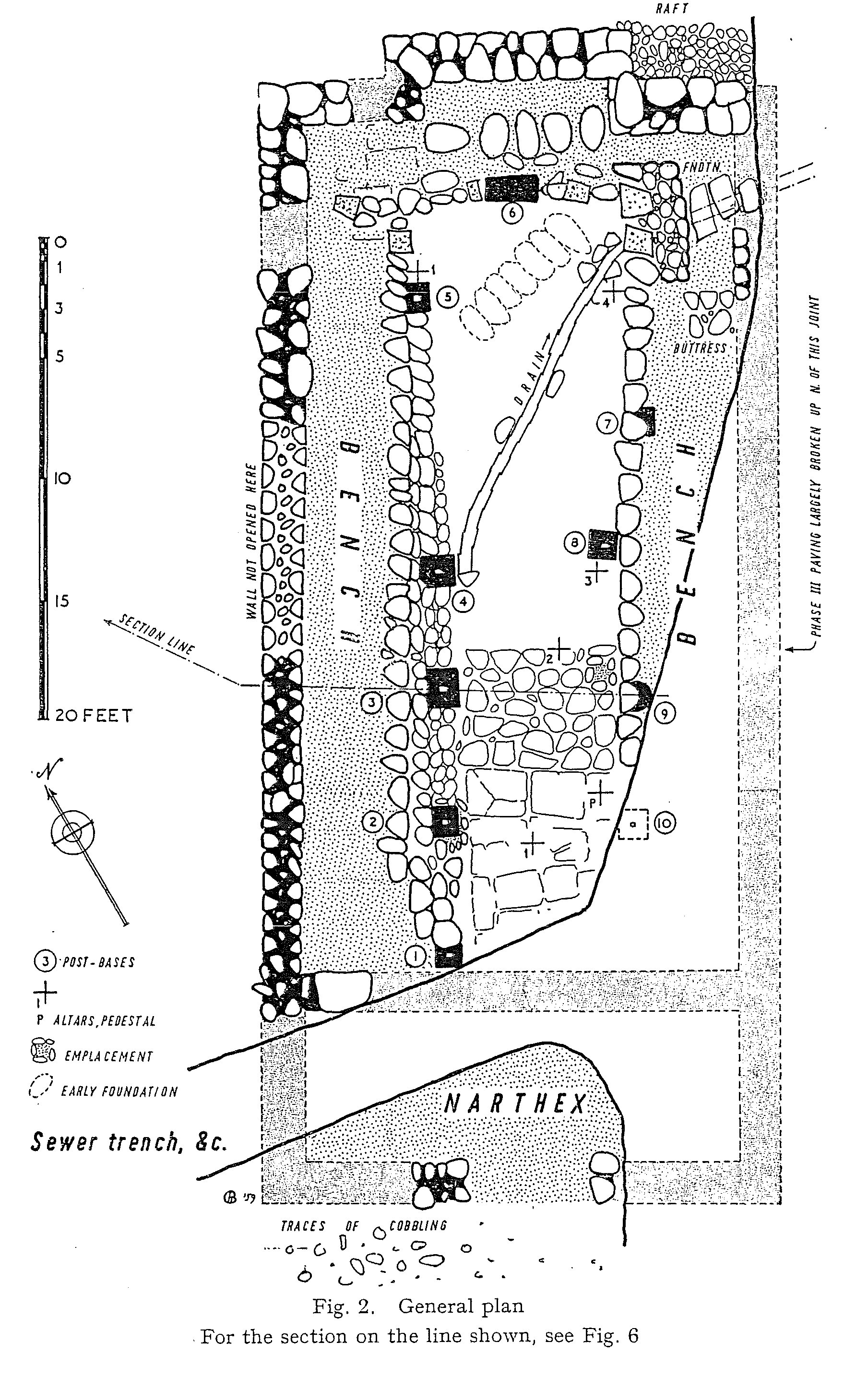
The Mithraeum of Caernarfon, in Walles, was built in three phases during the 3rd century, and destroyed at the end of the 4th.
