Your search Cabrera de Mar gave 1568 results.
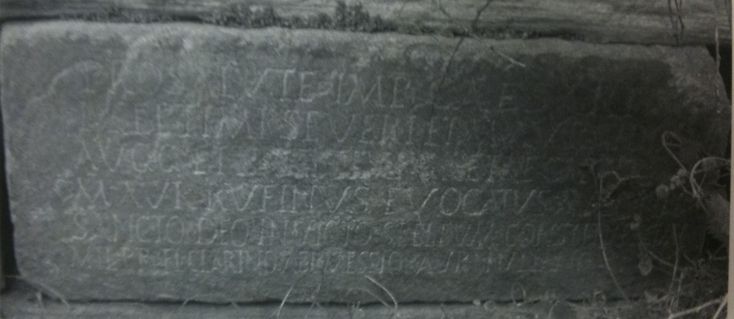
This inscription reveals the existence of a Mithraeum on the island of Andros, Greece, which has not yet been found.
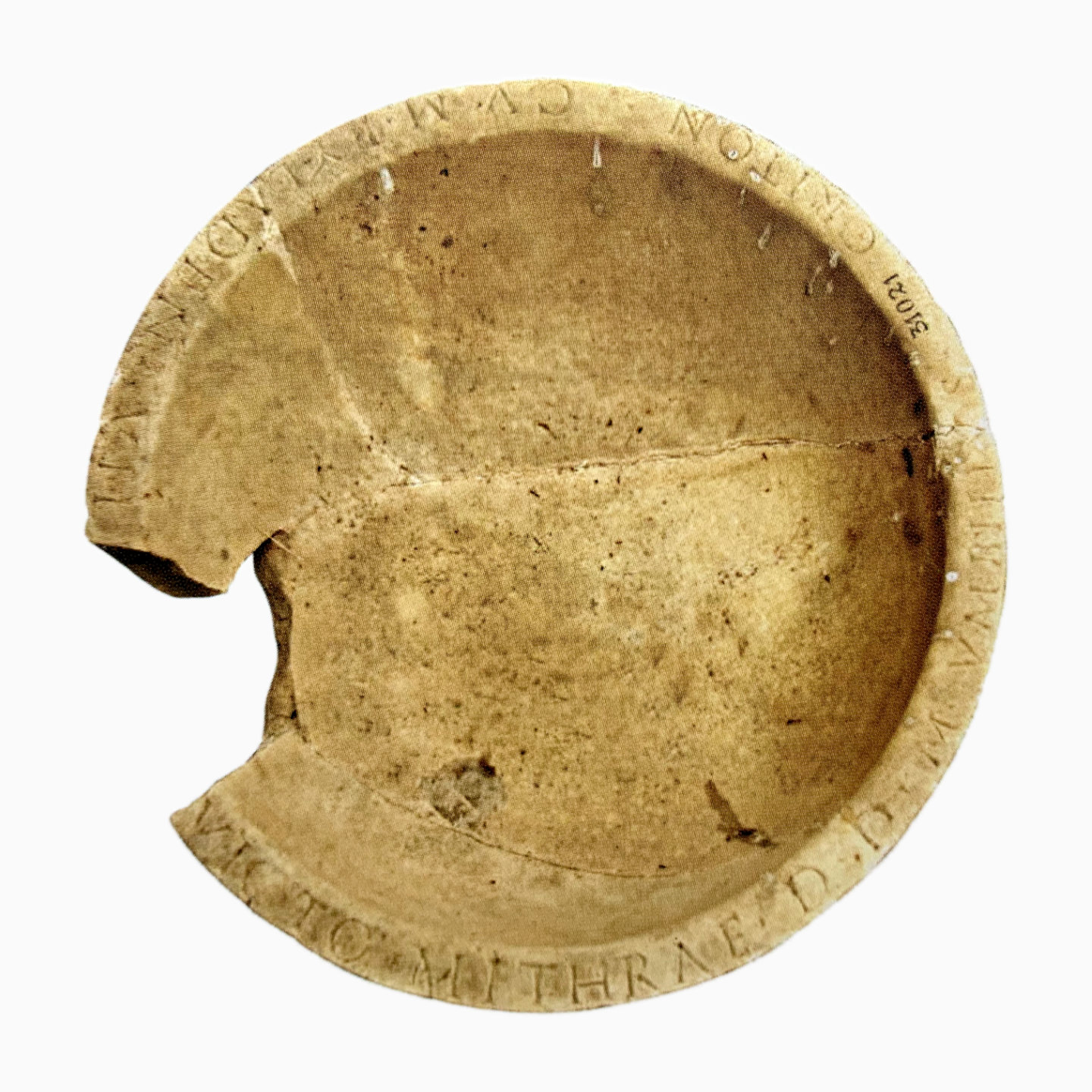
This marble basin found in the Mithraeum of the Footprint bears an inscription of a certain Umbilius Criton, associated with a monumental tauroctonic sculpture also found in Ostia.
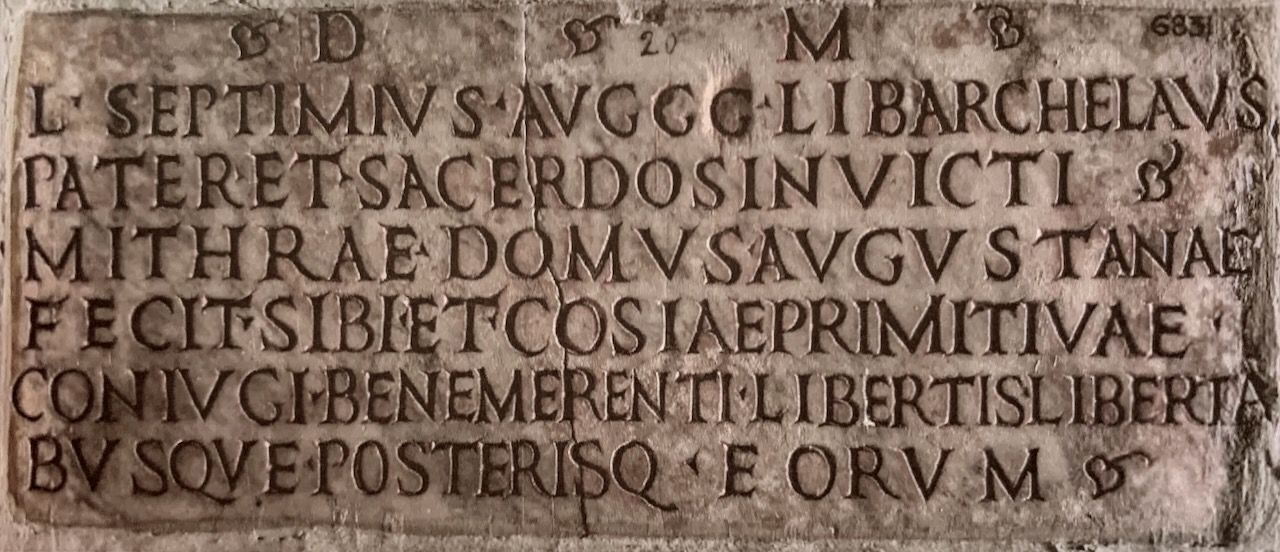
Marble funerary plaque erected by Lucius Septimius Archelaus, a Pater and priest of Mithras, for himself, his wife, and their freedmen and descendants.
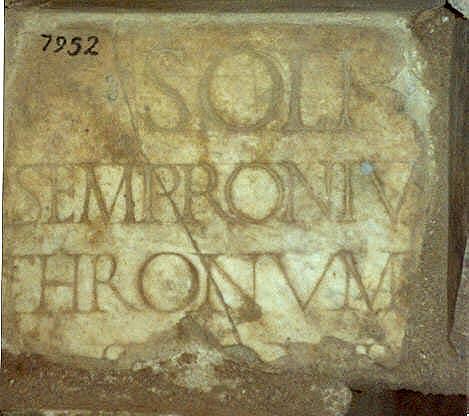
Slab marble indicates that Lucius Sempronius has donated a throne to the Mitreo delle Pareti Dipinte.
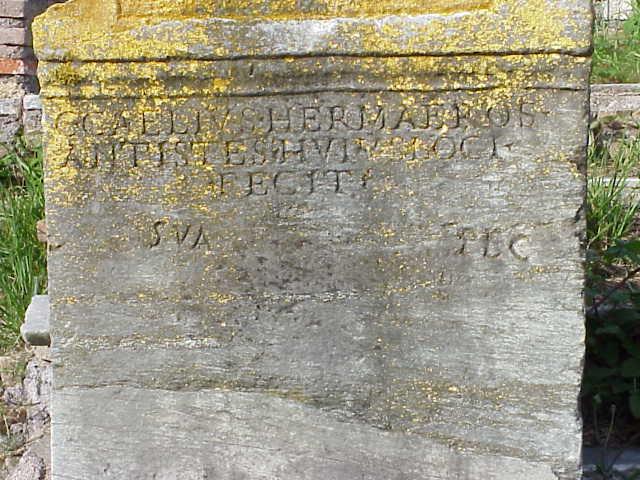
This is one of several marble inscriptions made by a certain Caelius Ermeros, who was the antistes of the Mithraeum of the Imperial Palace.
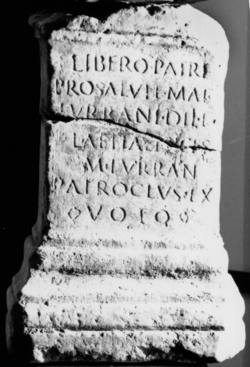
This altar was erected by Hermadio, who also signed other monuments in Dacia and even in Rome.

Fragmentary marble statue of a woman from the Mithraeum delle Sette Porte.
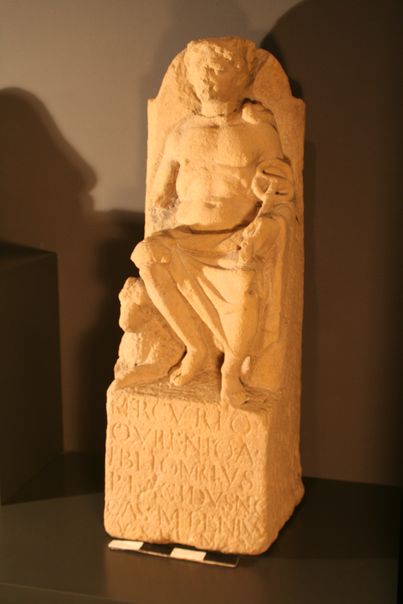
The statue was dedicated to Mercury Quillenius, an epithet used to refer to a Celtic god or the Greek Kulúvios.
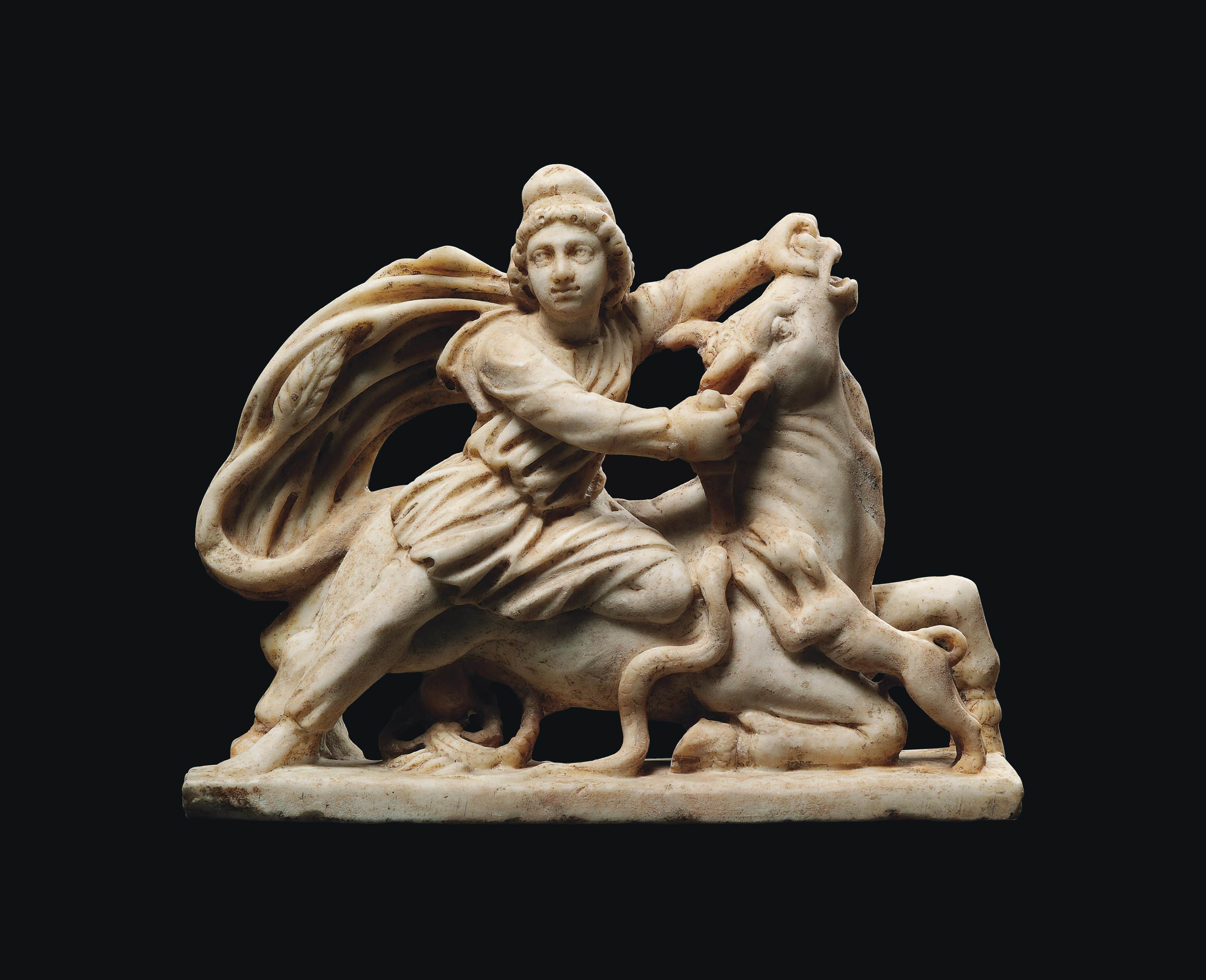
Marble group of Mithras slaying the bull, formerly sold by Antiquarium Ltd., New York.
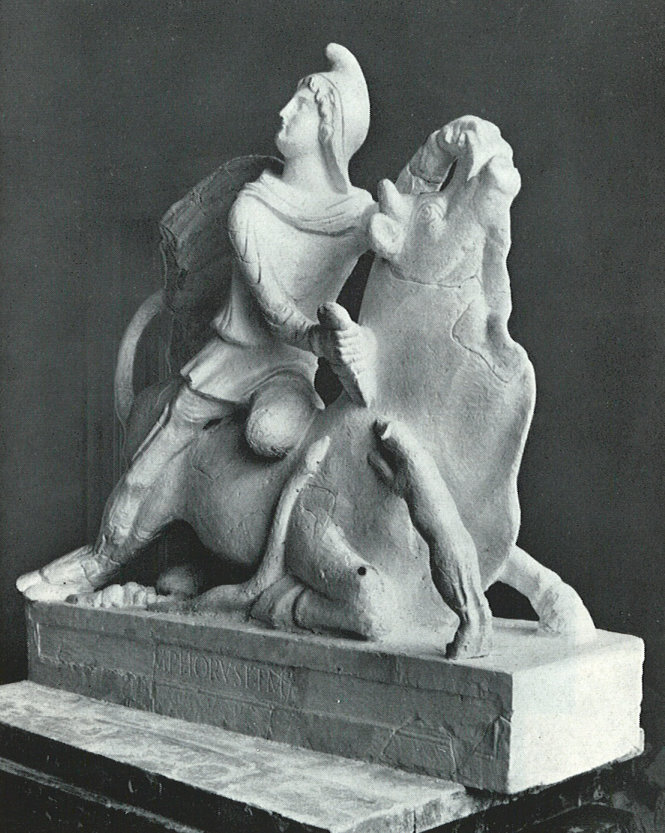
This sculpture of Mithras killing the sacred bull bears an inscription that mentions the donors.
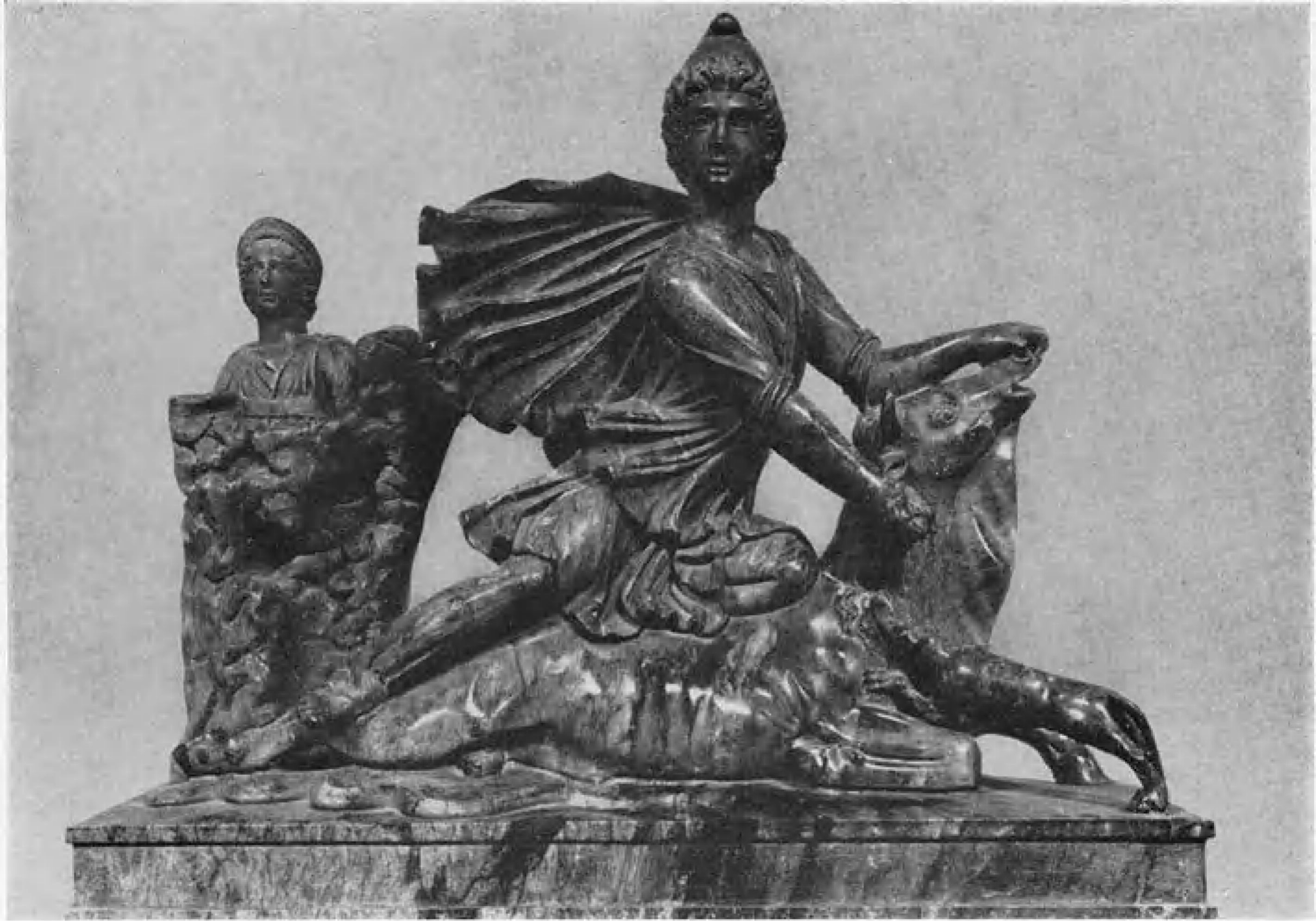
This black marble of Mithras killing the Bull has belonged to the sculptor Carlo Albacini.

Slab found at Tazoult-Lambèse dedicated to the Unconquered god Sol Mithras by the governor of Numidia Marcus Aurelius Decimus.
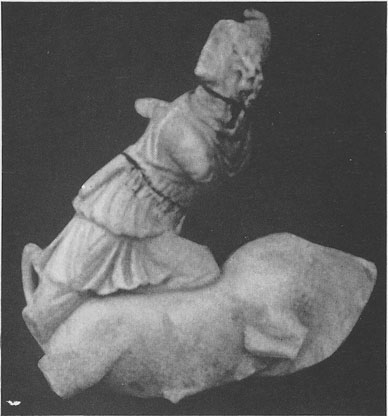
Fragment of a white marble statue of Mithras killing the bull from Rusicade, today Skikda, Algeria.

White marble statue of Mithras killing the sacred bull preserved in the Museo Nacional Romano.
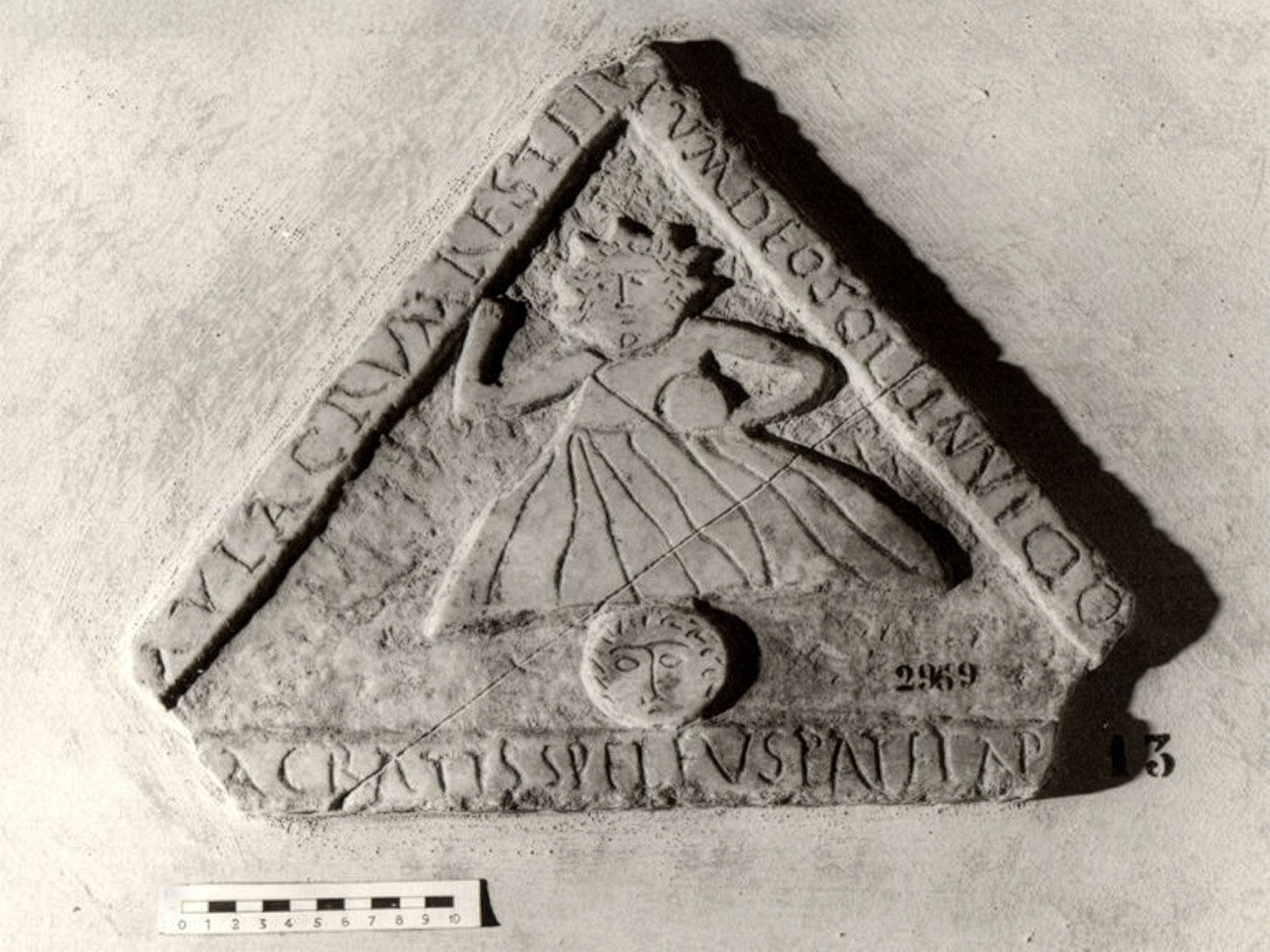
Small triangular slab bearing a Latin inscription referring to Sol Invictus and to a sacred cave, probably dating to the 4th century AD.

This altar to Invictus Mythra (sic) was found in 1867 in ancient Maros Portum, now Sighișoara, Romania.
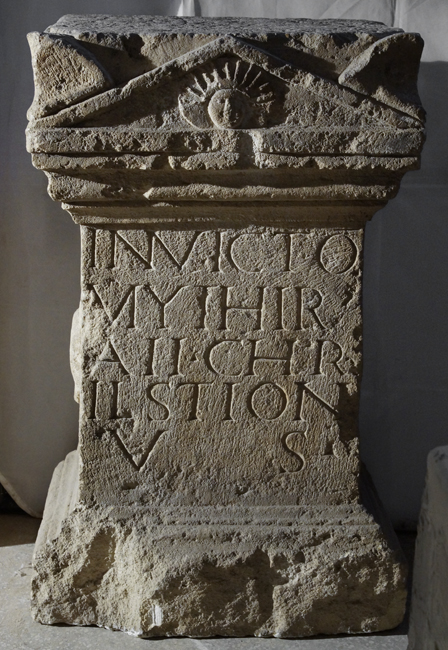
In 1852, Károly Pap, a naval captain, unearthed several Mithraic monuments in his garden at Marospartos, including this altar.
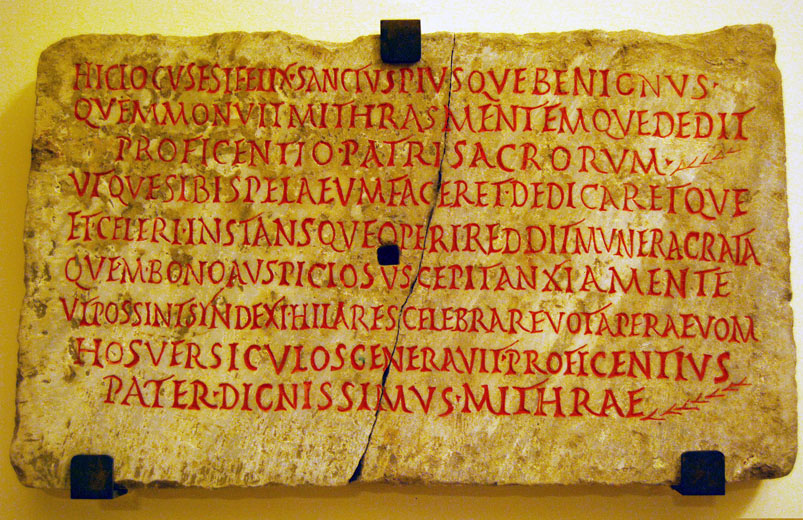
This marble slab bears an inception be the Pater Proficentius to whom Mithras has suggested to build and devote a temple.
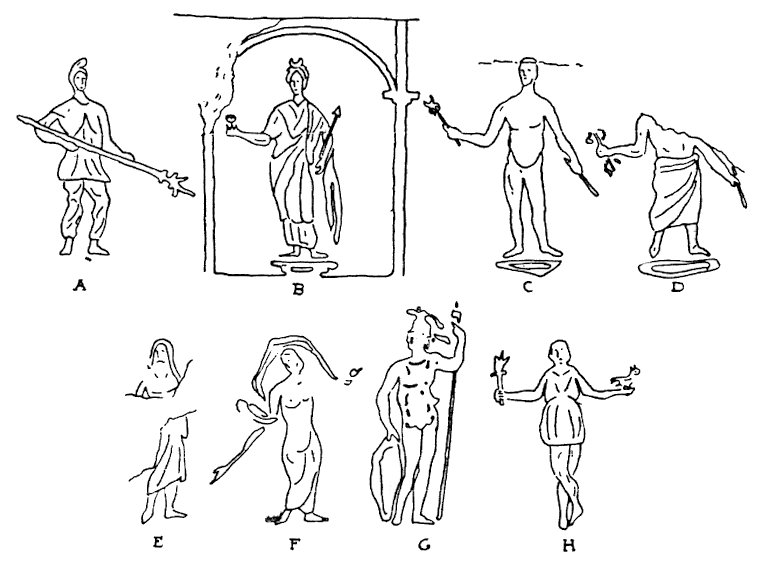
Diana-Luna, Mercurius, Jupiter, Saturn, Venus and Mars are depicted in the mosaics on the benches of this mithraeuma.
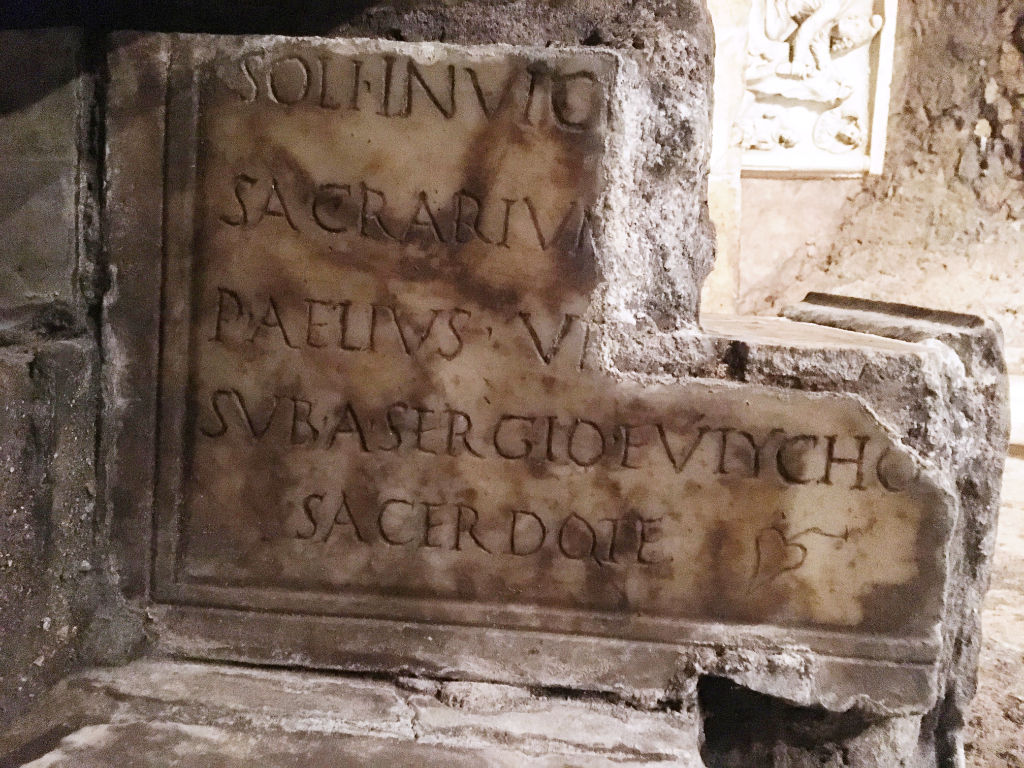
The Mithraic fellow P. Aelius Urbanus mentions that he built the sacred area of the Mithraeum Circo Massimo.
