Your search Casa del Mitreo gave 219 results.

This inscription to Mithras Invencible was dedicated by a certain Apronianus in 172 is currently lost.
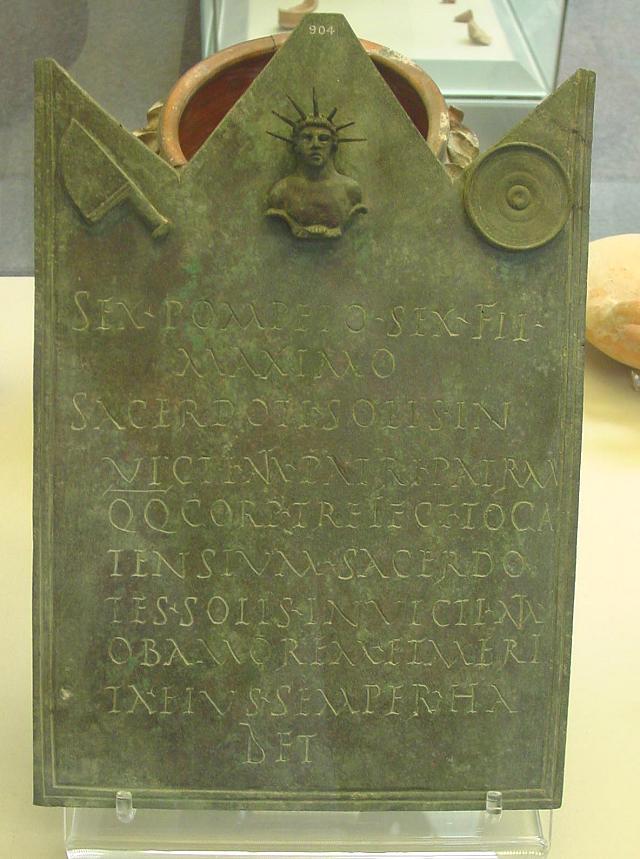
This plaque, now on display in the British Museum, may have come from the Aldobrandini Mithraeum in Ostia.

On the occasion of the discovery of a Mithraeum in Cabra, Spain, we talk to Jaime Alvar, a leading figure in the field of Mithraism. With him, we examine the testimonies known to date and the peculiarities of the cult of Mithras in Hispania.

The Mithraeum of Spoleto was found in 1878 by the professor Fabio Gori on behalf of Marquis Filippo Marignoli, owner of the land.
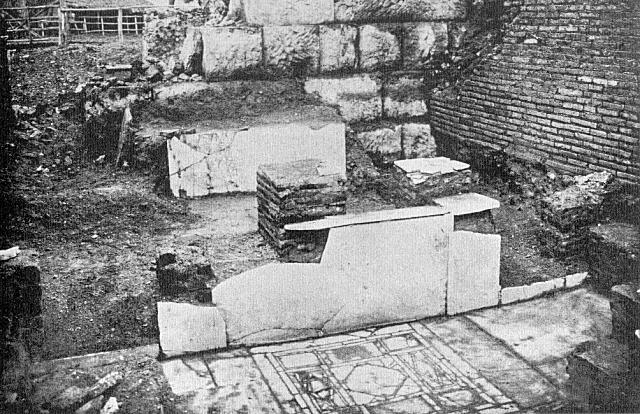
The Mithraeum of Aldobrandini was excavated in 1924 by G. Calza on the premises belonging to the Aldobrandini family.
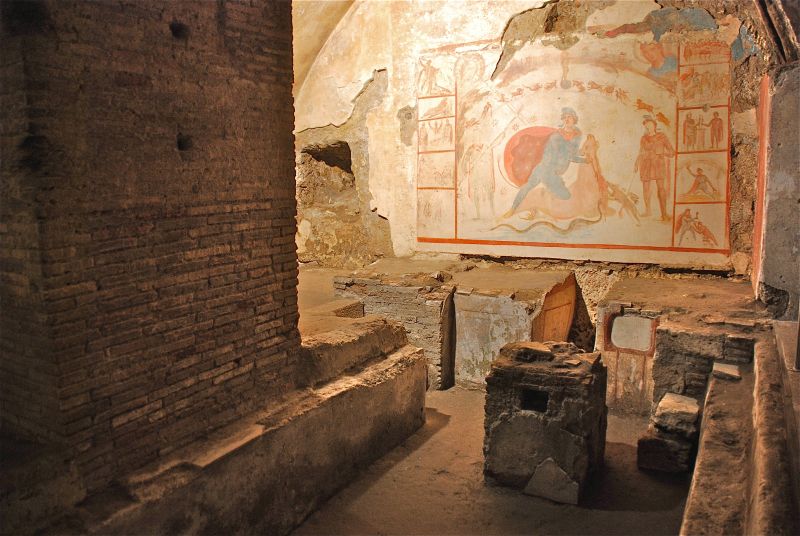
The Barberini Mithraeum was discovered in 1936 in the garden of the Palazzo Barberini, owned by Conte A. Savorgnan di Brazza.
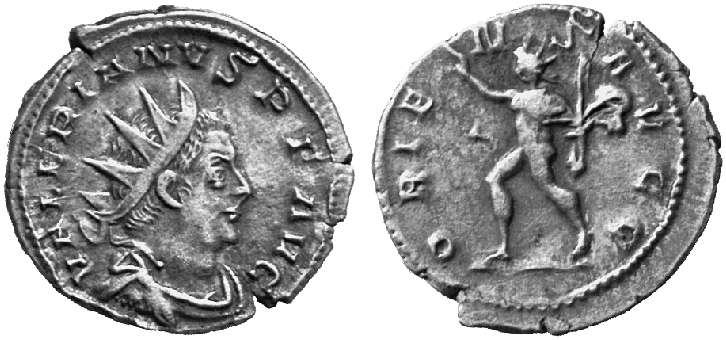
This coin was deposited in the upper level of the throne in the cult niche of the Mitreo della Planta Pedis.
The Mithraeum located in Piazza Dante in Rome was discovered in 1874 along with a series of monuments dedicated by a Pater named Primus.
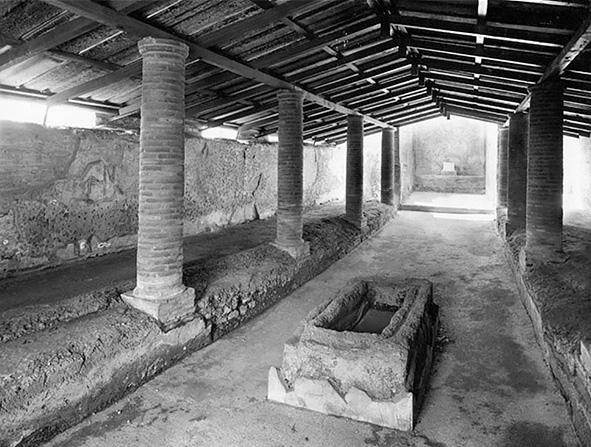
The Mithraeum in the Chapel of the Three Naves was not linked to the cult of Mithras until recently because of a mosaic showing a pig, in the belief that it was an animal unfit for consumption in a temple of Eastern origin.
The altar includes a slab with an inscription for the salvation of two emperors.
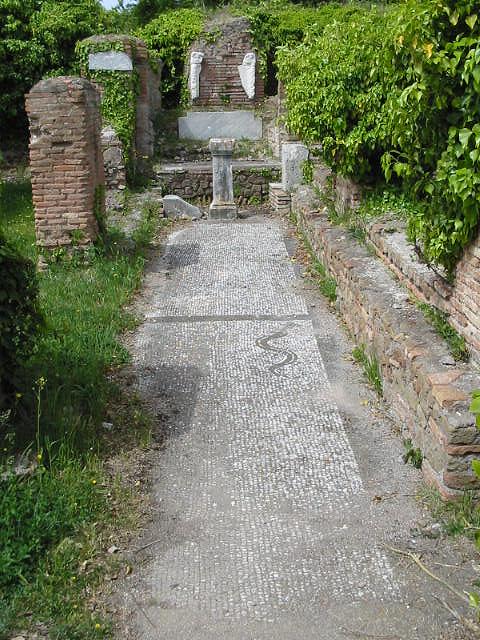
The floor of the central aisle of the Mithraeum of the Footprint in Ostia has a mosaic depicting a snake and a footprint.
Three mithraic monuments were found in 1931, suggesting that a mithraeum probably existed in the area.
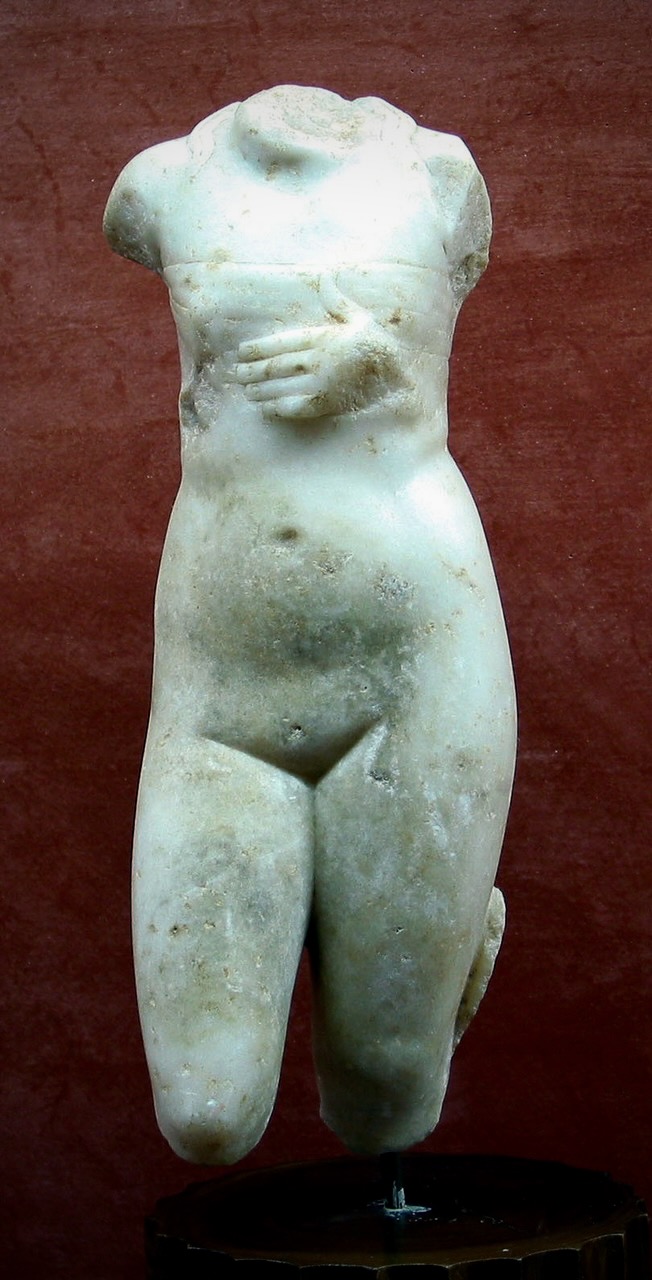
The lack of attributes and its decontextualisation prevent us from attributing a specific Mithraic attribution to this small Venus pudica from Mérida.
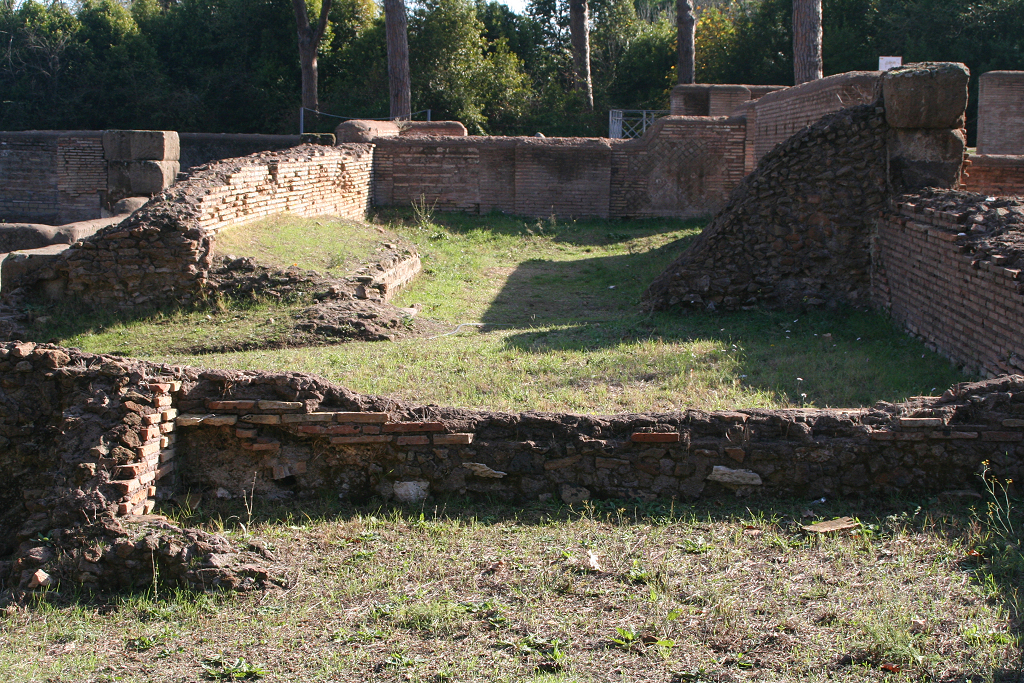
The Mithraeum near Porta Romana was connected to a Sacello, but the door was blocked.
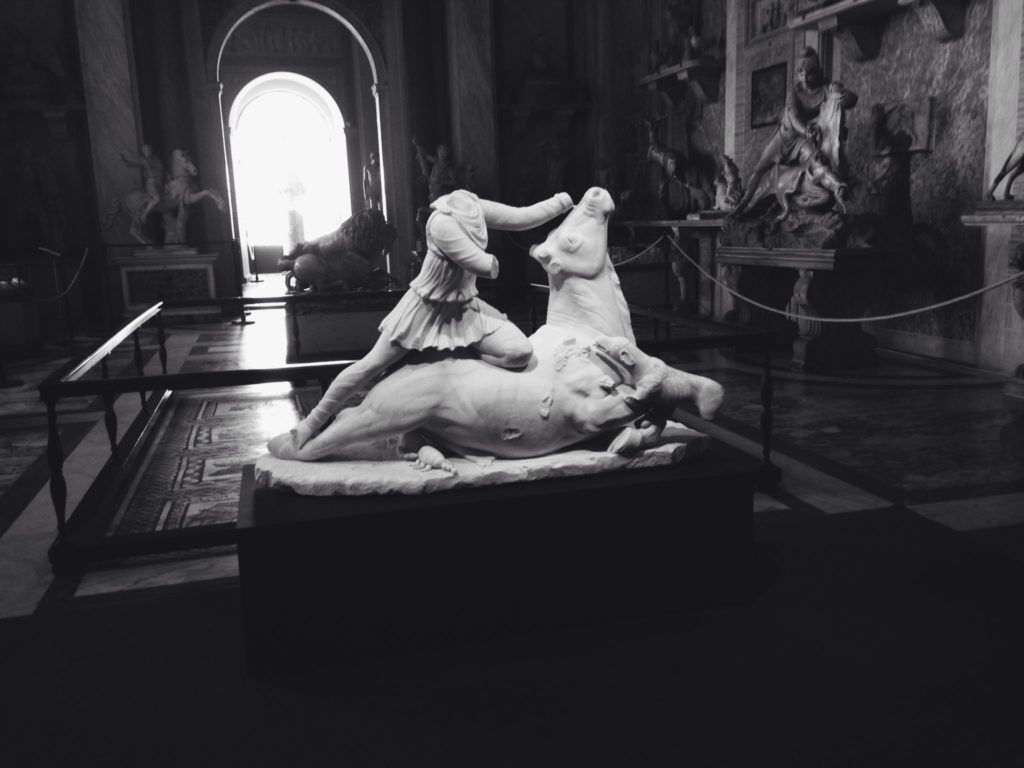
Votive sculpture of Mithras sacrificing the bull from the Mithraeum of Tarquinia.
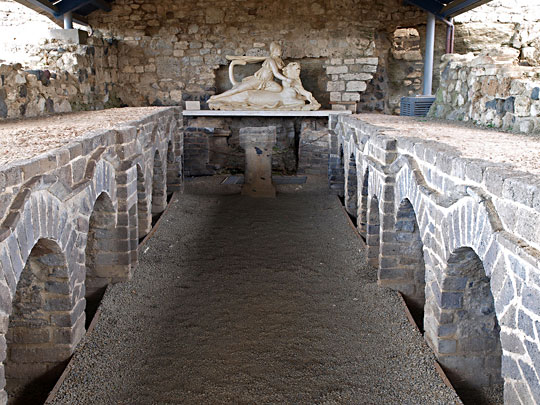
The Mithraeum of Vulci is remarkable because of his high benches and the arches below them.
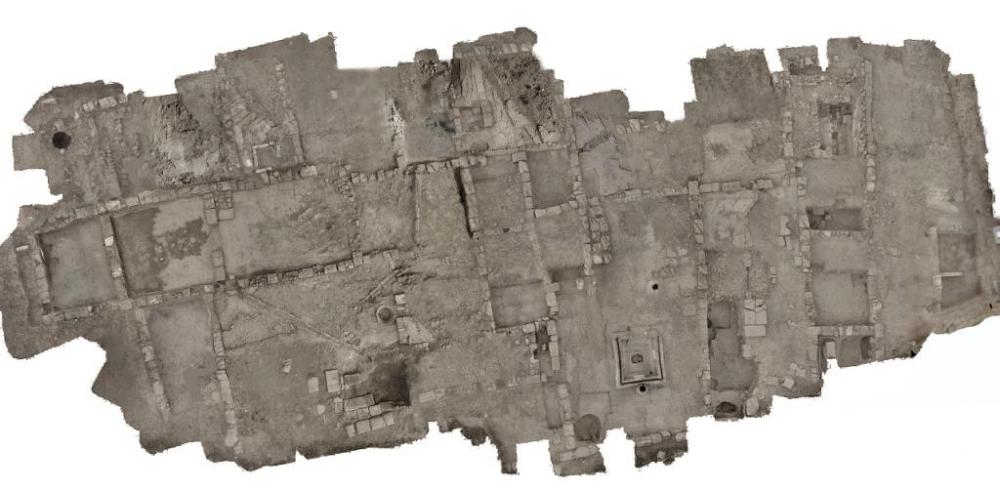
The discovery of the Mithraeum of Tarquinia is due to the Department for Protection of Cultural Heritage of the Carabinieri, who noticed some clandestine excavations near the Ara della Regina.
This temple of Mithras on the north side of the Capitoline Hill in Rome no longer exists.
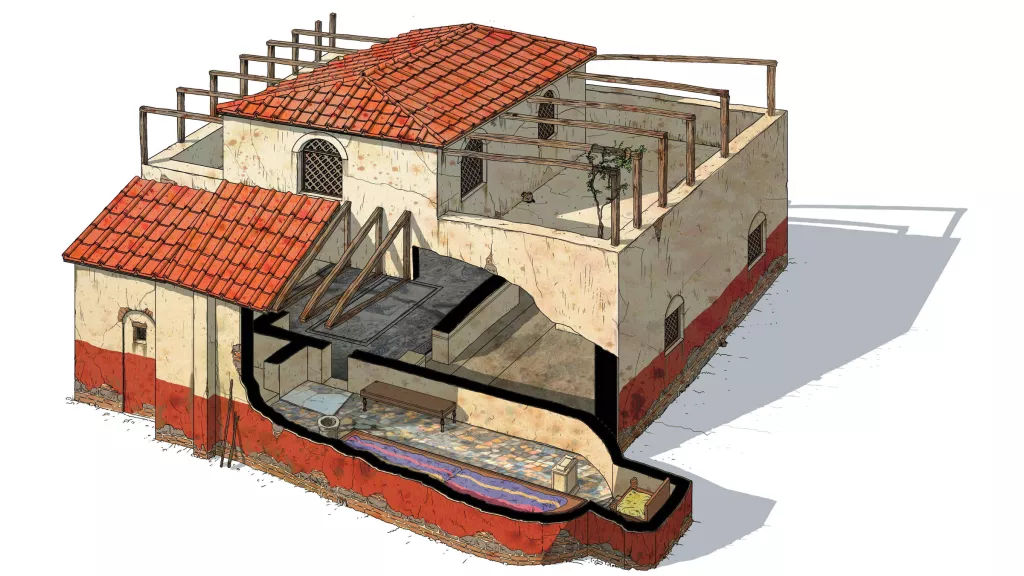
The Mitreo dei Marmi Colorati takes its name after the discovery of a black-and-white mosaic of Pan fighting with Eros.
