Your search Casa del Mitreo gave 219 results.
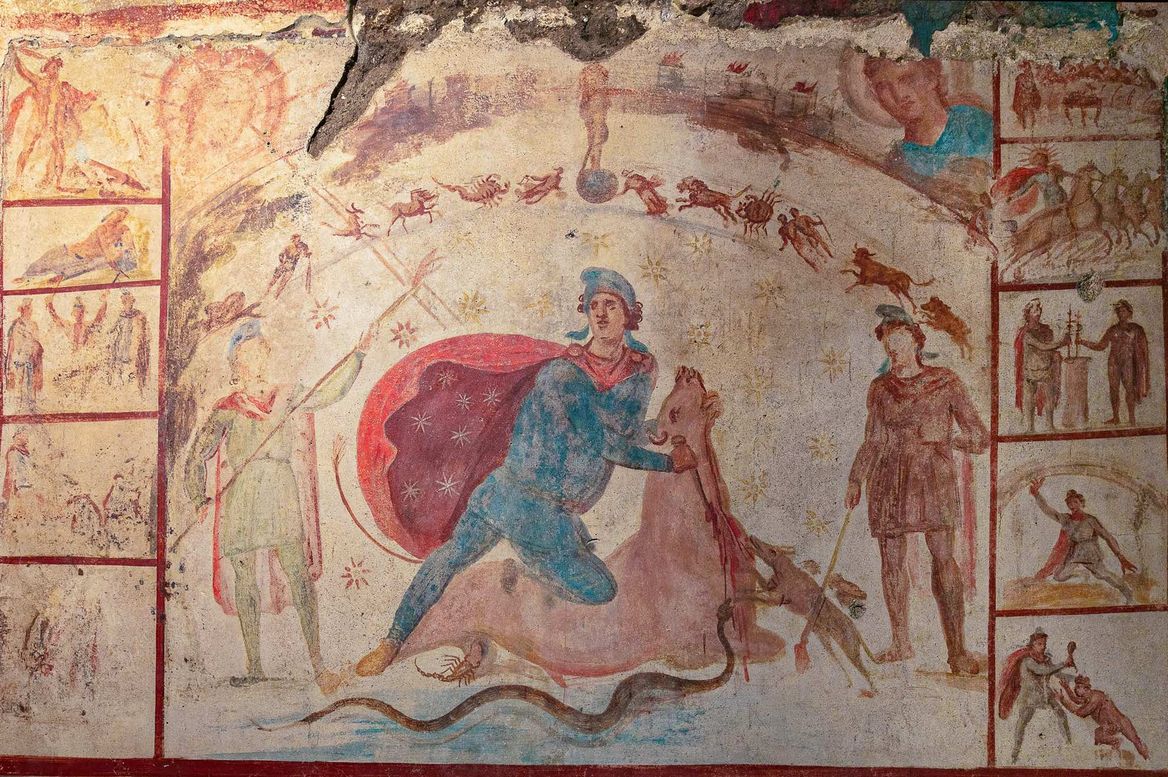
The votive fresco from the Mithraeum Barberini displays several scenes from Mithras’s myth.

This volume collects the first results of the extensive and articulated research project dedicated to the Mithraeum of the Circus Maximus.

Lissa-Caronna details the excavation and findings of a mithraeum beneath San Stefano Rotondo, focusing on its decor, sculptures, and rituals.

Patronus of the corpus lenunculariorum tabulariorum auxiliariorum Ostiensium.
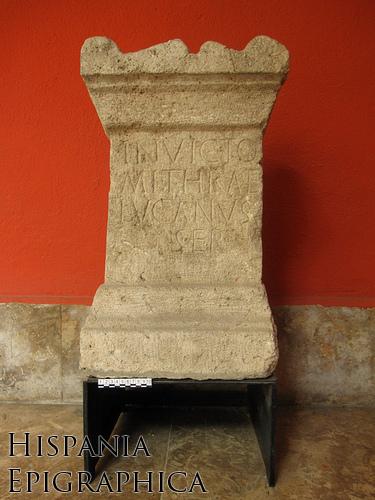
This altar found in Benifaió, València, was erected by a slave called Lucanus.
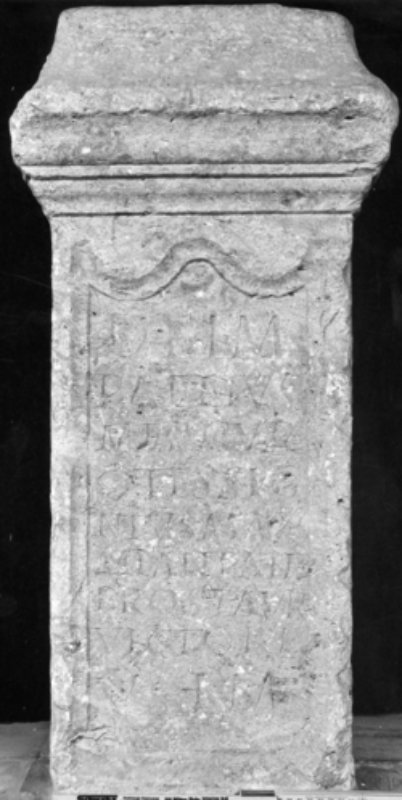
This altar to Mithras found in Aquilieia mentions several persons of a same community.

A subterranean room with a stucco depiction of Mithras slaying the bull, probably from the fourth century, discovered at Agurzano near Ponte Mammolo on the Via Tiburtina outside Rome.
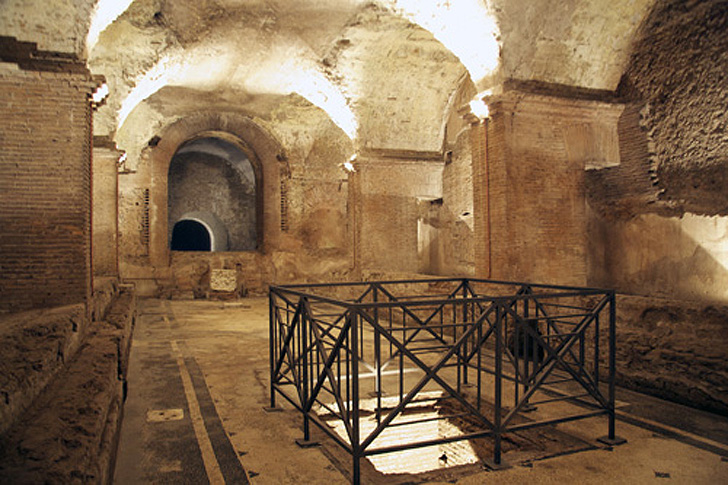
The Mitreo delle terme di Caracalla is one of the largest temples dedicated to Mithras ever found in Rome.
This monument was erected on the occasion of the elevation of a member to the Mithraic grade of Perses.
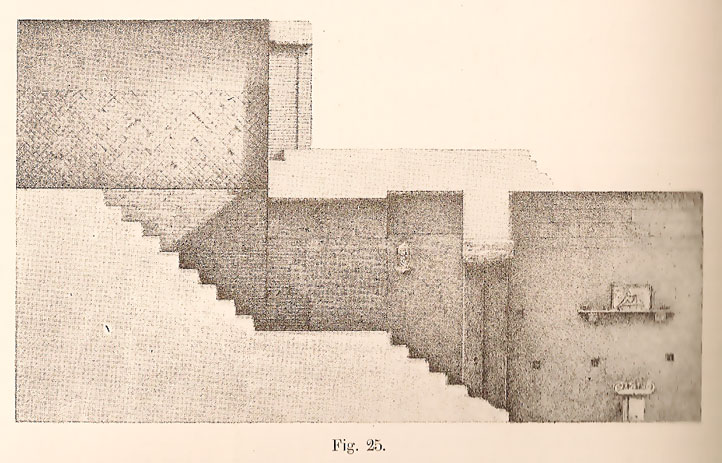
In a house from the time of Constantine, a Lararium was found with a statue of Isis-Fortuna. The Mithraeum was a door next to it, on a lower room.

This unusual mural depicting Mithras killing the bull was found near the Colosseum in 1668.
Small cippus found opposite the Theatre at Ostia, with a dedication by brothers Aurelius Crescens and Naima Victor Patri for the restoration of the ruined Mithraeum, third century A.D.
Two marble frieze fragments with incised busts of Sol, Luna, Mars, Jupiter, and Venus, one found in 1890 in the outer porticus of the Theatre and one found in 1938 near the Mithraeum at Ostia.

Administrator, probably a slave of Pater Alfius Severus, who dedicated the main altar of the Mitreo di Marino.
A probable Mithraic sanctuary near Santa Maria in Domnica on the Caelian Hill, known from a group of dispersed reliefs formerly owned by Ottaviano Zeno.

In this relief of Mithras as bull slayer, recorded in 1562 in the collection of A. Magarozzi, Cautes and Cautopates have been replaced by trees still bearing the torches.
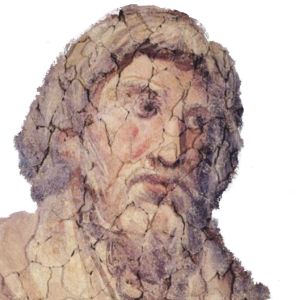
North African author, Platonic philosopher and rhetorician associated with the Mithraic milieu of Ostia.
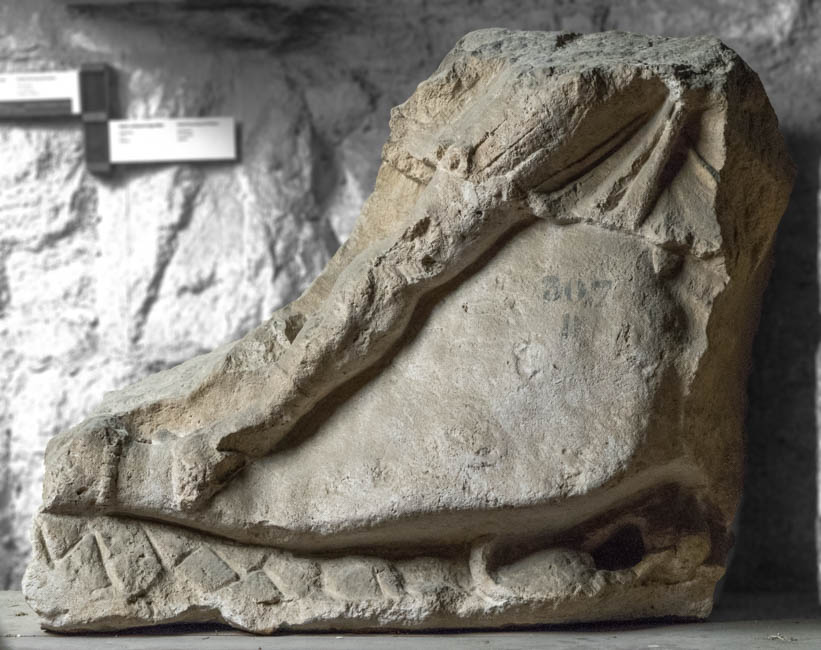
This large limestone fragment from Roman Salona preserves the hind part of the bull together with Mithras’ foot and traces of his red tunic.
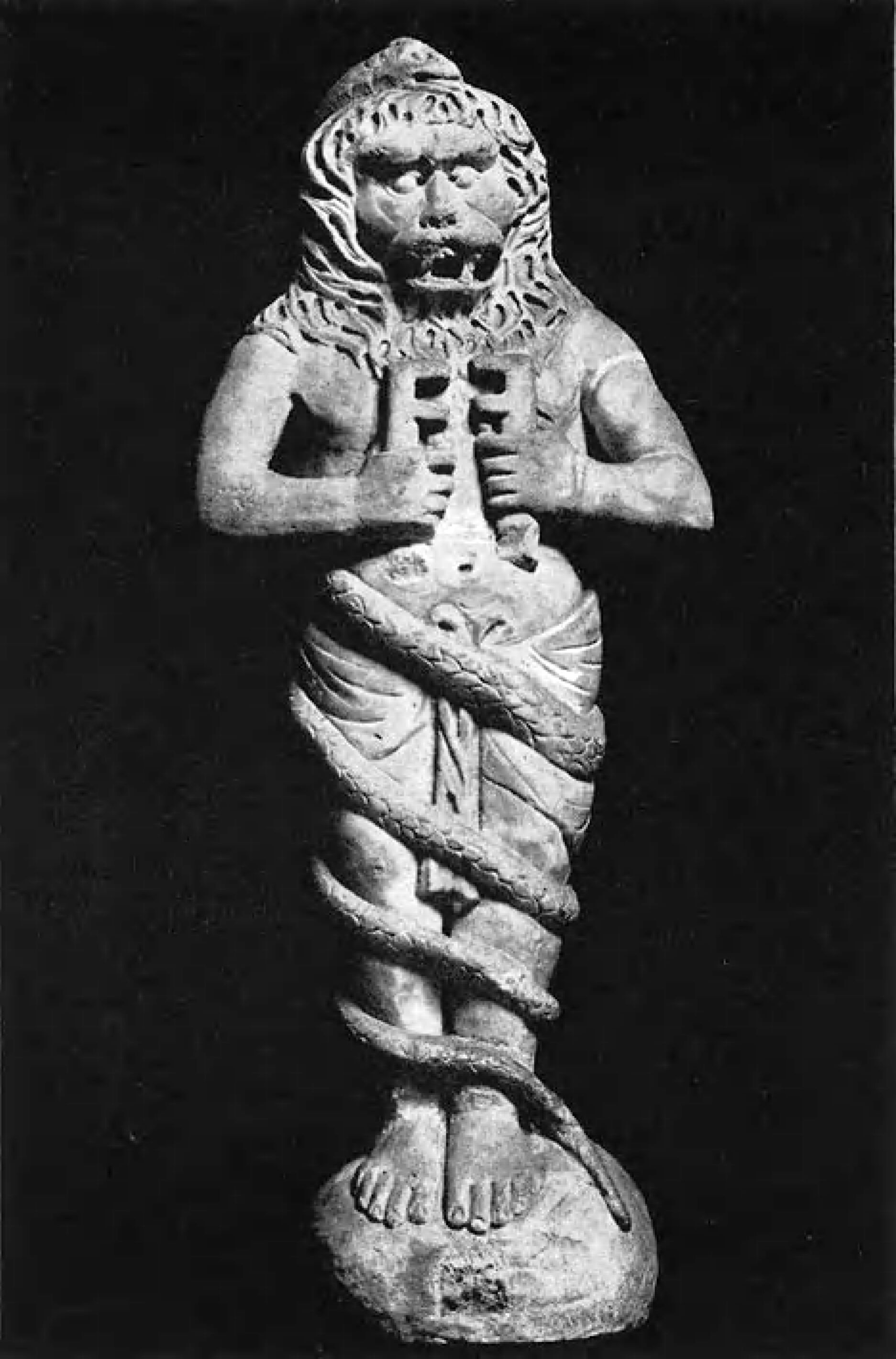
The lion-headed marble from Muti's gardens has a serpent entwined in four coils around his body.
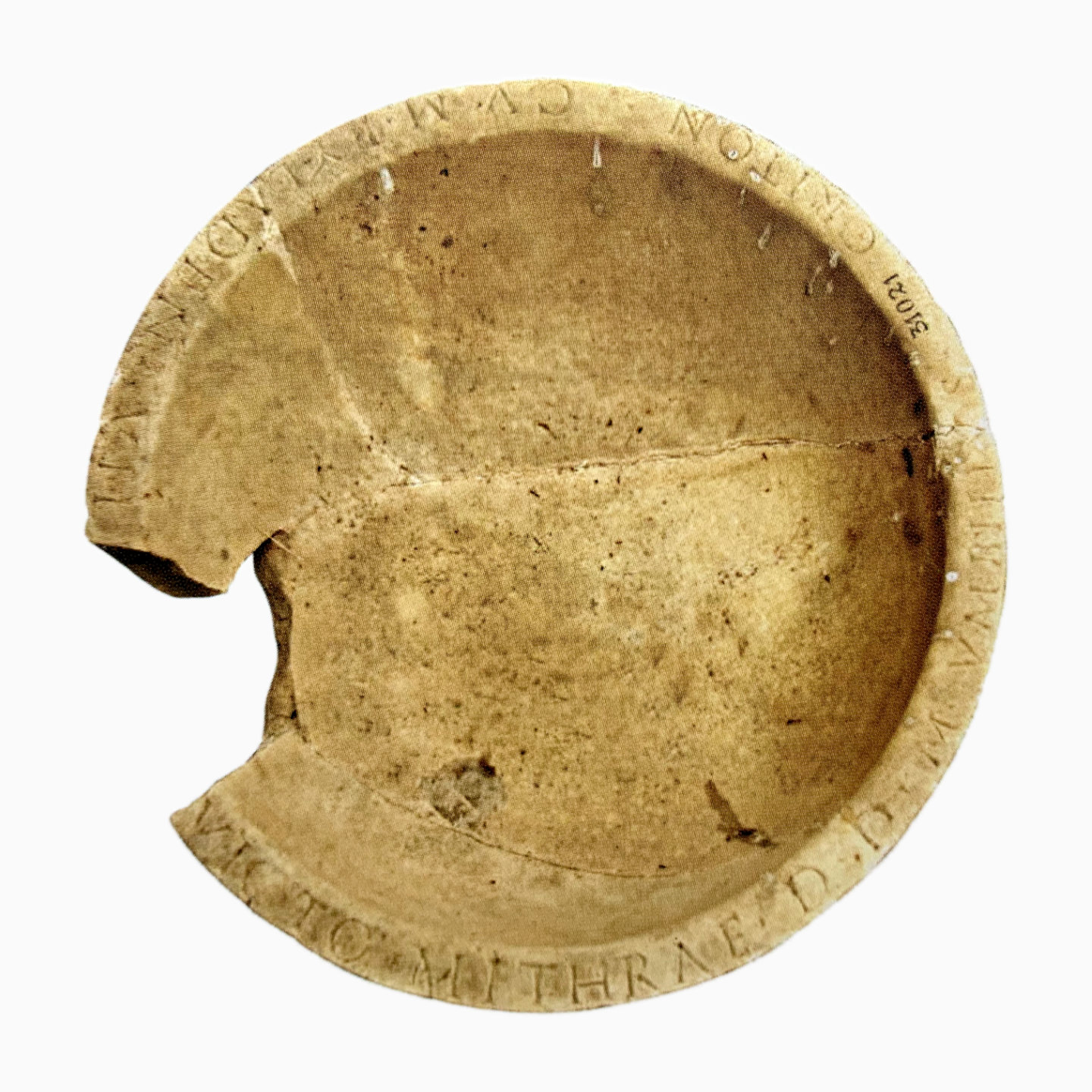
This marble basin found in the Mithraeum of the Footprint bears an inscription of a certain Umbilius Criton, associated with a monumental tauroctonic sculpture also found in Ostia.
