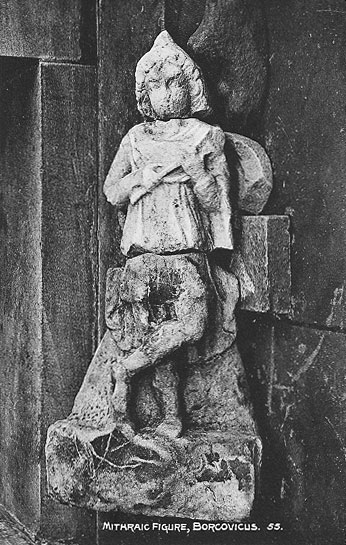
Your search Cemetery of the church of St. Michael gave 3410 results.
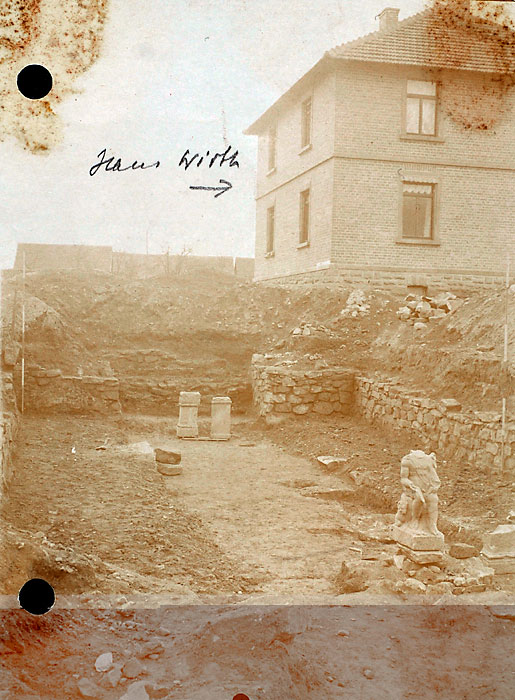
The Mithraeum I in Stockstadt contained images of Mithras but also of Mercury, Hercules, Diana and Epona, among others.
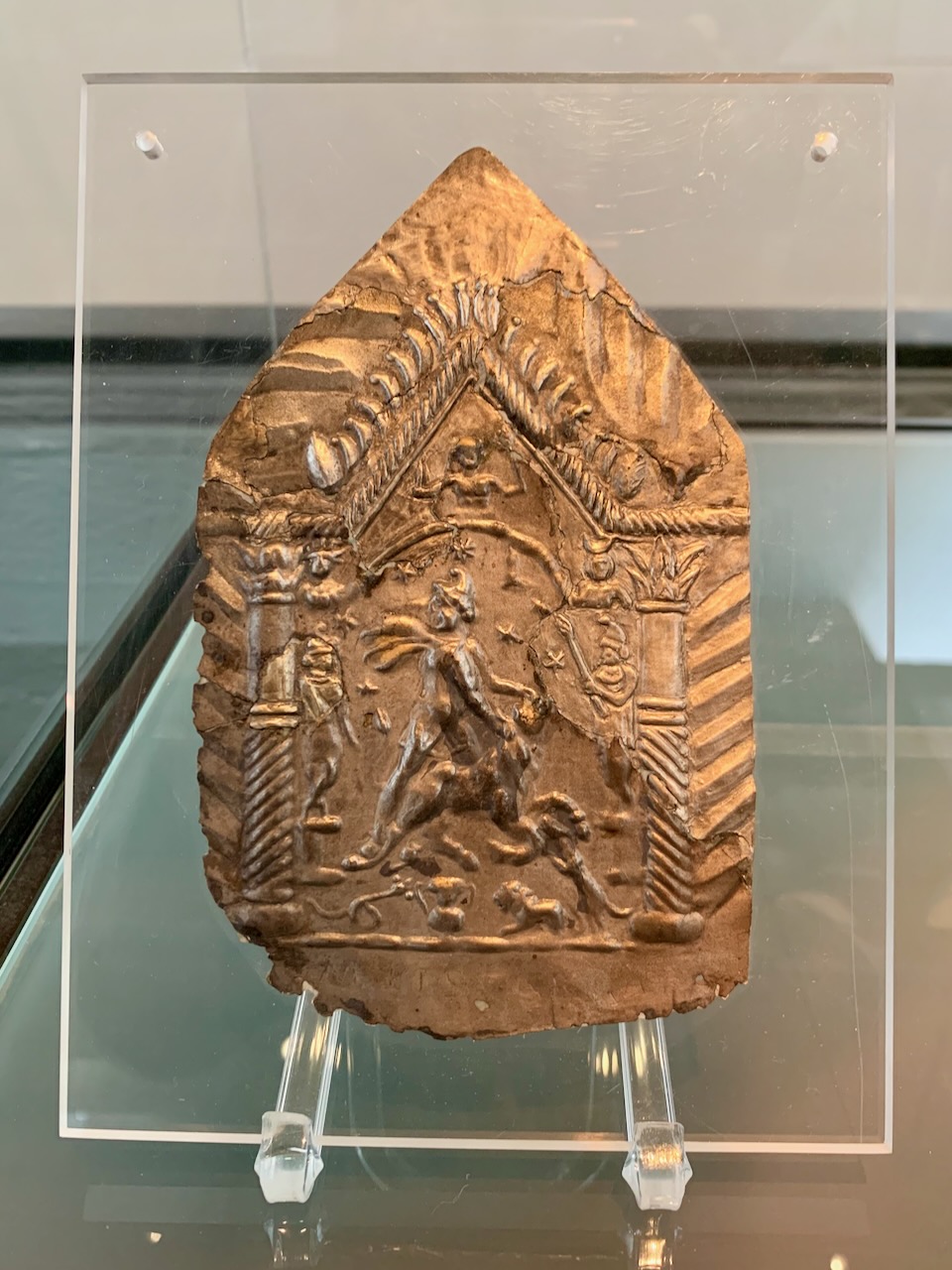
This plaque was found in Mithraeum I at Stockstadt broken into pieces inserted between the blocks of the socle of the cult relief, in the manner of a votive deposit.

The Mithraeum II in Stockstadt was in fact the first one known built in the vicus. It was destroyed by fire around 210.
Sandstone relief depicting the god Aion, standing with wings, a staff and a key, accompanied by a lion and a serpent-entwined vessel.
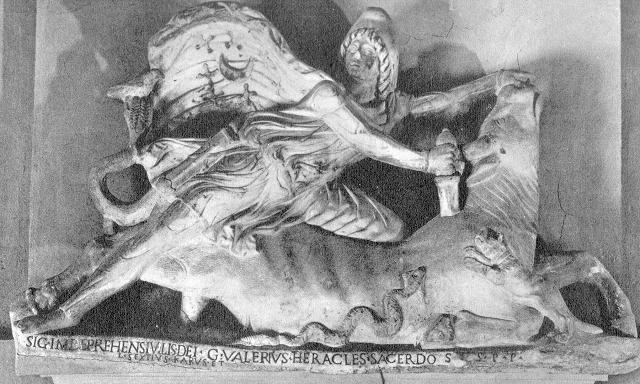
This sculpture of Mithras killing the bull was dedicated to the ’incomprehensible god’ by a certain priest called Gaius Valerius Heracles.
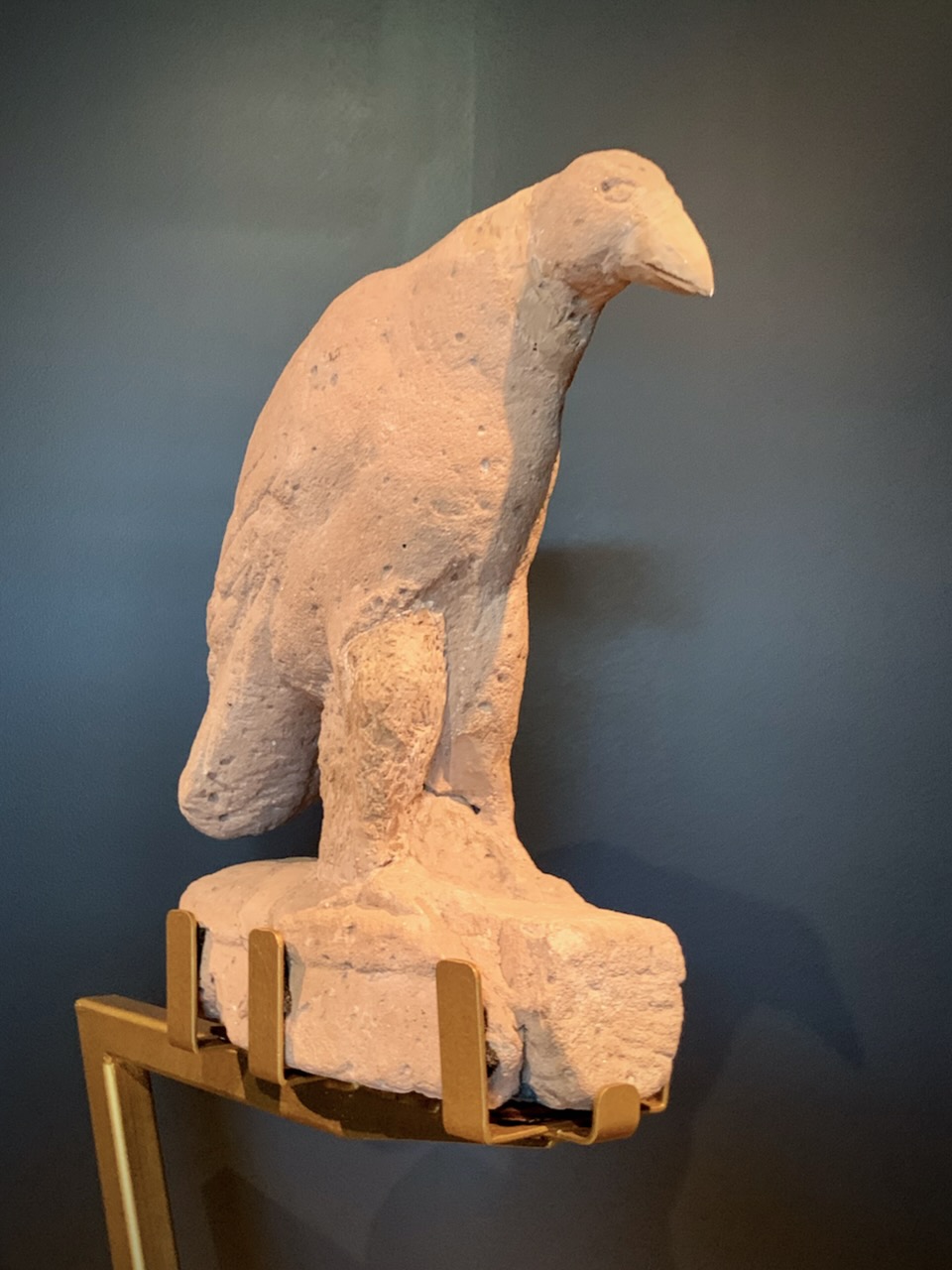
The Stockstadt Raven is one of only two standing-alone sculptures of this bird to be found in Mithraic statuary.

This gemstone depicting Mithras killing the bull, preserved in the Ploiești Museum, originated from Prahova County or south of the Danube area.
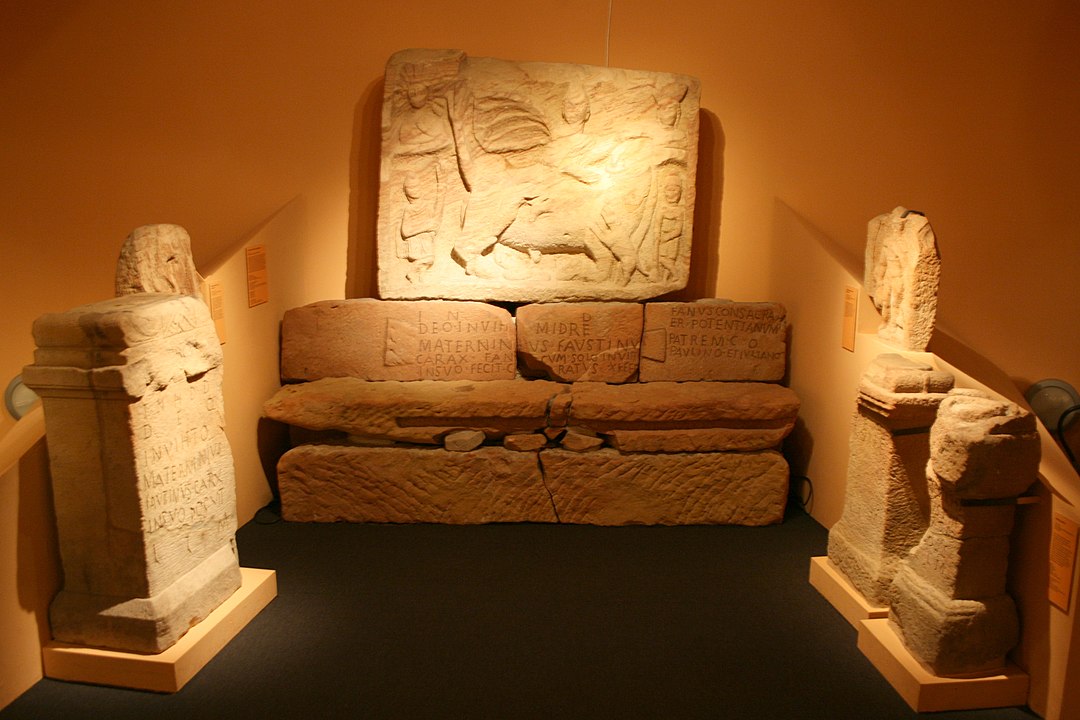
The few remains of the Mithraeum of Gimmeldingen are preserved at the Historical Museum of the Palatinate, in Speyer, Germany.
This marble of Cautes was found together with his partner Cautopates in Ostia in 1939.
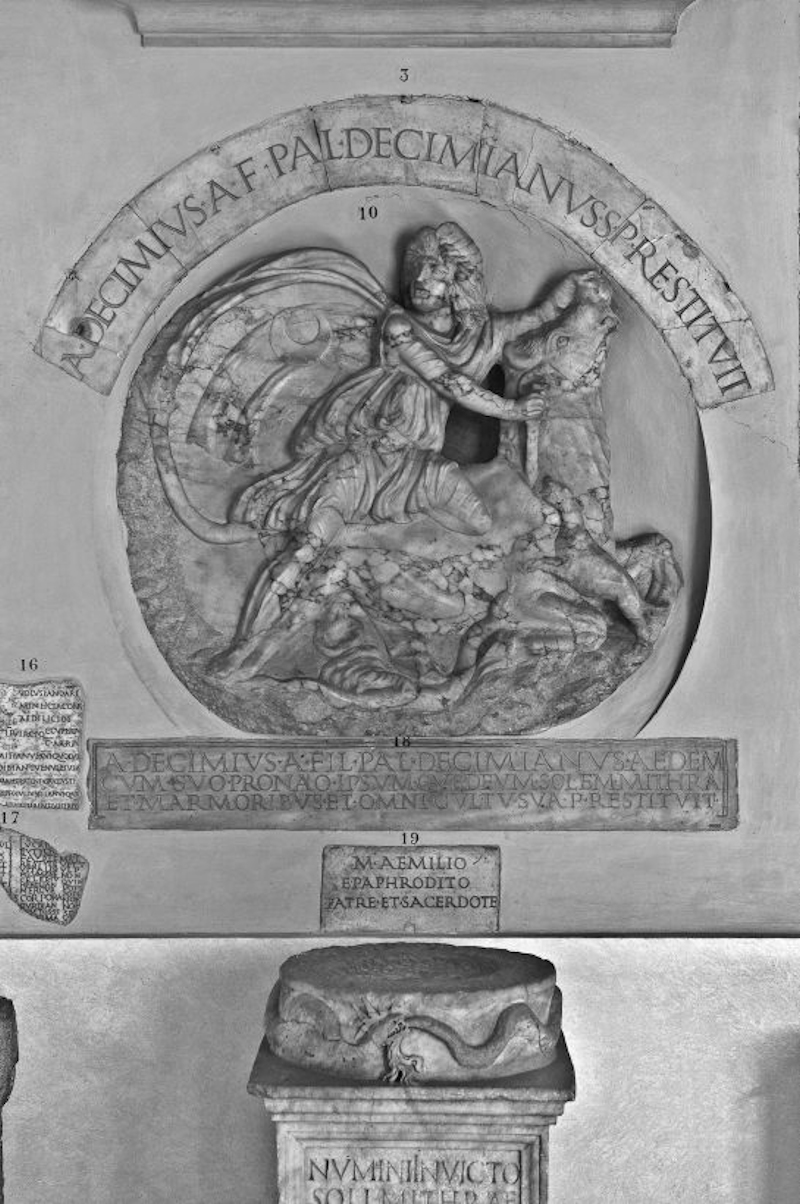
The relief of Mithras slaying the bull from the Mithraeum of the Seven Spheres was discovered in 1802 by Petirini by order of Pope Pius VII.
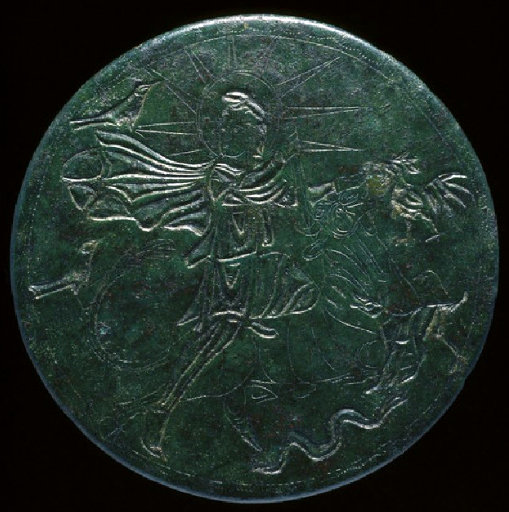
In the Mithraic bronze brooch found in Ostia, Cautes and Cautopates have been replaced by a nightingale and a cock.
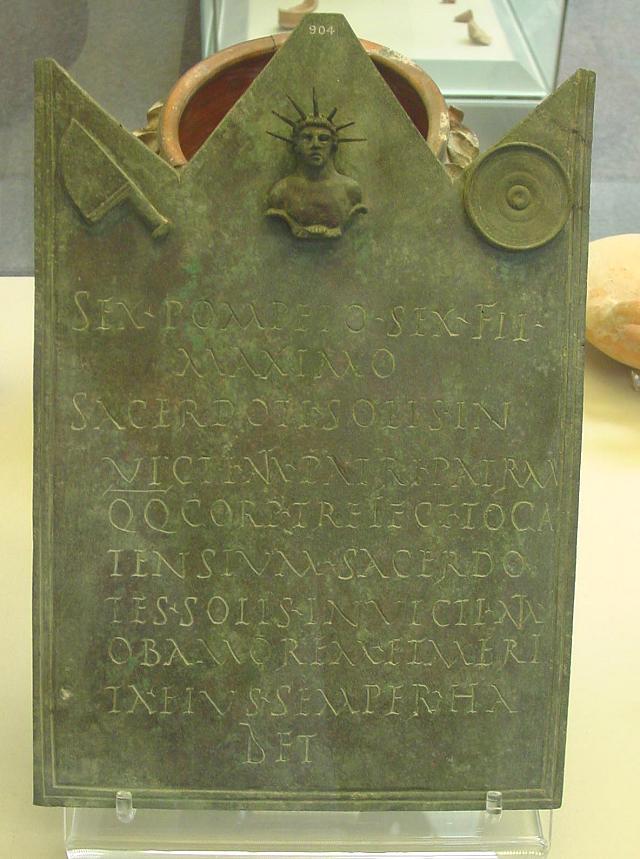
This plaque, now on display in the British Museum, may have come from the Aldobrandini Mithraeum in Ostia.
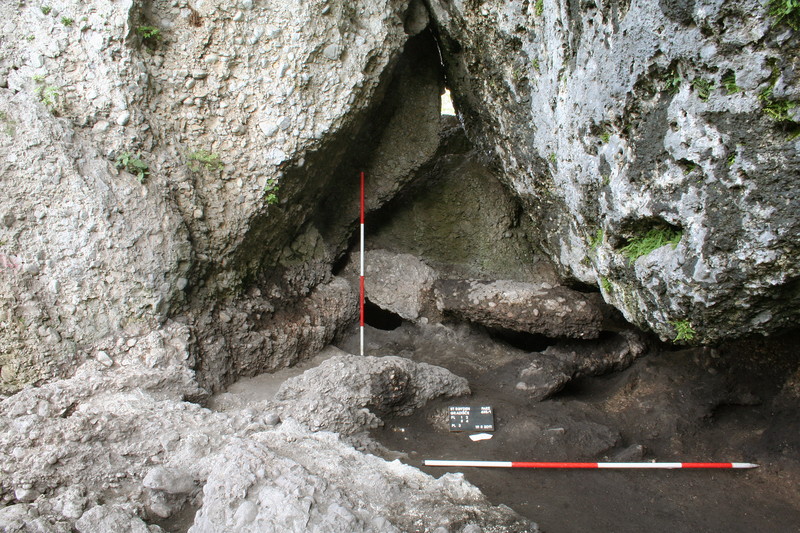
The 'Mithraic cave' in the Gradische/Gradišče massif near St. Egidio contained vessels decorated with snakes and the remains of chicken bones and other animals that were consumed during Mithraic ceremonies.
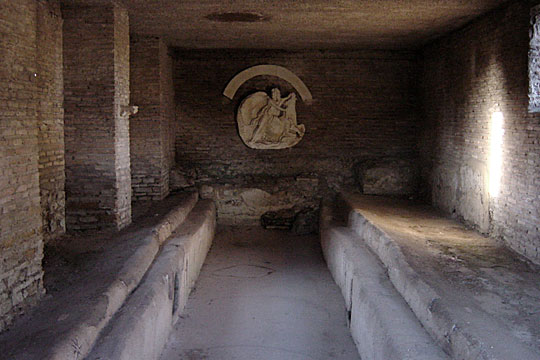
The Mithraeum of the Seven Spheres (Sette Sfere) is of great importance for the understanding of the cult, because of its black-and-white mosaics depicting the planets, the zodiac and related elements.
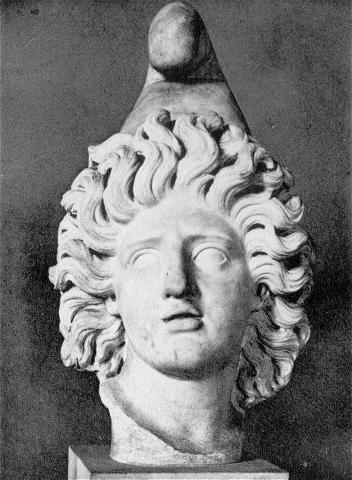
The head of Mithras had seven holes made for fastening rays.
As this short inscription indicates, Aemilio Epaphorodito was both Pater and priest of the Mithraeum of the Seven Spheres.
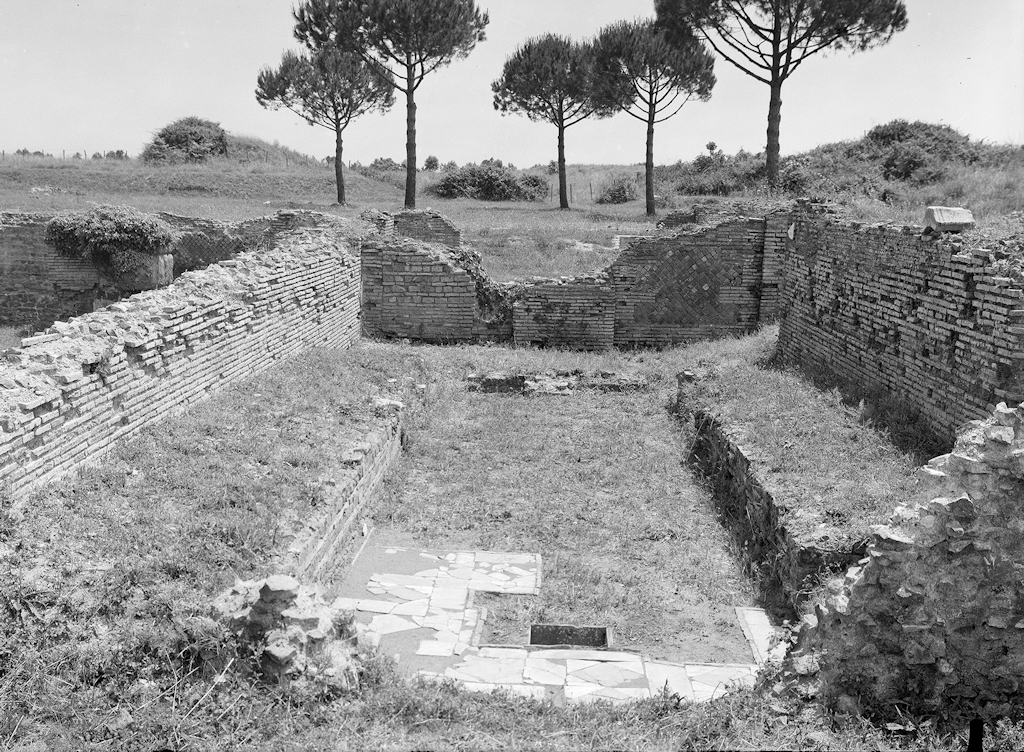
Excavated in 1919, the Mithraeum near the Roman Gate was installed in the 3rd century within a larger building complex.
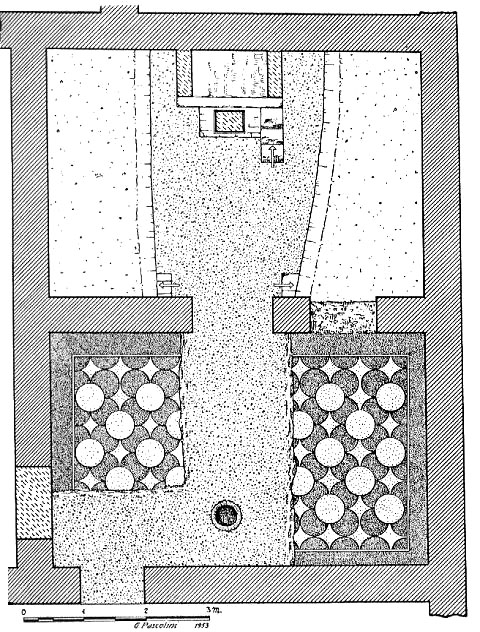
The Mithraeum of the House of Diana was installed in two Antonine halls, northeast corner of the House of Diana, in the late 2nd or early 3rd century.
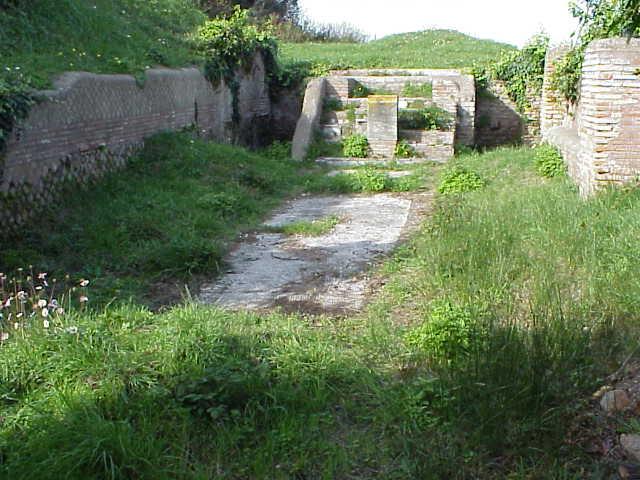
A mosaic of Silvanus, dated to the time of Commodus, was found in a niche in a nearby room of the Mithraeum in the Imperial Palace at Ostia.