Your search Kadin Most gave 396 results.

Emperor Caracalla ordered one of Rome’s largest temples to the god Mithras to be built in the baths bearing his name.

Regensburg is a city in eastern Bavaria, at the confluence of the rivers Danube, Naab and Regen, Danube's northernmost point.
The Roman settlement overlooked a passage between the Hodna and the Sahara via the Aïn Rich plain and the valley of the Oued Chaïr, between the Ouled-Naïl and Zab mountains.
Mendes was a famous city that attracted the notice of most ancient geographers and historians, including Herodotus, Diodorus, Strabo, Mela, Pliny the Elder, Ptolemy, and Stephanus of Byzantium. The city was the capital of the Mendesian nome.
Storgosia was a Roman road station and later a fortress, located in the modern Kaylaka Park in the vicinity of modern Pleven (North-central Bulgaria). Pleven is today the seventh most populous city in Bulgaria.
Geneva is the second-most populous city in Switzerland and the most populous city of Romandy, the French-speaking part of Switzerland.
Salona was an ancient city and the capital of the Roman province of Dalmatia. It was founded in the 3rd century BC and was mostly destroyed in the invasions of the Avars and Slavs in the 7th century AD.
Londinium was the capital of Roman Britain for most of the period of Roman rule. It was originally a settlement founded around 47-50 AD in an uninhabited area.
Emerita Augusta was founded in 25 BC by order of the Emperor Augustus to protect a pass and a bridge over the Guadiana River. The city became the capital of the province of Lusitania and one of the most important cities in the Roman Empire.
Dacia superior formed part of one of the most intensely Mithraic frontier regions of the Roman empire after the conquest of Trajan.
Lusitania preserves one of the most important bodies of Mithraic evidence in Roman Hispania, centred above all on Augusta Emerita and its urban religious landscape.

Slave and vilicus in the household of Tiberius Claudius Livianus, linked to the earliest known Mithraic tauroctony.

Clarissimus knight and legate born in Poetovio that helped to disseminate the cult of Mithras in the African provinces.
A Mithraic initiate attested in Pannonia Superior during the late 2nd or early 3rd century CE.
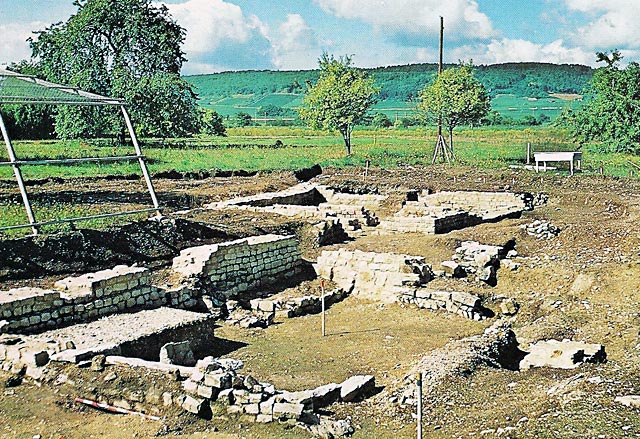
The Mithraeum des Bolards was integrated into a therapeutic cultural complex related to healing waters.
Germania inferior preserves a strongly militarised body of Mithraic evidence from the lower Rhine frontier of the Roman empire.
Bruttium occupied the southernmost reaches of the Italian Peninsula where maritime mobility linked Italy, Sicilia and the wider Mediterranean.
Campania preserved a vibrant urban and maritime environment closely connected to the commercial life of Roman Italy.
Latium formed the political and religious centre of the Roman world where some of the most important Mithraic communities developed.
Syria-Palestina occupied a complex religious landscape shaped by imperial administration, pilgrimage and eastern Mediterranean mobility.
