Your search Monteu da Po gave 2106 results.

Neapolitan senator who dedicated a tauroctonic relief to Mithras tauroctonus to the Almighty God Mithras.

Histria connected the northern Adriatic to the Balkan and Danubian worlds through maritime and regional communication networks.
Along the northern frontier of Roman Britain, Britannia inferior preserves important evidence linked to military and frontier communities.
Aegyptus occupied a unique position within the Roman world where Mediterranean trade, Nile networks and ancient religious traditions intersected.
Venetia connected northern Italy to the Adriatic and Danubian worlds through trade, mobility and imperial communication routes.
Cilicia occupied a key position between Anatolia, Syria and the eastern Mediterranean maritime routes.
Chersonesus occupied a northern Black Sea position where Greek, Roman and frontier cultures intersected at the edges of the Mithraic world.
Macedonia formed a major crossroads between the Greek world, the Balkans and the communication routes of the eastern Roman empire.
Thracia connected the Balkan world to the northern Aegean through military movement, trade routes and provincial urban centres.
Belgica occupied a strategic position between Roman Gaul, the Rhine frontier and the northern provinces where Mithraic cults circulated widely.
Roman Sicilia preserves Mithraic evidence shaped by Mediterranean mobility and the island’s strategic position between east and west.
Raetia preserves Mithraic evidence connected to Alpine frontier systems and military mobility.
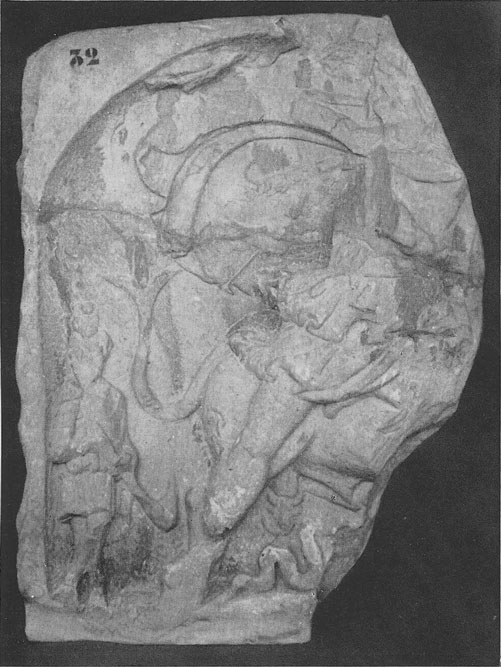
This fragmentary tauroctony relief from Timziouin near Saïda depicts Mithras slaying the bull within a cave-like frame, accompanied by the raven, serpent, scorpion, and Cautopates.
Pannonia preserves one of the most important frontier corpora of Mithraic evidence in the Roman world.
Macedonia preserves Mithraic evidence shaped by major Balkan routes and long-standing urban traditions.
Armenia occupied a strategic position between Roman and Iranian religious worlds during the centuries of Mithraic expansion.

Inscription from Hamadan where the ’great king’ Artaxerxes mentions Ahuramazda, Anahita, and Mithra as guardians.

Late Roman dux associated with the restoration of the so-called Mithraeum IV of Poetovio.

A probable Mithraic sanctuary at Poetovio, identified by Vermaseren as the so-called Mithraeum IV on the basis of four associated inscriptions.
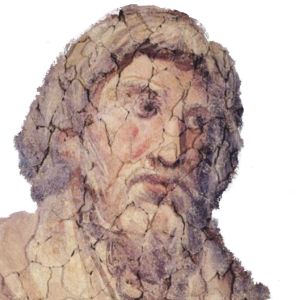
North African author, Platonic philosopher and rhetorician associated with the Mithraic milieu of Ostia.
