Your search Monteu da Po gave 2106 results.
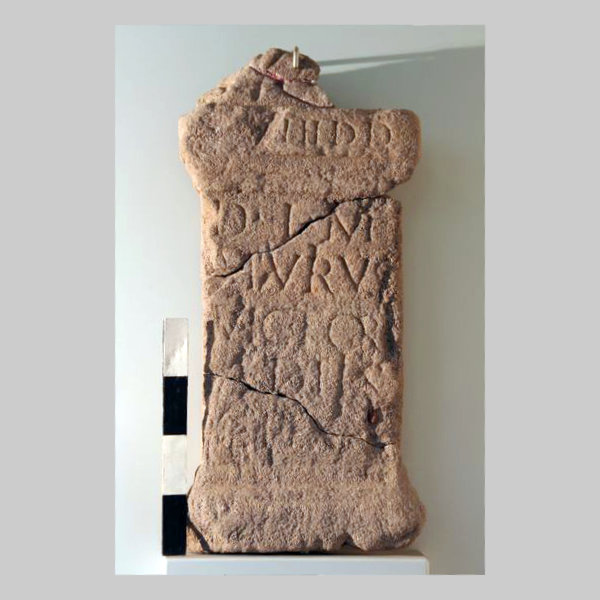
Marius Victor, according to the inscription on the monument, erected this monument to Mithras ’when Philip and Titianus were consuls’.
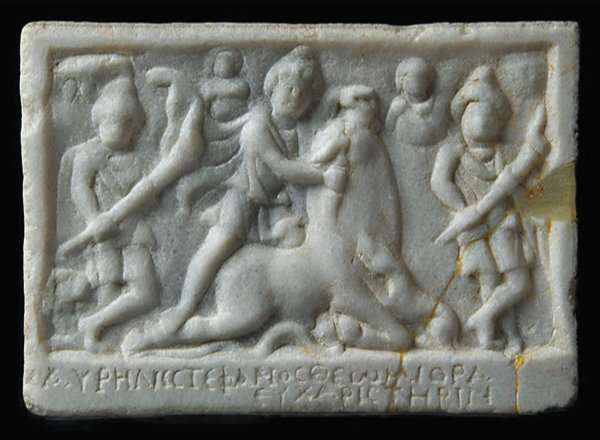
This relief of Mithras killing the bull is unique in the Apulum Mithraic repertoire because of its inscription in Greek.
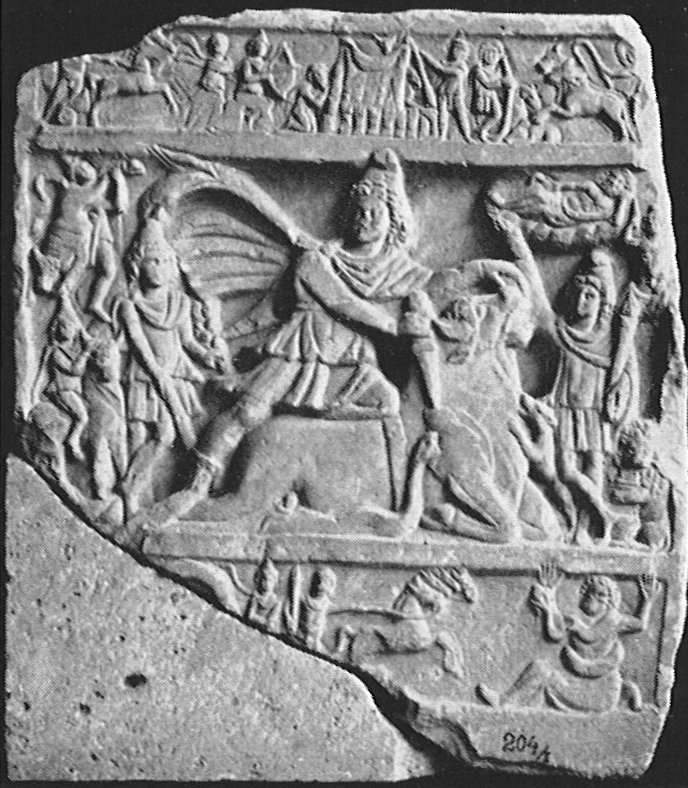
This relief of Mithras killing the bull from Apulum, now Alba Iulia, Romania, contains several scenes from the Mithras legend.
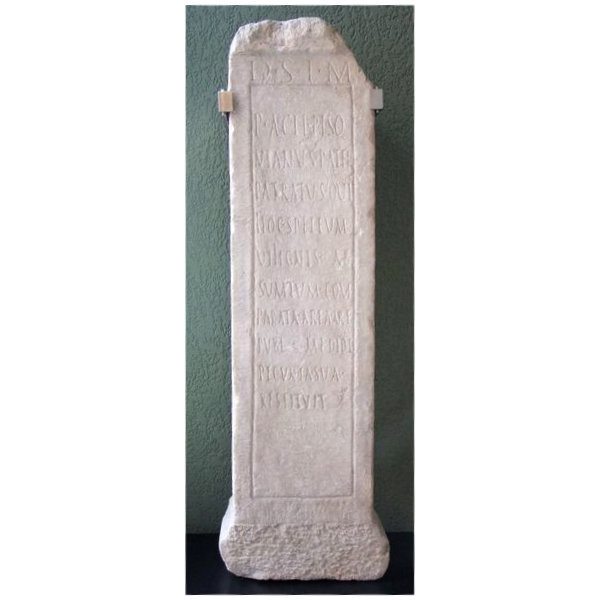
This high stele by a certain Acilius Pisonianus bears an inscription commemorating the restoration of a Mithraeum in Mediolanum, today's Milan.
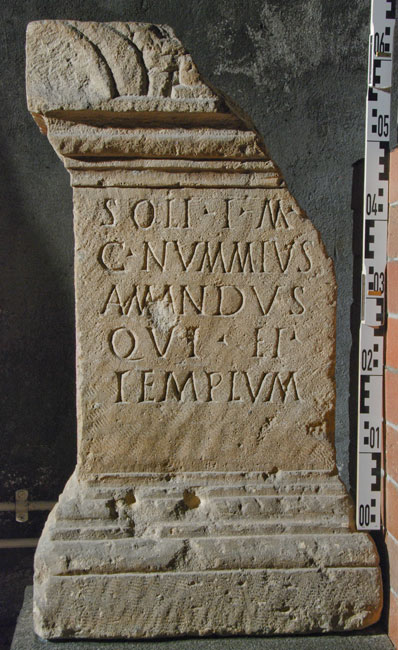
This altar dedicated to the Invincible Sol Mithra was found in 1878 in a cemetery in Alba Iulia.
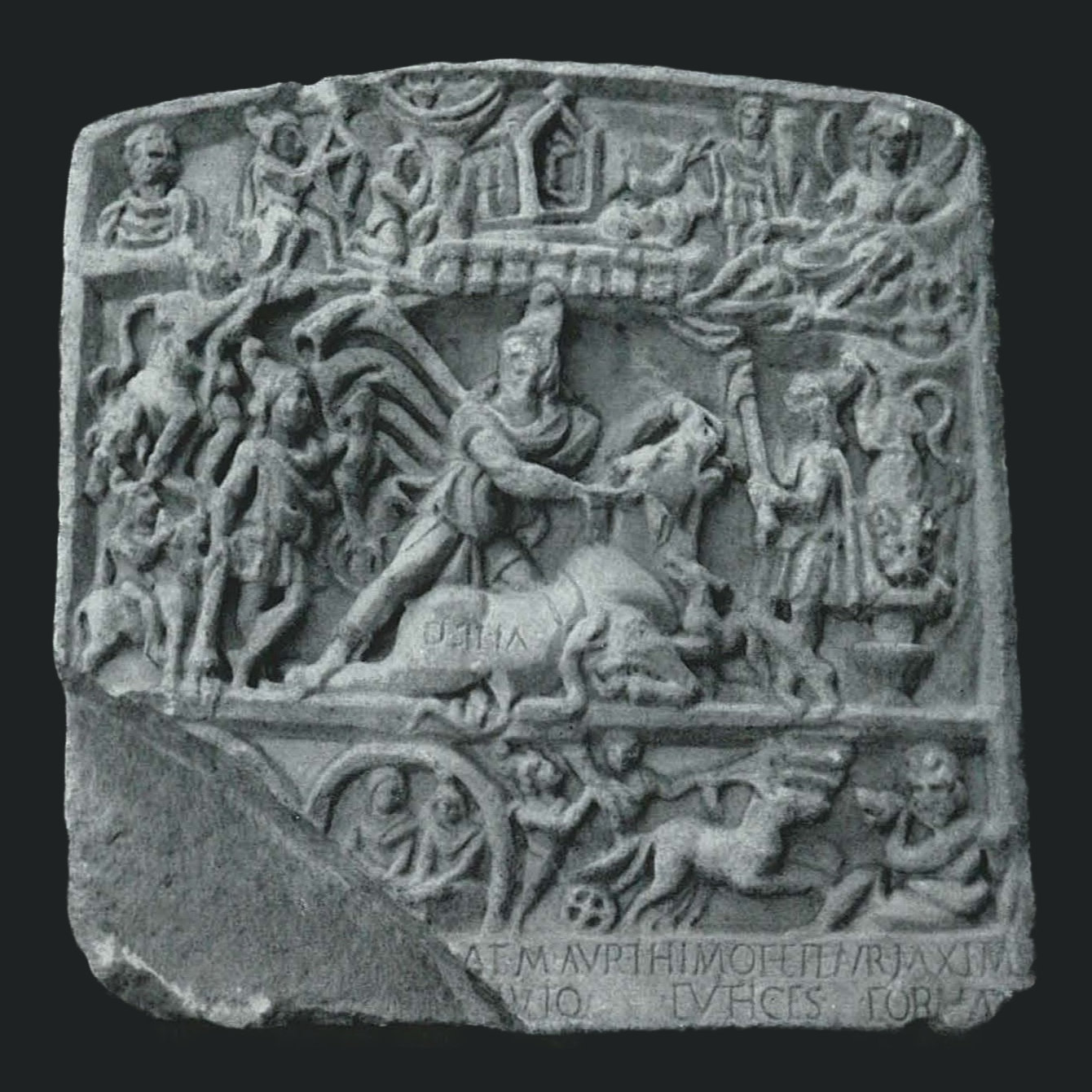
This marble relief of Mithras killing the bull was made by a freedman who dedicated it to his old masters.

This inscription to Zeus Helios Mithras Serapis by a certain Ioulios Pyrros is now lost.
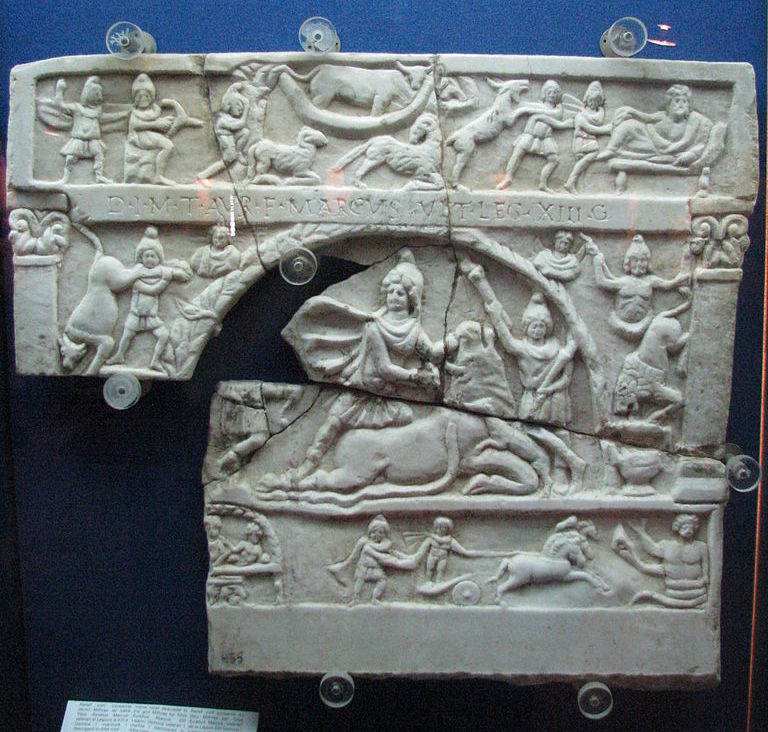
This marble relief from Alba Iulia contains numerous scenes from the myth of Mithras.
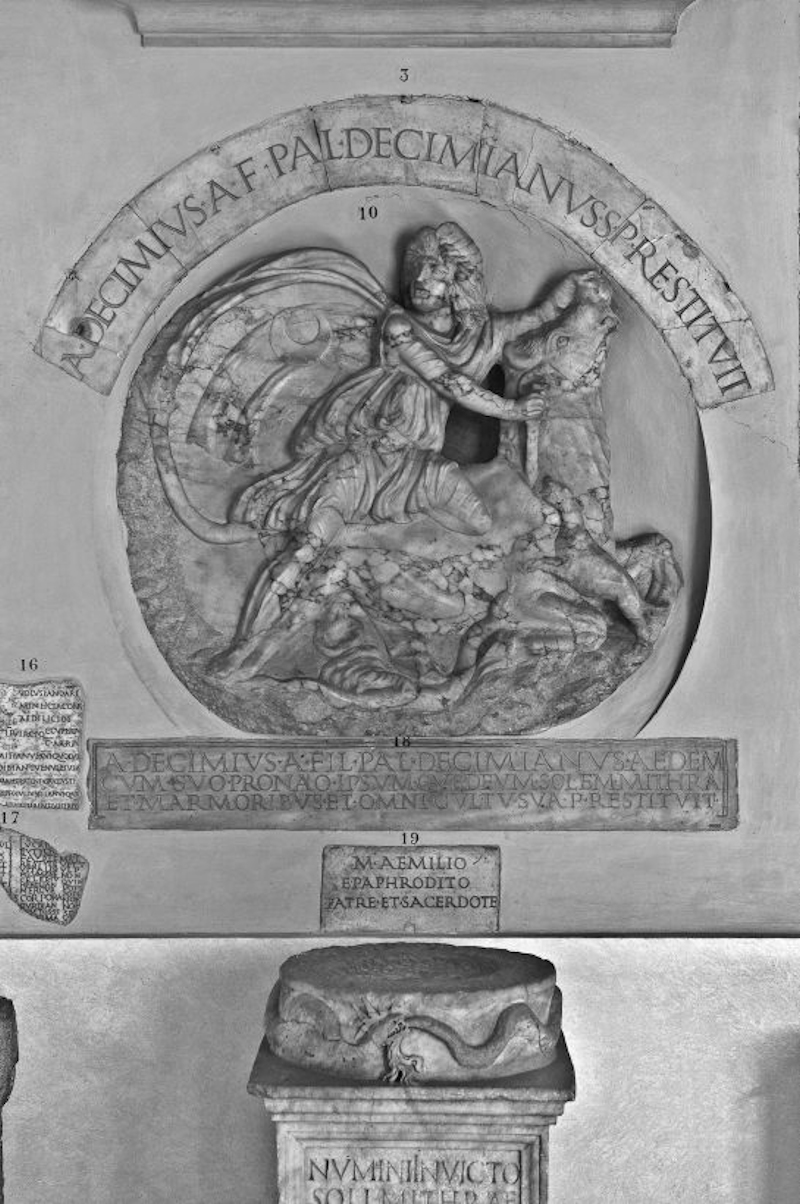
The relief of Mithras slaying the bull from the Mithraeum of the Seven Spheres was discovered in 1802 by Petirini by order of Pope Pius VII.
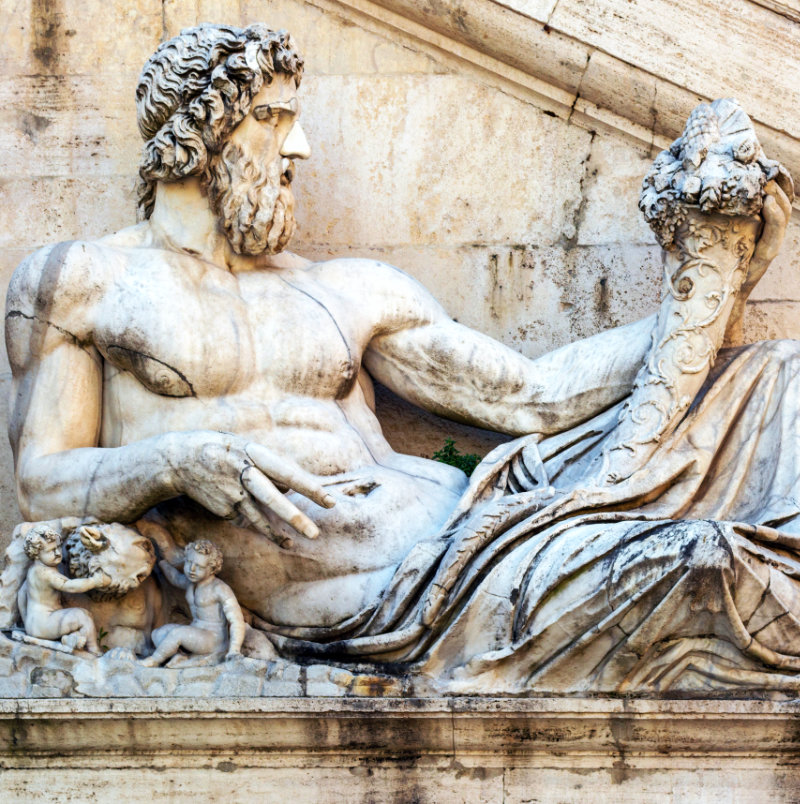
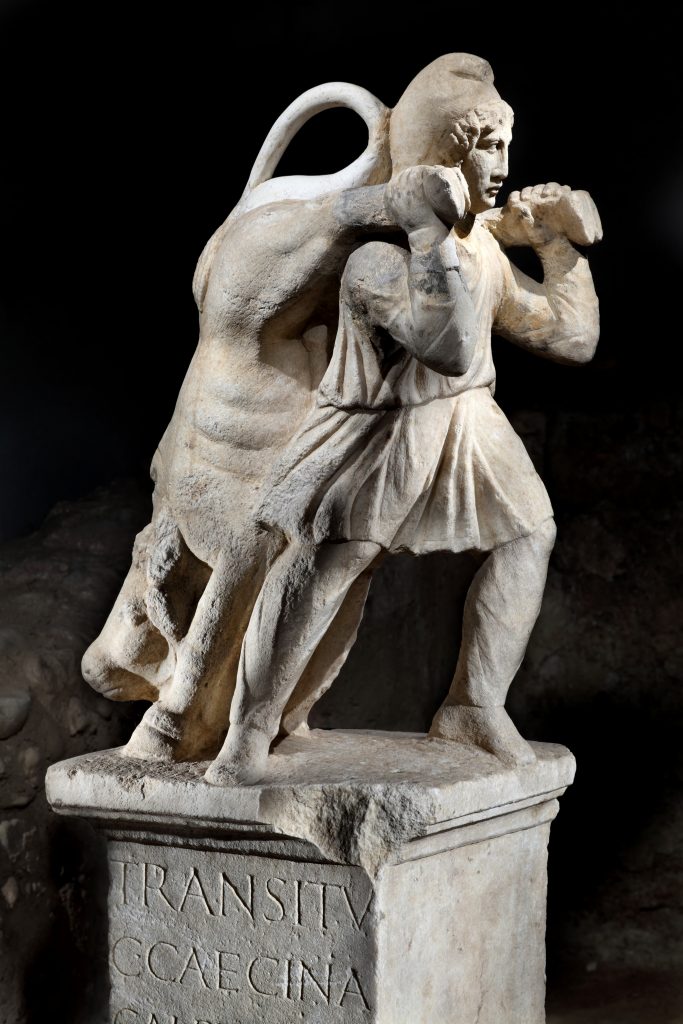
The sculpture of Mithras carrying the bull includes an inscription on its base.

Mithraeum II was found at Ptuj at a distance of 20 m south of the Mithraeum I in 1901.
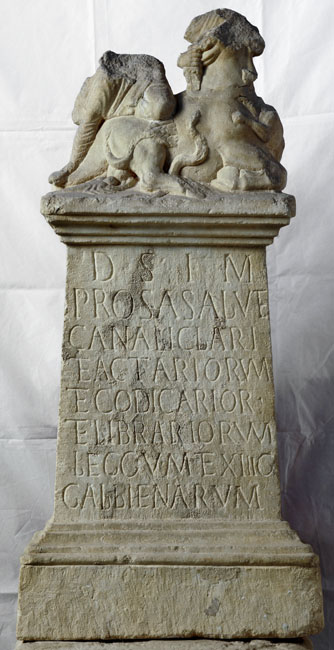
Remarkable fragmentary sculpture of Mithras slaying the bull on an inscribed altar found in Mithraeum III at Ptuj.
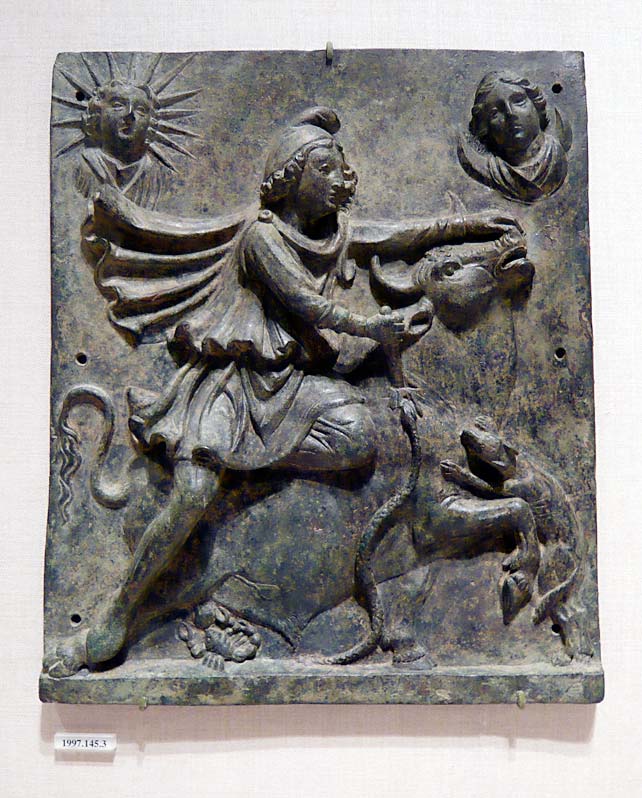
Mithras Tauroctony on bronze exposed at the Metropolitan Museum of New York.
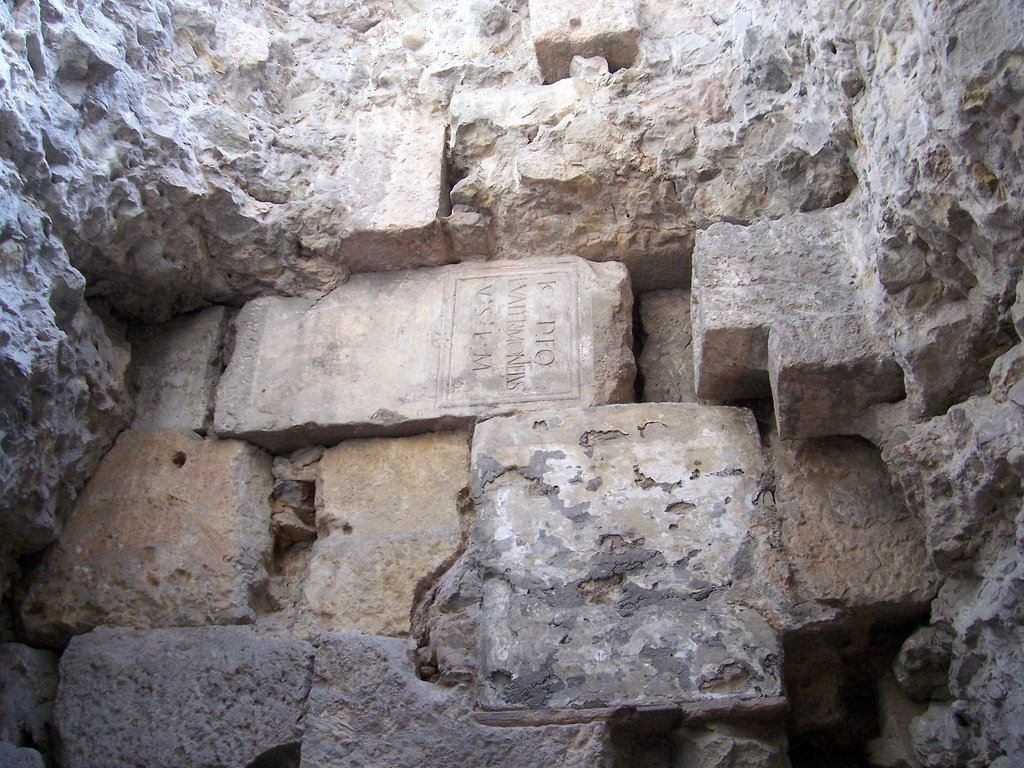
This altar was dedicated to Cautes by a certain Lucius in Baetulo (Badalona), near Barcino (Barcelona).
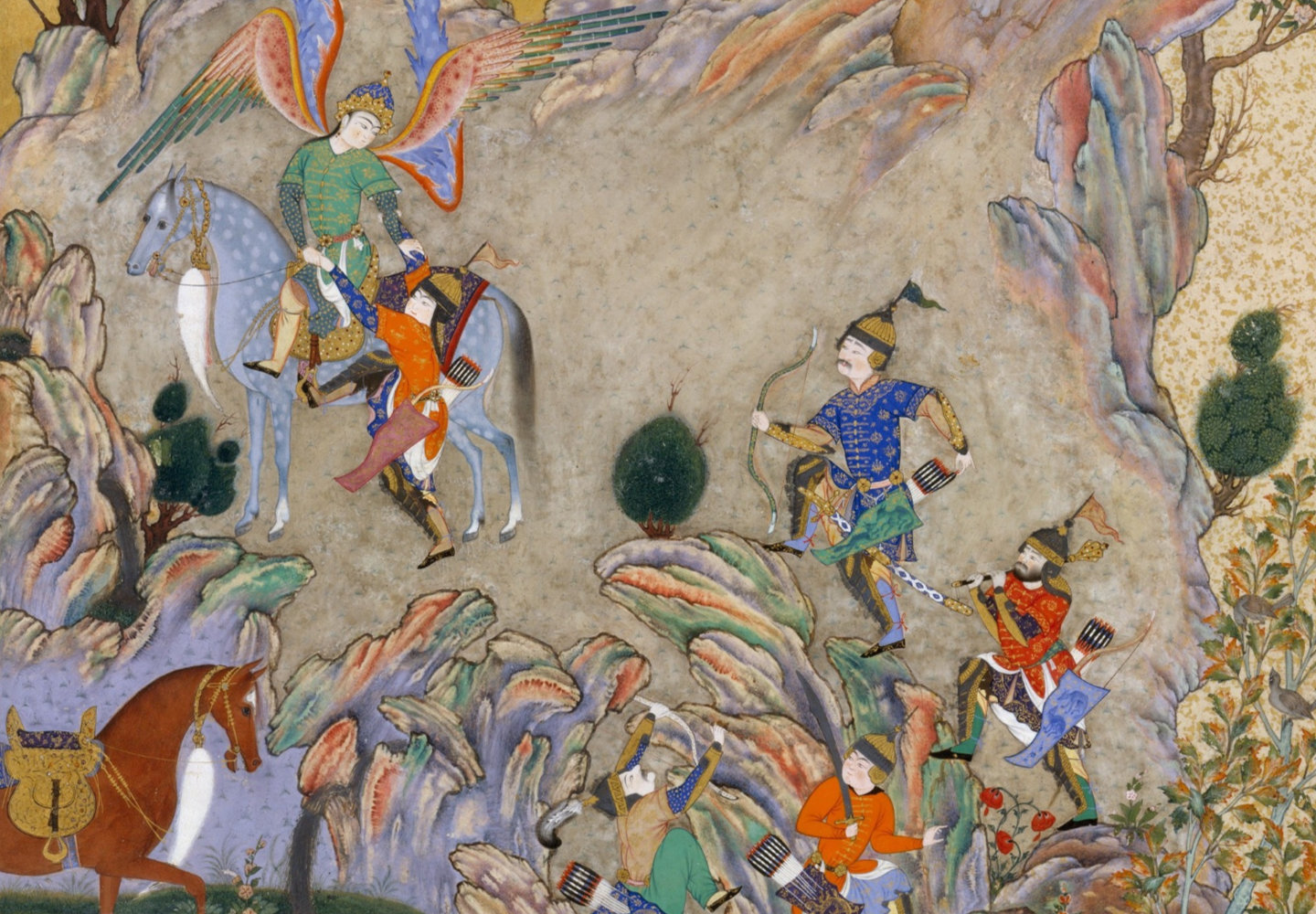
We propose to revisit a passage by the prolific author Marteen Vermaseren that highlights correspondences today forgotten between the Roman Mithras and its Eastern counterparts.
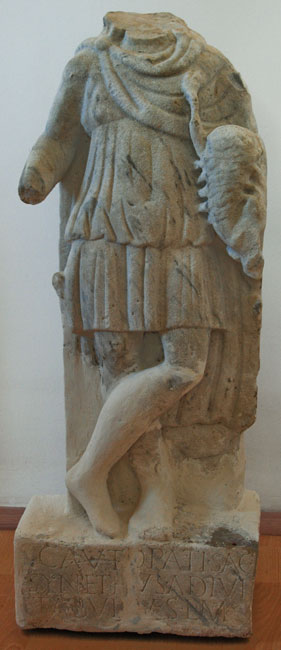
The Cautopates with scorpion found in 1882 in Sarmizegetusa includes an inscription of a certain slave known as Synethus.
This altar to Mithras is dedicated by a certain Gaius Iulius Castinus, legate prefect of the emperors.
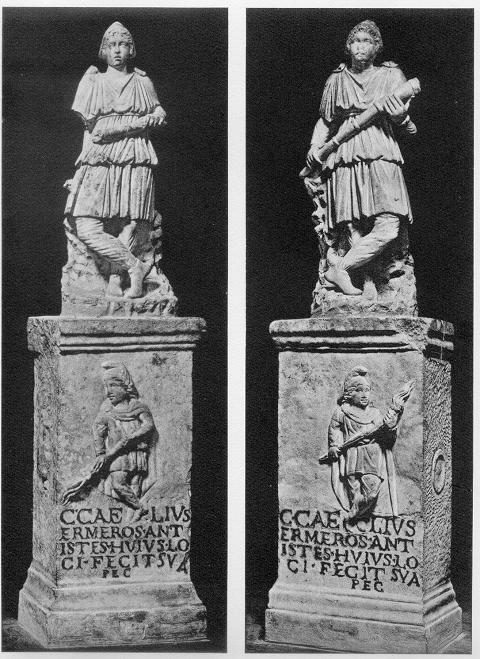
The sculptures of Cautes and Cautopates from the Mitreo del Palazzo Imperiale may have been reused from an older mithraeum in Ostia.

The dedicator of this altar was a slave in the service of a high official, the prefect Gaius Antonius Rufus, known from other inscriptions.
