Your search Paris gave 93 results.
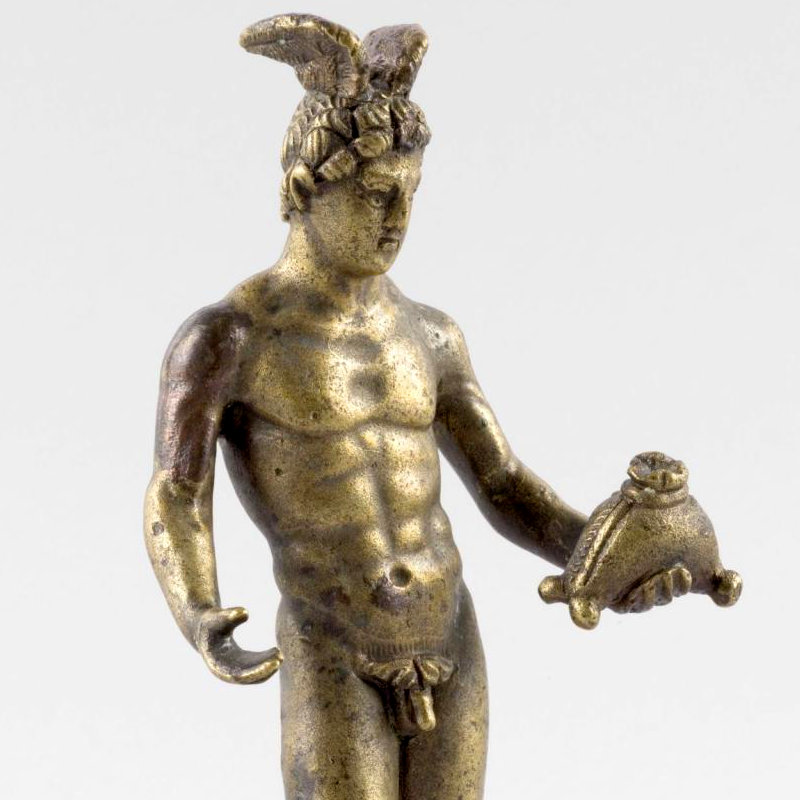
This sculpture, probably of Cautopates, now in the Musei Vaticani, was transformed into Paris.
White marble relief depicting Mithras as bull-slayer in a grotto from the Froehner collection, now in the Cabinet des Médailles, Paris.
A selection of texts gathered by Ernesto Milá that reinterprets Mithraism as an initiatory, solar, and heroic cult. It includes the so-called Great Magical Papyrus of Paris, translated and commented by Julius Evola and the Ur Group.
The cultural and religious world of fourth-century Rome is explored through the life and afterlife of Vettius Agorius Praetextatus. His case is set in comparison with other pagan and Christian senators of the period.
This is one of the two torchbearers, probably Cautes, transformed into Paris, now in the British Museum.
This is one of the three reliefs depicting Mithras killing the bull that the Louvre Museum acquired from the Roman Villa Borghese collection.
There is no consensus on the authenticity of this monument erected by a certain Secundinus in Lugdunum, Gallia.
The Tauroctony found in Velletri, Rome, bears an inscription from its owner and donor.
The controversial Italian journalist Edmon Durighello discovered this marble statue of a young naked Aion in 1887.
This magnificent candelabrum was found in Rome in 1803, in the Syrian Temple of Janicule.
This medallion belongs to a specific category of rounded pieces found in other provinces of the Roman world.
This intaglio depicting Mithras killing the bull is preserved at the Bibliothèque national de France.
The marble shows Mithras slaying the bull, on one side, and Sol and Mithras feasting on a bull skin, on the other.
The Mithraeum of Tazoult / Lambèse is one of the best preserved Mithras’s temples in Africa.
One of the largest known Mithraea in Pannonia, the sanctuary of Sárkeszi stood near the Roman road linking Herculia and Aquincum.
Burham is a village and civil parish in the borough of Tonbridge and Malling in Kent, England.
These bronze medallions associates the image of several Roman emperors with that of Mithras, usually as a rider, in the province Pontus.
Roman stone low-relief depicting Mithras as a bull-slayer, with the upper part of his head missing.
