Your search Podersdorf am See gave 2331 results.

A statue and a relief of Cautes have been found in an ancient Gallo-Roman site in the commune of Dyo.
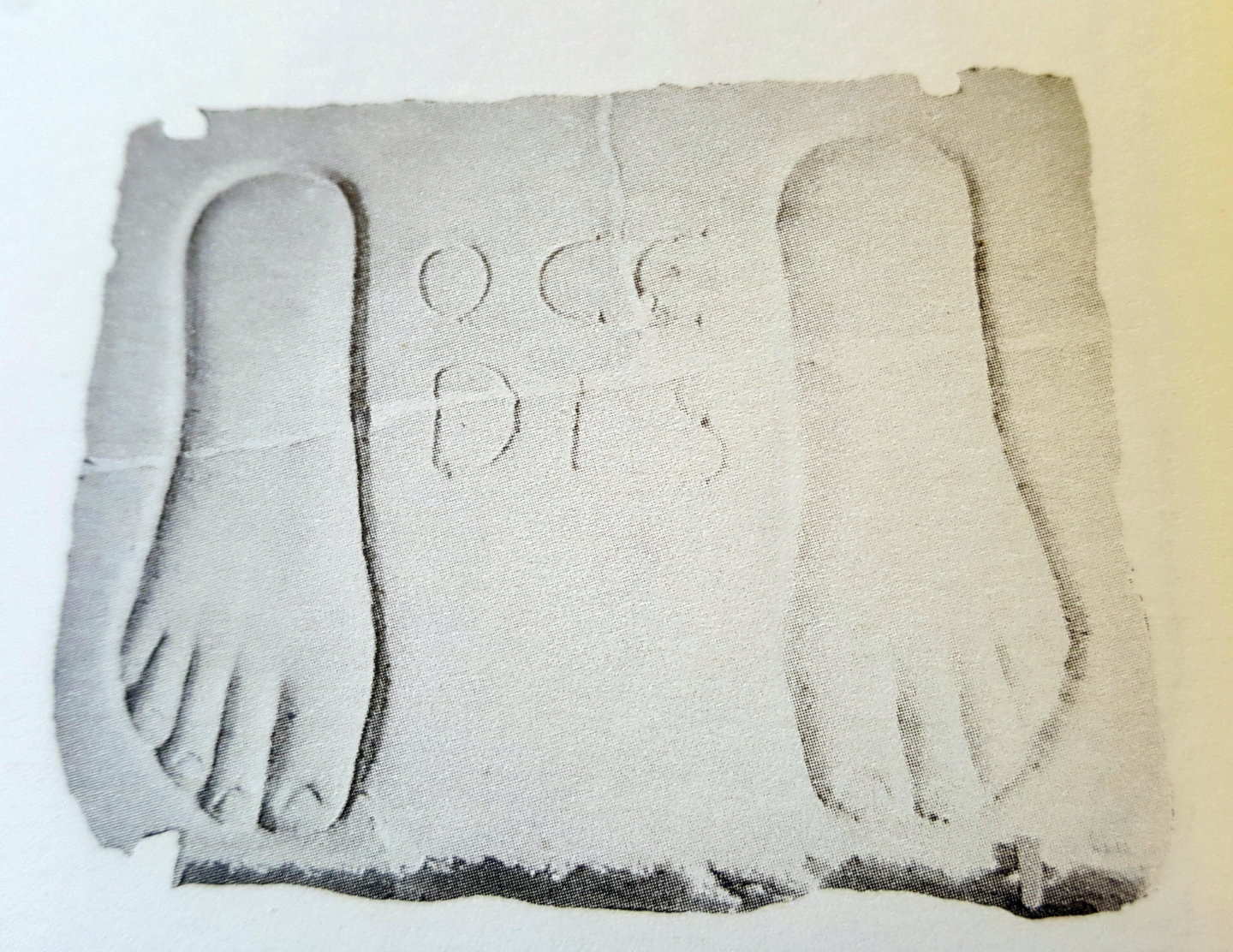
Recent interpretations link this marble inscription to the cult of the goddess Nemesis.
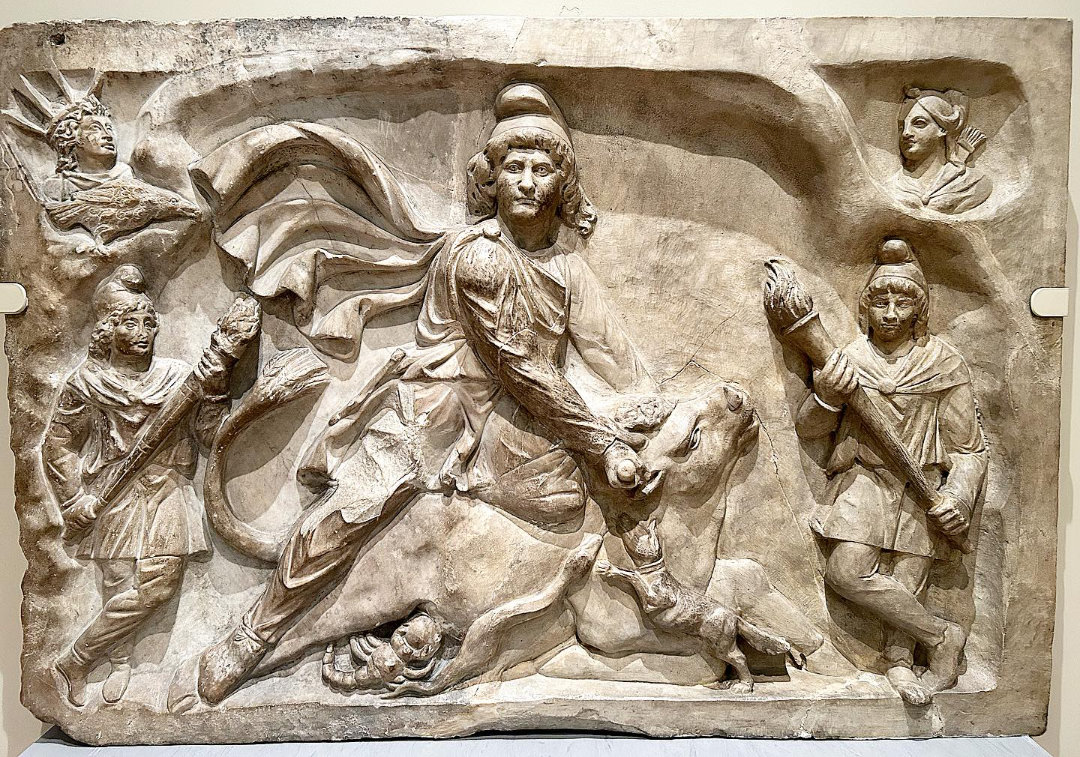
This relief of Mithras killing the bull is on display at the Royal Ontario Museum.
This inscription, found in the Mitreo della Planta Pedis, among some other monuments in Ostia, suggests a link between Mithras and Silvanus.
This inscription was dedicated to God Cautes by a certain Flavius Antistianus, Pater Patrorum in Rome.
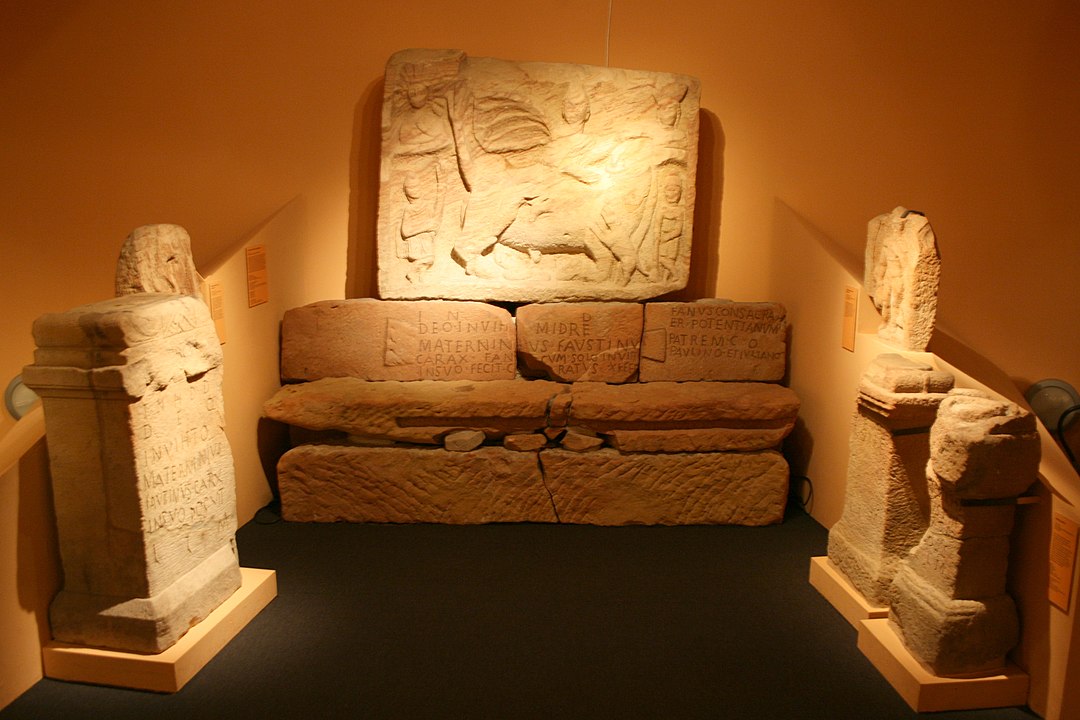
The few remains of the Mithraeum of Gimmeldingen are preserved at the Historical Museum of the Palatinate, in Speyer, Germany.
There are no further details about this Mithraic statue from Transylvania, the historical region of central Romania.
The provenance of this fragment of a white marble relief depicting Mithras as a bullkiller is unknown.
Three larger altars and other finds from the Mithraeum of Jajce, Bosnia and Herzegovina.
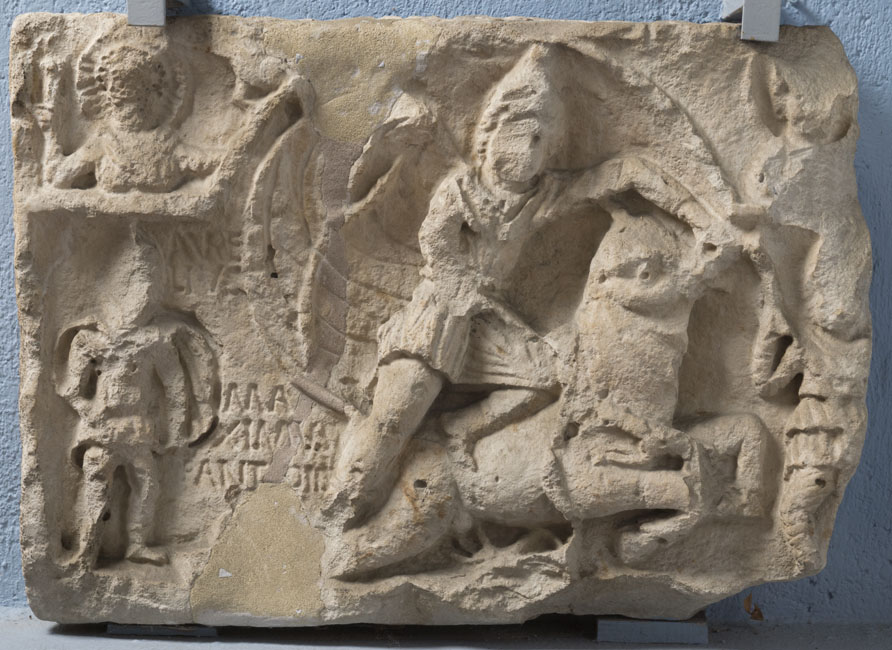
This relief of Mithras as a bullkiller was found in Golubić, Bosnia and Herzegovina, near a cementery.
Vermaseren noted in his Corpus that he had been informed of a fragmented relief of Mithras killing the bull in "the museum at Ghighen".
This statuette was bought by A. Wiedemann in Luxor in 1882 from a man from Kus.
This Aion is known for wearing a Kalathos on his lion’s head, linking him to the syncretic Sarapis.
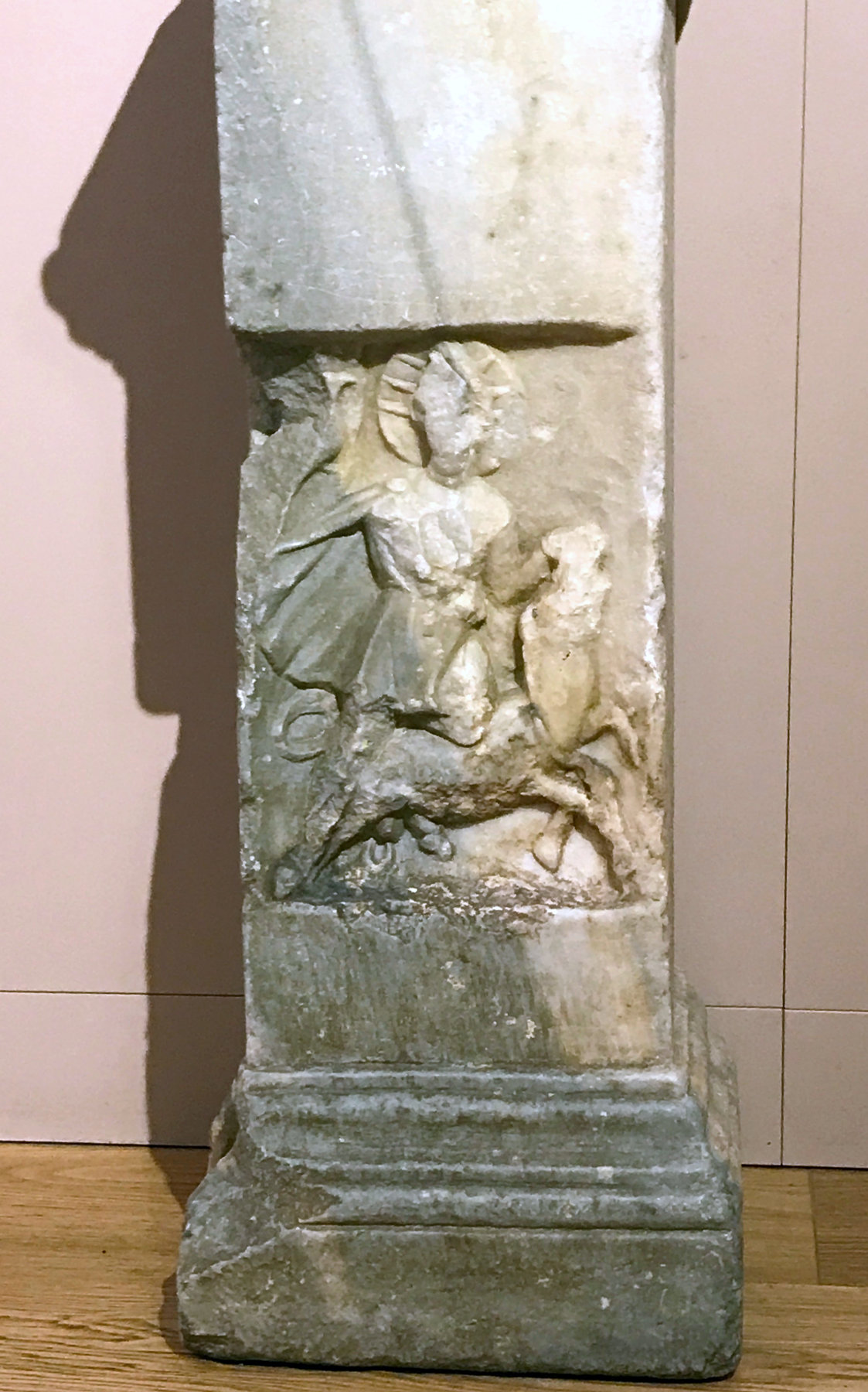
This low relief on an altar of Mithras killing the bull was found in a church in Pisignano, south of Ravenna.
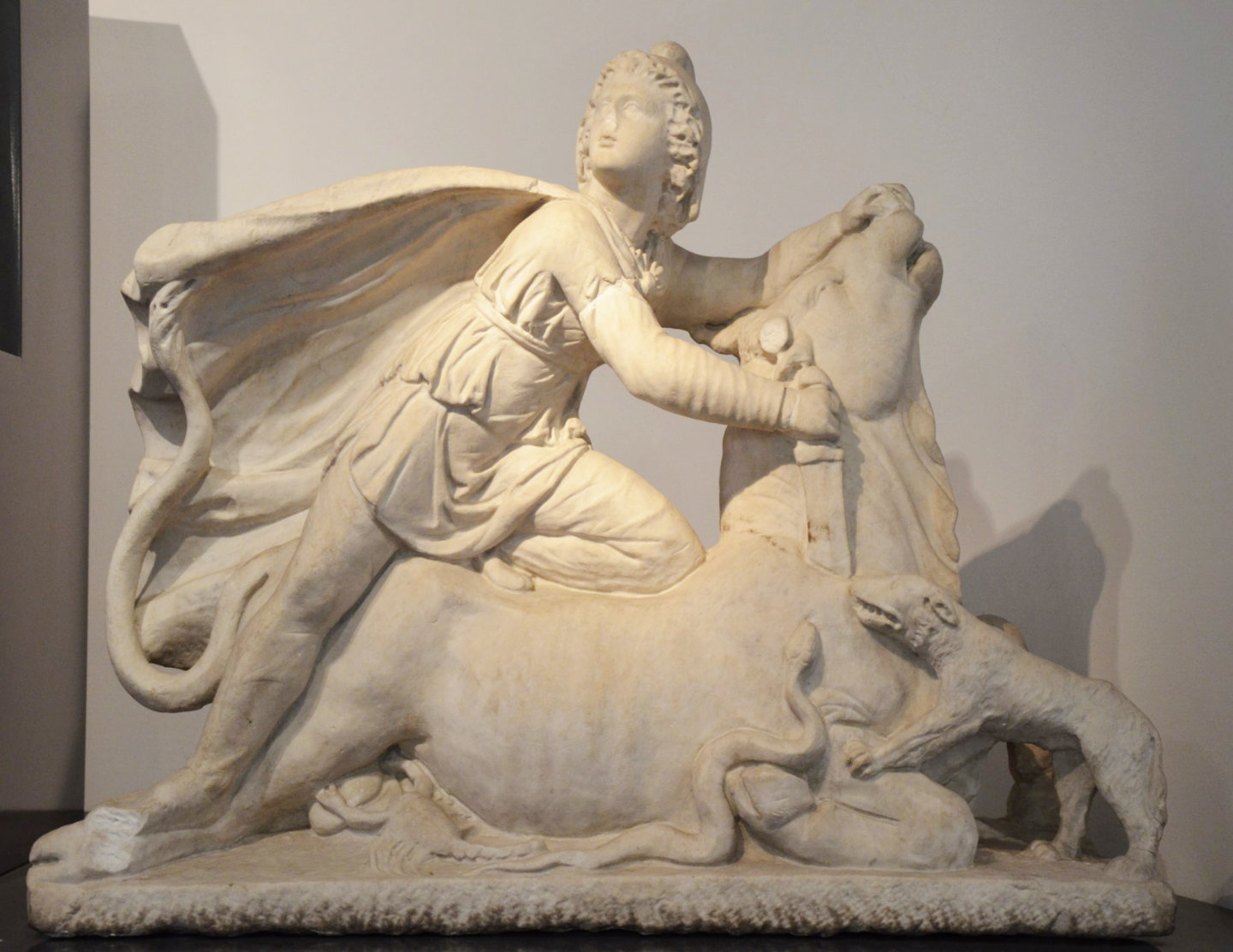
This statue of Mithras as a bullkiller was bought at Rome where it might be found.
This marble of Cautes was found together with his partner Cautopates in Ostia in 1939.
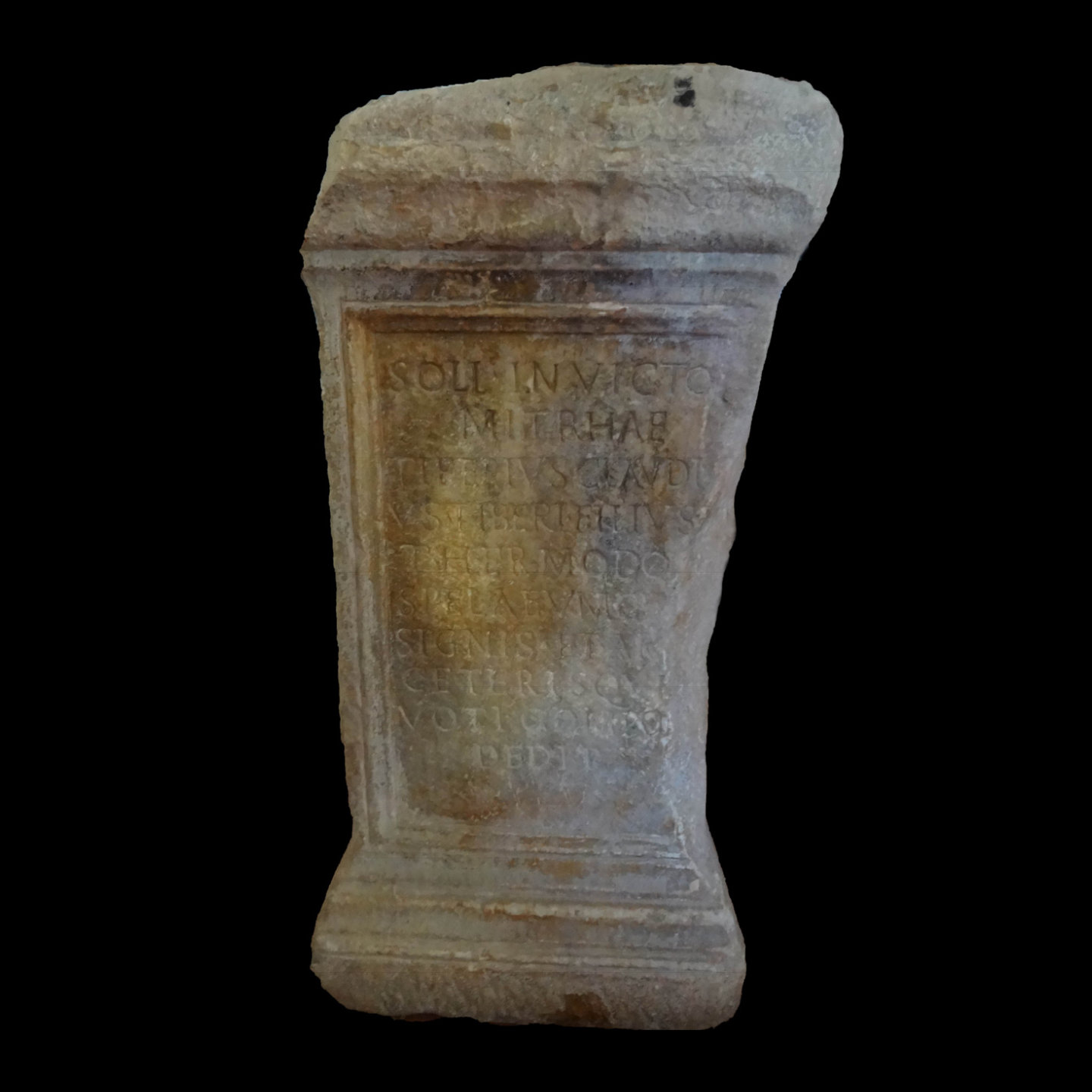
The donor of this Mithraic inscription from Bolsena, a certain Tiberius Claudius Thermoron, is known from two other monuments.
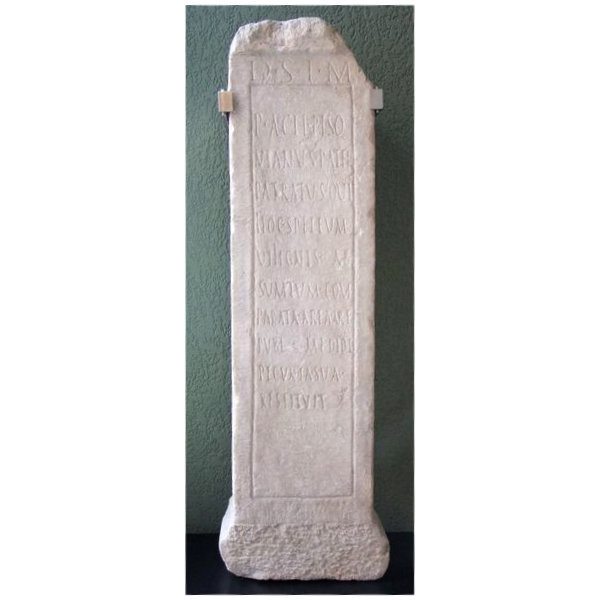
This high stele by a certain Acilius Pisonianus bears an inscription commemorating the restoration of a Mithraeum in Mediolanum, today's Milan.
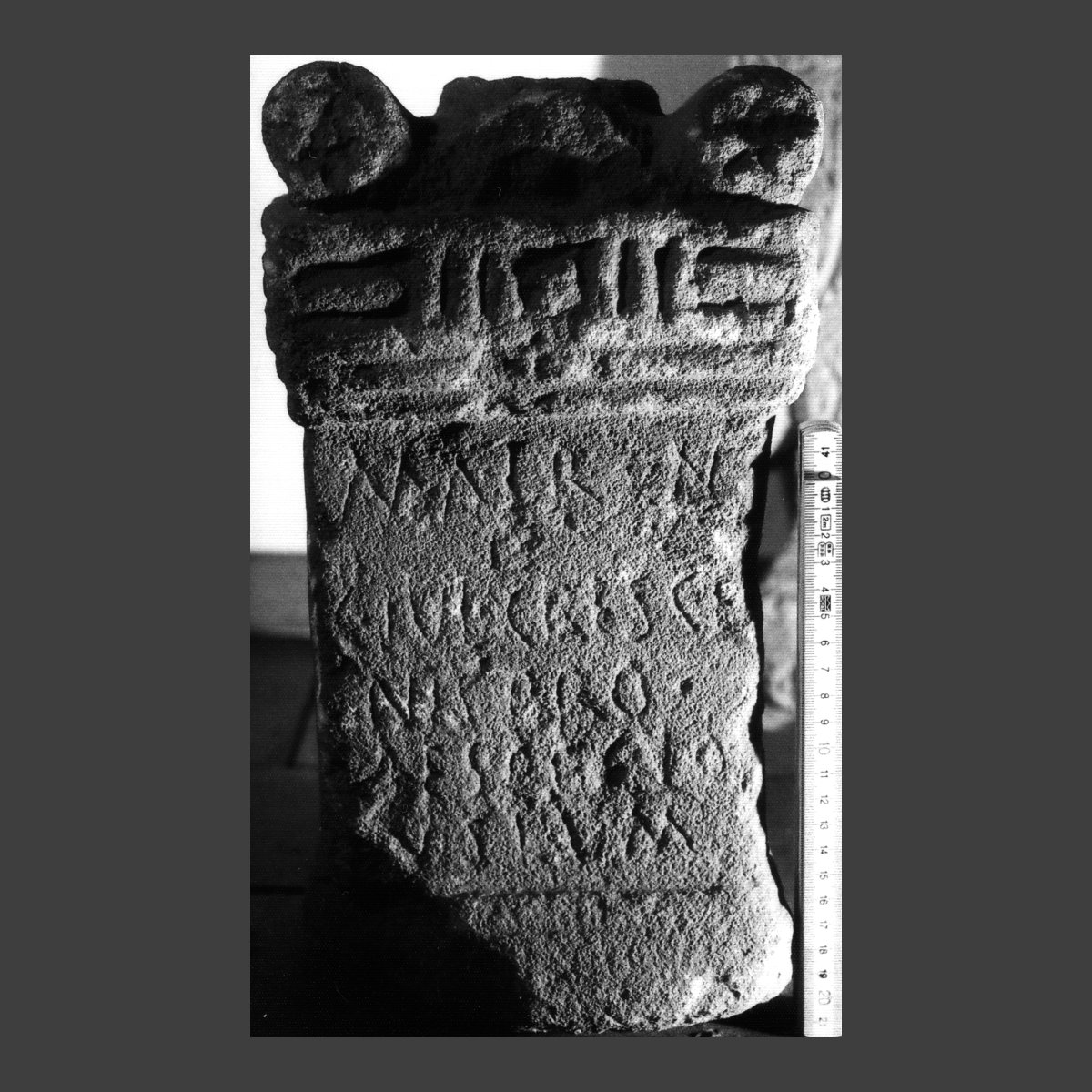
This fragmented altar of a certain Caius Iulius Crescens, found in the Mithraeum of Friedberg, bears an inscription to the Mother Goddesses.
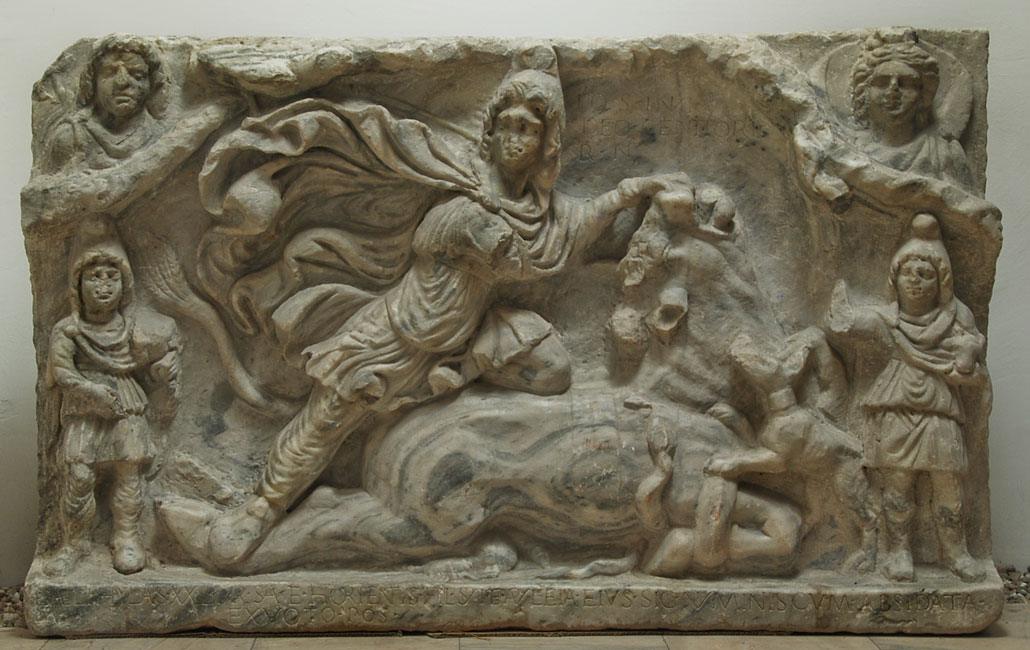
This monument bears an inscription by a certain Lucius Aelius Hylas, in which he associates Sol Invictus with Jupiter.
