Your search Roger Jehu Bull gave 454 results.

Marble tauroctony relief from Vintu de Jos near Apulum, Dacia, depicting the standard bull-slaying scene.
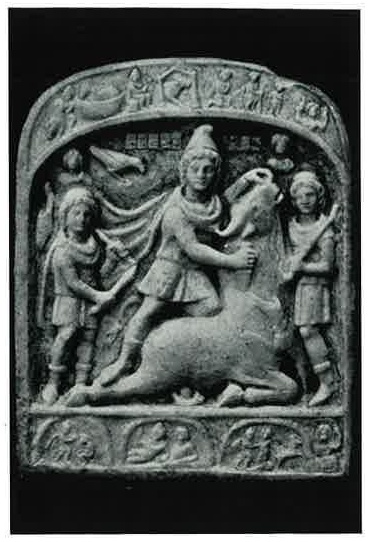
White marble tauroctony relief found in the river Mureș at Vintu de Jos near Apulum, Dacia, around 1859, depicting the bull-slaying with the full iconographic programme.

Limestone altar from Apulum, Dacia, decorated on one side with Medusa, on another with a vase, flowers, a bull's head, and a serpent; the front bears an inscription.
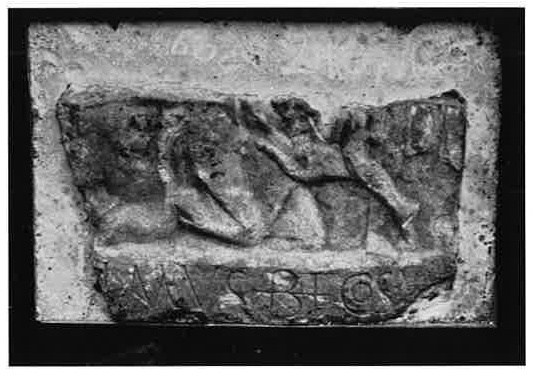
Marble relief fragment from Apulum, Dacia, preserving the forepart of the bull with the serpent and dog, and part of Cautes; the upper portion is lost.
White marble tauroctony relief from Apulum, Dacia, depicting Mithras killing the bull in a grotto with dog and serpent; formerly in a private collection in Budapest.
Fragment of an open-work marble tauroctony from the Mithraeum at Apulum, Dacia, preserving Mithras's head with only the snout of the bull; the relief is framed by a border.
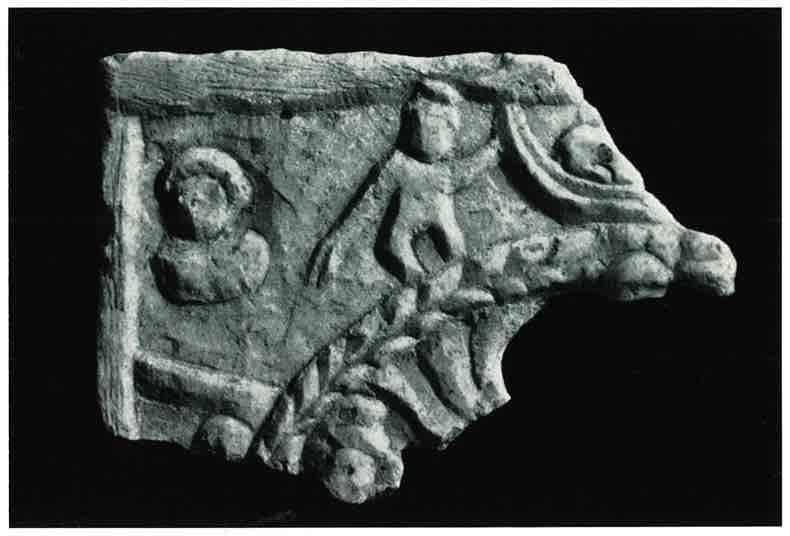
Marble relief fragment found in the Turda castrum in 1954, Dacia, preserving the bust of Sol in the upper left corner and Mithras grasping the bull; remnants of a wreath are visible in the upper right.
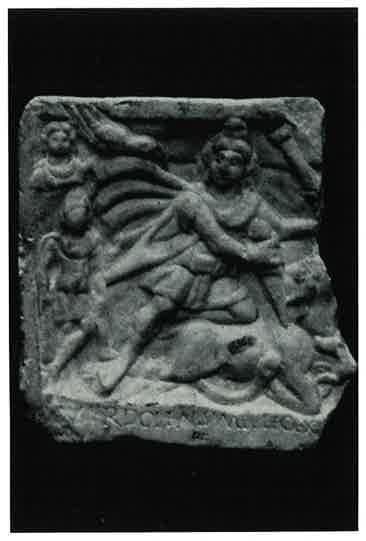
Fragment of a white marble tauroctony relief from Turda, ancient Potaissa in Dacia, depicting the bull-slaying with the bull's tail ending in three corn-ears, the dog, serpent, and scorpion.
Lost white marble tauroctony relief from Turda, ancient Potaissa in Dacia, depicting the bull-slaying with dog, serpent, and scorpion; the inscription in the lower border named the dedicant Iulius Iulianus.
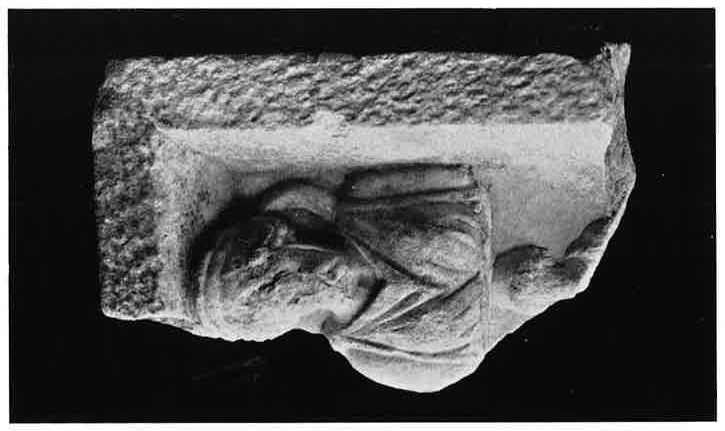
Right upper corner of a white marble bordered tauroctony relief from Salona or its surroundings, Dalmatia, with framing elements and part of the bull-slaying iconography.
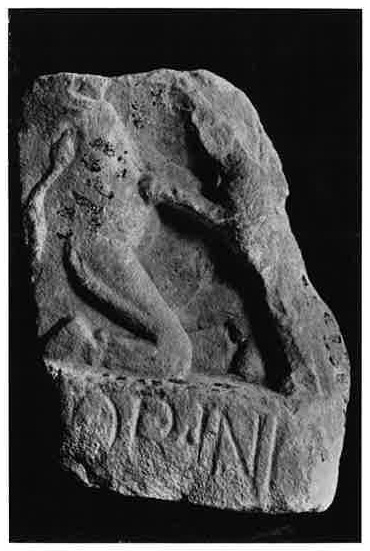
Limestone tauroctony relief fragment from Salona, Dalmatia, preserving the foremost part of the bull, the dog, the serpent, and part of Mithras's dagger hand.
Fragment of a limestone tauroctony relief from Székesfehérvár, Pannonia Inferior, preserving only the border of the grotto in which Mithras kills the bull; the greater part of the god and bull are lost.
Circular white marble relief in five fragments from the Mithraeum at Sárkeszi, Pannonia Inferior, depicting an open-work tauroctony enclosed in a laurel wreath; only part of the bull's body, the god's foot, and the scorpion are preserved.
Fragment of a relief from Aquincum, Pannonia Inferior, walled into a house at Majláth-Utcai 51, preserving the lower left corner of a tauroctony with the bull's hind-leg, Mithras's leg, and the scorpion.
Marble tauroctony relief from Aquincum or possibly Budaörs, Pannonia Inferior, depicting the bull-slaying scene with cypress trees between the torchbearers and the central group.
Marble tauroctony relief from Aquincum, Pannonia Inferior, found at Budapest III, Fötér, depicting Mithras as bull-slayer with both torchbearers flanking the central group.
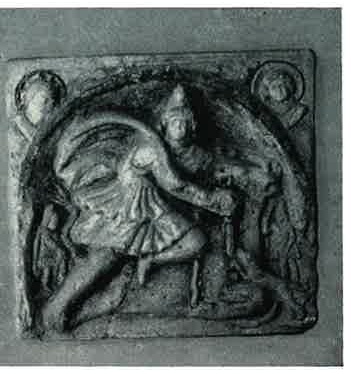
Marble tauroctony relief from Petronell, ancient Carnuntum in Pannonia Superior, with the bull's tail ending in corn-ears; no scorpion is depicted, and Cautes holds the upraised torch.
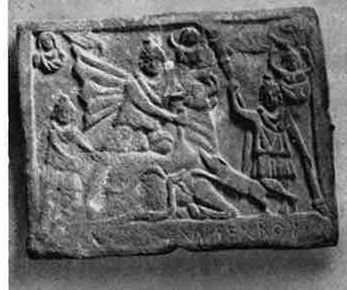
White marble tauroctony relief from Stix-Neusiedl, Pannonia Superior, depicting Mithras killing the bull with the raven perched on the rim of the god's flying cloak — an unusual detail placing the raven on the cloak rather than on the grotto border…
Marble relief fragment from Mithraeum III at Ptuj, ancient Poetovio, preserving the dog and part of the serpent approaching the bull's wound.
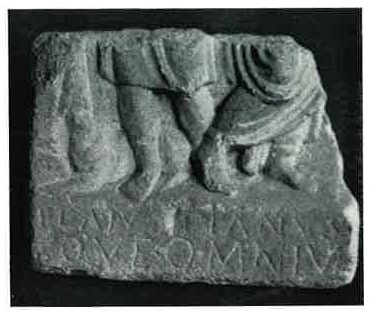
Marble relief fragment from Mithraeum III at Ptuj, ancient Poetovio, preserving part of Mithras's flying cloak and the scorpion below the bull.
