Your search San Gemini gave 1021 results.

A fragmentary inscription on the lower border of the limestone tauroctony relief from San Zeno di Romedio near Trento, partially reading a dedication to the Invincible Mithras by Marius.
A limestone low-relief tauroctony fragment found in 1869 near the entrance of the valley of San Zeno di Romedio in the Trentino, now in the Museum at Trento, showing a primitive Mithras bullkiller with Cautes upraised, the bust of Luna and an inscription on the lower border…
A coarse-grained yellowish-white marble tauroctony relief fragment found walled in at San Zeno am Nonsberg in the Trentino in 1911, now in the Museum Ferdinandeum at Innsbruck, showing part of Mithras slaying the bull and Cautes raising a flaming torch.
A small four-sided white marble relief of uncertain Mithraic attribution, found at Italica (modern Santiponce, near Seville), depicting a bull walking to the right on the front, a fig-tree on the back, five ears of wheat on the right side, and damaged vine tendrils with grapes on the left…
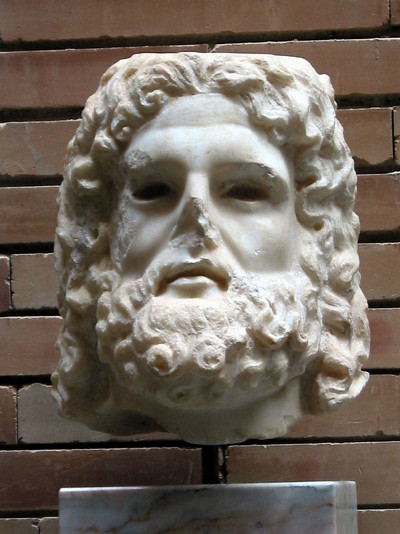
This head of Serapis from Cerro de San Albín may be unrelated to Mithras worship.
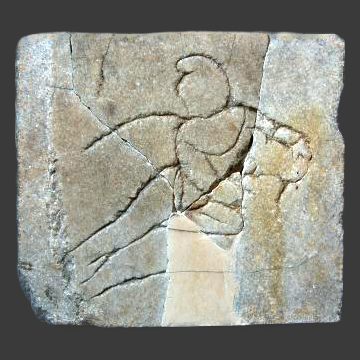
This unfinished Mithras tauroctonos without the usual surrounding animals was found in 1923 in Italica, near Seville, Spain.
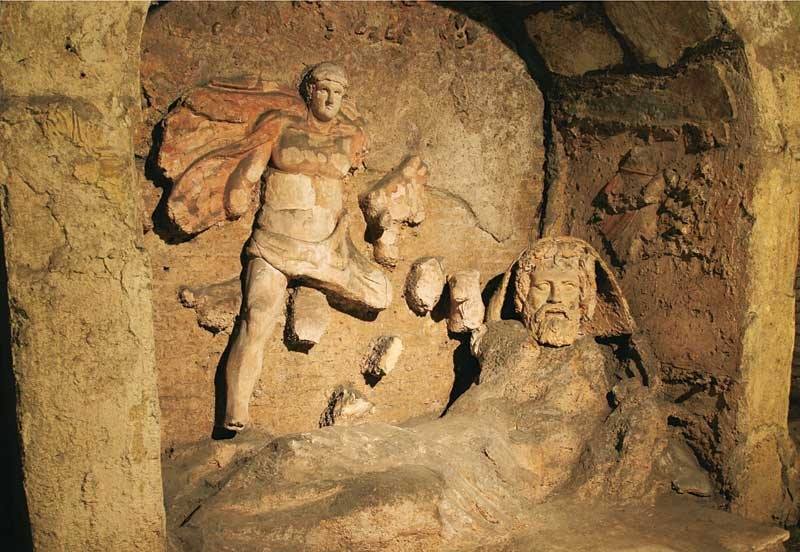
Even if only a few fragments remain, it is very likely that the main niche of the Mitreo di Santa Prisca contained the usual representation of Mithras killing the bull.
The fragmented tauroctony of the Mitreo di Santa Prisca rests on the naked figure of a bearded man, probably Ocean or Saturn.
Group of Mithraic finds distributed across different localities named San Zeno along the Verona–Brenner route.

These fragments of a monumental tauroctony found in the Cerro de San Albín must have decorated the Gran Mitreo de Mérida, which has not yet been found.

Partial relief of a Giant with snake-feet found in the Mithraeum of Santa Prisca.
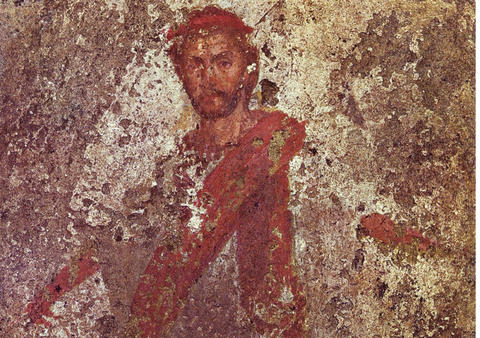
Figures in procession, each representing a different grade of Mithraic initiation, labeled with their respective titles.
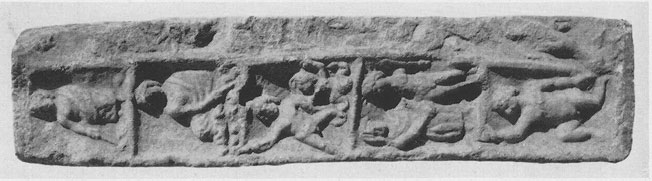
Fragment of a double-sided white marble Mithraic relief from San Zeno, found near the Castello di Tuenno, depicting elements of the tauroctony cycle and bearing a dedication to Deo Invicto Mithrae.
This Mithraic temple, also known as the Mithraeum of the Olympii, dates to the 3rd century and was rediscovered in 15th-century Rome, but it has not been preserved.

Guides, maps and additional information on the Basilica, the Mithraeum and the archaeological area of San Clemente.
This inscription, which doesn’t mention Mithras, was found near the church of Santa Balbina on the Aventine in Rome.
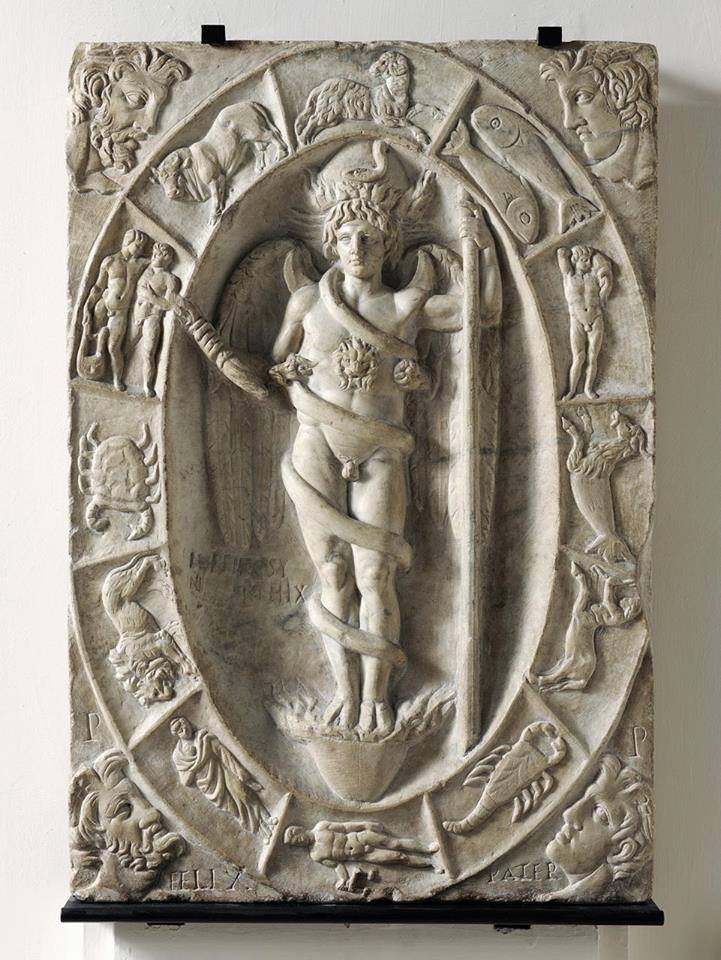
The Aion / Phanes relief, currently on display in the Gallerie Estensi, Moneda, is associated with two Eastern mysteric religions: Mithraism and Orphism.
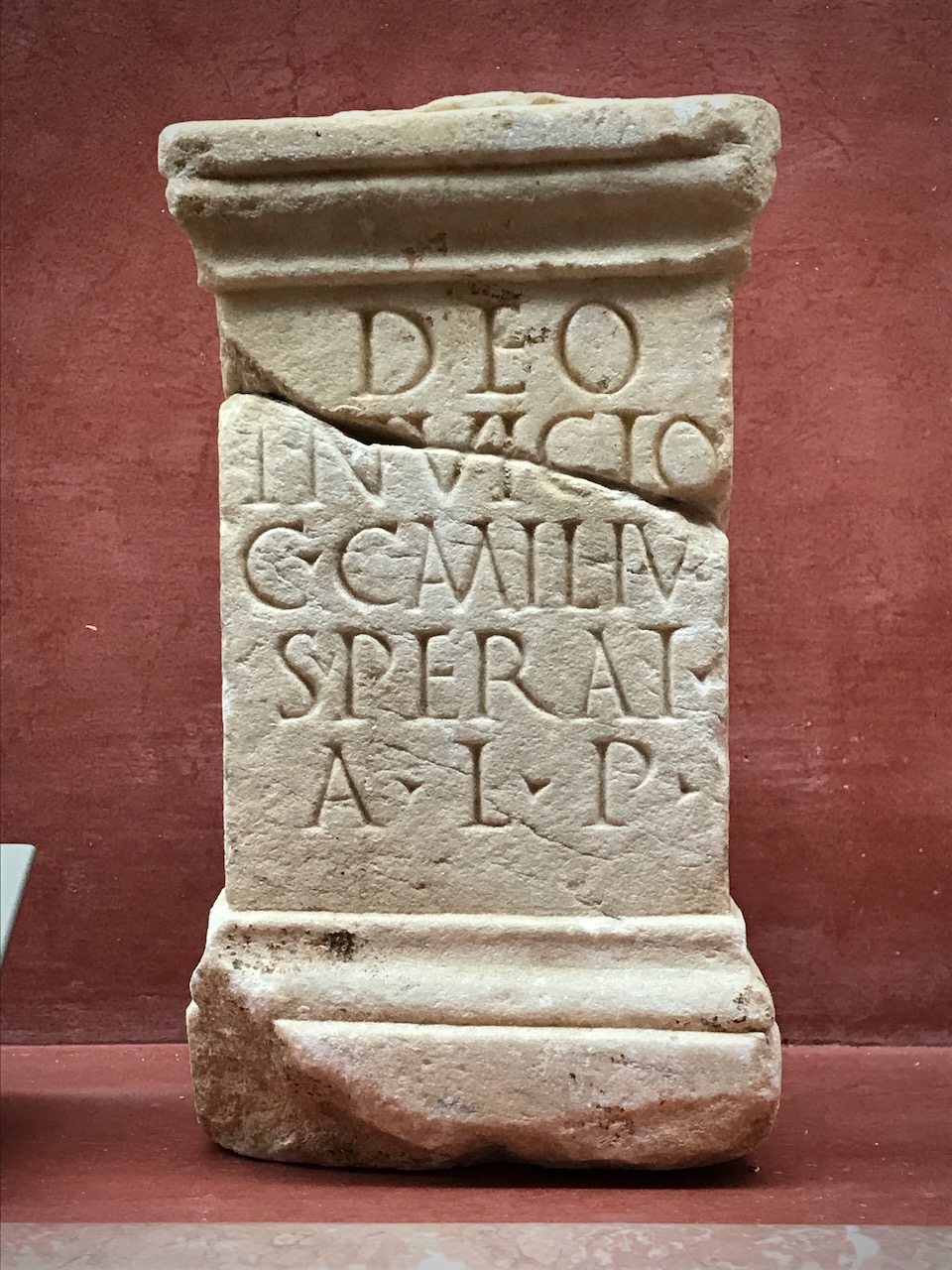
Small white marble altar made in honour of Mithras found at San Albín, Mérida.
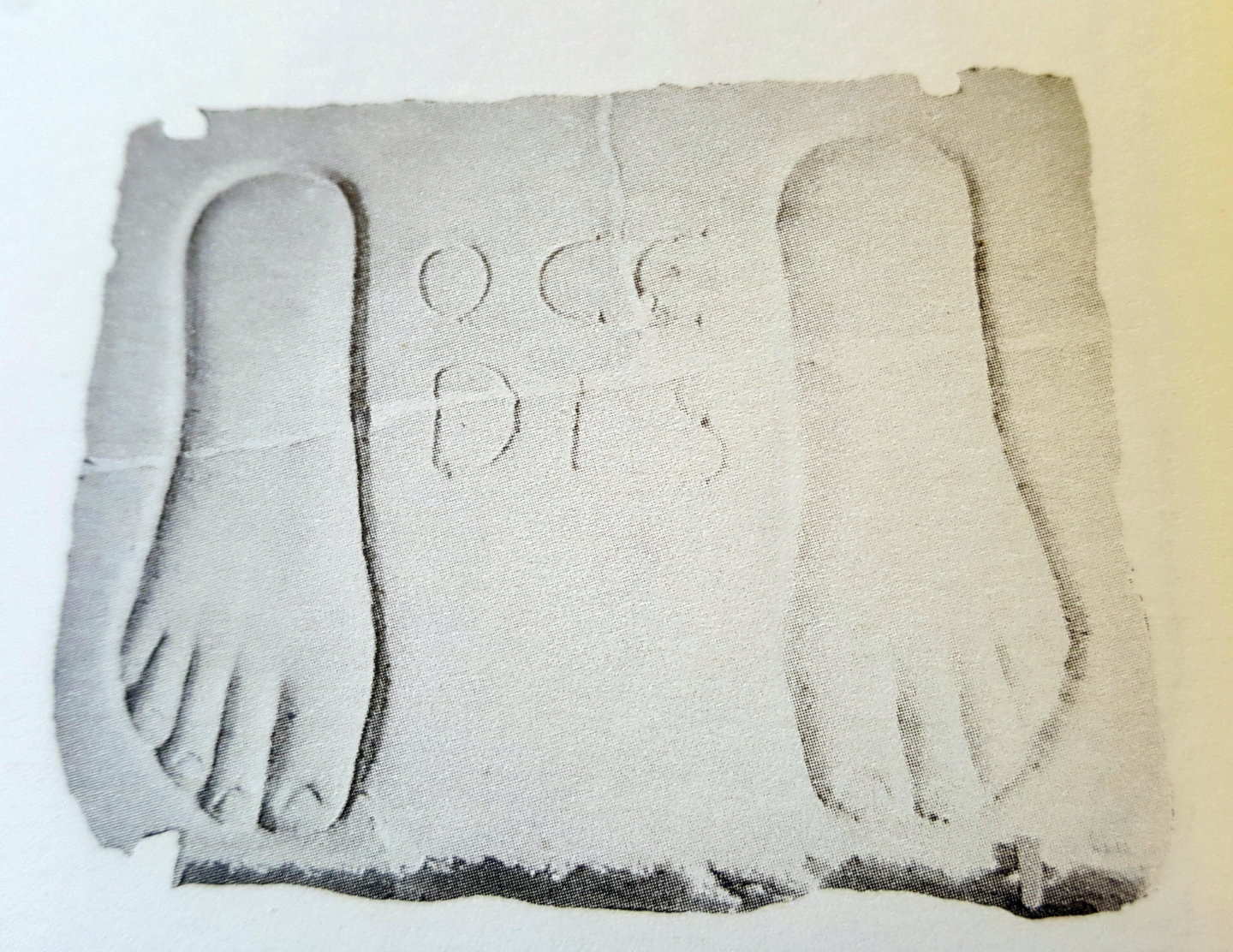
Recent interpretations link this marble inscription to the cult of the goddess Nemesis.
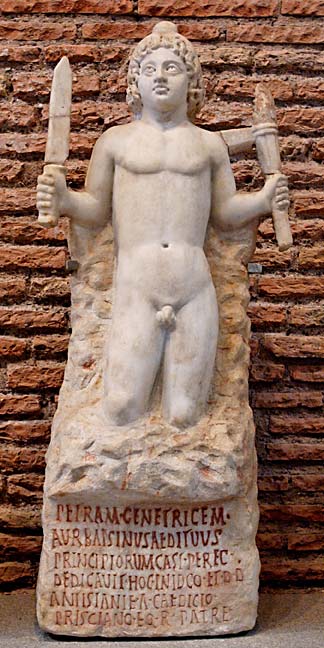
The sculpture of Mithras rock-birth from Santo Stefano Rotondo bears an inscription of Aurelius Bassinus, curator of the cult.
