Your search San Giovanni al Timavo gave 3157 results.
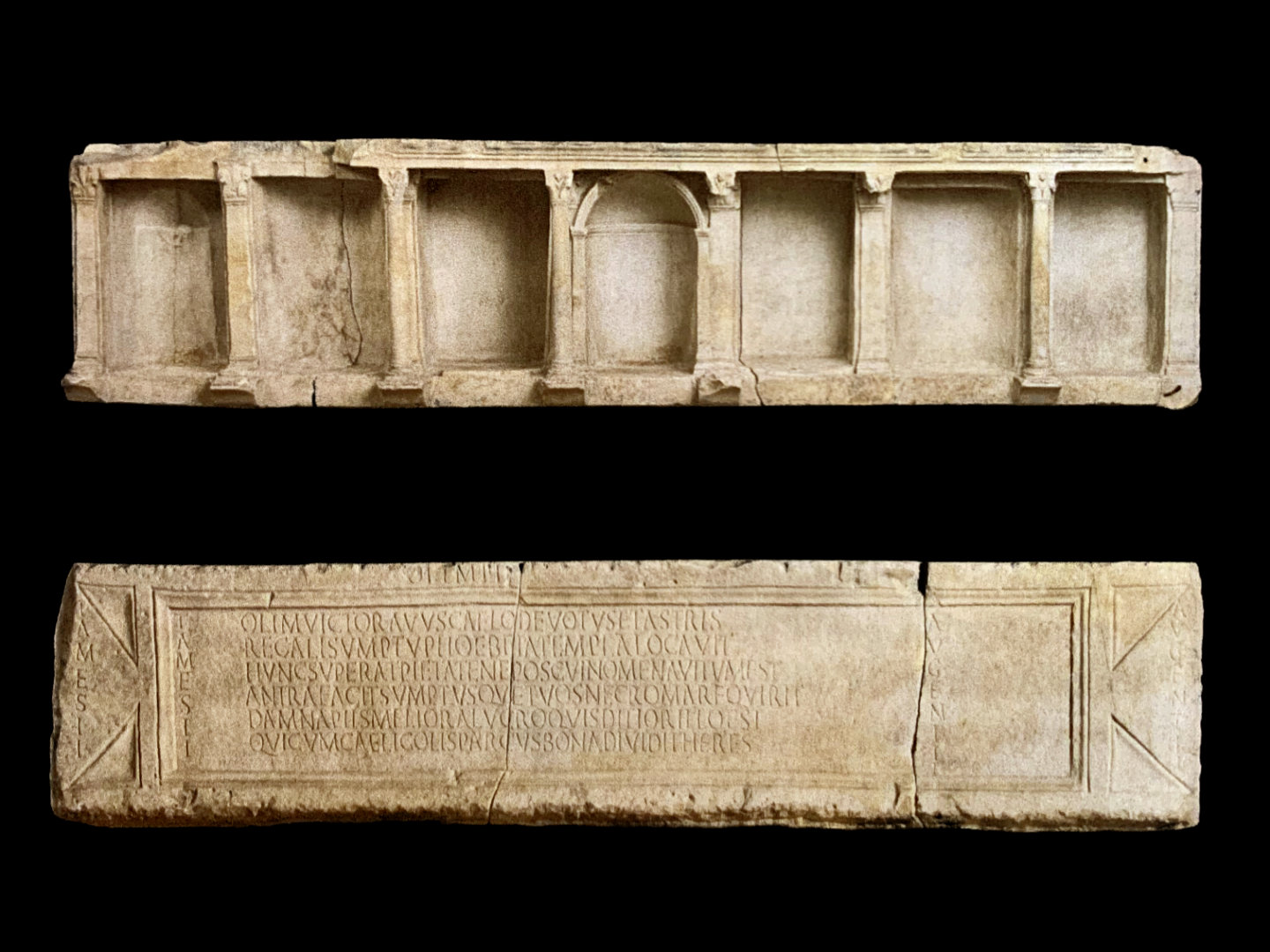
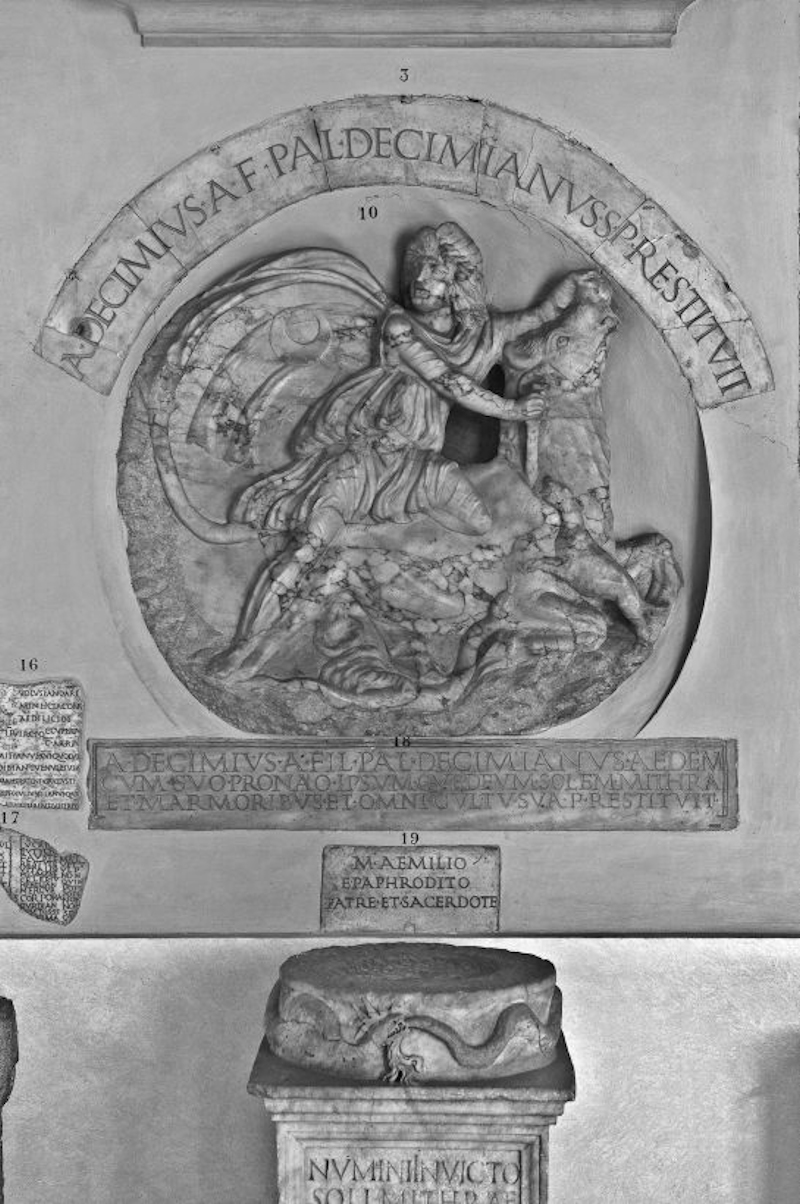
This monument is the only one still available from the disappeared Mithraeum in Piazza S. Silvestro in Capite.
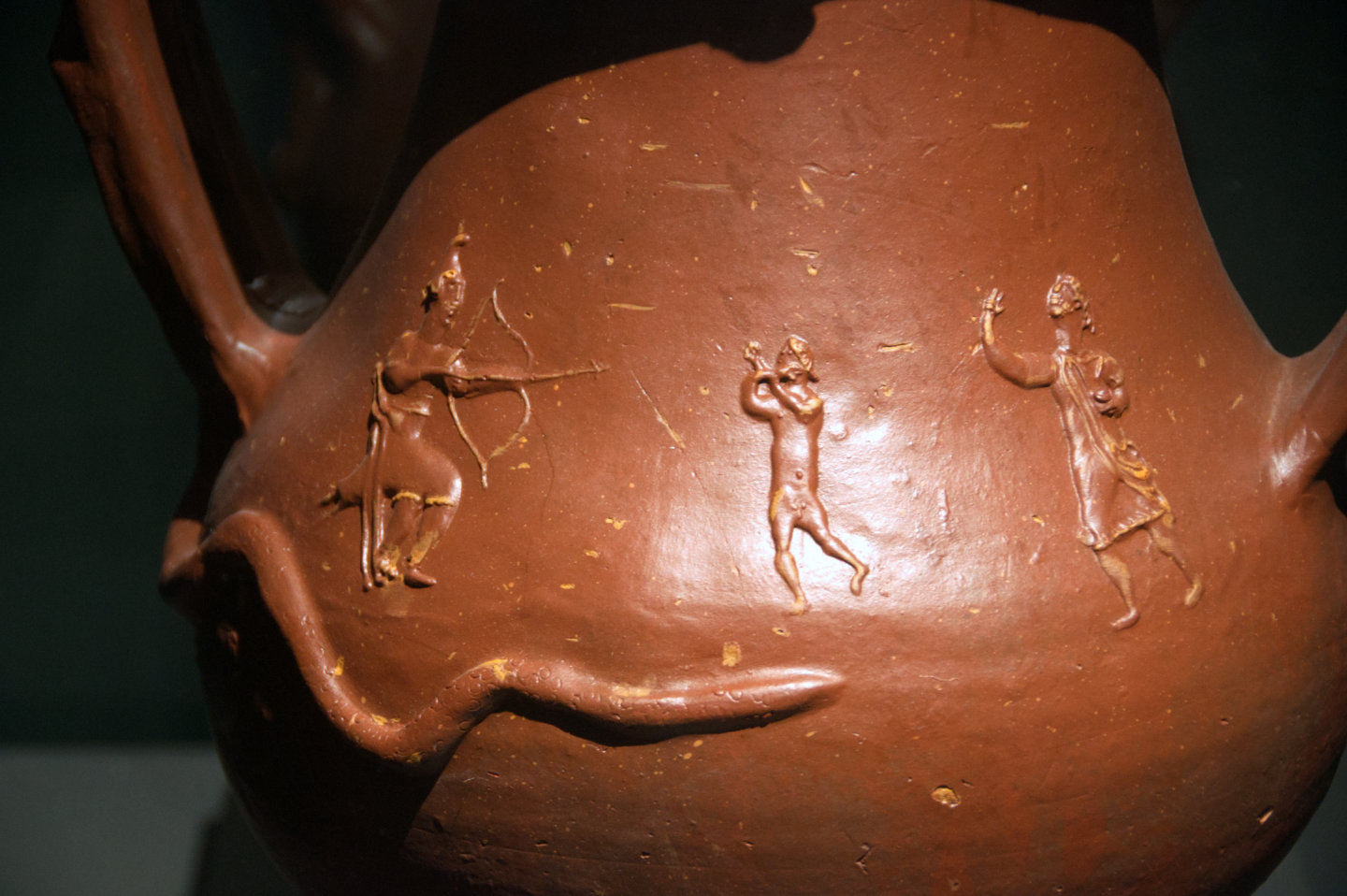
The Mithraic vase from Ballplatz in Mainz depicts seven figures arranged in two narrative sequences, commonly interpreted in relation to initiation rites.
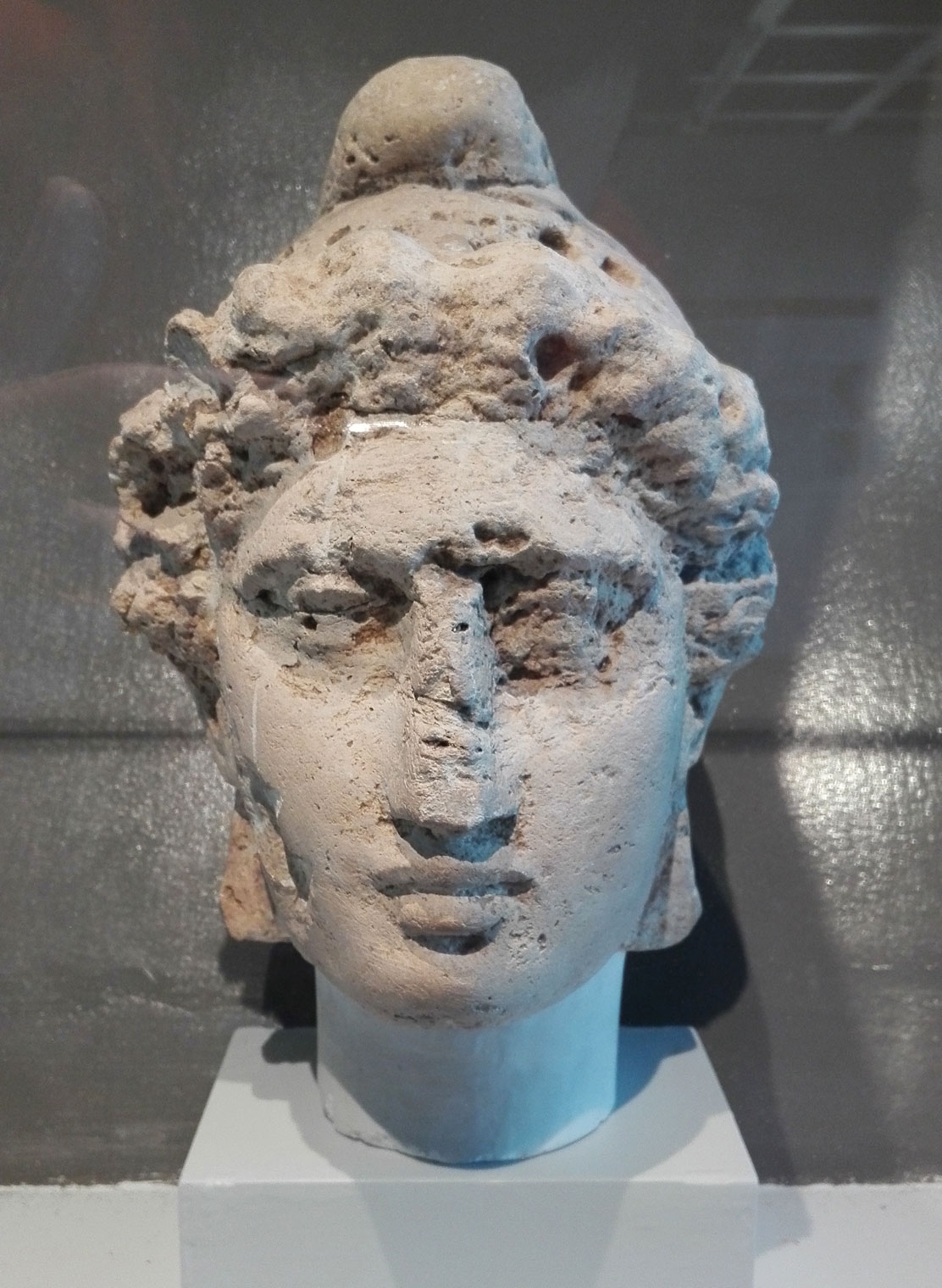
Head, possibly of Mithras, wearing a Phrygian cap, found in the bed of the Millicri River, near Locri, Calabria.

Small limestone stele, discovered at Apt in 1903. It depicts a standing torchbearer in the conventional Mithraic posture and dress, accompanied by a cock placed at his feet.
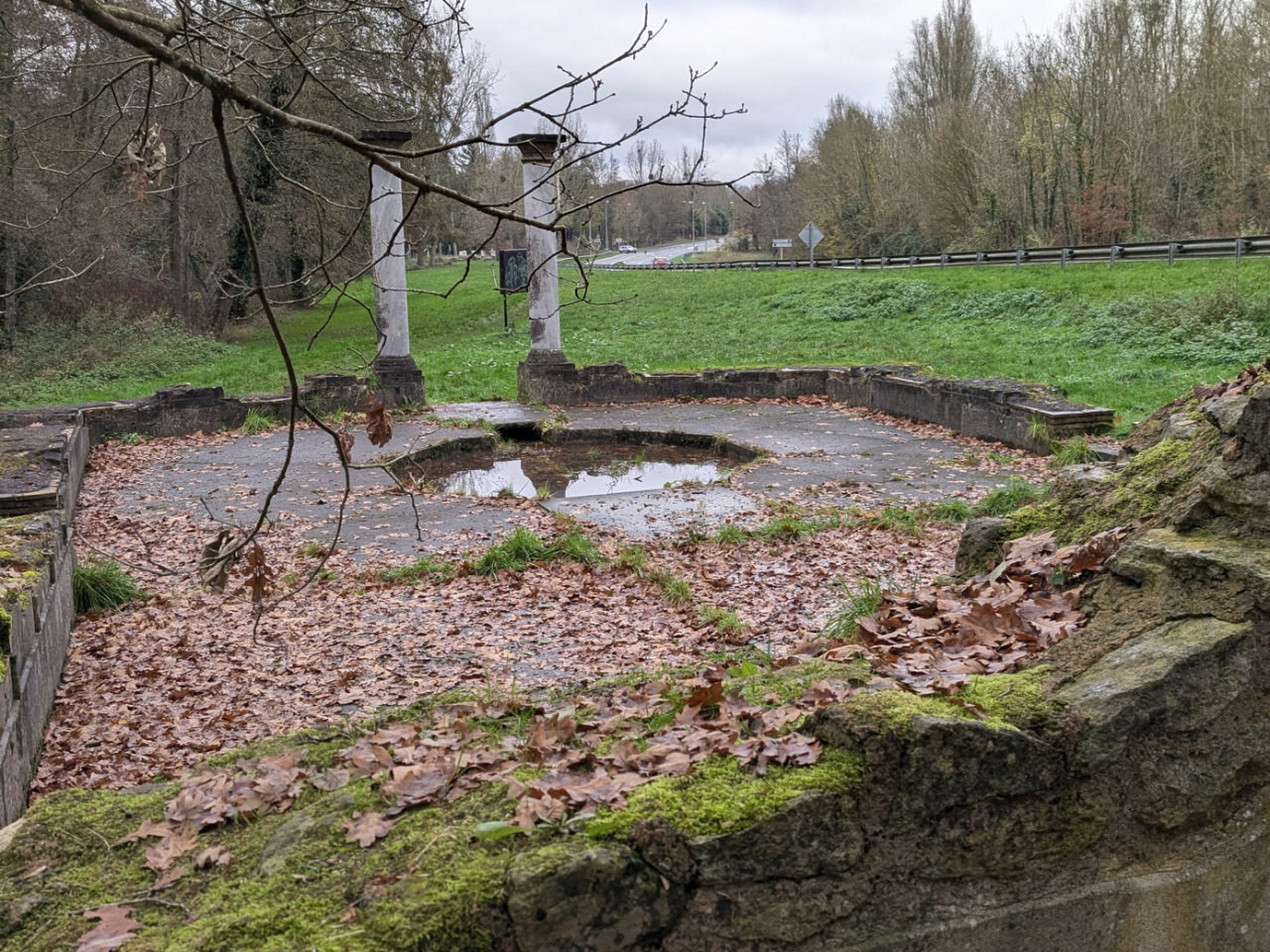
In the second half of the 4th century, a Mithraic temple was established within an earlier spring sanctuary at Septeuil, where the cult of the nymphs and Mithraic practices appear to have coexisted.
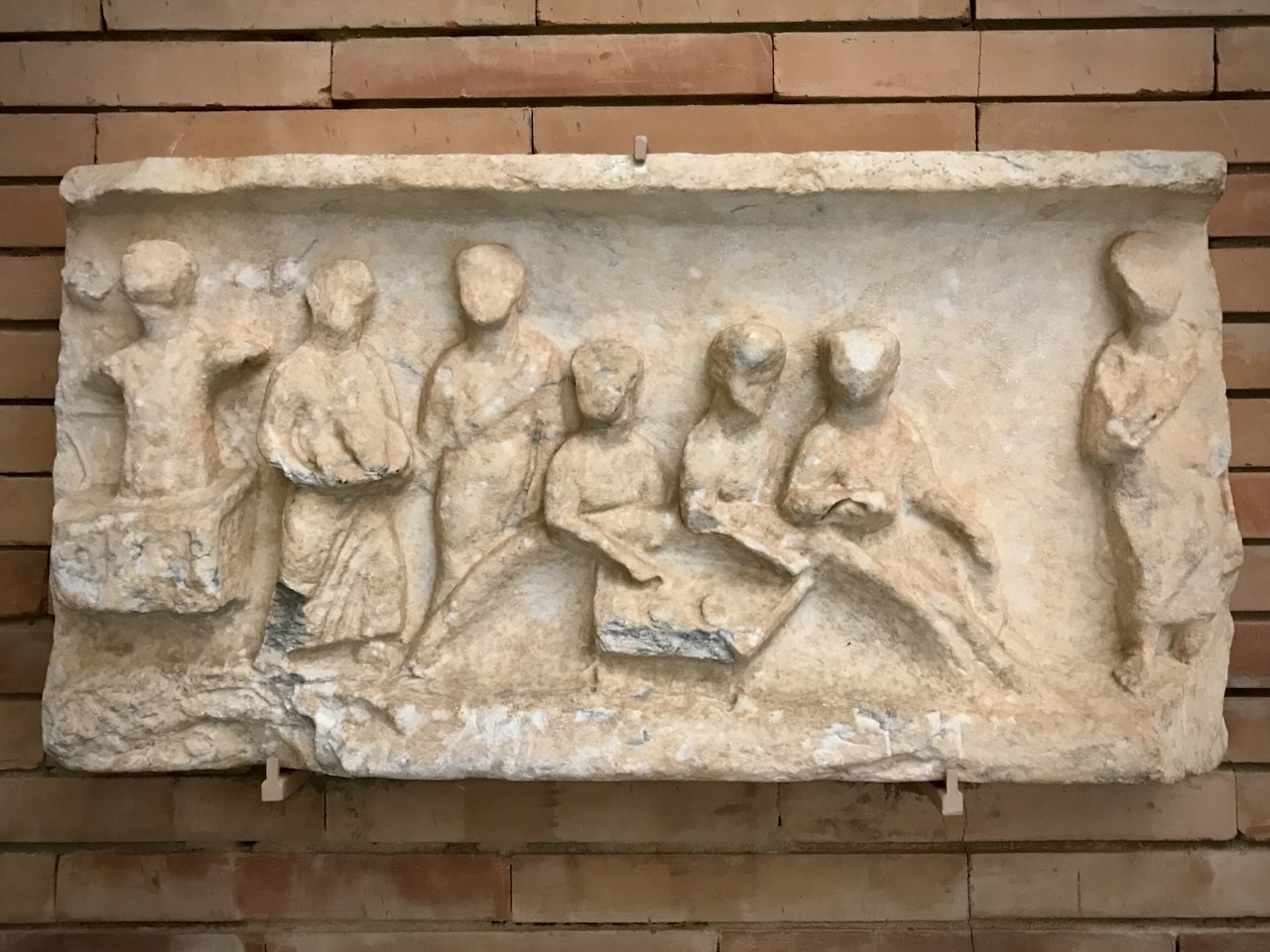
This scene of a feast from Mérida shows three persons at a table with other people standing beside them, one holding a bull’s head on a plate.

This fragment of a sculpture depicting the birth of Mithras from a rock, intertwined with a chaotic mass of serpent coils, was discovered in Aquileia, Italy.

This relief of Mithras killing the bull includes various singular features specific to the Danubian area.

The remains of the Mithraeum of Aosta, also known as the Mitreo di Augusta Praetoria, were discovered in 1953 in insula 59, in a commercial district of the ancient city.
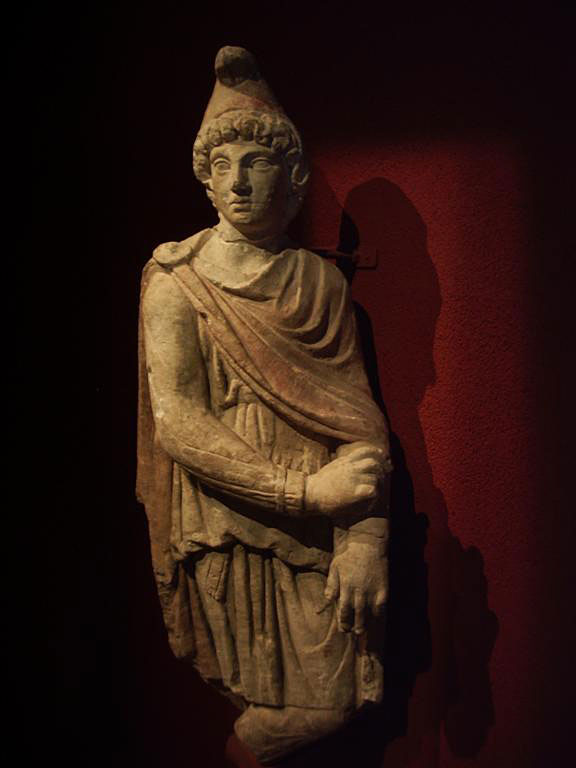
The Cautopates of Bordeaux stands as usual with his legs crossed and arms down.
The dedicator of this monument is also known for having made a tauroctonic relief in Nesce.
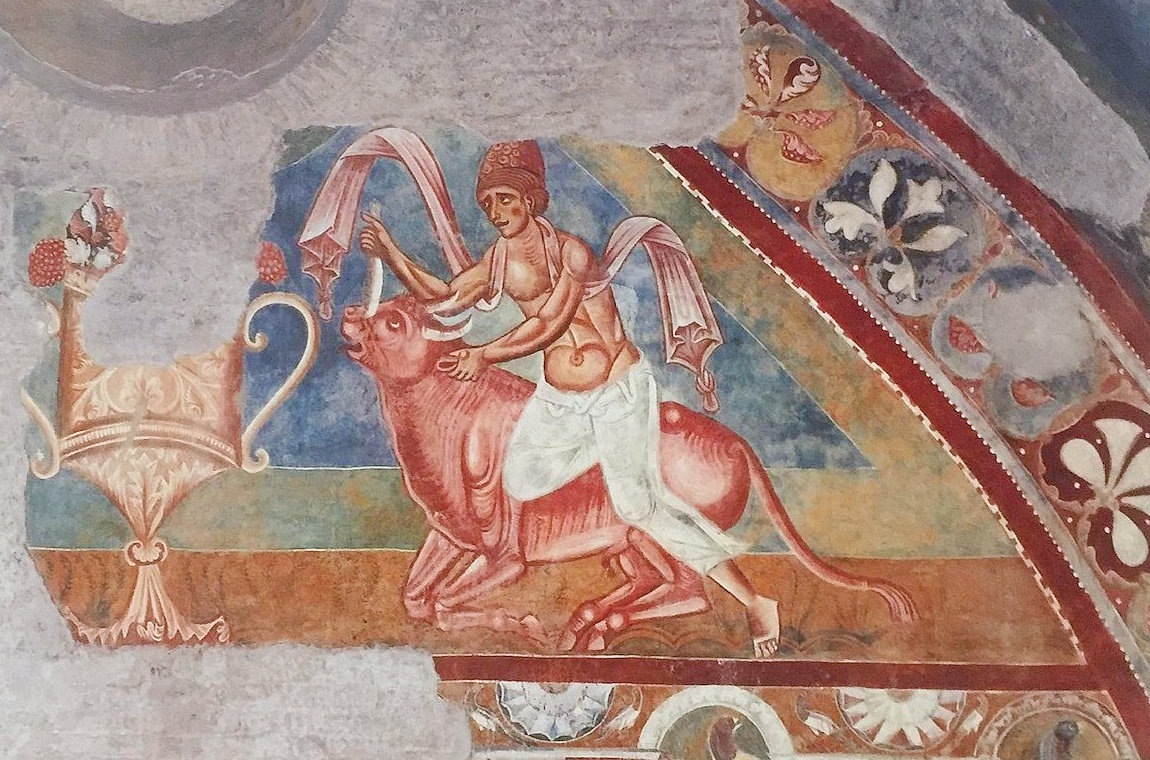
What appears to be a representation of Mithras killing the bull appears in the 12th century frescoes of the Basilica dei Santi Quattro Coronati in Rome.
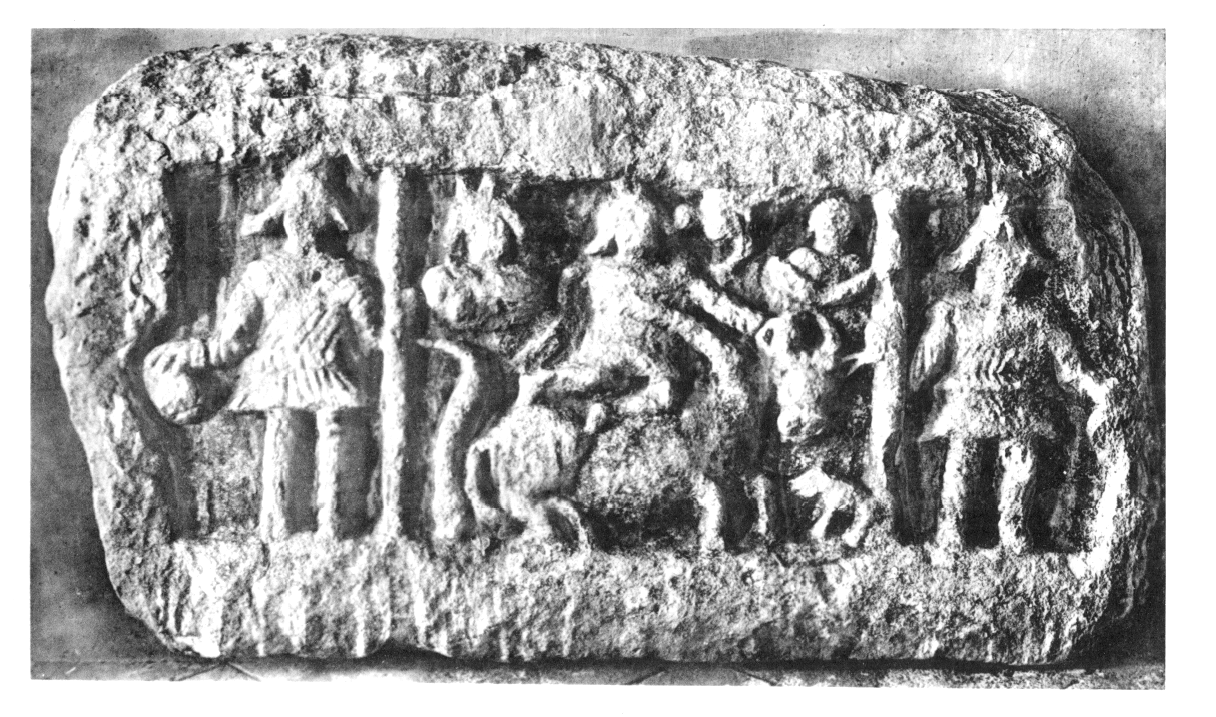
This relief of Mithras as bull slayer is surrounded by Cautes and Cautopates with their usual torch plus an oval object.
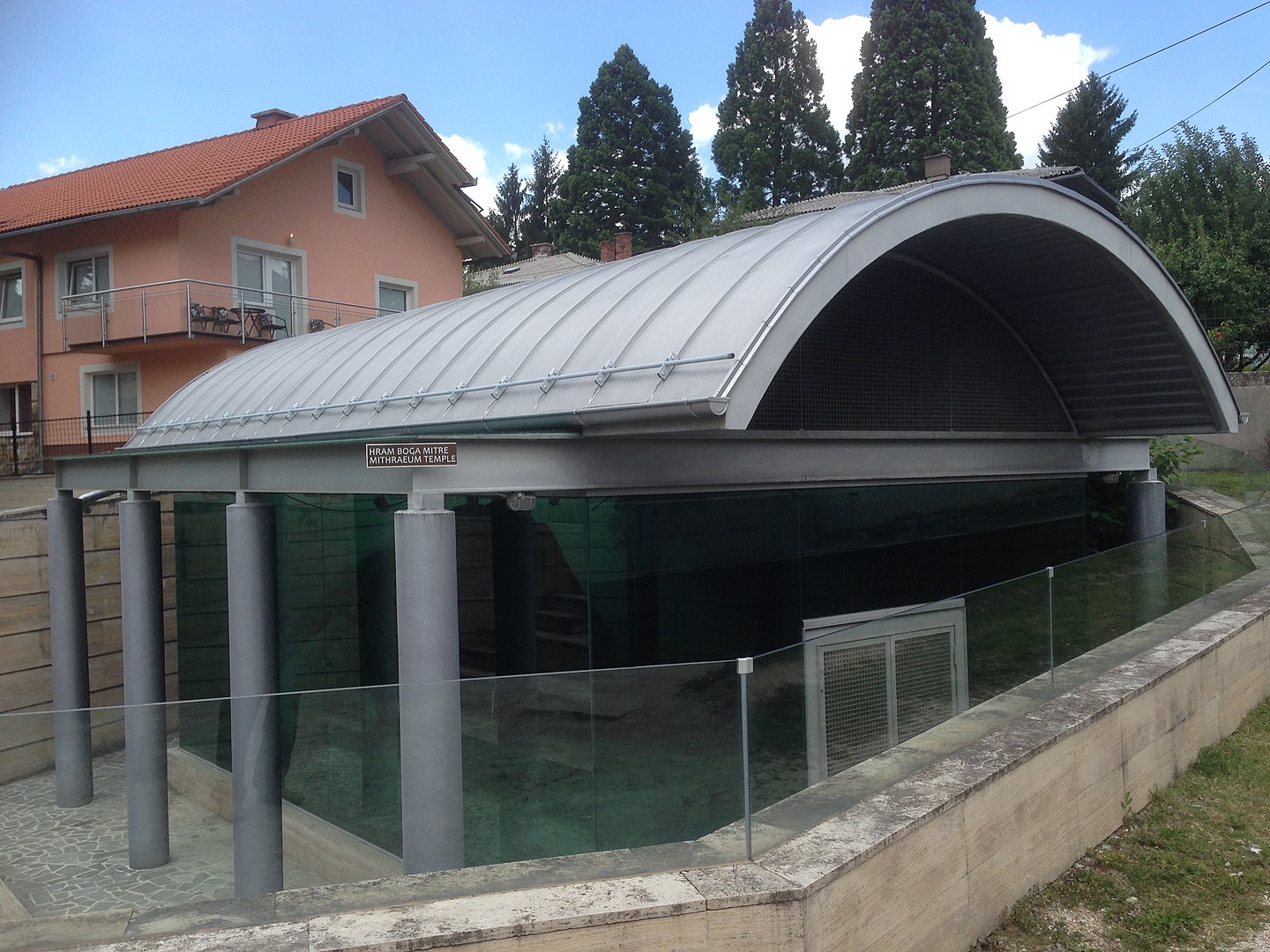
The remains of the Jajački Mithraeum were discovered accidentally during excavation for the construction of a private house in 1931.
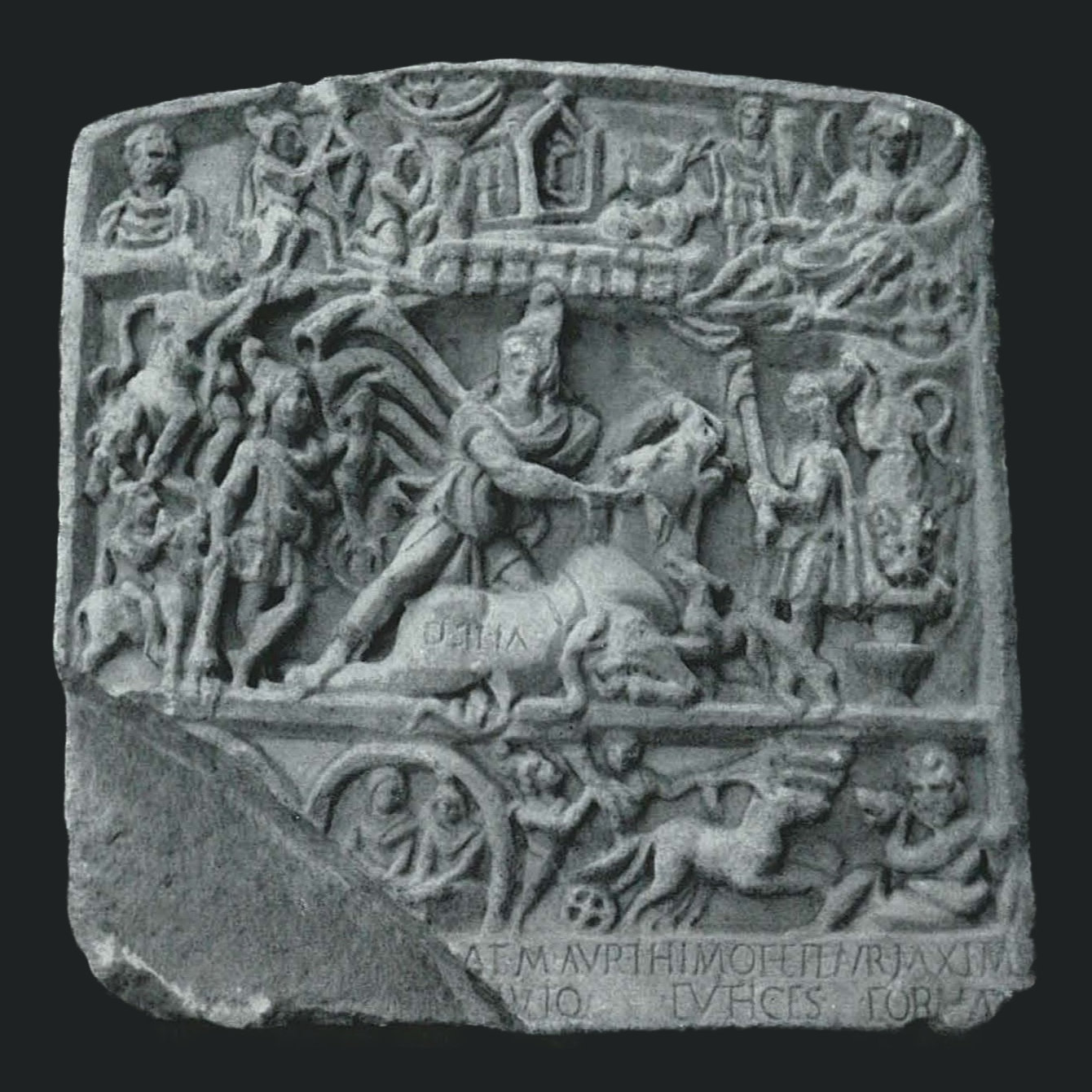
This marble relief of Mithras killing the bull was made by a freedman who dedicated it to his old masters.
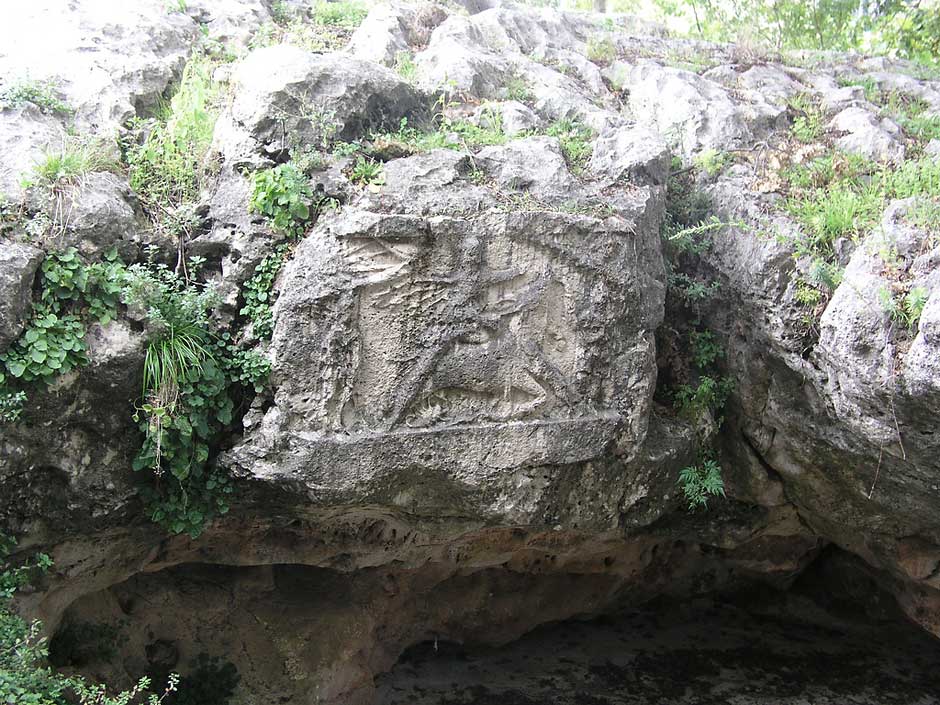
The Mithraeum of Mocici was situated in a grotto at one hour's walk fomr the ancient Epidaurum.
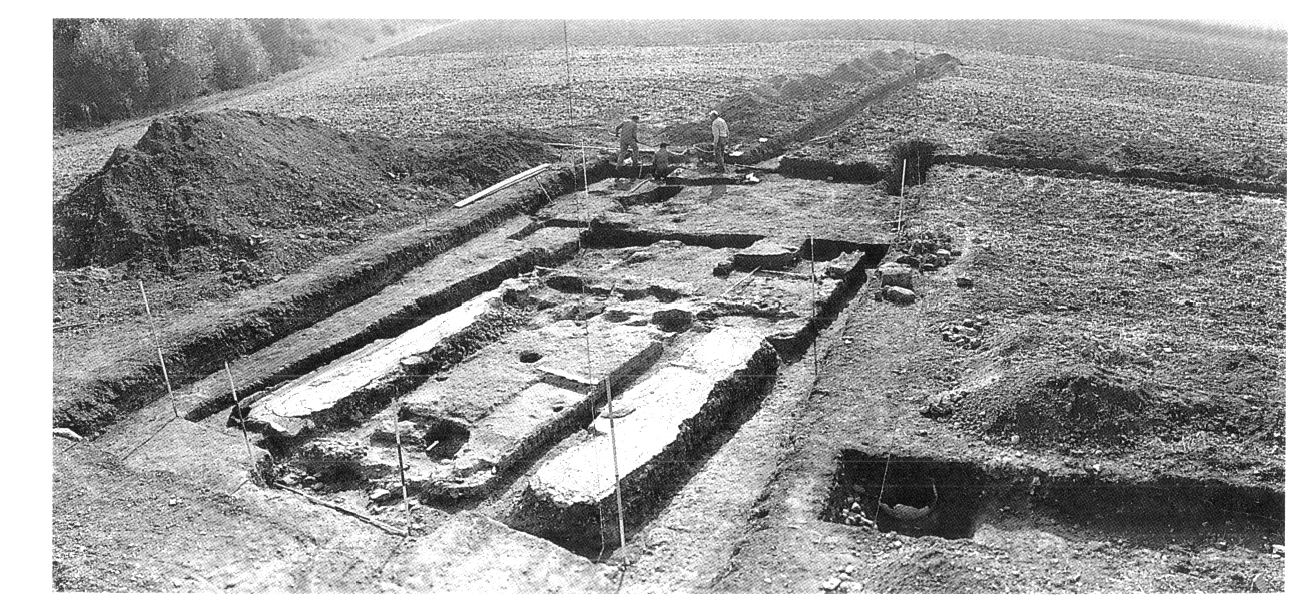
The Mithraeum of Biesheim-Kunheim is located near the ancient village of Altkirch, near the Rhin.
The relief of Mithras slaying the bull from the Mithraeum of the Seven Spheres was discovered in 1802 by Petirini by order of Pope Pius VII.
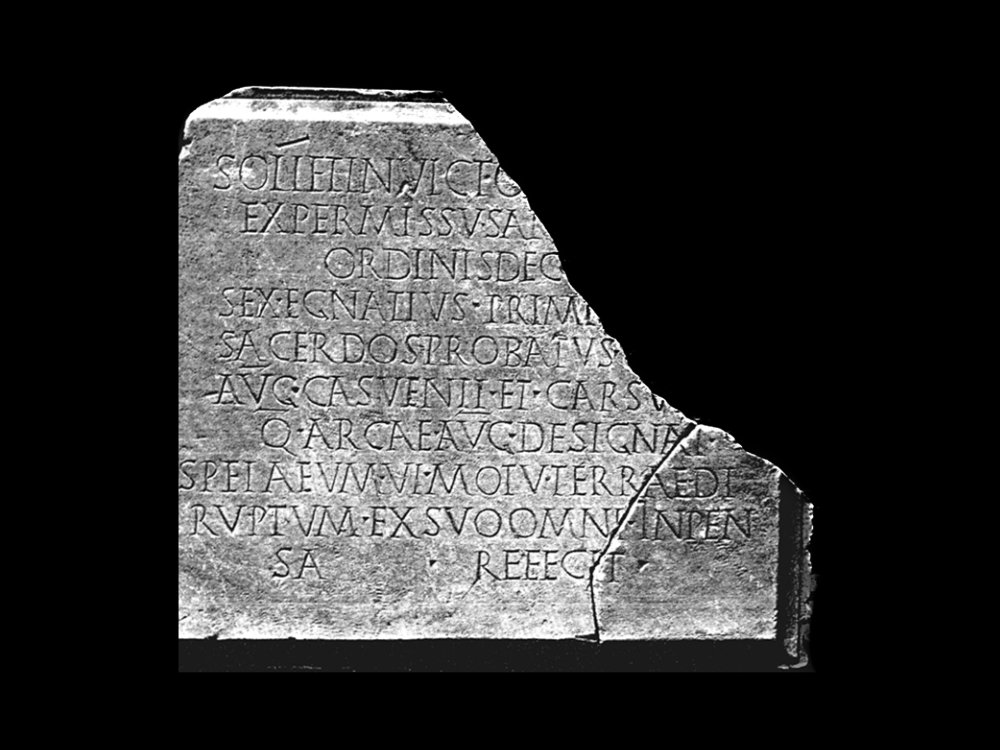
Marble plaque with inscription of a sacerdos probatus to Sol and the god Invictus Mithras.
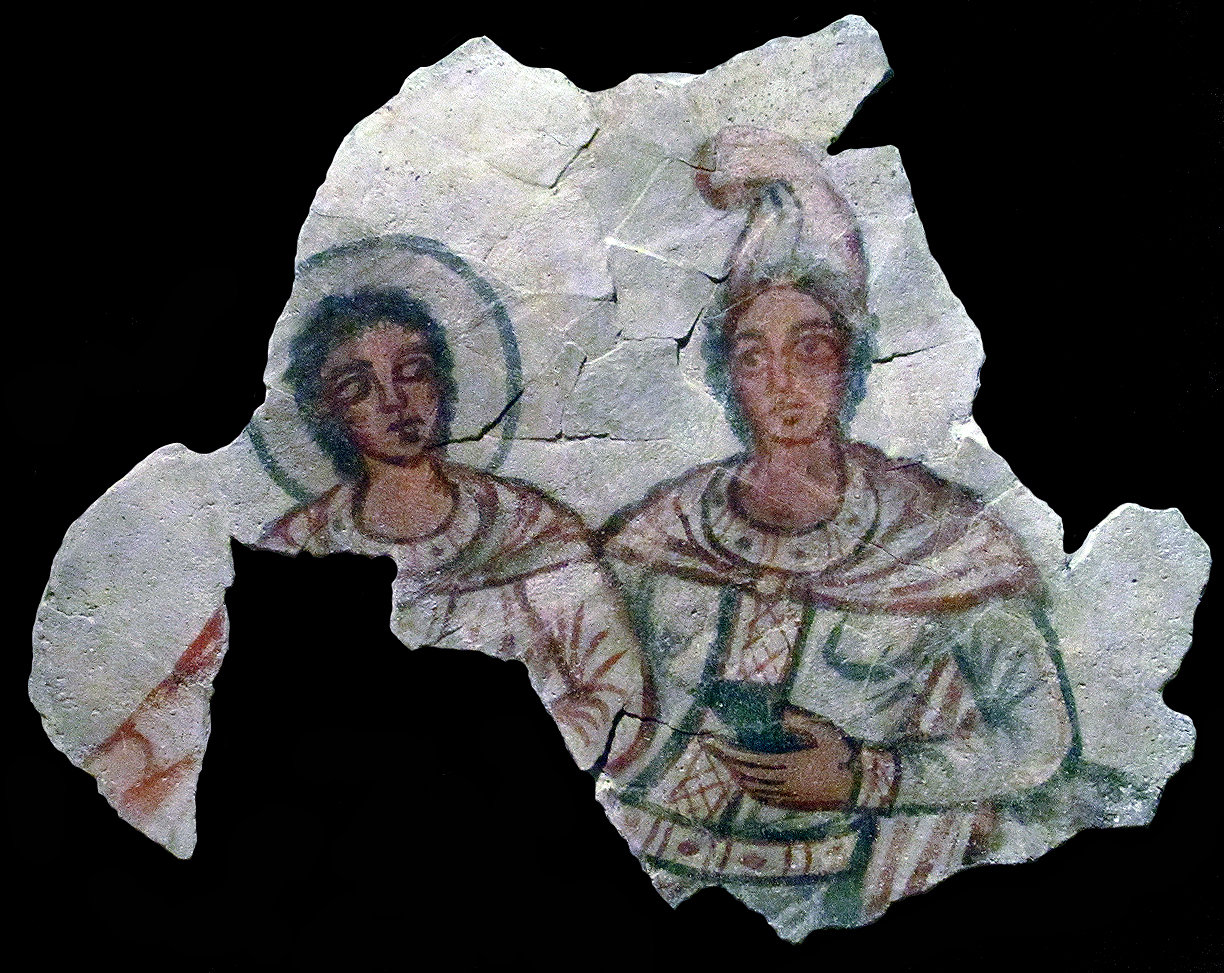
Sol watches Mithras as he gazes Mithras gazes up to heaven while sharing the sacred meal.
