Your search Tal hal Hariri / Es-Sâlihiyeh / As Salhiyah gave 3725 results.

Minute engraved inscription with the words eisodos and exodos (entrance and exit), from column 3 of the Mithraeum of Dura-Europos, Syria.
Graffito bearing the Mithraic salutation Nâma, engraved on column 1 of the Mithraeum of Dura-Europos, Syria.
Painted inscription naming a tribune Archelao, found on a column or wall of the Mithraeum of Dura-Europos, Syria.
Fragments of large-scale painted heads belonging to paintings of considerable size, from the Mithraeum of Dura-Europos, Syria, 3rd century A.D.
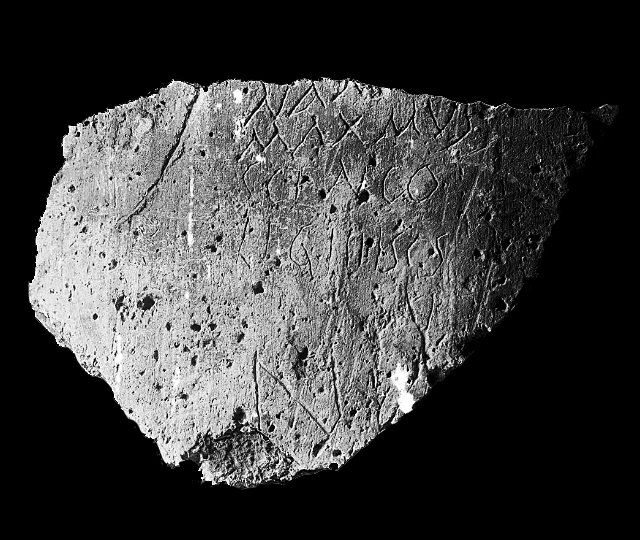
A certain Maximus from the Legio IV Scythica engraved his name in one of the columns of the Mithraeum of Dura Europos.

gyptian scholar of Greek descent, philosopher, astrologer and trusted adviser to the emperor Tiberius, whose intellectual milieu has been associated with the emergence of the Roman Mysteries of Mithras.
A comprehensive and critically updated catalogue of Mithraic sites, monuments and artefacts across the Roman world, incorporating both accepted and disputed evidence while reassessing decades of scholarship in light of recent research.
White marble head in Phrygian cap with a sorrowful expression from Ghighen, ancient Oescus in Moesia Inferior, probably the head of Mithras as bull-slayer.

In this article, Chalupa examines the scant evidence that has been found for the presence of women in the Roman cult of Mithras.
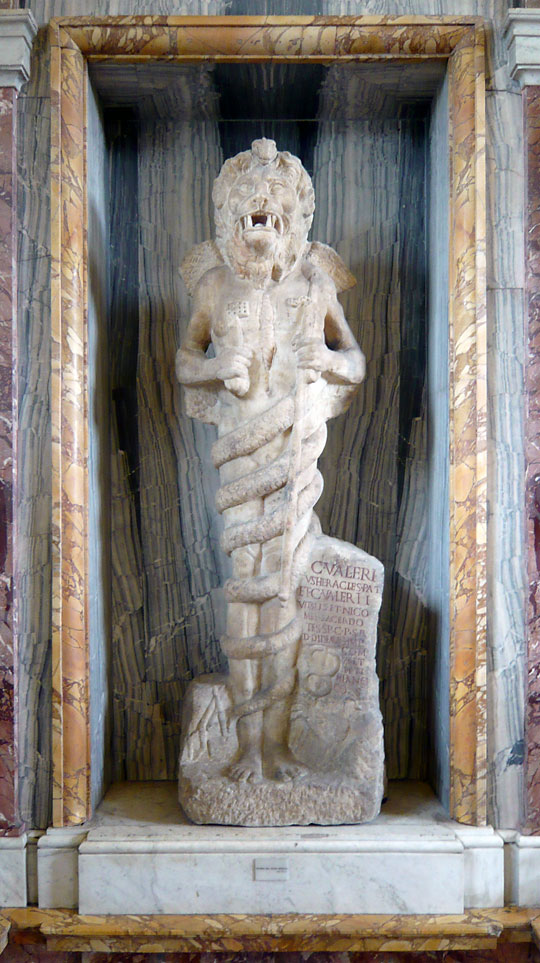
Marble leontocephalic Aion/Arimanus from the now-lost Fagan Mithraeum at Ostia, dedicated in AD 190 by three members of the local Mithraic priesthood.
This monument was erected on the occasion of the elevation of a member to the Mithraic grade of Perses.

One of the rooms in a sustantive masonry building in Hollytrees Meadow was considered to be a Mithreum, a theory that has now been discarded.
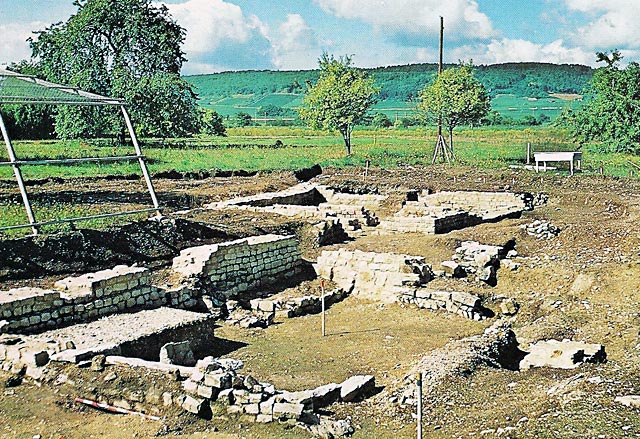
The Mithraeum des Bolards was integrated into a therapeutic cultural complex related to healing waters.
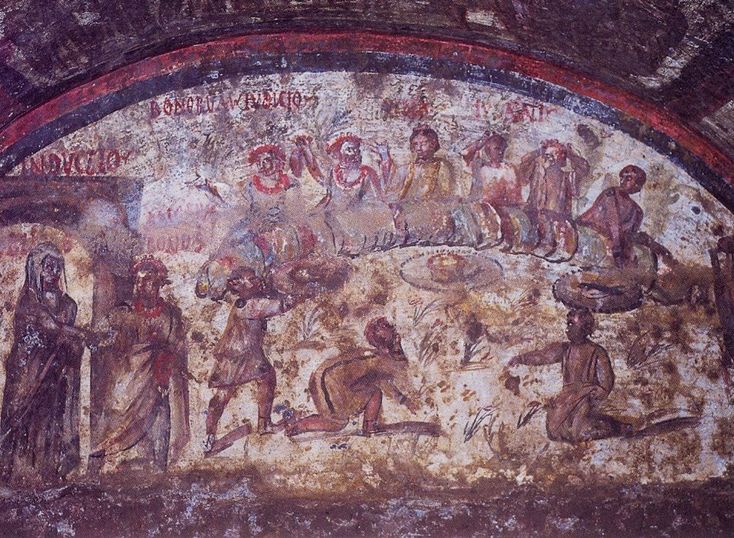
The epigrahy includes a mention of Marcus Aurelius, a priest of the god Sol Mithras, who bestowed joy and pleasure on his students.

A critical edition of the Mithras Liturgy (PGM IV.475–834), providing the Greek text, English translation, commentary, and an updated discussion of its interpretation since Albrecht Dieterich’s 1903 edition.
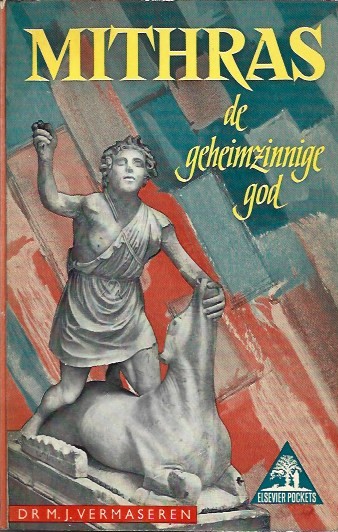
De oorspronkelijke Nederlandse uitgave van 1959 introduceerde het werk van Vermaseren, dat als klassiek geldt in de populaire studie van het mithraïsme en dat de belangstelling voor deze cultus blijvend heeft gevormd.

This monograph presents the findings from Robert J. Bull's 1973 excavation of the Mithraeum in Caesarea Maritima, Israel, including stratigraphic analyses, studies of frescoes and and insights into the site's historical significance.

Actes du 2e Congrès International, Téhéran, du 1er au 8 septembre 1975. (Actes du Congrès, 4). Éditions Brill, collection. Acta Iranica.

Catalogue de l'exposition tenue au Musée d'Aquitaine du 15 février 1988 au 16 mai 1988 sur le site de Parunis.

