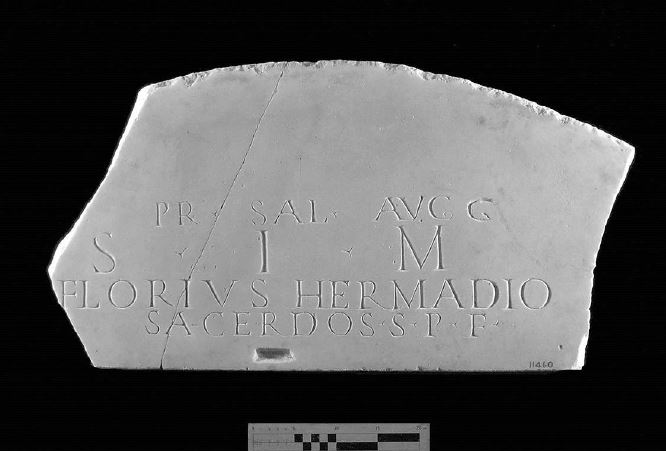
Marble revetment inscription from the cult niche of the Mitreo della Planta Pedis recording a dedication to Sol Invictus Mithras by the priest Florius Hermadio for the welfare of two emperors.
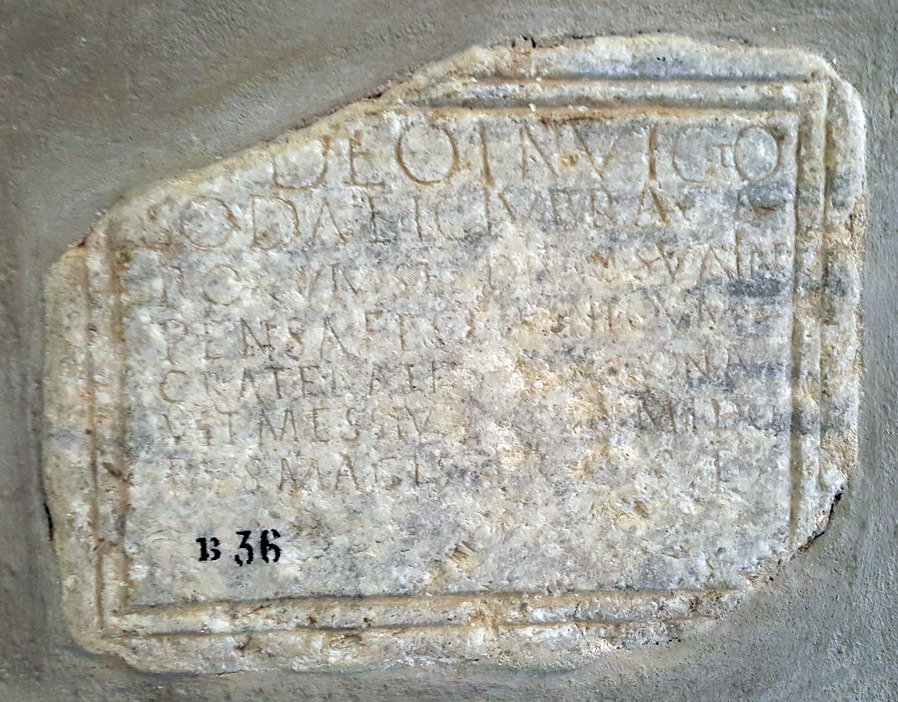
Marble inscription recording the construction of a Mithraic meeting place and the donation of a crater by Titus Flavius Artemidorus.
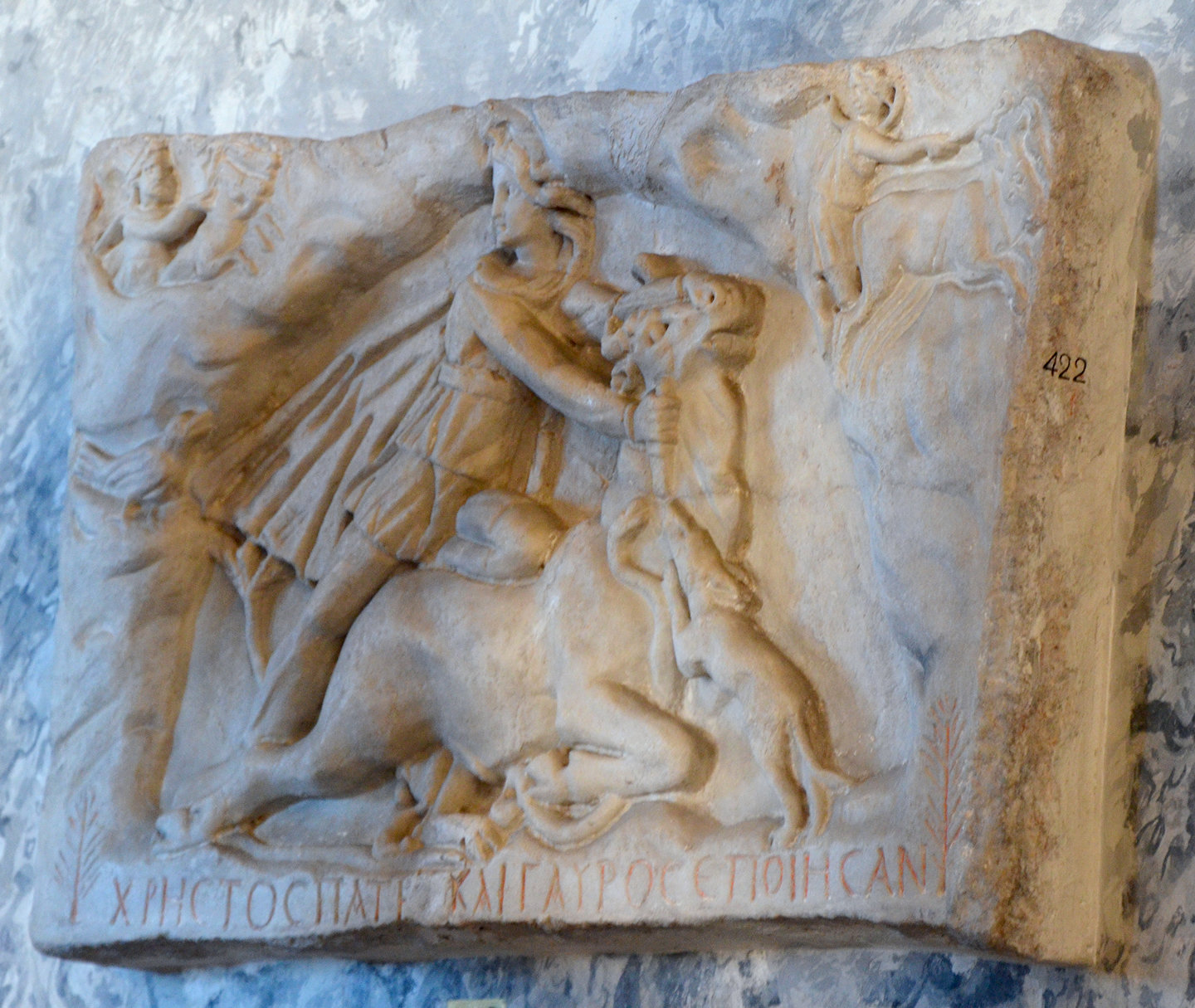
This relief of Mithras killing the bull, signed by a certain Χρῆστος, is on display in the Sala dei Animali of the Vatican Museum.

Upper fragment of a marble relief depicting Cautes, discovered in the Forum of Caesar in Rome.
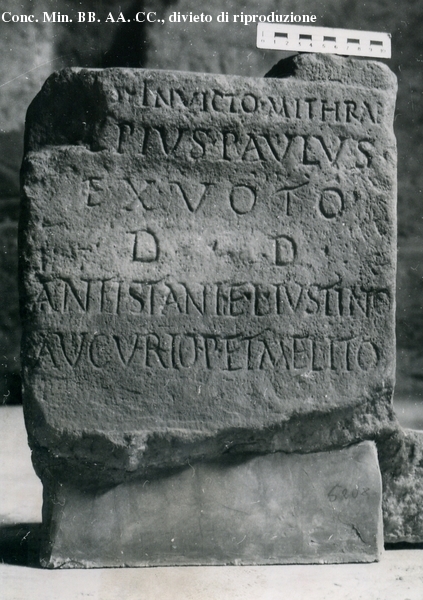
Small marble base, found in one of the private houses along the Via Sacra nearly opposite to the Basilica of Constantine, Rome.
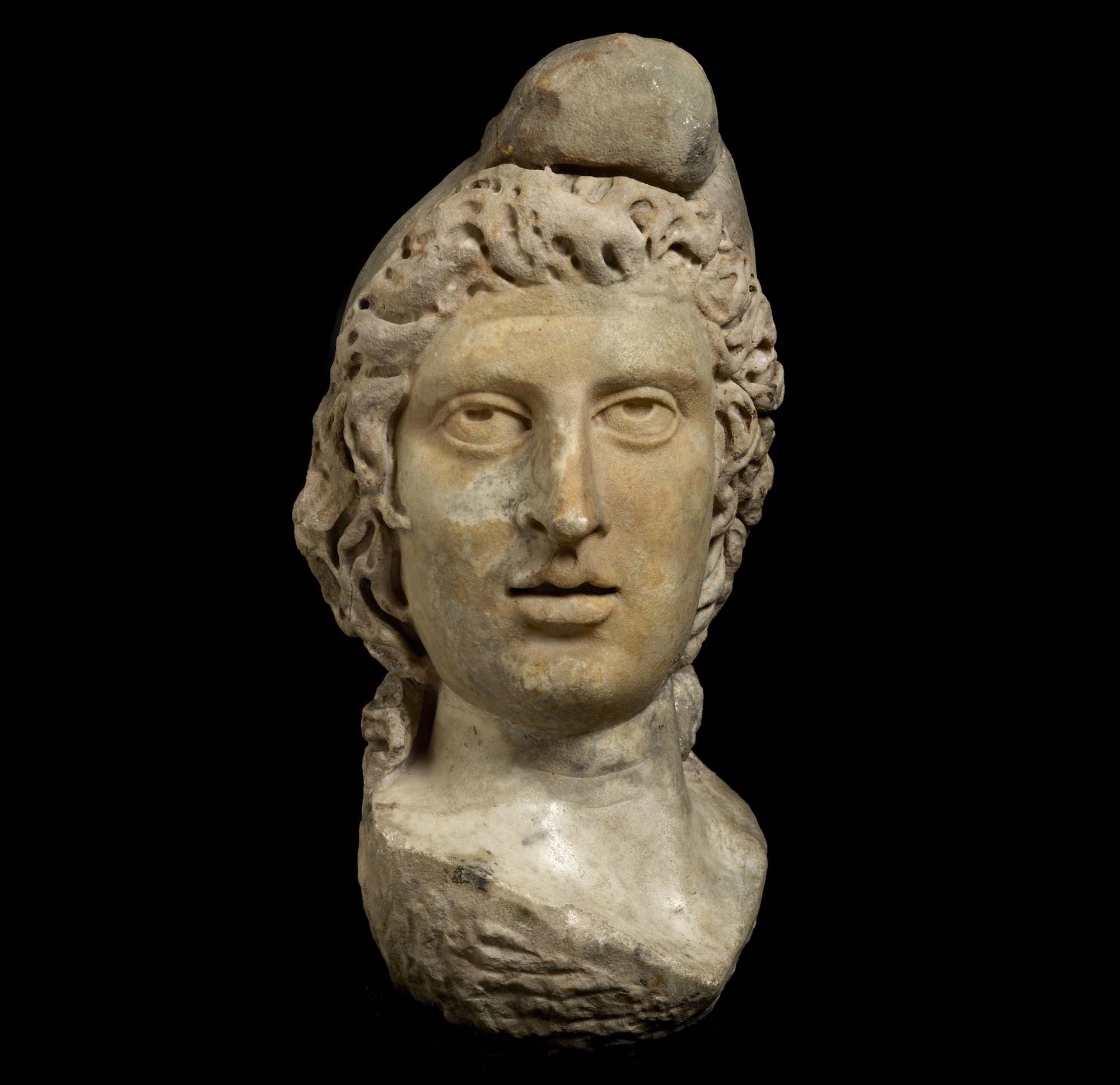
The Mithras's head of Walbrook probable belonged to a life-size scene of the god scarifying the bull.
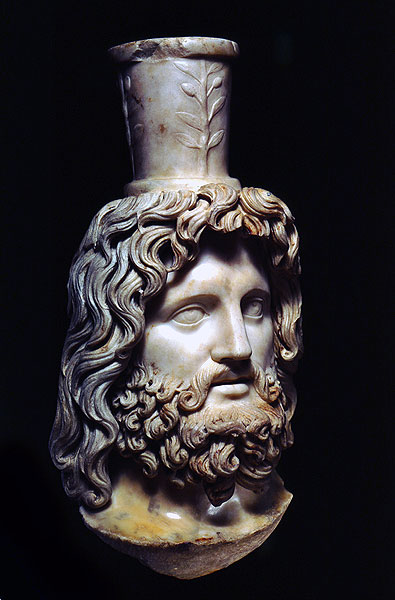
The head of Serapis found at Walbrook, London, is decorated with stylised olive branches.
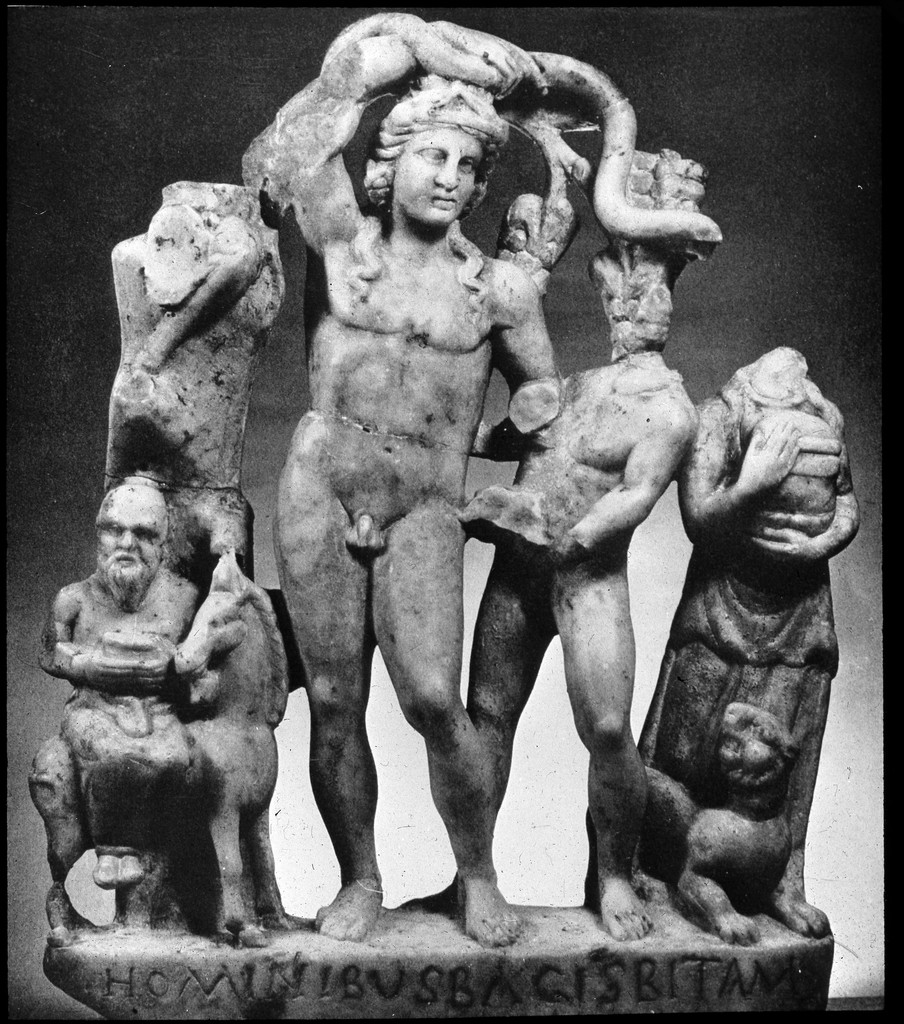
Marble group of Dionysus accompanied by a Silenus on a donkey, a satyr and a menead.
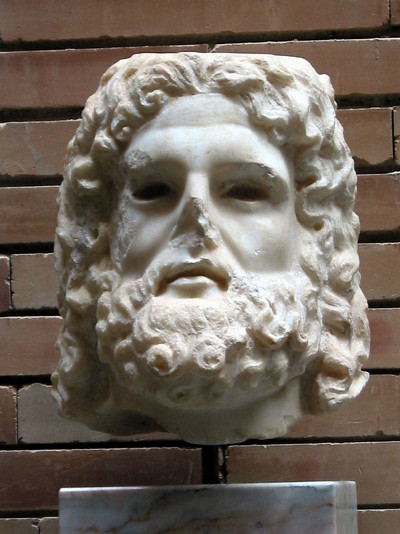
This head of Serapis from Cerro de San Albín may be unrelated to Mithras worship.
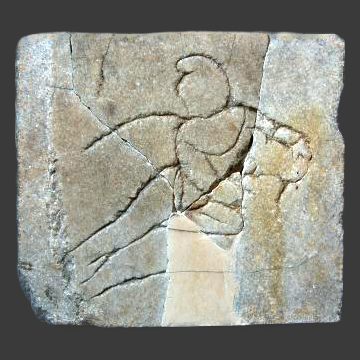
This unfinished Mithras tauroctonos without the usual surrounding animals was found in 1923 in Italica, near Seville, Spain.
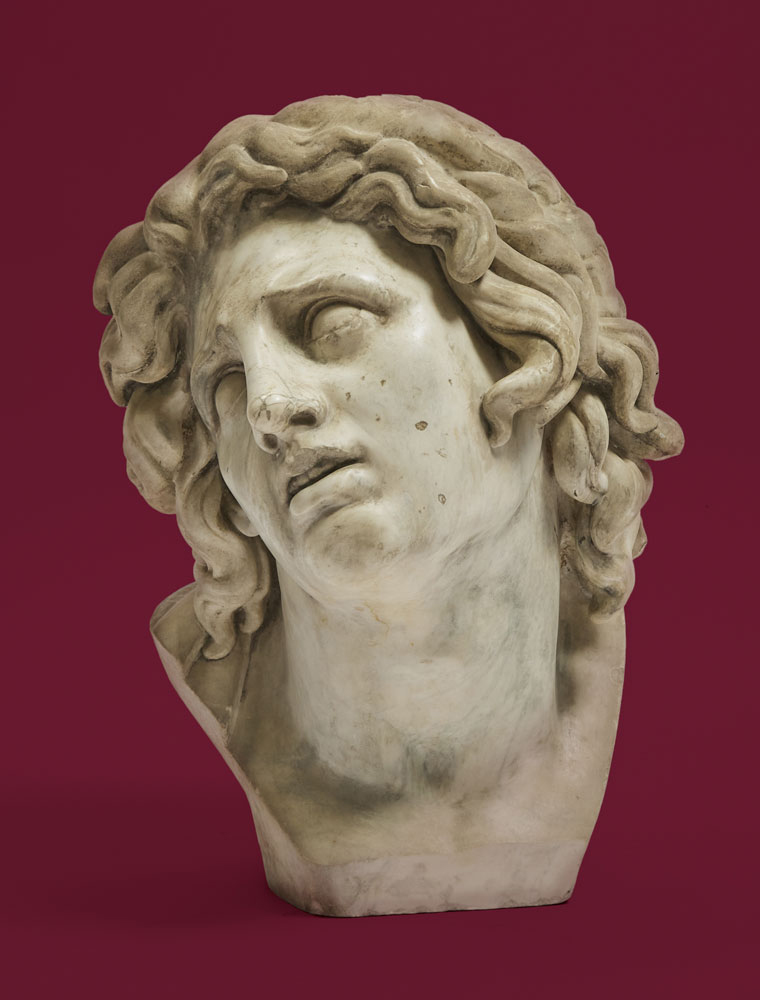
Head formerly associated with Mithraic material but interpreted by Margarete Bieber as a dying Giant.
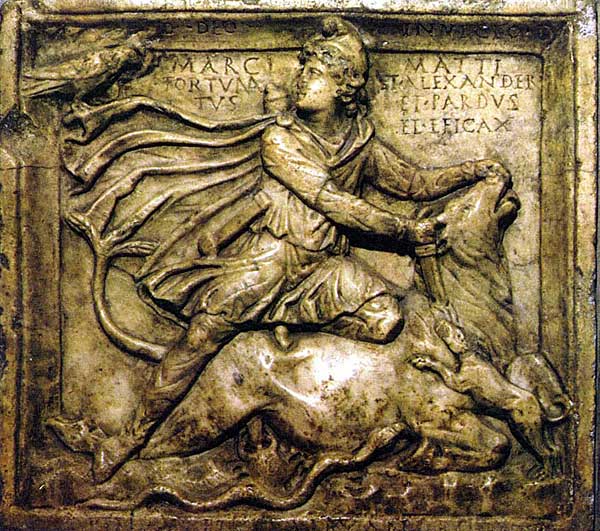
The relief marble of Mithras sacrifying the bull, exposed on the Hermitage Museum comes from Rome.

Mithraic relief from Rome reproduced in figure 169 of the corpus.
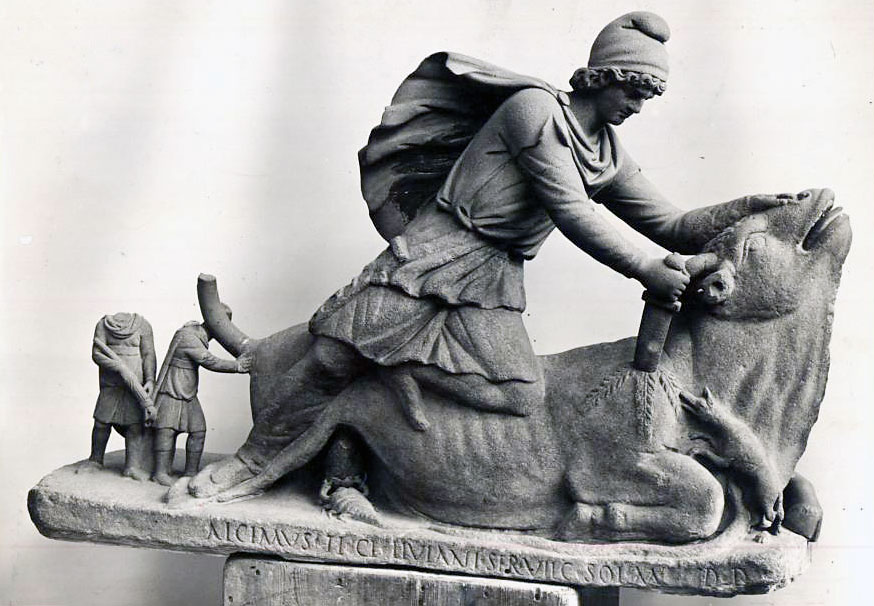
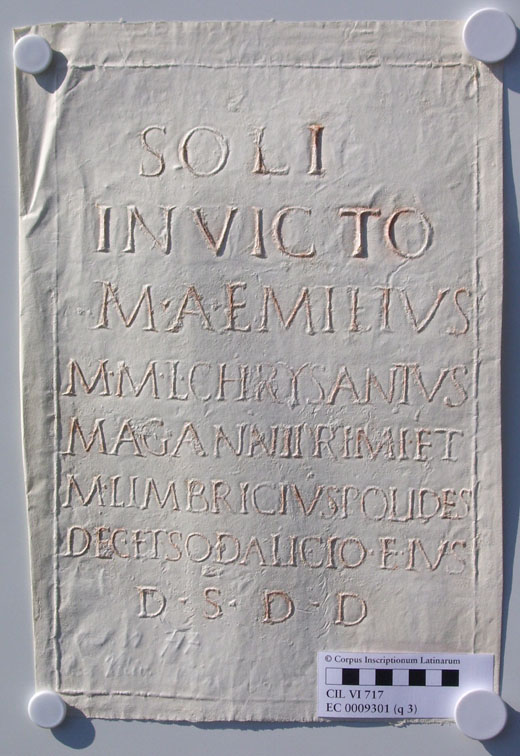
Aemilius Chrysanthus shares the expenses of this monument with a decurio named Limbricius Polides.
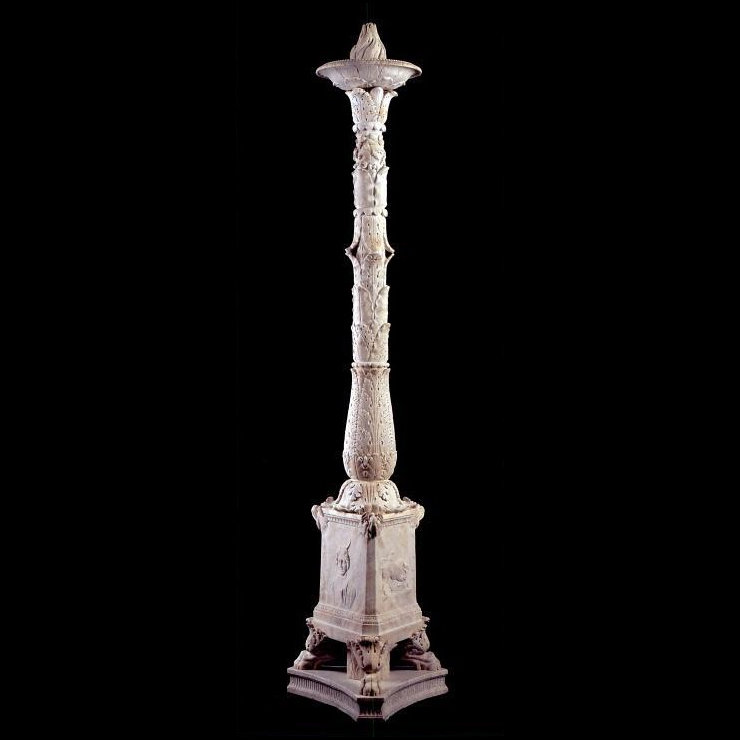
This magnificent candelabrum was found in Rome in 1803, in the Syrian Temple of Janicule.
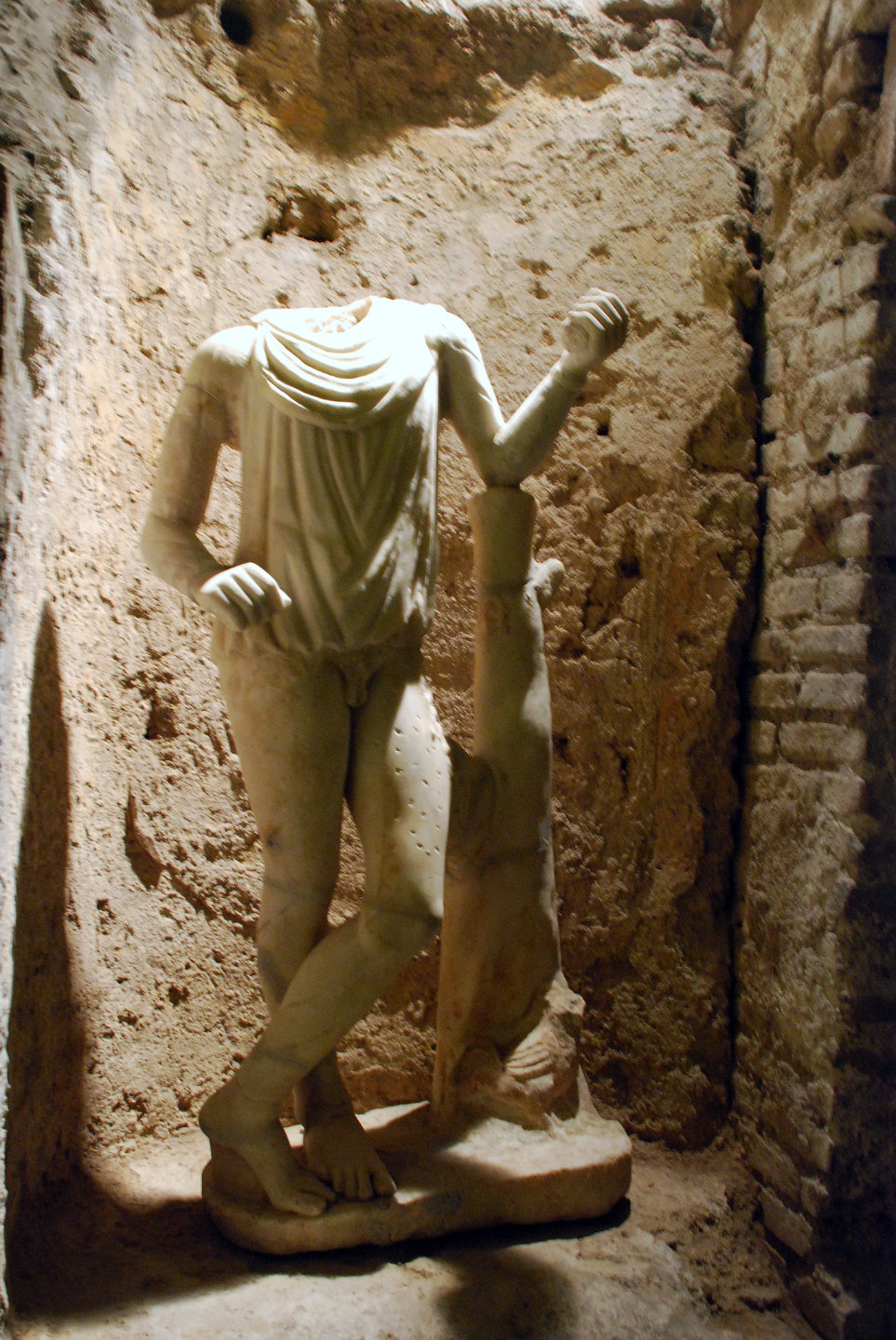
The marble statue of Cautes, found in the Mithraeum of Santa Prisca, was originally a Mercury.
This small cippus to Zeus, Helios and Serapis includes Mithras as one of the main gods, although some authors argue that it could be the name of the donor.

This remarkable Greek marble relief of Mithras killing the bull was discovered in 1705 and remained in private collections until it was bought by the Louvre.
Epigraphic testimony catalogued in the Année Épigraphique and Lugli’s Fontes for ancient Rome.
