Your selection in monuments gave 63 results.
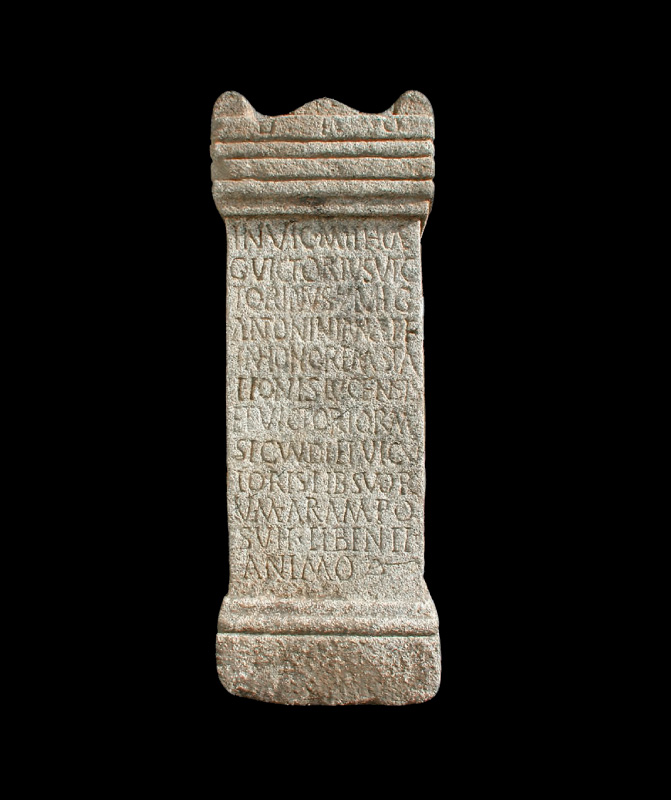
Victorius Victorious, centurion of the Legio VII, erected the altar in honour of the Lugo garrison and of the Victorius Secundus and Victor, his freedmen.

This lost monument from Malaga, Spain, to Dominus Invictus has been linked to the cult of Mithras, although there is not enough evidence.
An inscription from Asturica (modern Astorga) recording a dedication to Jupiter Optimus Maximus, Sol Invictus and Liber Pater by Q. Mamilius Capitolinus, juridical legate and later prefect of the Treasury of Saturn, for the welfare of himself and his family…
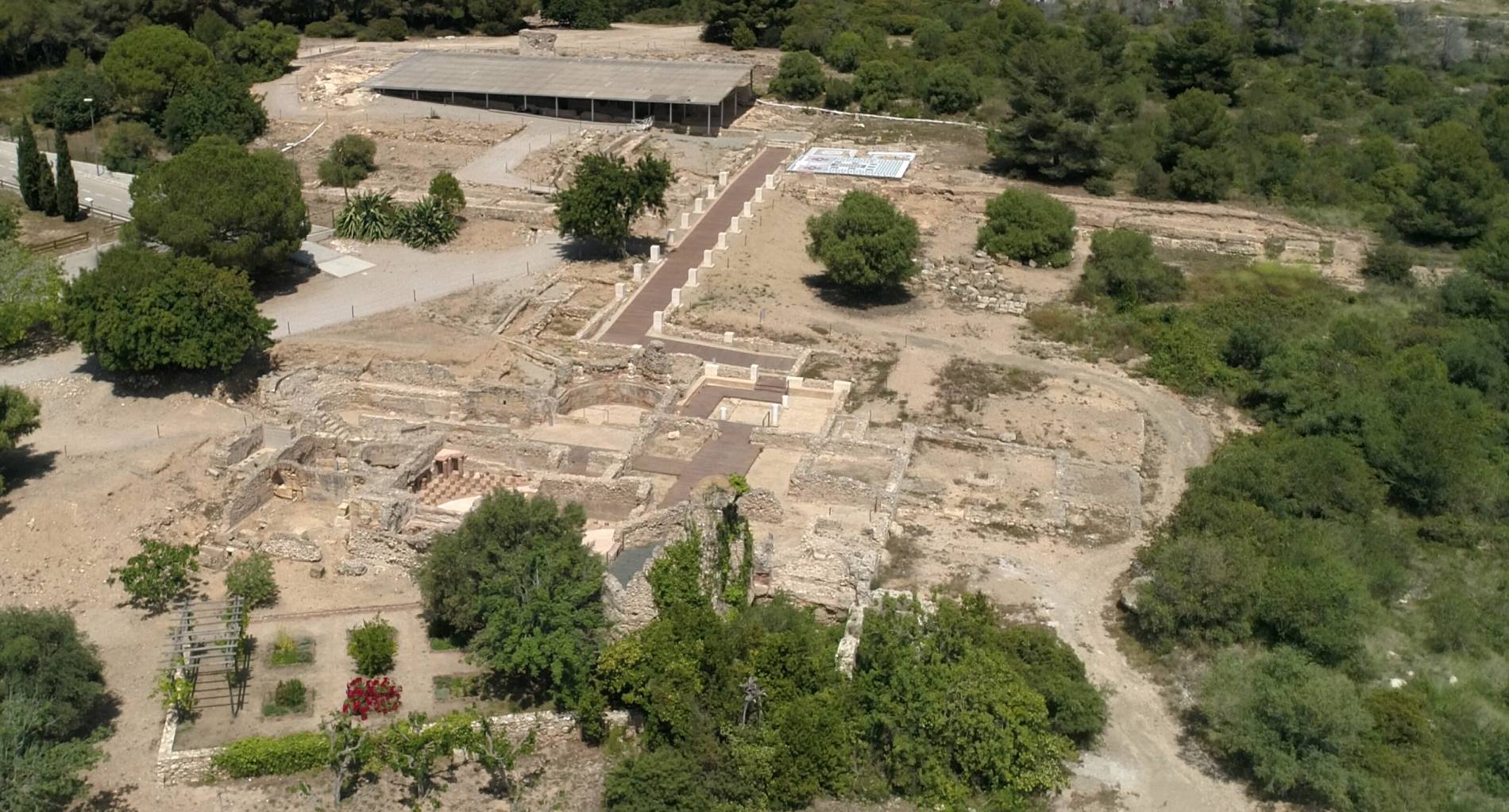
A possible Mithraic sanctuary attached to the luxurious Roman villa of Els Munts, near ancient Tarraco, whose interpretation remains disputed.
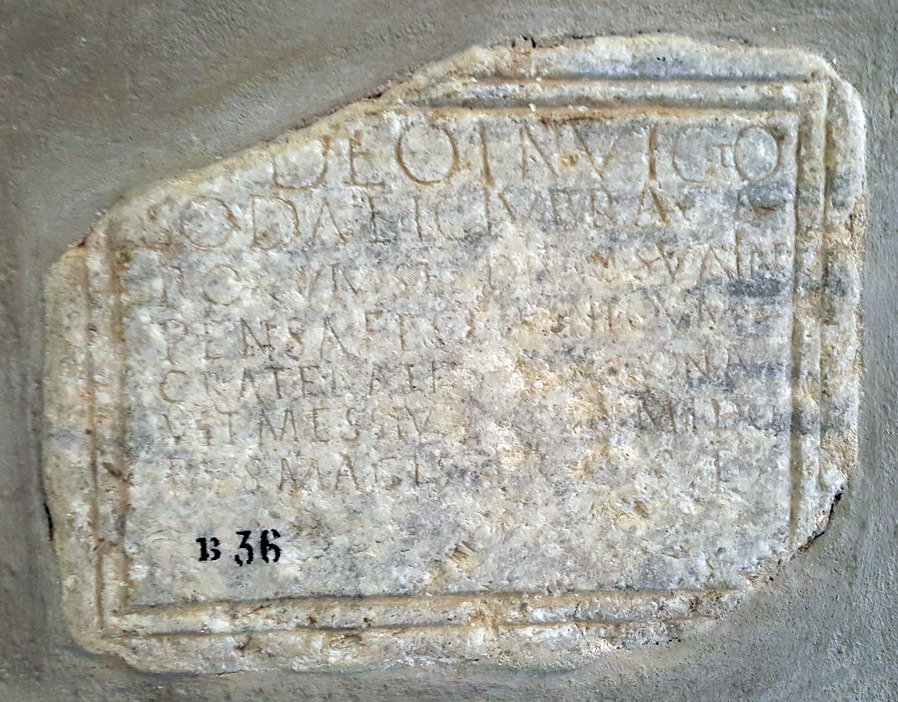
Marble inscription recording the construction of a Mithraic meeting place and the donation of a crater by Titus Flavius Artemidorus.
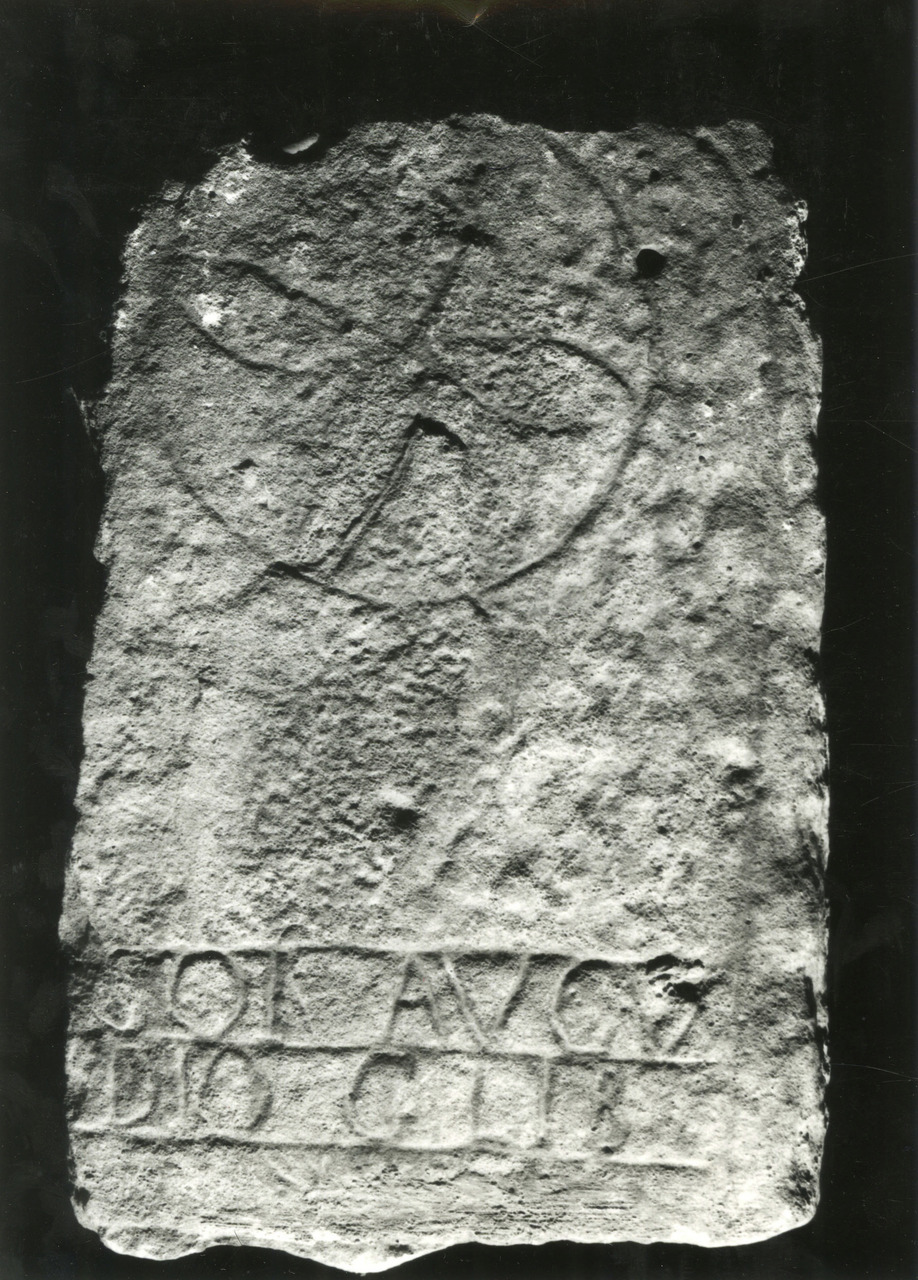
A sandstone slab found along the border of the Tagus river near Thirmarum (modern Trillo, near Cifuentes in Guadalajara), recording an inscriptoiin by a certain Cornelius, freedman of Gaius.
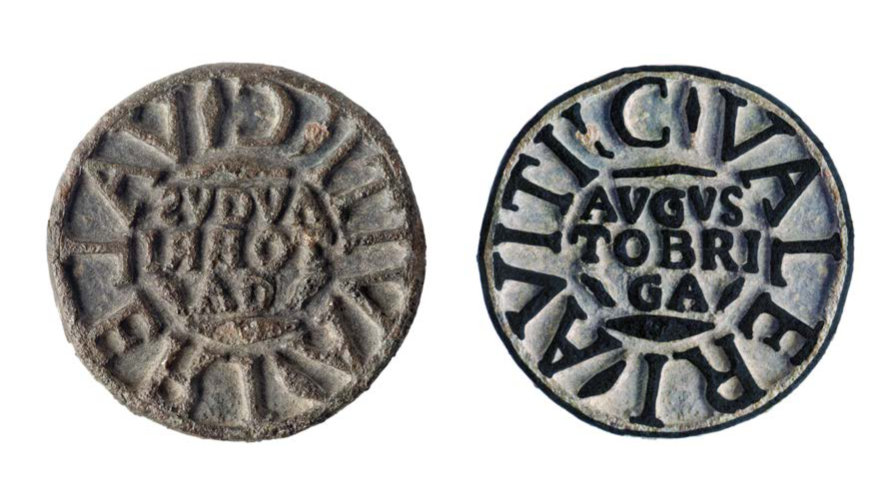
Bronze personal seal of a duovir of Tarraco and owner of the villa of Els Munts.
An altar found in 1889 at Caldas de Reyes (ancient Iria Flavia) in Galicia, bearing a fragmentary dedication to Cautes, possibly by a person named Antonius.
A small marble fragment from Augusta Emerita (modern Mérida) bearing the fragmentary inscription (S)arapi(s), attesting to the veneration of Sarapis in proximity to the Mithraic sanctuary.
A marble statuette found at Augusta Emerita (modern Mérida) in 1902, representing a seated deity whose head, arms and feet are lost, tentatively identified as Jupiter-Serapis.
A square stone from La Oliva near Capera (modern Cáparra) in Extremadura, bearing an inscription dedicated to Sol Invictus Augustus.
A large inscription from Olisipo (modern Lisbon), recording a dedication to the Eternal Sol and Luna for the perpetuity of the empire and the welfare of Septimius Severus, Caracalla and Geta, executed under the supervision of Drusus Valerius Coelianus and others, dated to the Severan period…
A great cippus from Olisipo (modern Lisbon), recording a dedication to Sol and Luna by Cestius Acidius Perennis, legate of the Emperor and propraetor of the province of Lusitania.
An altar from Baetulo (modern Badalona) in Hispania Citerior, carved in a rock on a hill facing east opposite the town, recording a dedication to Sol Deus by A. Pompeius Abascantus.
Sculptural fragments from the Mithraeum at Augusta Emerita (modern Mérida), comprising a naked foot beside tree-trunk remnants and fragments of a marble seat or table decorated with an acanthus-leaf from which emerge the head and neck of a lion.
A marble statue from Augusta Emerita (modern Mérida), depicting a standing woman in a long chiton, now in the museum at Mérida, with head lost.
A marble statue found at Augusta Emerita (modern Mérida) in 1913, depicting a standing woman in a long chiton, now in the museum at Mérida, with head lost.
A marble statue from Augusta Emerita (modern Mérida), depicting a standing dressed male person whose right leg leans against a tree-trunk and whose raised right arm once held a lance or trident, tentatively identified as Poseidon.
A small four-sided white marble relief of uncertain Mithraic attribution, found at Italica (modern Santiponce, near Seville), depicting a bull walking to the right on the front, a fig-tree on the back, five ears of wheat on the right side, and damaged vine tendrils with grapes on the left…
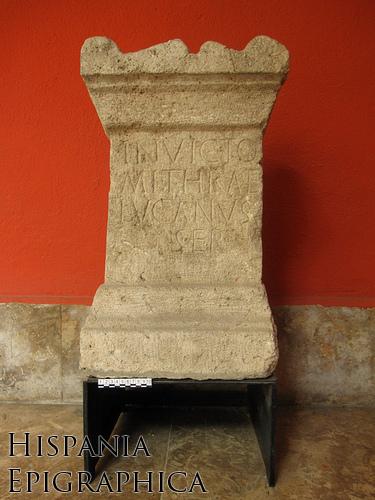
This altar found in Benifaió, València, was erected by a slave called Lucanus.
