Your selection in monuments gave 43 results.
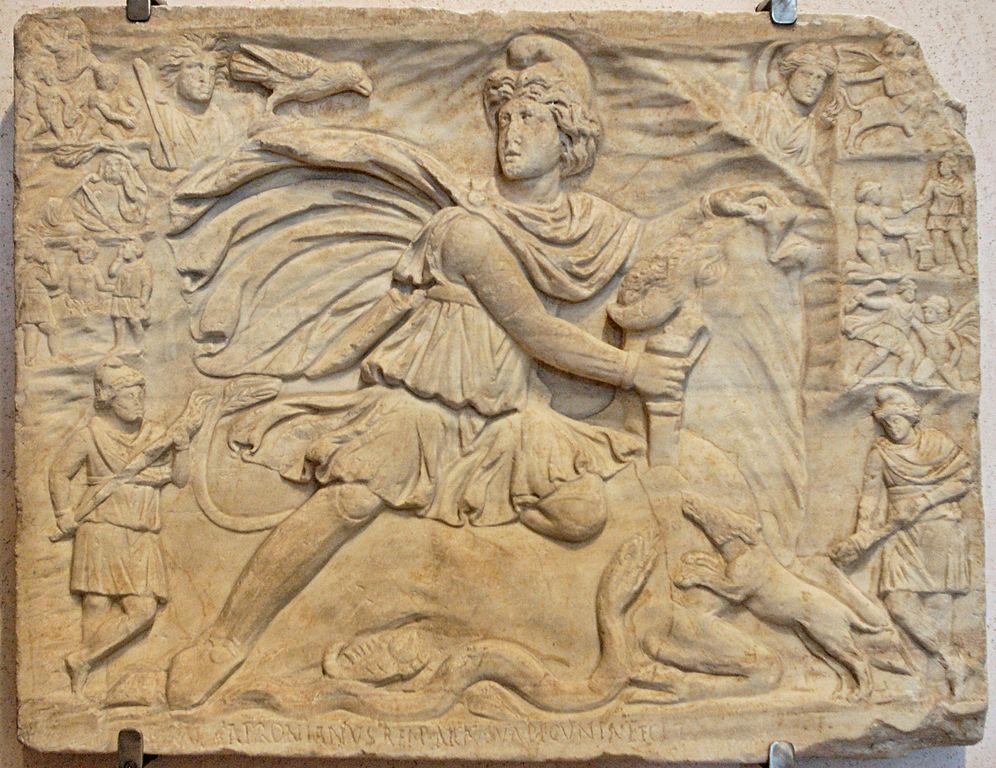
The relief of Mithras slaying the bull of Nersae includes several episodes from the exploits of the solar god.

Mithraic relief from Rome reproduced in figure 169 of the corpus.

This remarkable Greek marble relief of Mithras killing the bull was discovered in 1705 and remained in private collections until it was bought by the Louvre.
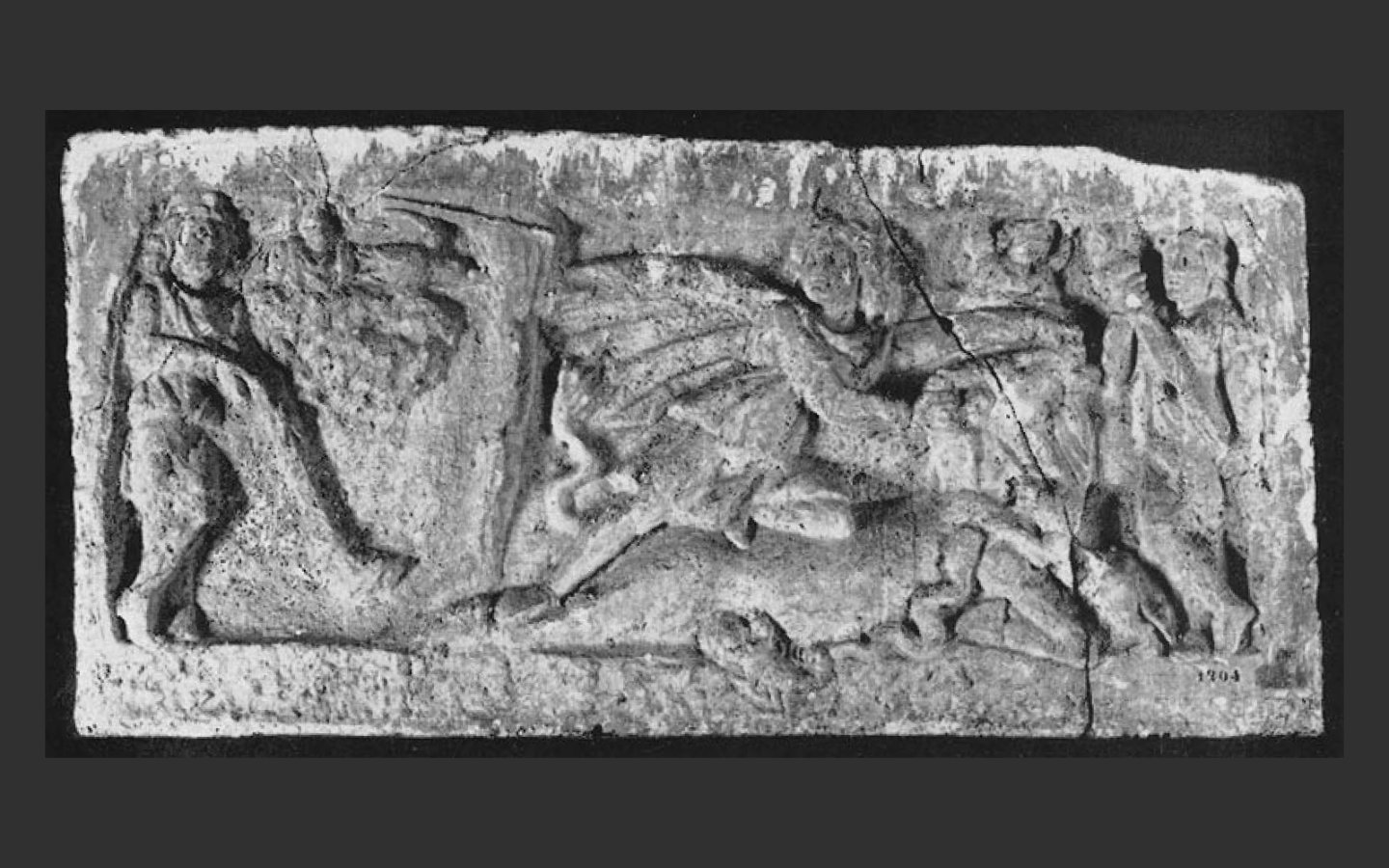
This relief of Mithras Tauroctonos from Rome bears the inscription of three brothers, two of them lions.
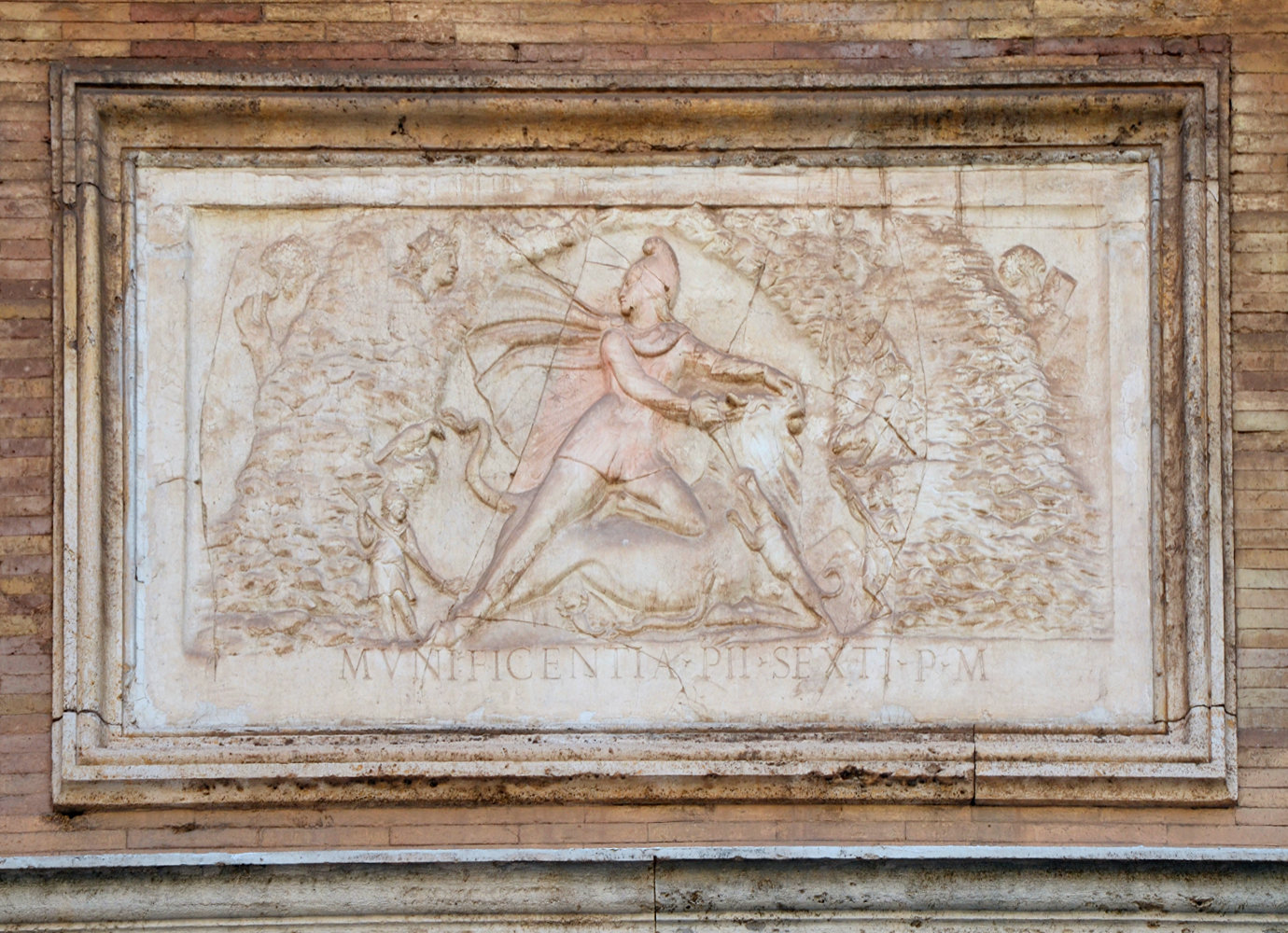
The Tauroctony relief of Mithras killing the bull walled in the Cortile of the Belvedered, Vatican City, was found by Fagan near Ostia.
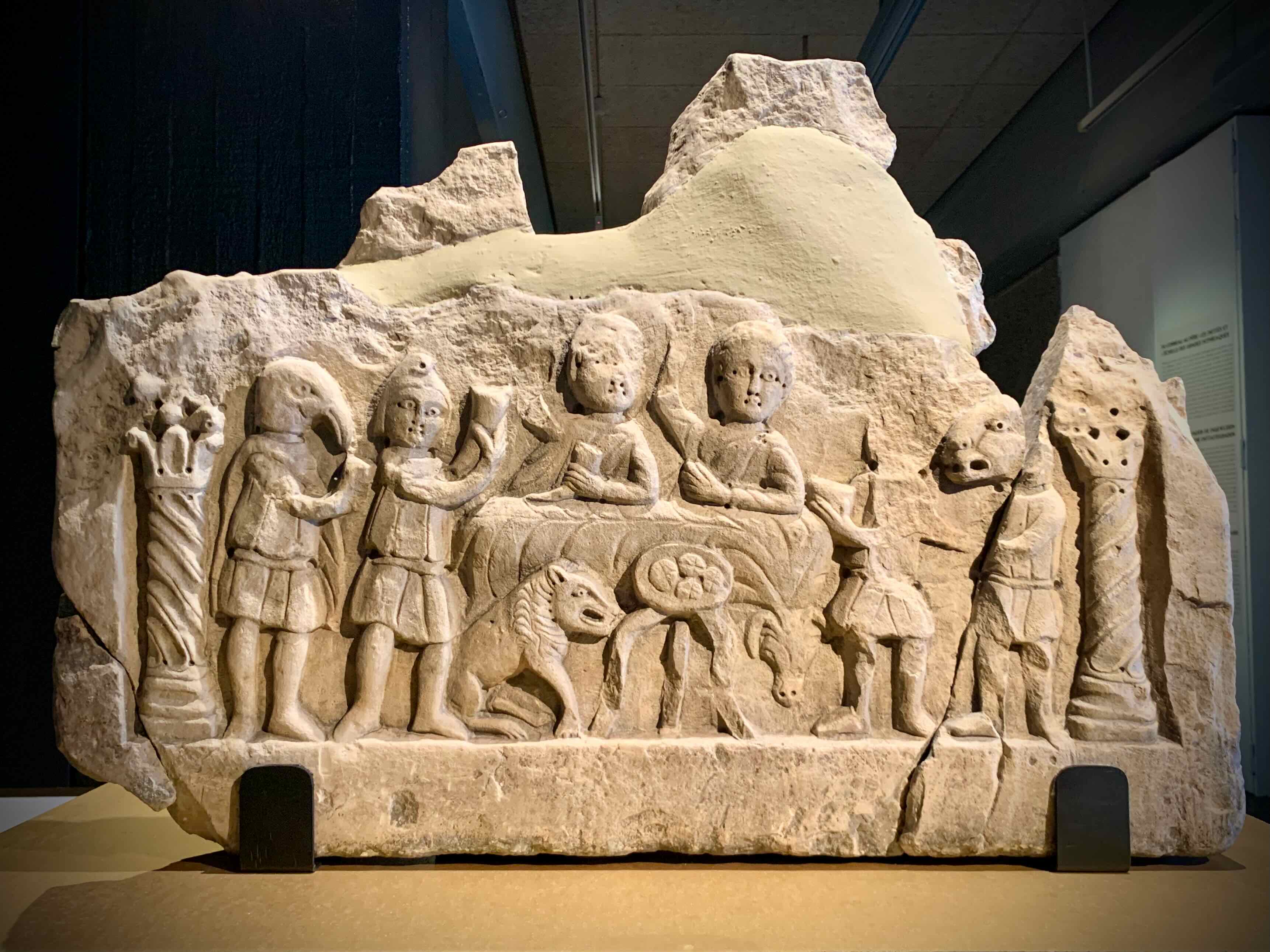
The mithraic relief of Konjic shows a Tauroctony in one side and a ritual meal in the other.
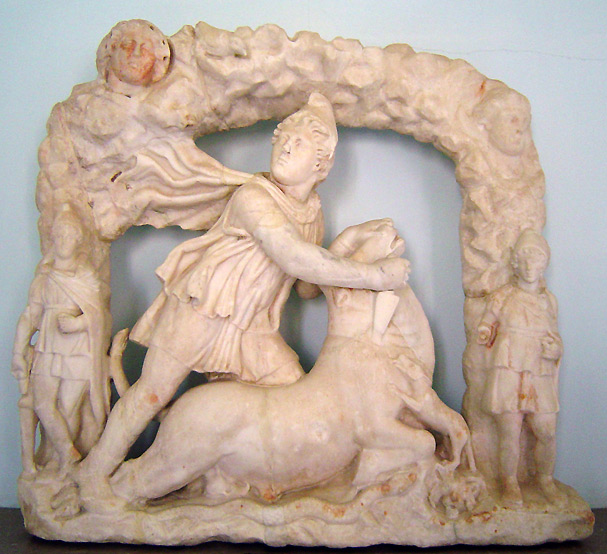
The assumed find-place of the Mithras Tauroctonus of Palermo is uncertain.

Fragmentary tauroctony preserving Mithras, the torchbearers, Sol and Luna from the sanctuary at Aïtodor.
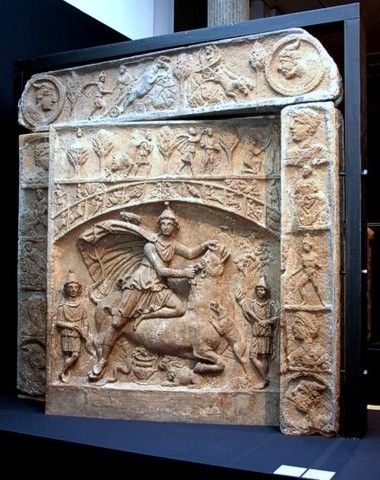
This relief is so well-known that it has been reproduced in nearly every handbook of archaeology and of history of religions.
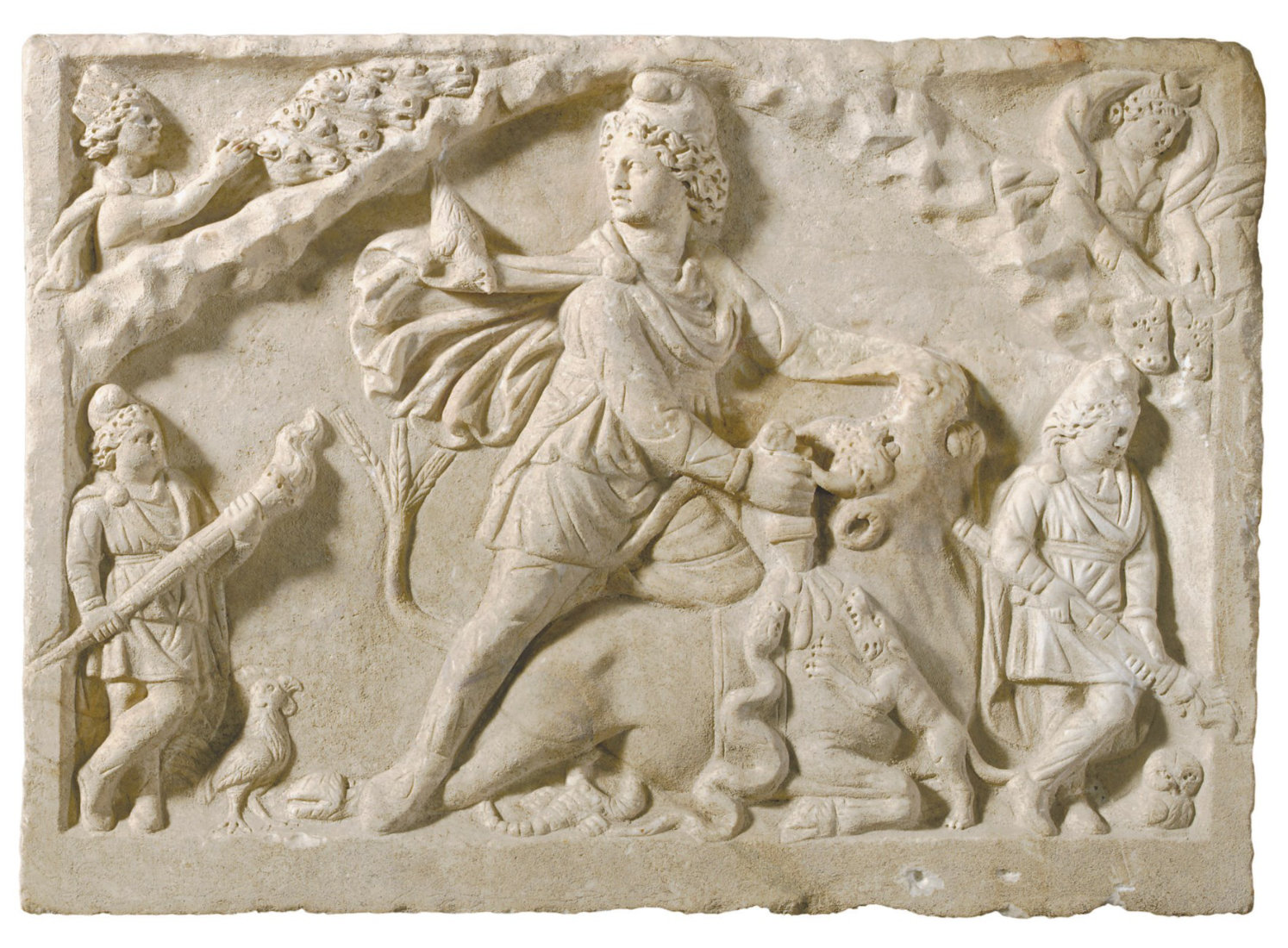
This relief of Mithras killing the bull includes an unusual owl at the feet of Cautopates and a cock next to Cautes.
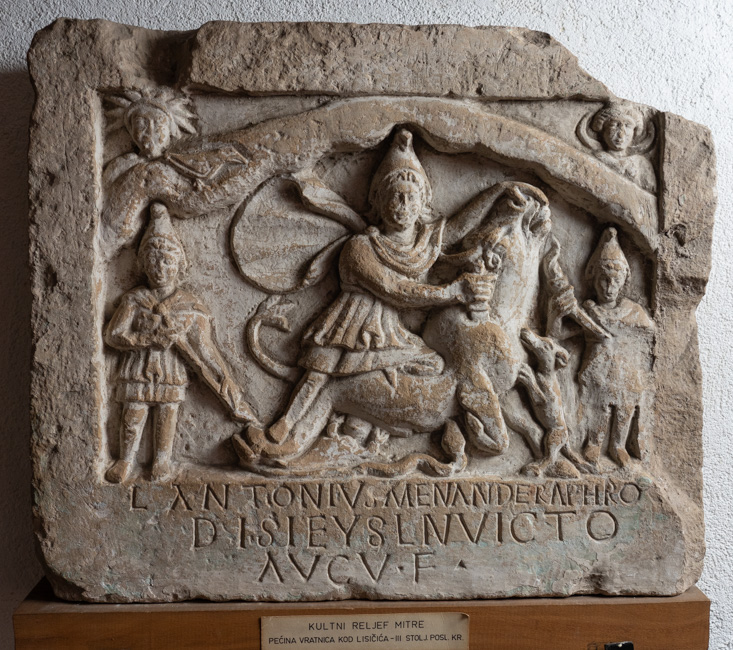
This relief of Mithras as a bullkiller found at Vratnitsa, near Lisicici in northern Macedonia, was signed by a certain Menander Aphrodisieus.
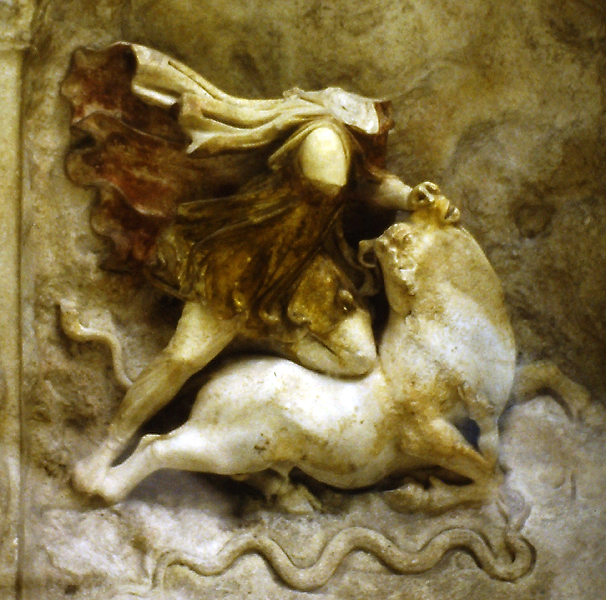
In the Tauroctony of Hermopolis, Cautes and Cautopates are placed over two columns at each side of the sacrifice.

The importance of the Mithraeum of Marino lies in its frescoes, the most significant of which is that of Mithras slaying the bull, surrounded by mythological scenes.
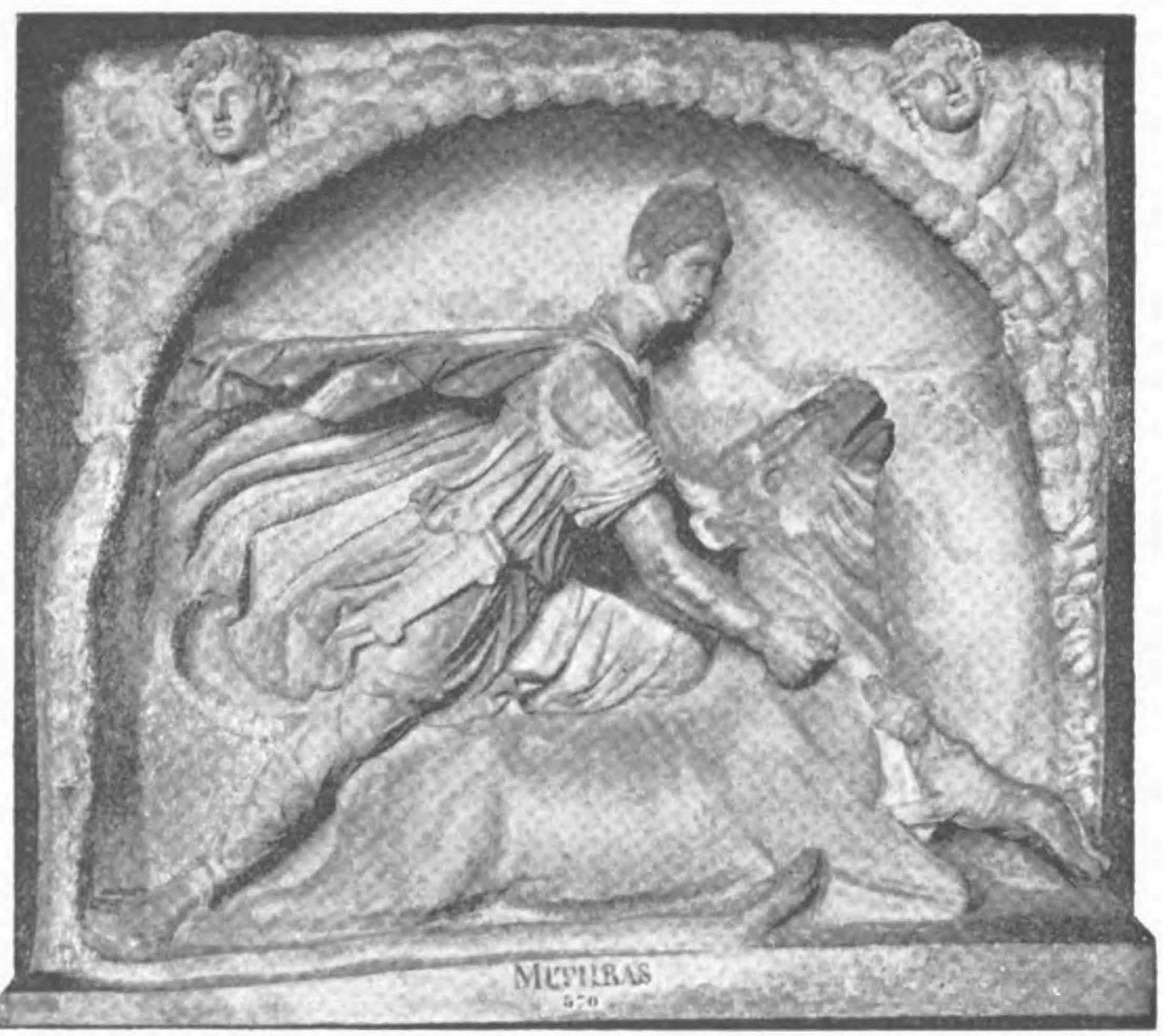
This is one of the three reliefs depicting Mithras killing the bull that the Louvre Museum acquired from the Roman Villa Borghese collection.
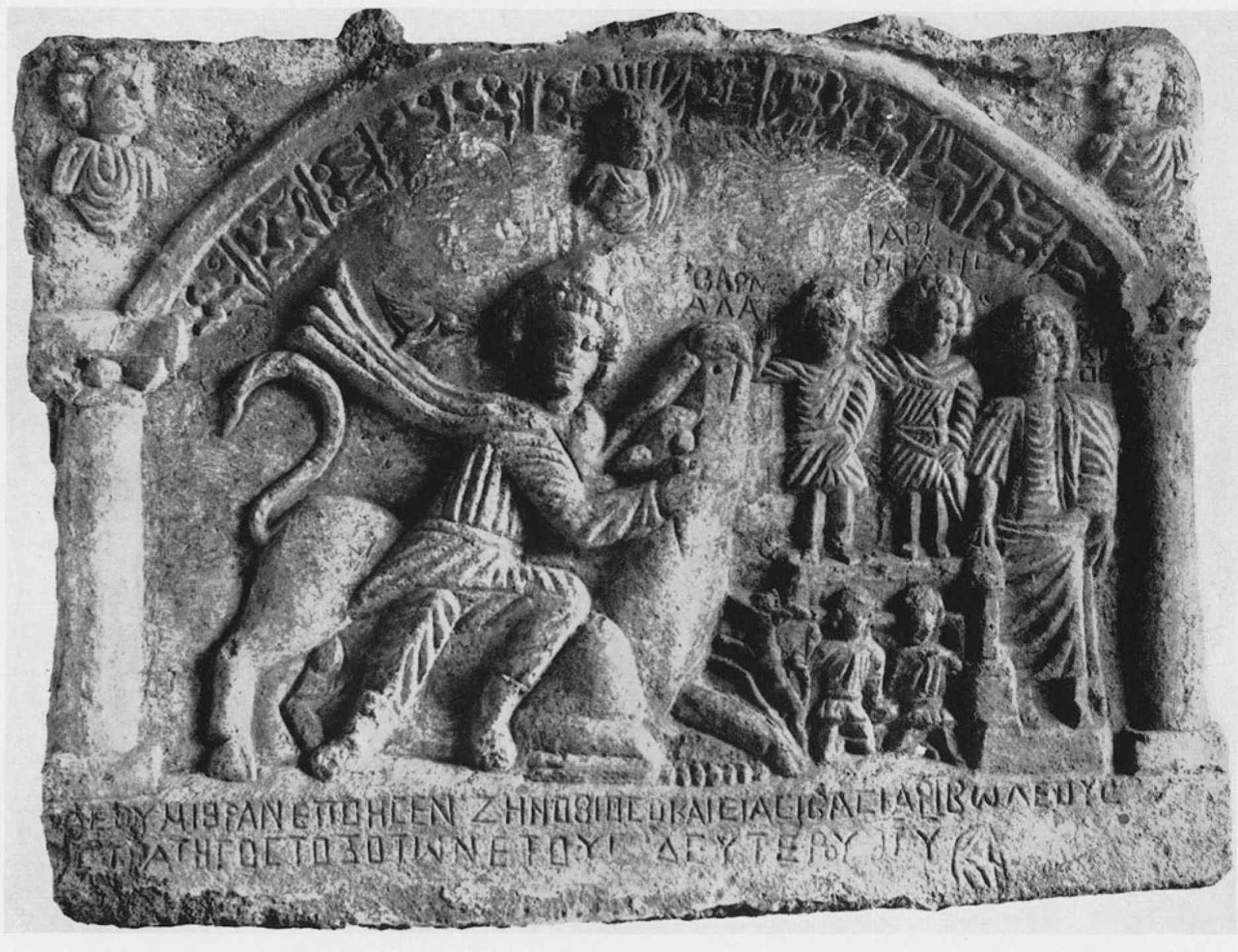
The main relief of Mithras killing the bull from the Mithraeum of Dura Europos includes three persons named Zenobius, Jariboles and Barnaadath.
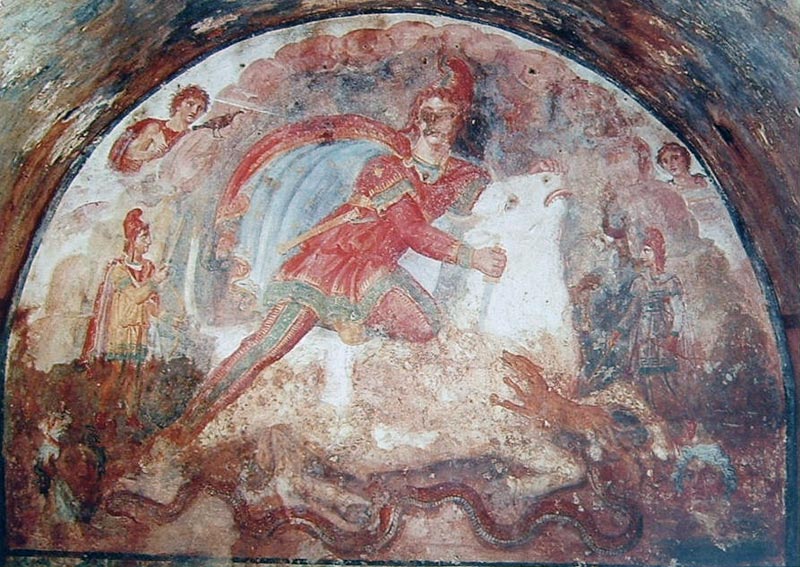
The main fresco of the Mithraeum of Santa Maria Capua Vetere portrays Mithras slaughtering a white bull.
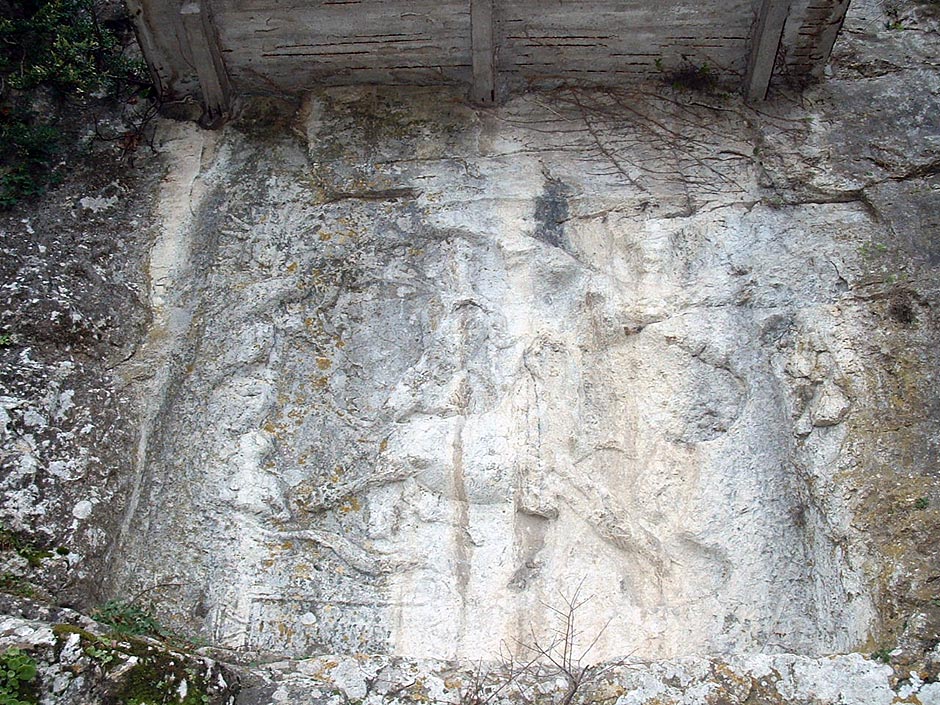
The low relief of Bourg-Saint-Andéol depicting Mithras killing the bull has been chiseled on the rock.

This remarkable marble relief from the end of the 3rd century was discovered in the most remote room of the Mithraeum in the Circo Massimo.
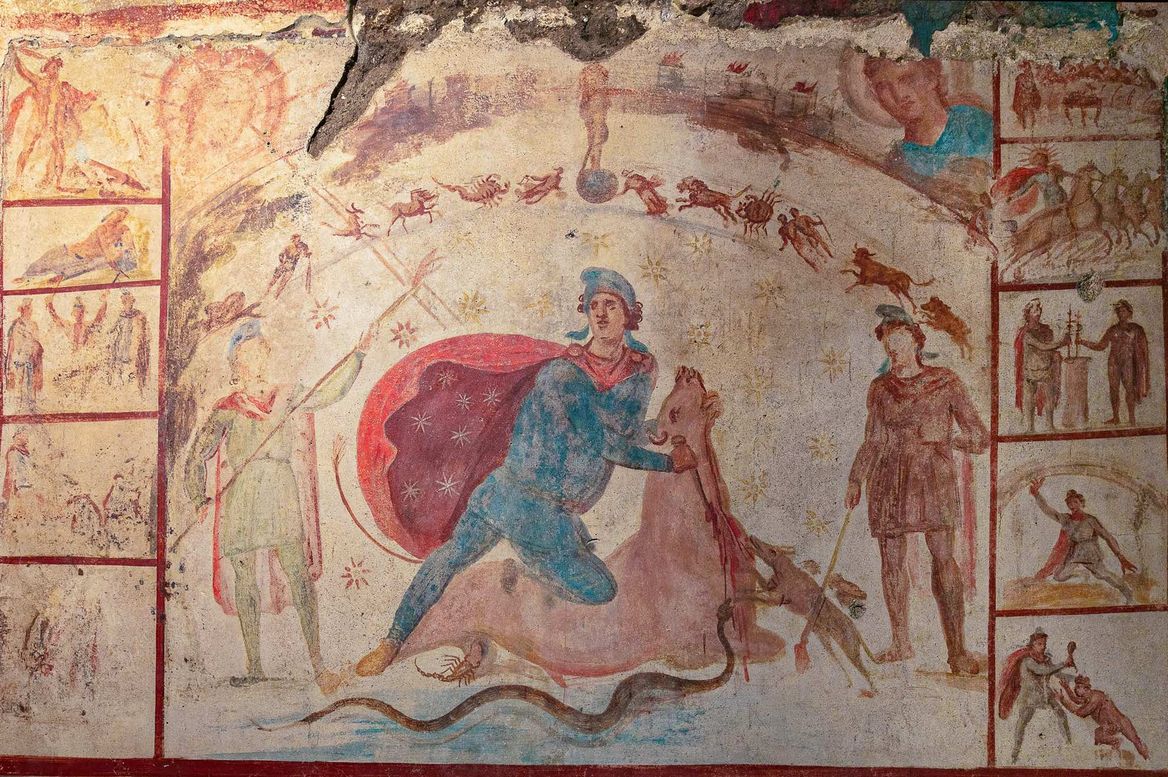
The votive fresco from the Mithraeum Barberini displays several scenes from Mithras’s myth.
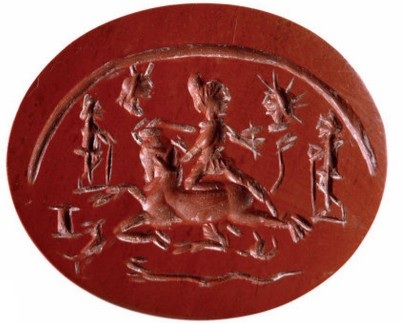
An oval carnelian gem from Carnuntum showing Mithras tauroktonos in a grotto. Sol and Luna appear above, with both torchbearers and a small altar before the bull.
