Your selection in monuments gave 290 results.
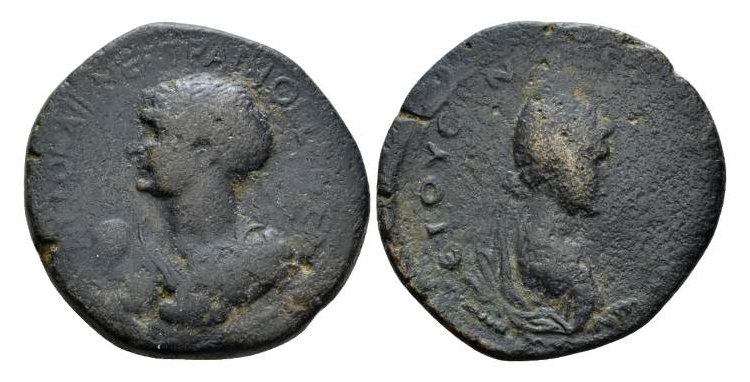
These bronze medallions associates the image of several Roman emperors with that of Mithras, usually as a rider, in the province Pontus.
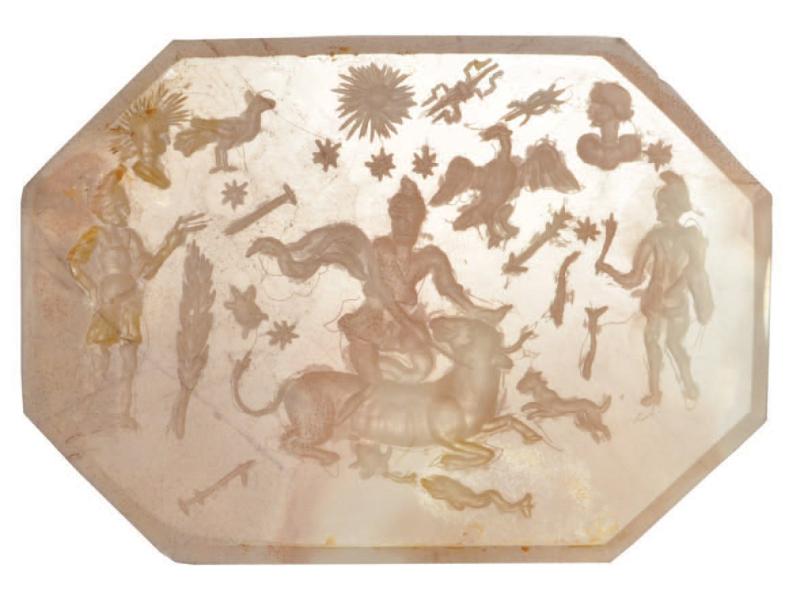
Large intaglio engraved with Mithras as bull slayer surrounded by a peculiar version of Cautes and Cautopates and other celestial deities.
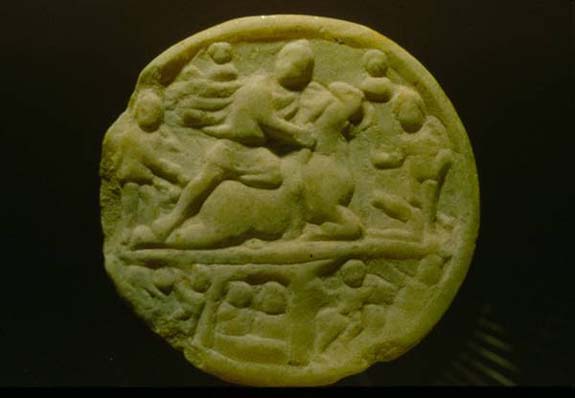
The small medallion depicts three scenes from the life of Mithras, including the Tauroctony. It may come from the Danube area.
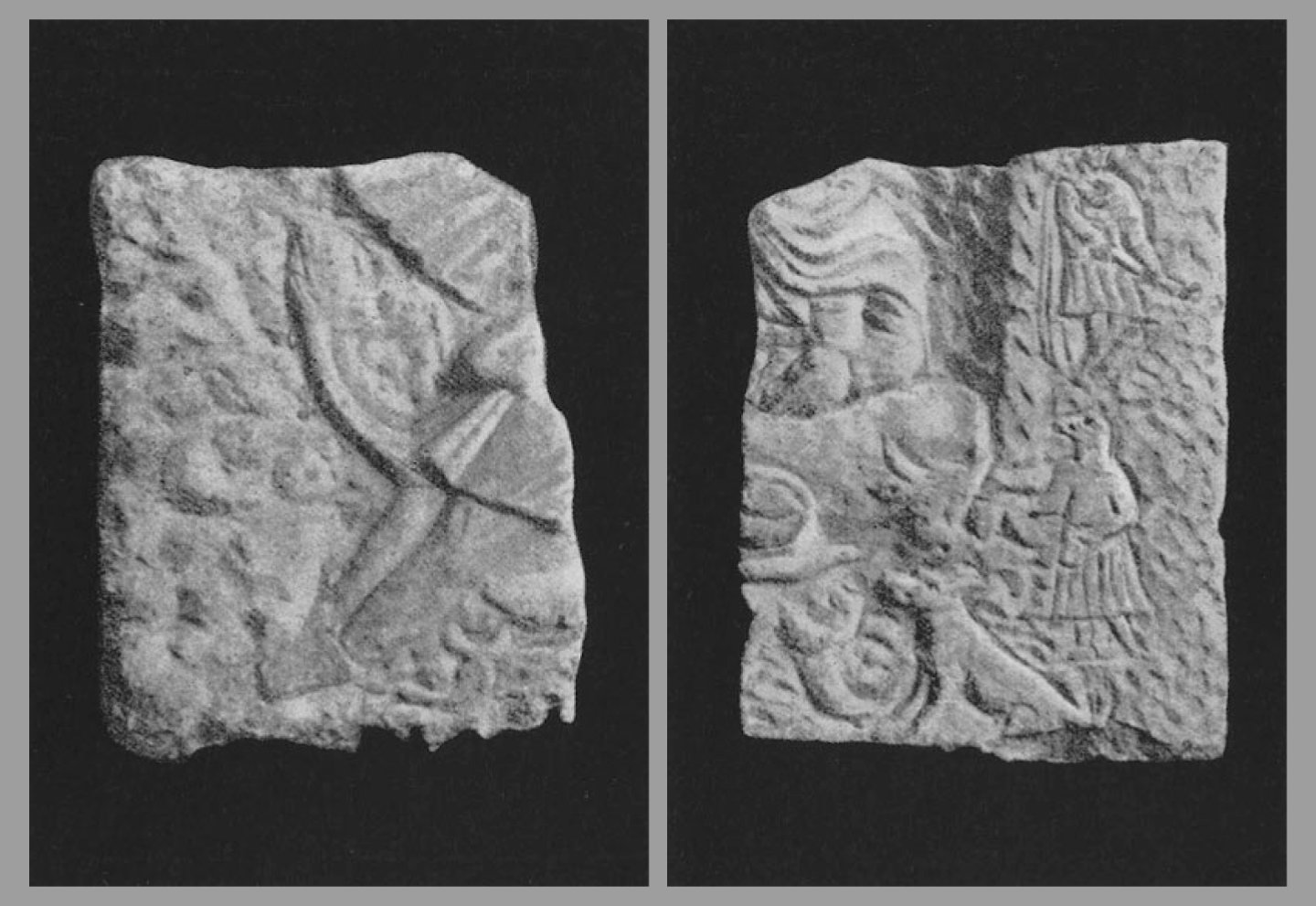
This fragment of a double relief shows a tauroctony on one side and the sacred meal, including a serving Corax, on the other.
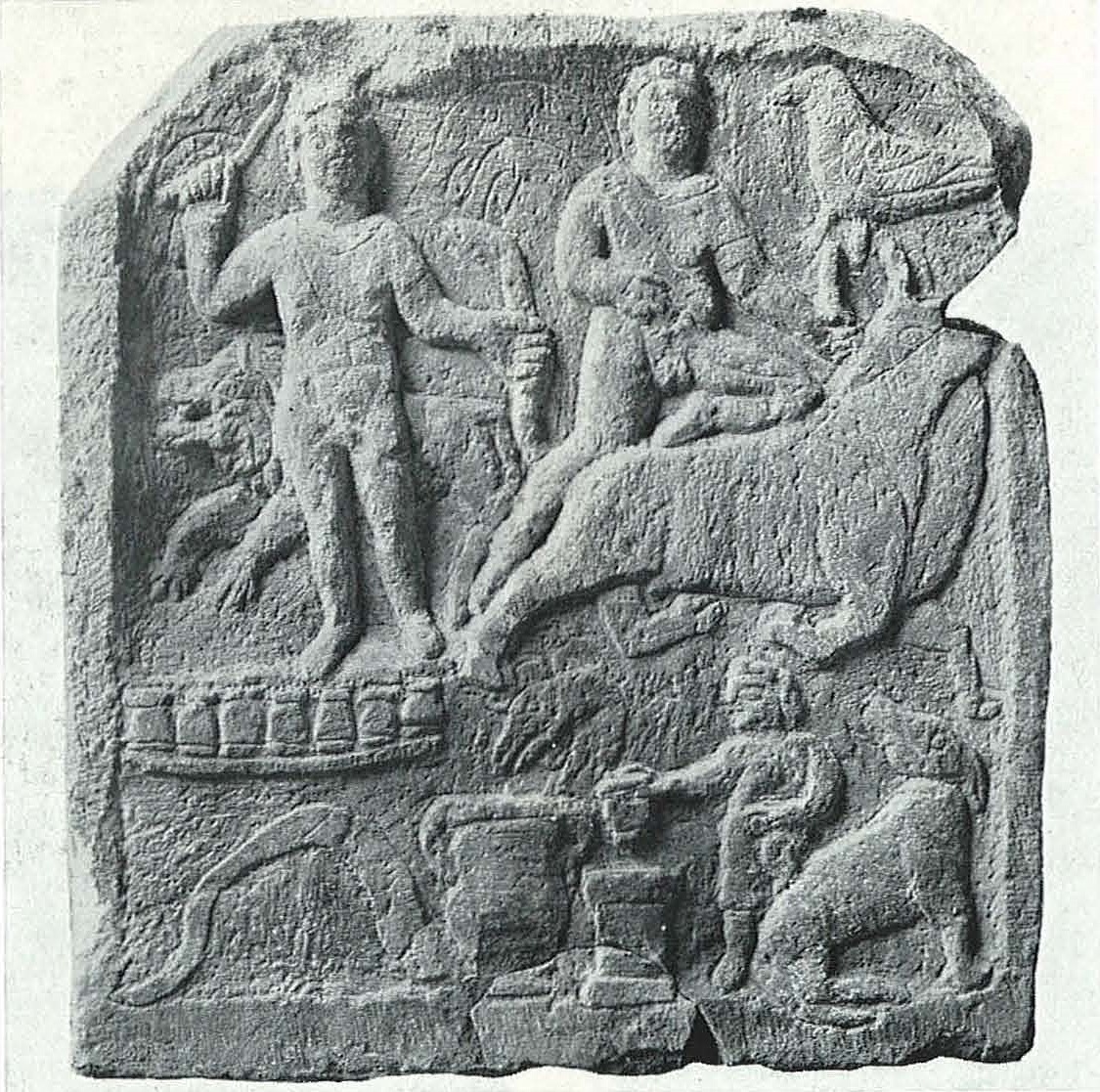
The Tauroctony from Landenburg, Germany, shows a naked Mithras only accompanied by his fellow Cautes.
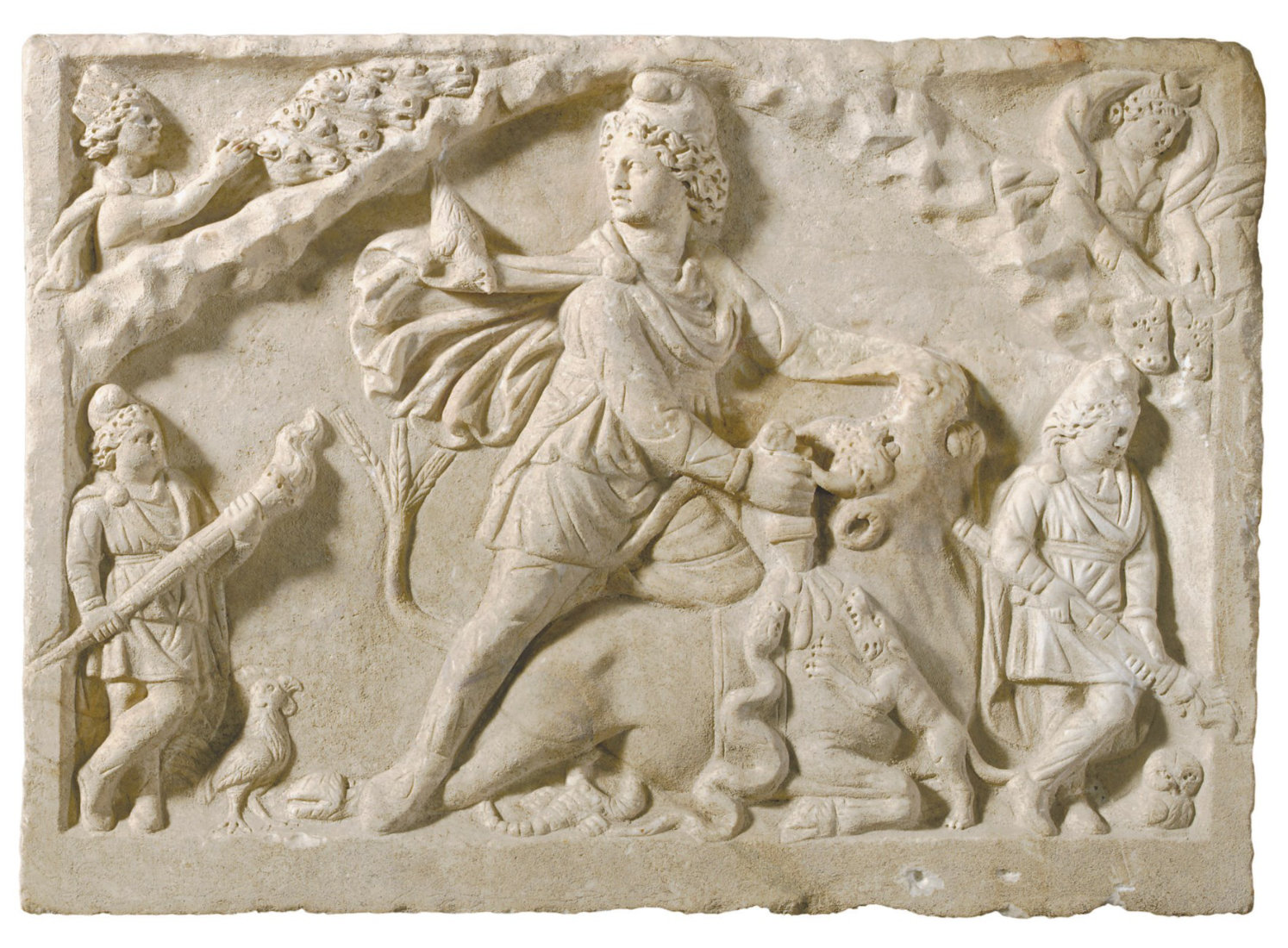
This relief of Mithras killing the bull includes an unusual owl at the feet of Cautopates and a cock next to Cautes.
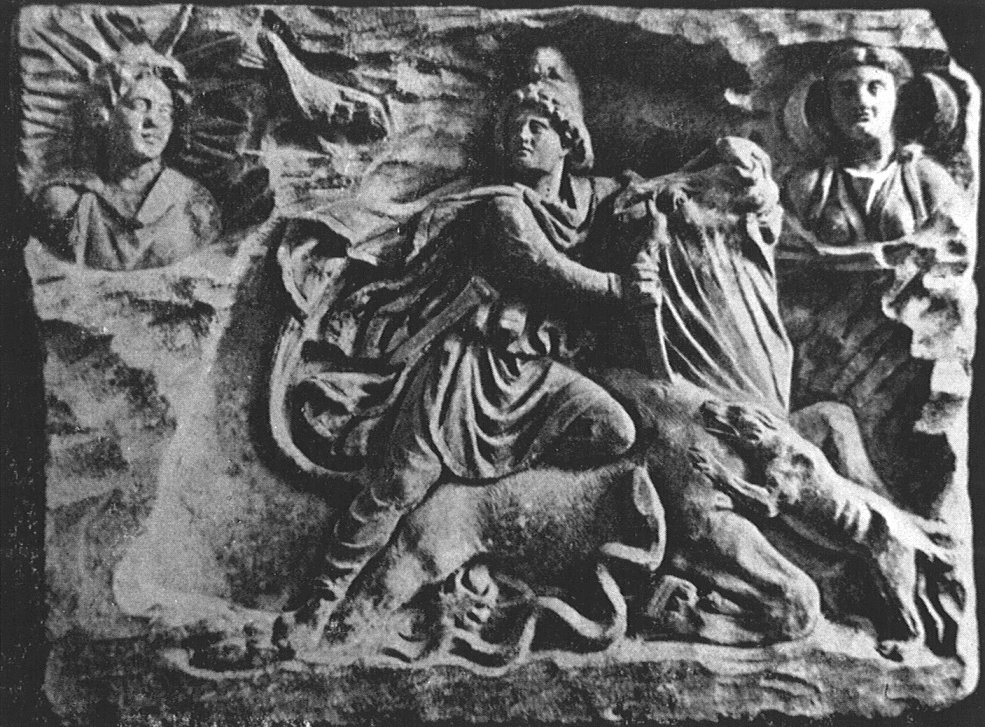
This marble relief depicting Mithras as a bull slayer was found in the back room of the Mithraeum of the Circus Maximus.

This marble relief depicting Mithras killing the bull, found at Porto d’Anzio in 1699 and now lost, is known from a engraving by del Torre.

This relief of Mithras slaying the bull, framed by acanthus leaves, was sold at auction in 2011 by Bonhams.
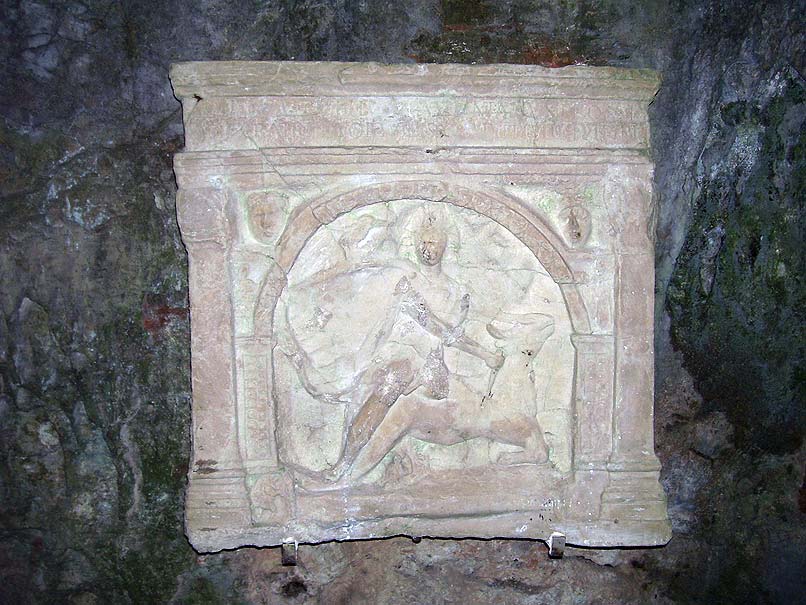
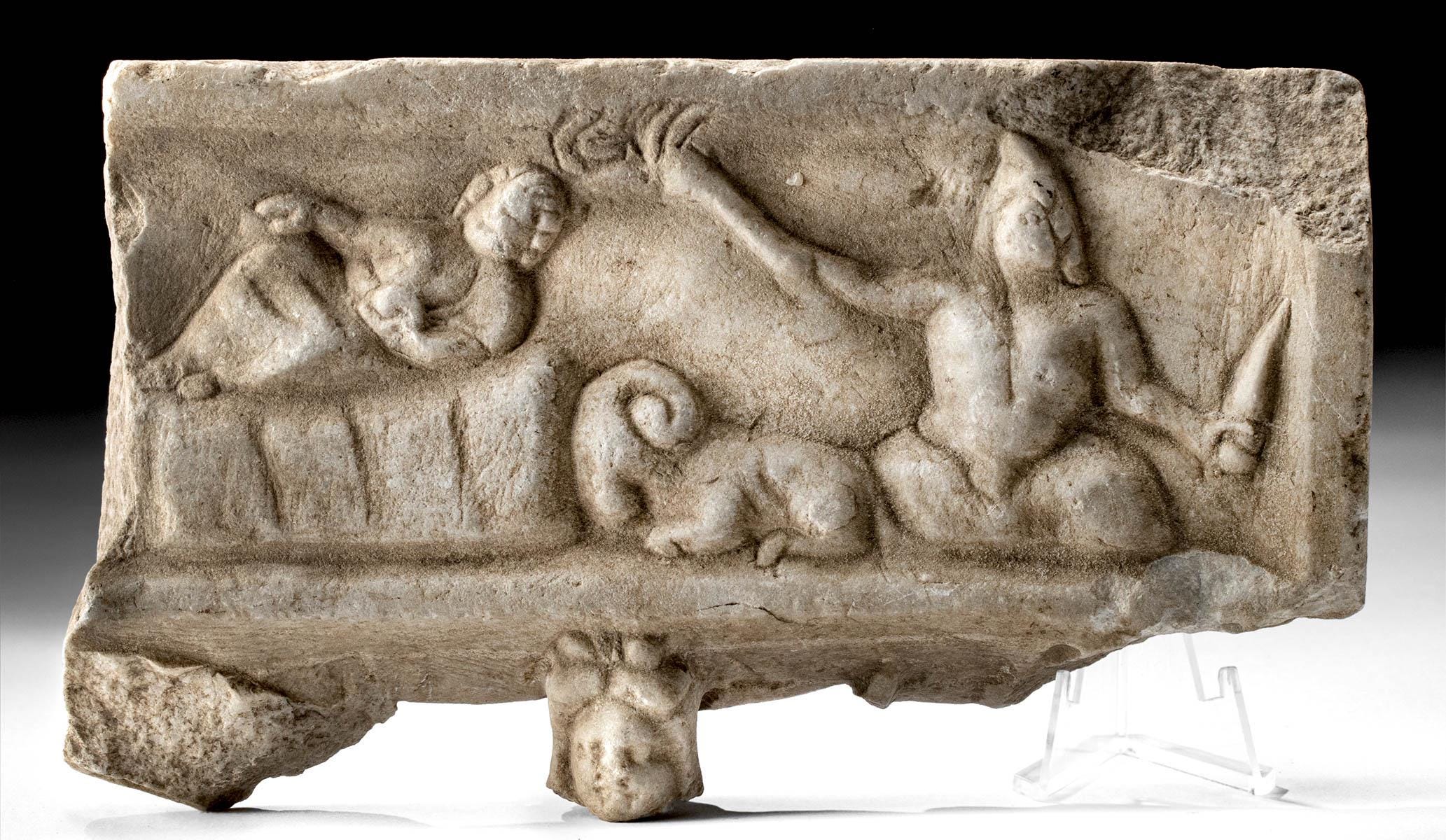
Mithras emerging from the rock with torch and dagger beside a reclining Oceanus or Saturn.
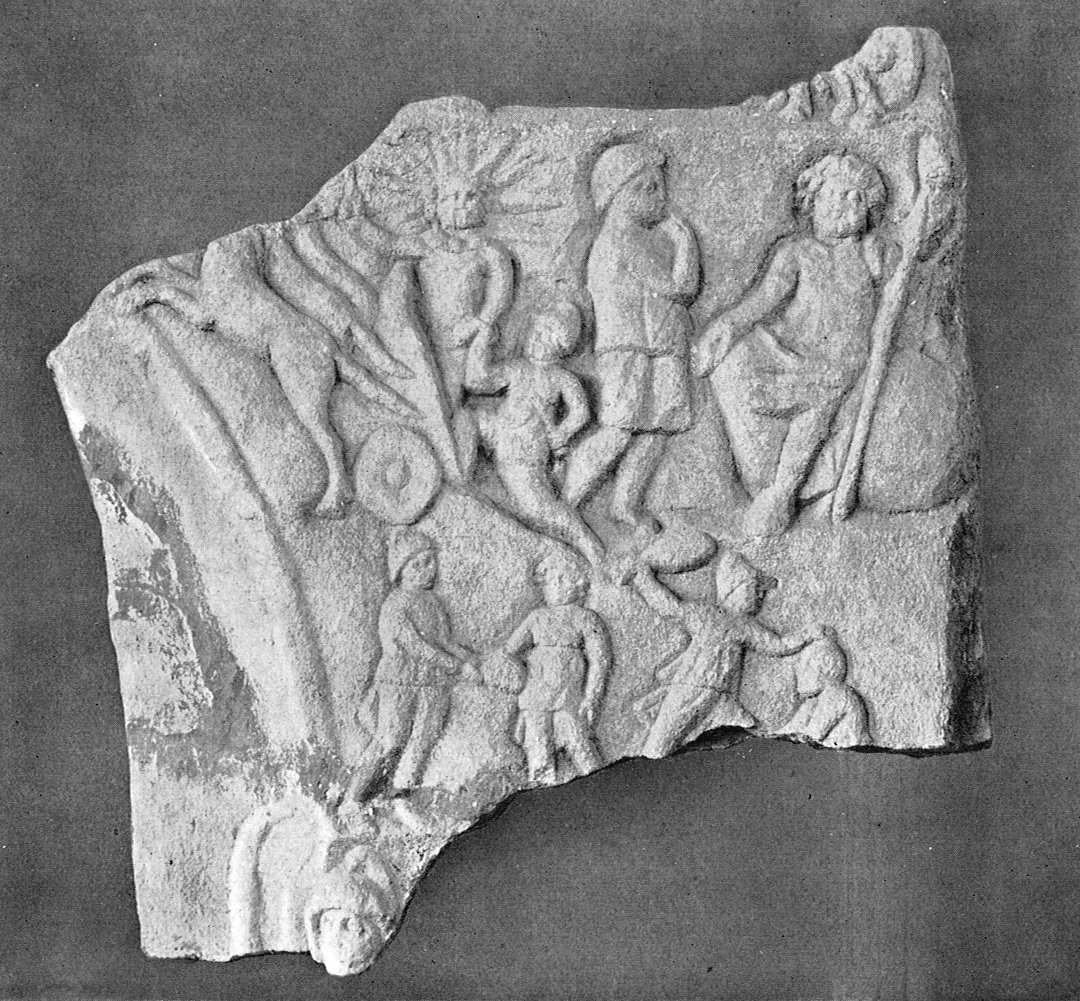
Several Mithraic scenes, including Mithras with Saturn, Mithras with Sol and Mithras' Ascension, are depicted on this fragment of a relief from Ptuj.
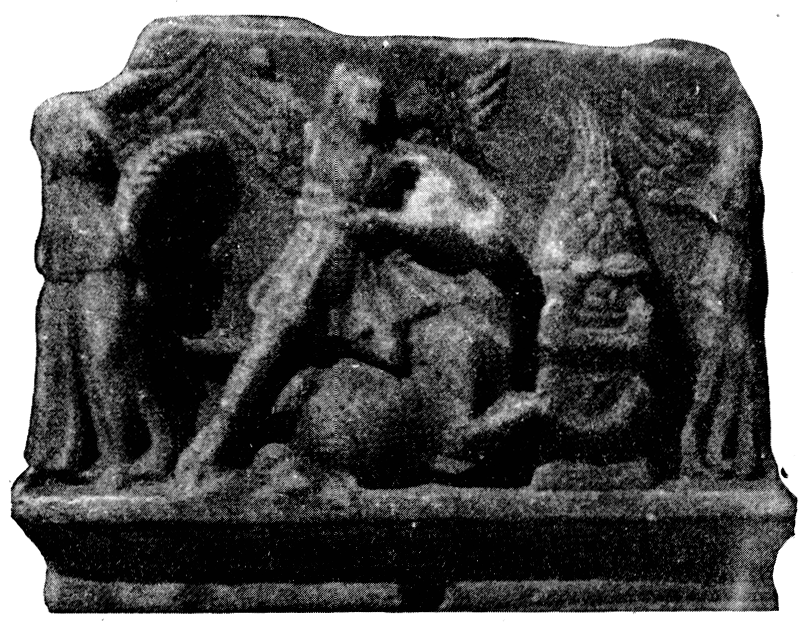
The Mithraic relief from Baris, in present-day Turkey, shows what appears to be a proto-version of the Tauroctony, with a winged Mithras surrounded by two Victories.
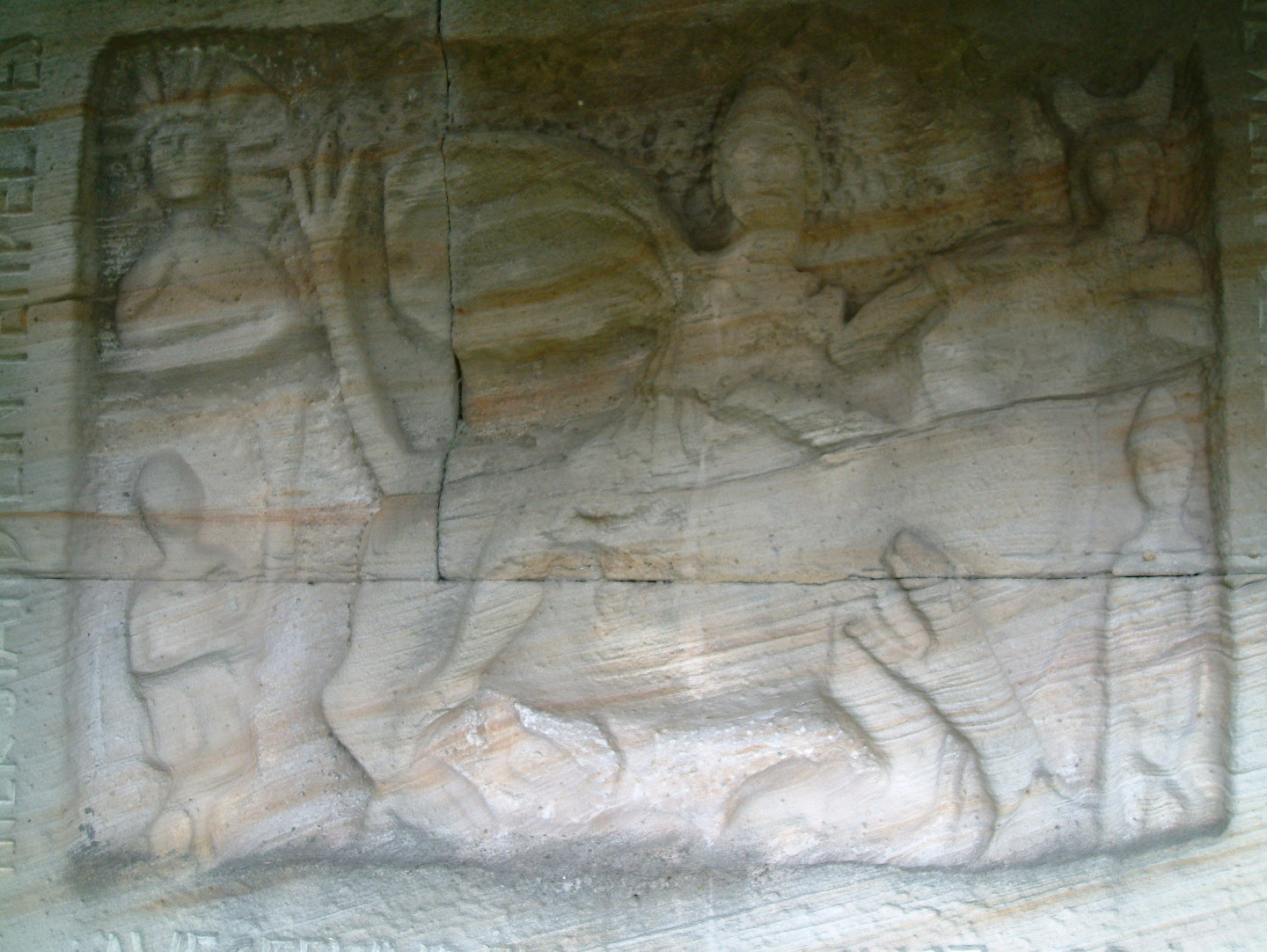
This relief of Mithras killing the bull found in Gimmeldingen, Germany, lacks the usual raven.

Roman stone low-relief depicting Mithras as a bull-slayer, with the upper part of his head missing.
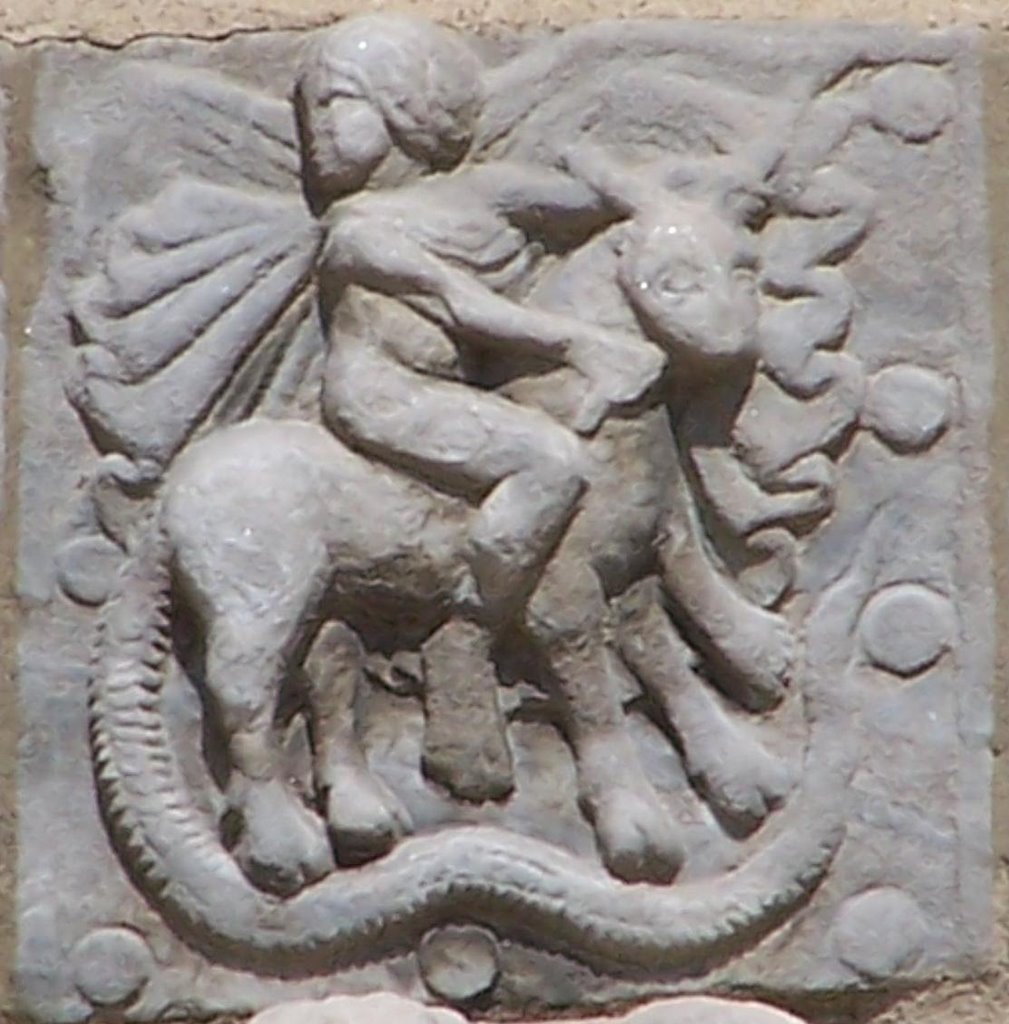
Mithras slaying the bull appears as the sign of Capricorn in a zodiacal sequence on the Pórtico del Cordero of the Abbey de Santo Domingo de Silos, Burgos, Spain.
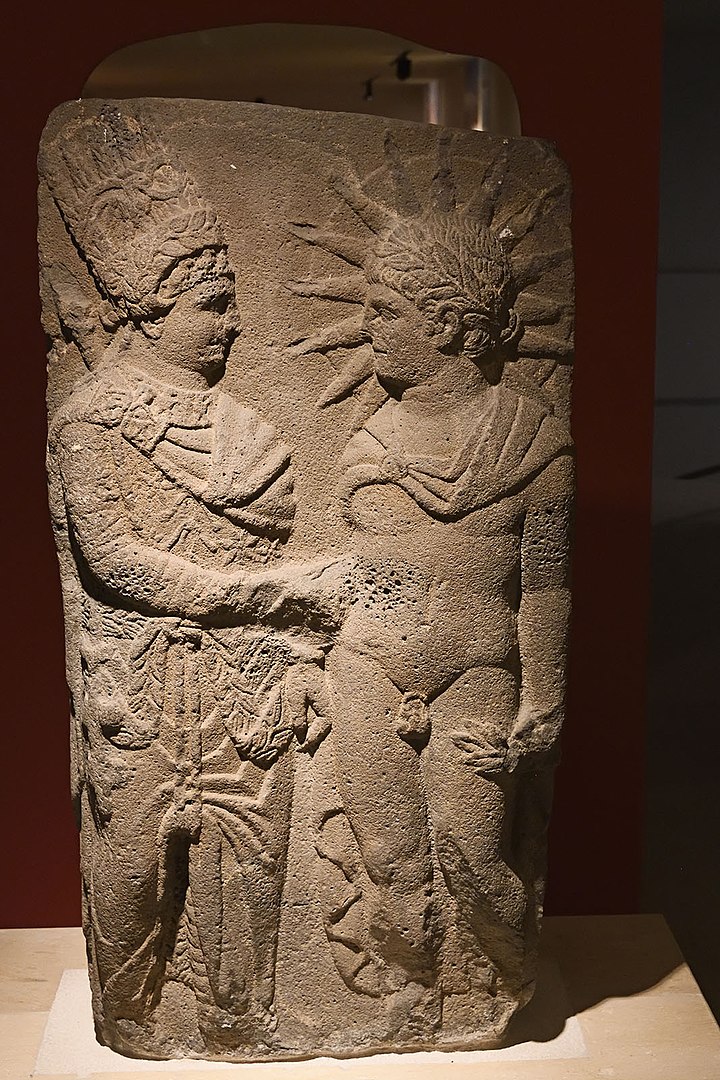
Stele representing Apollo-Mithras-Helios in a Hellenistic nude fashion, shaking hands with Antiochus I.

These fragments of a monumental tauroctony found in the Cerro de San Albín must have decorated the Gran Mitreo de Mérida, which has not yet been found.
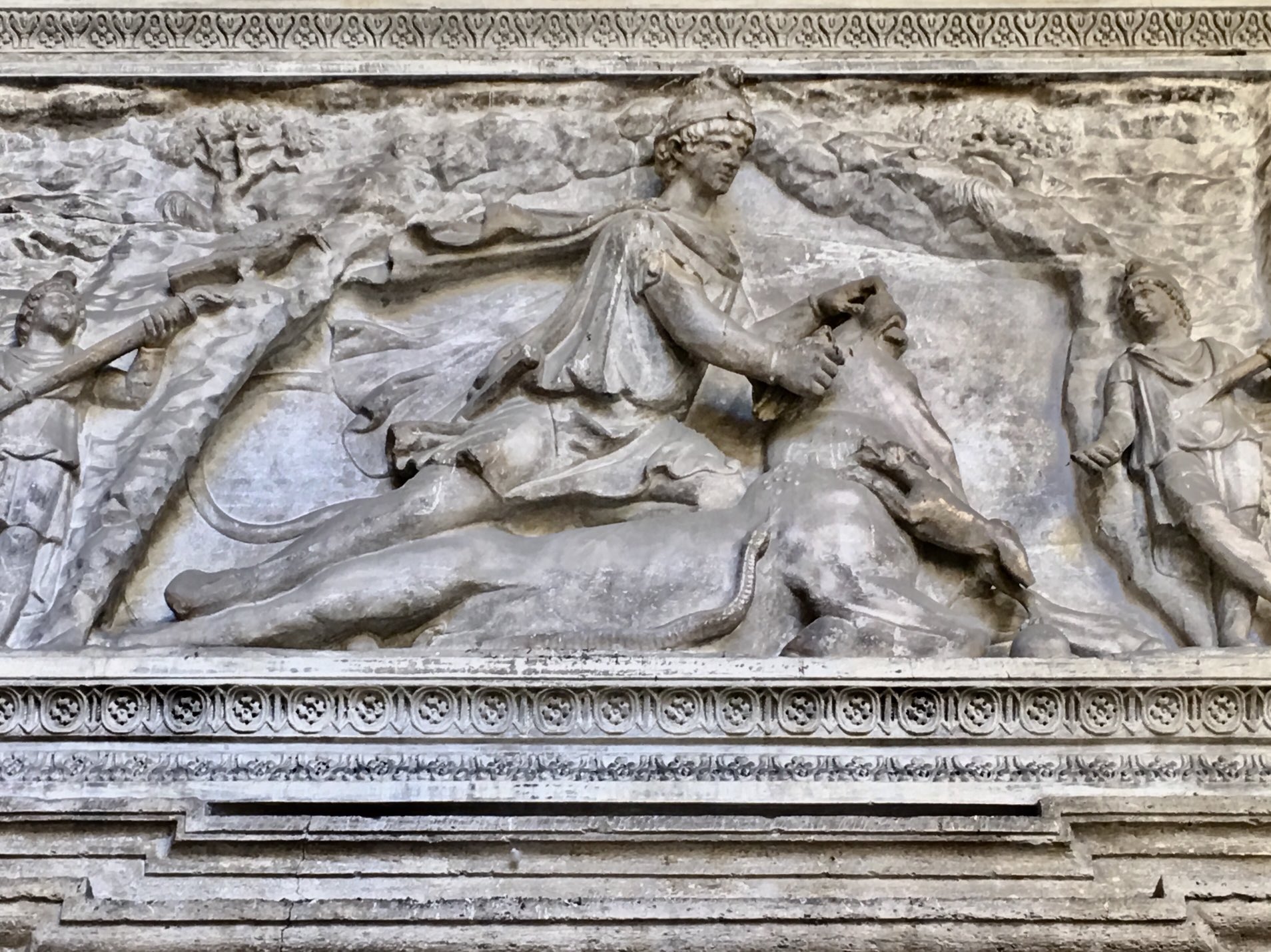
This relief of Mithras as a bullkiller, probably found in Rome, has been part of the Palazzo Mattei collection since at least the end of the 18th century.
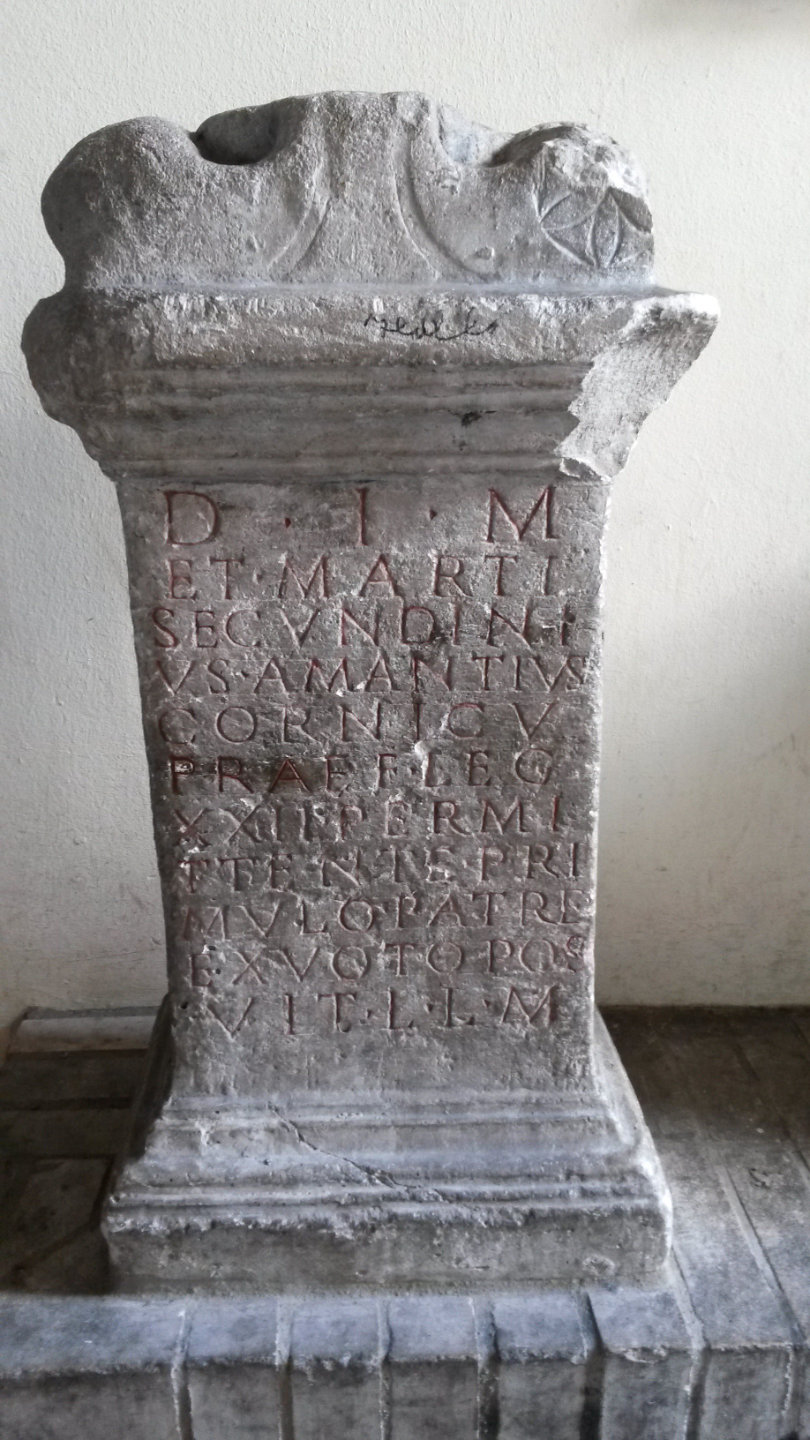
This altar has been unusually dedicated to both gods Mithras and Mars at Mogontiacum, present-day Mainz.
