Your selection in monuments gave 133 results.
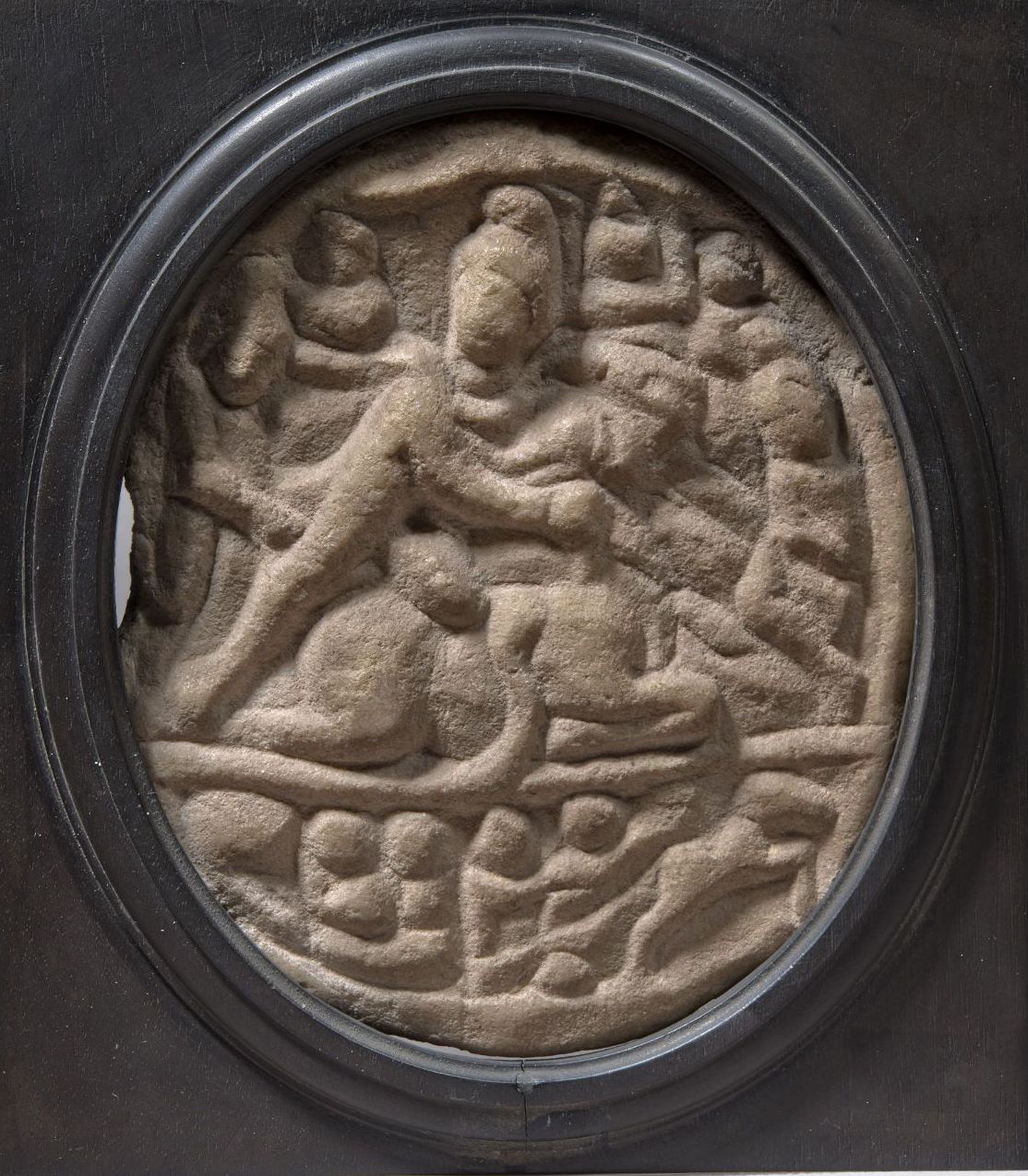
This medallion belongs to a specific category of rounded pieces found in other provinces of the Roman world.
Sol watches Mithras as he gazes Mithras gazes up to heaven while sharing the sacred meal.
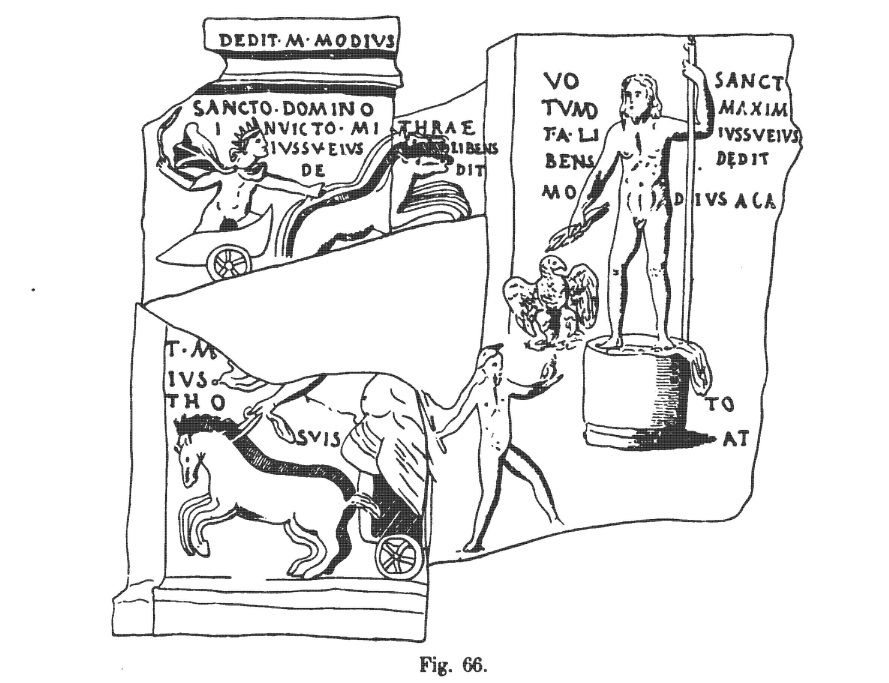
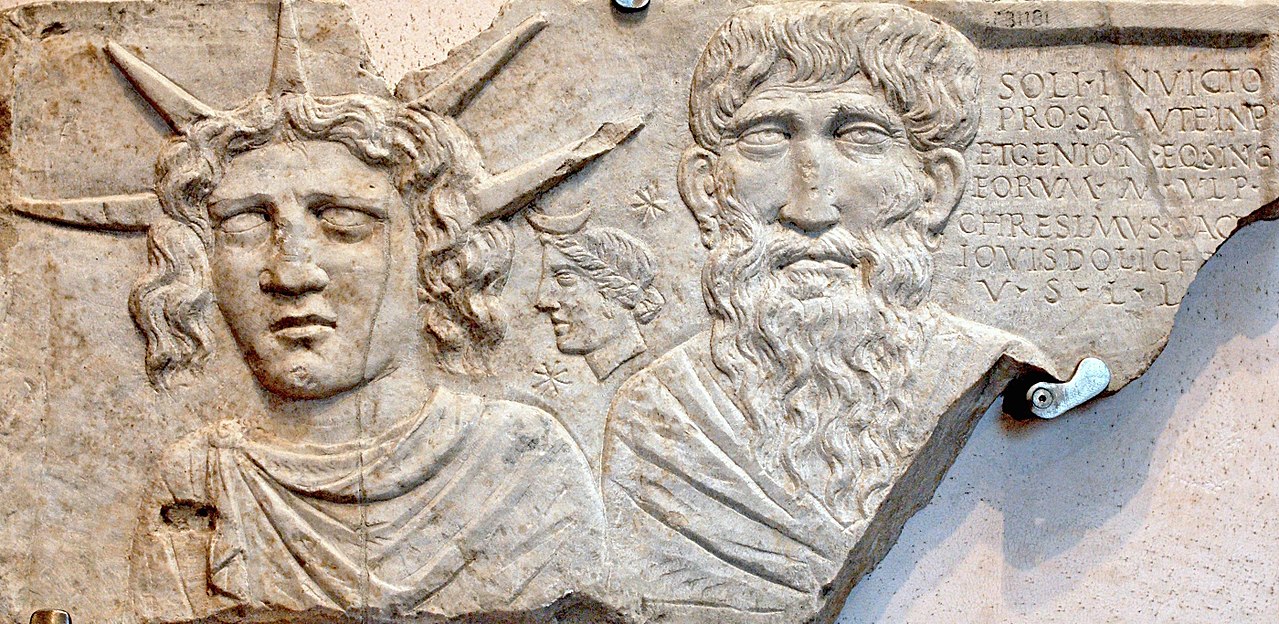
These three fragments of carved marble depict Jupiter, Sol, Luna and a naked man wearing a Phrygian cap, with inscriptions calling Mithras Sanctus Dominum.
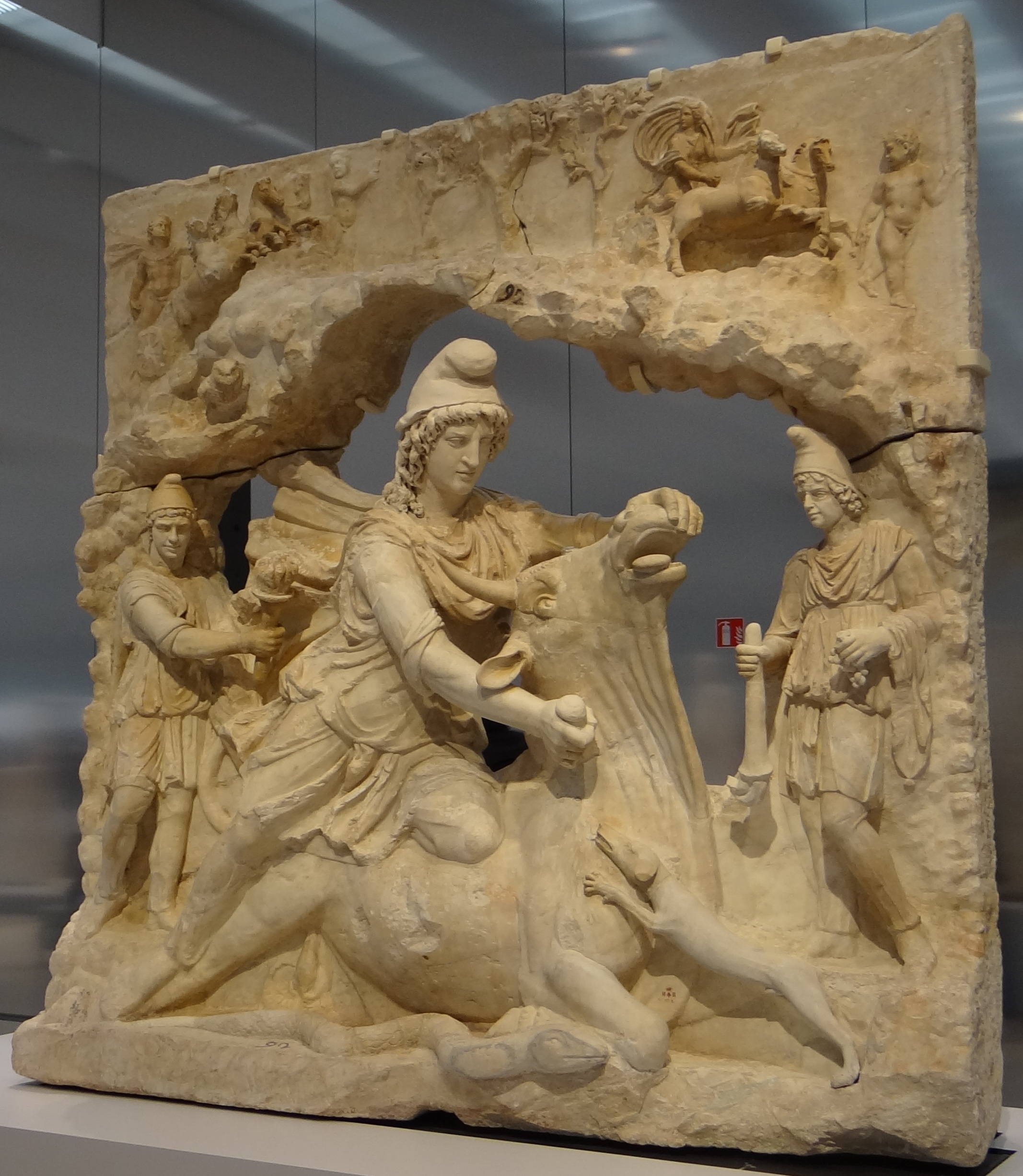
This relief of Mithras slaying the bull was erected in Piazza del Campidoglio, moved to Villa Borghese and is now in the Louvre Museum.
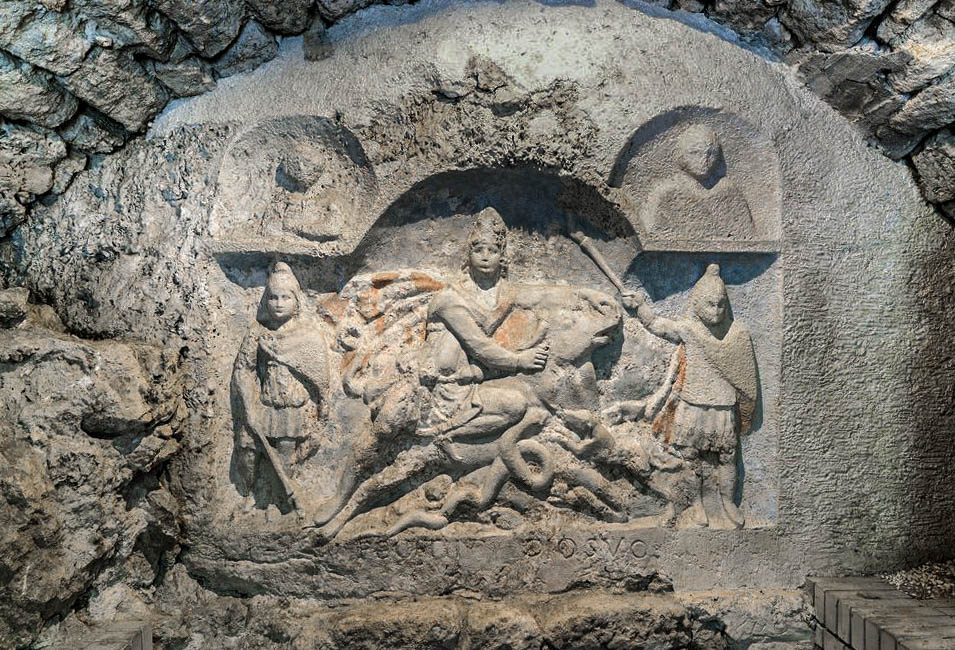
The main cultic relief of Mithras slaying the bull of Fertorakos was carved into the rock face.
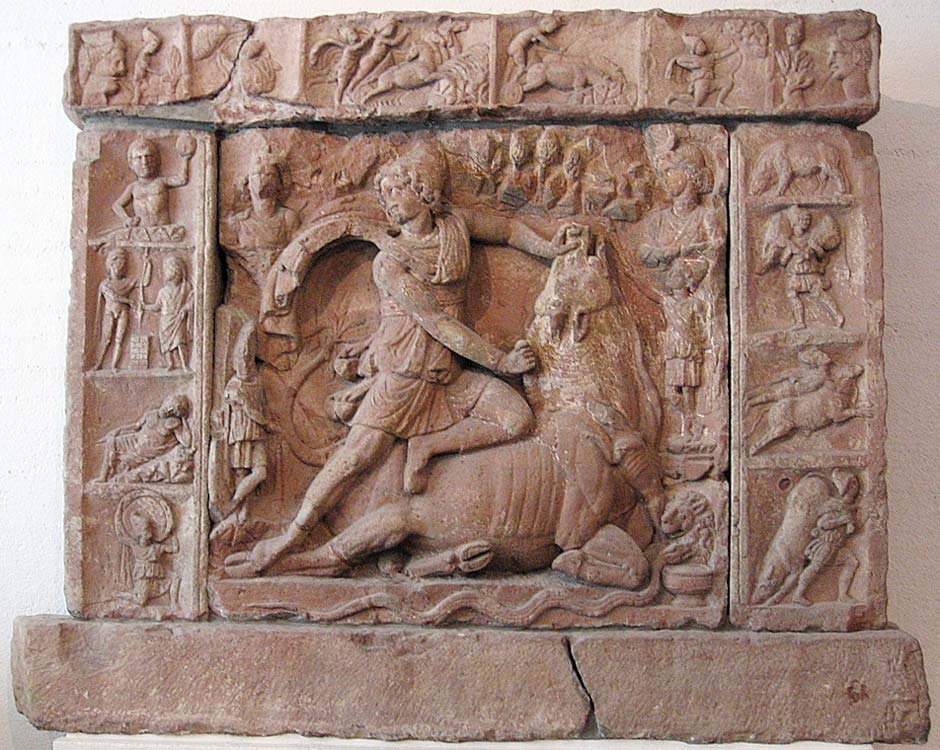
The Tauroctony relief of Neuenheim, Heidelberg, includes several scenes from the deeds of Mithras and other gods.
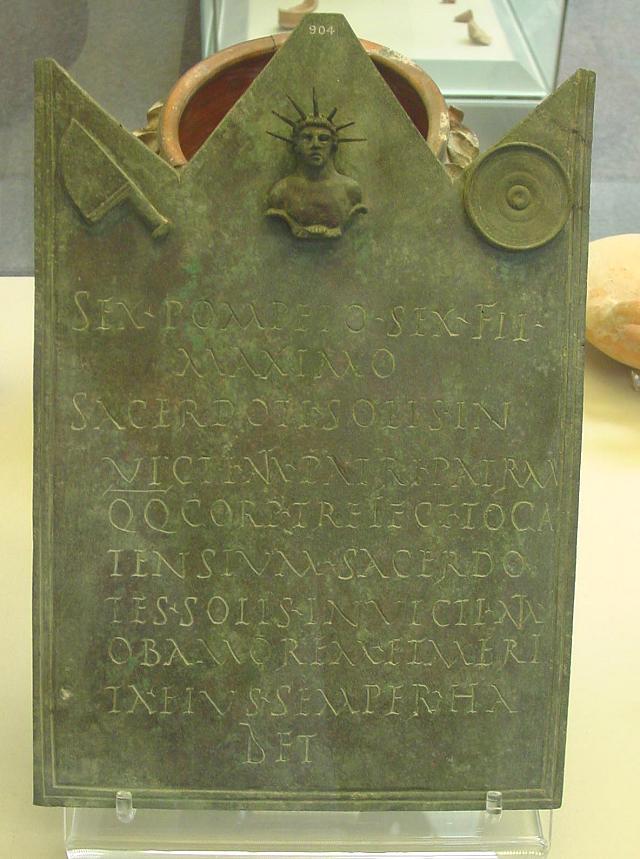
This plaque, now on display in the British Museum, may have come from the Aldobrandini Mithraeum in Ostia.
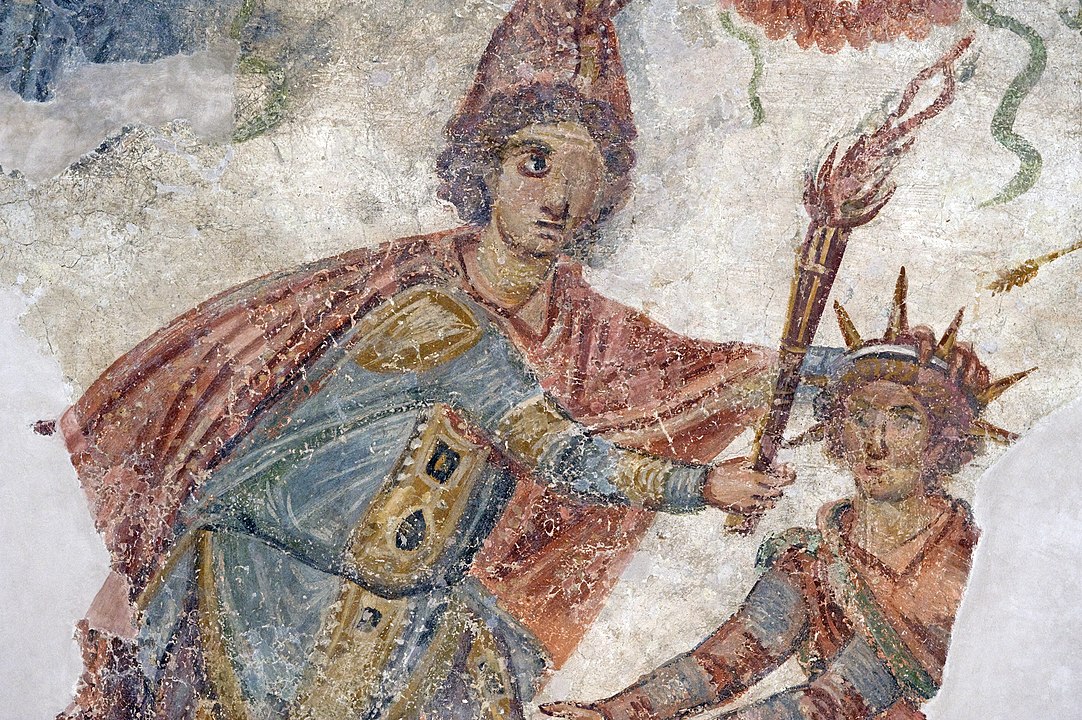
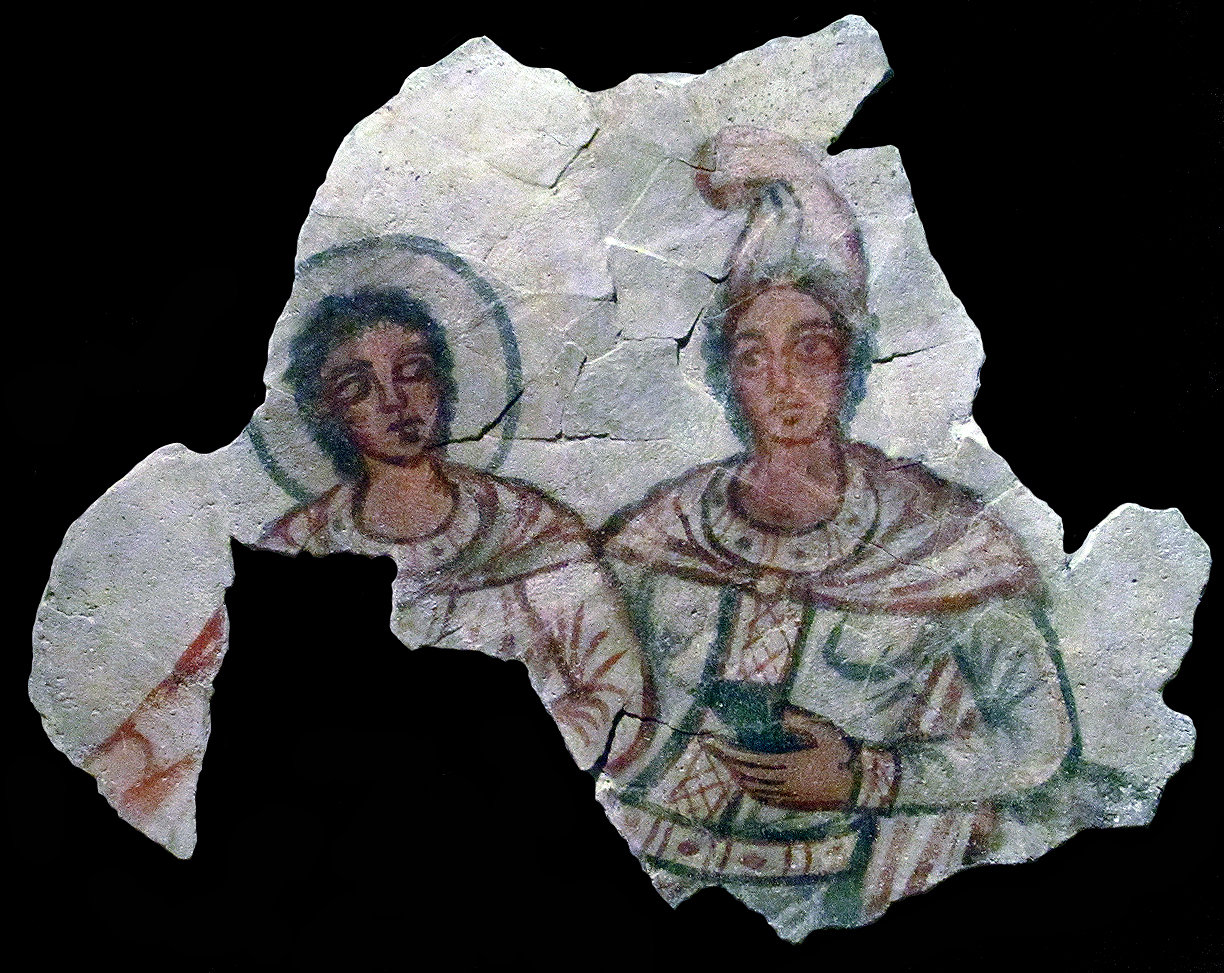
Fresco du Mithraeum de Hawarte, Syria, depicts Mithras' victory over the Sun.
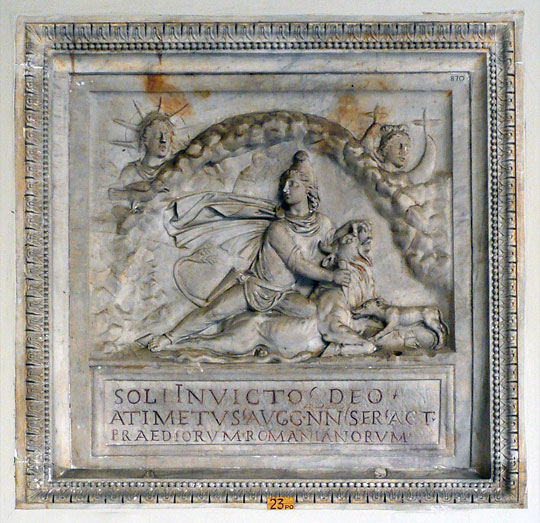
White marble relief depicting Mithras slaying the bull, dedicated by Atimetus.
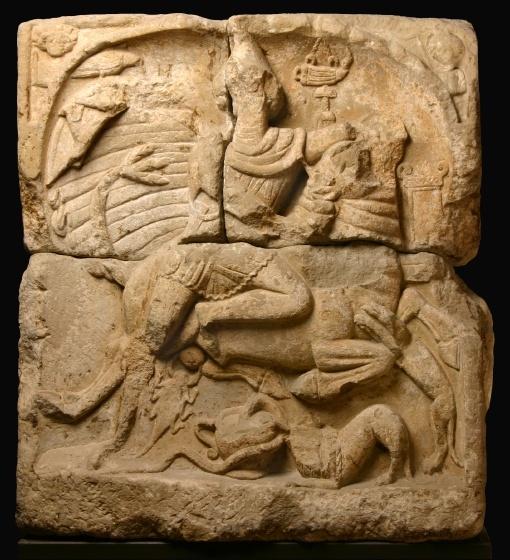
This relief of Mithras killing the bull, now on display in Stuttgart, includes a small altar with a sacrificial knife and an oil lamp.
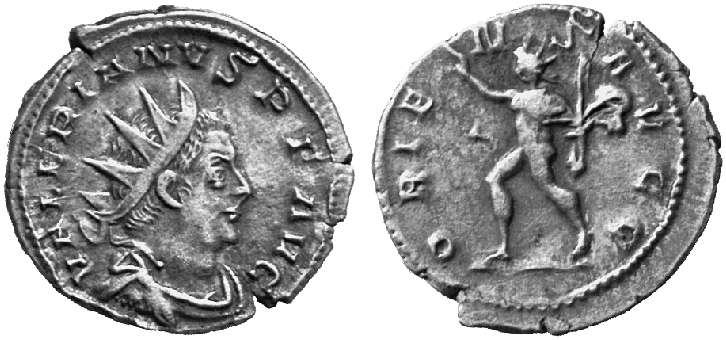
This coin was deposited in the upper level of the throne in the cult niche of the Mitreo della Planta Pedis.
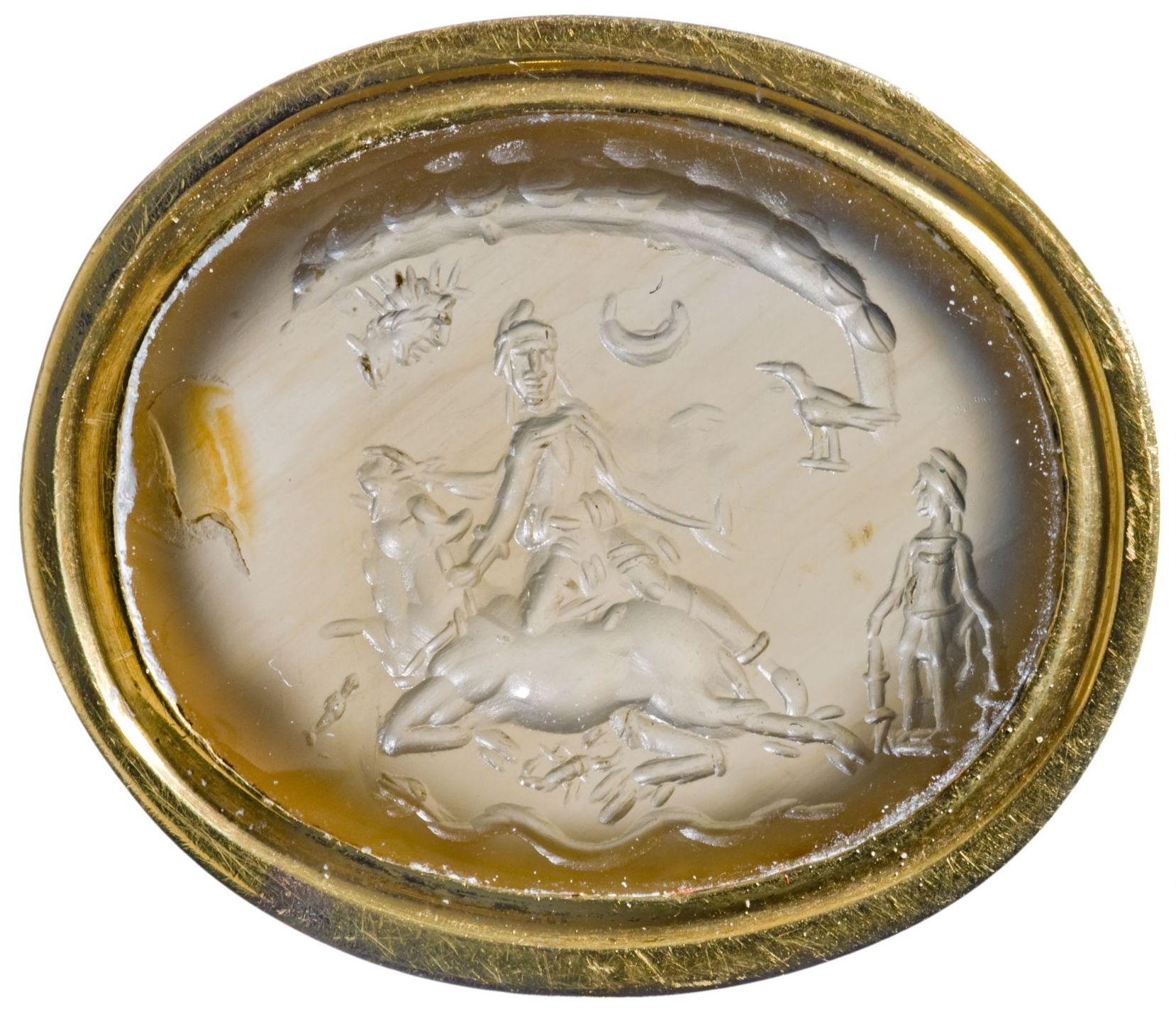
This intaglio depicting Mithras killing the bull is preserved at the Bibliothèque national de France.
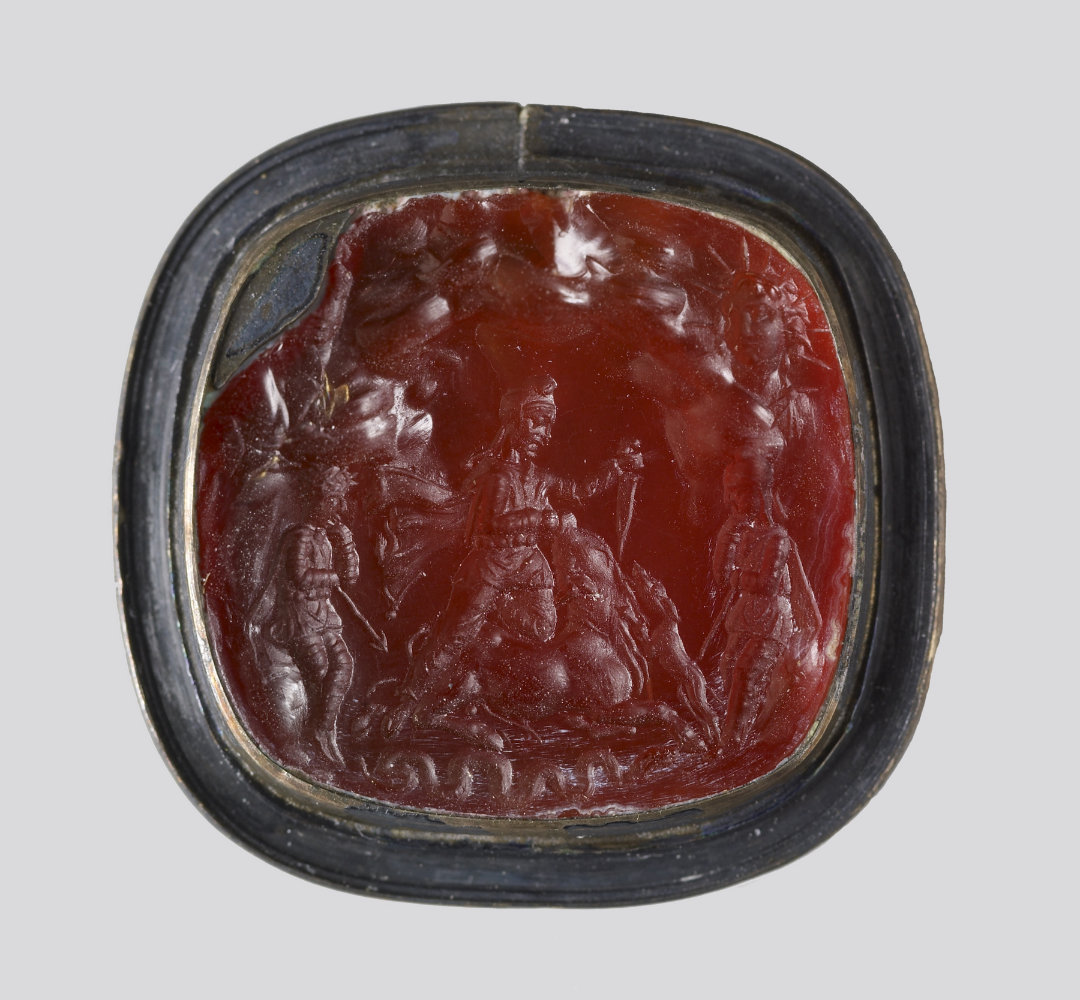
This ancient carnelian intaglio mounted in gold depicts Mithras slaying the bull surrounded by his companions Cautes and Cautopates.
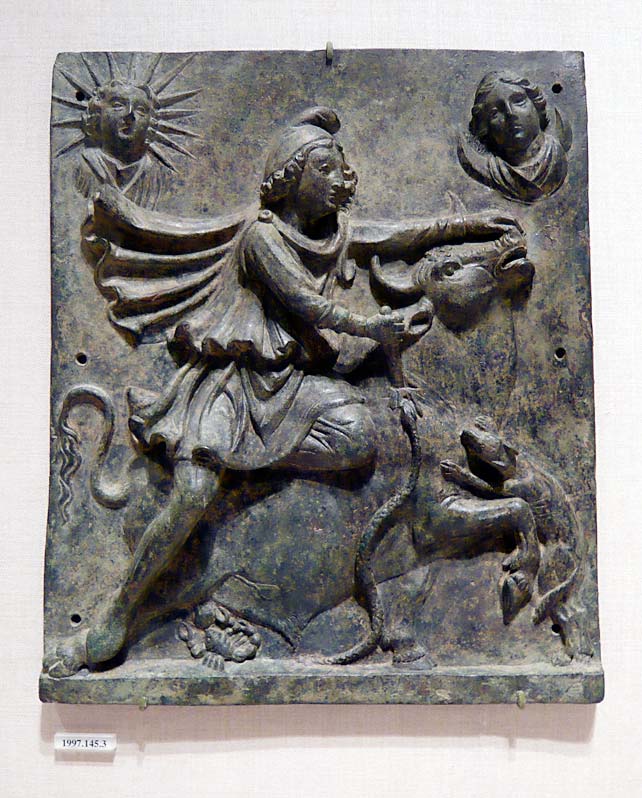
Mithras Tauroctony on bronze exposed at the Metropolitan Museum of New York.
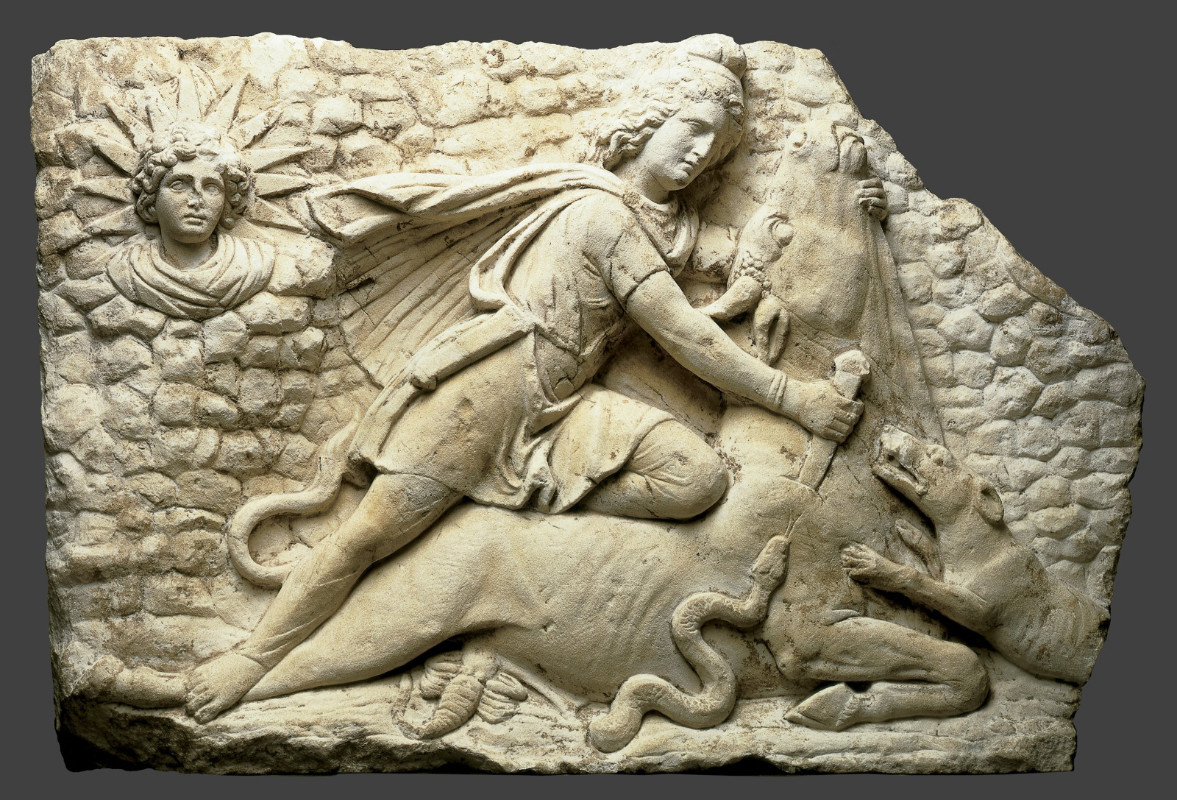
In the tauroctonic relief on display at the Cincinnati Art Museum, Mithras slaughters the bull over a rocky background.
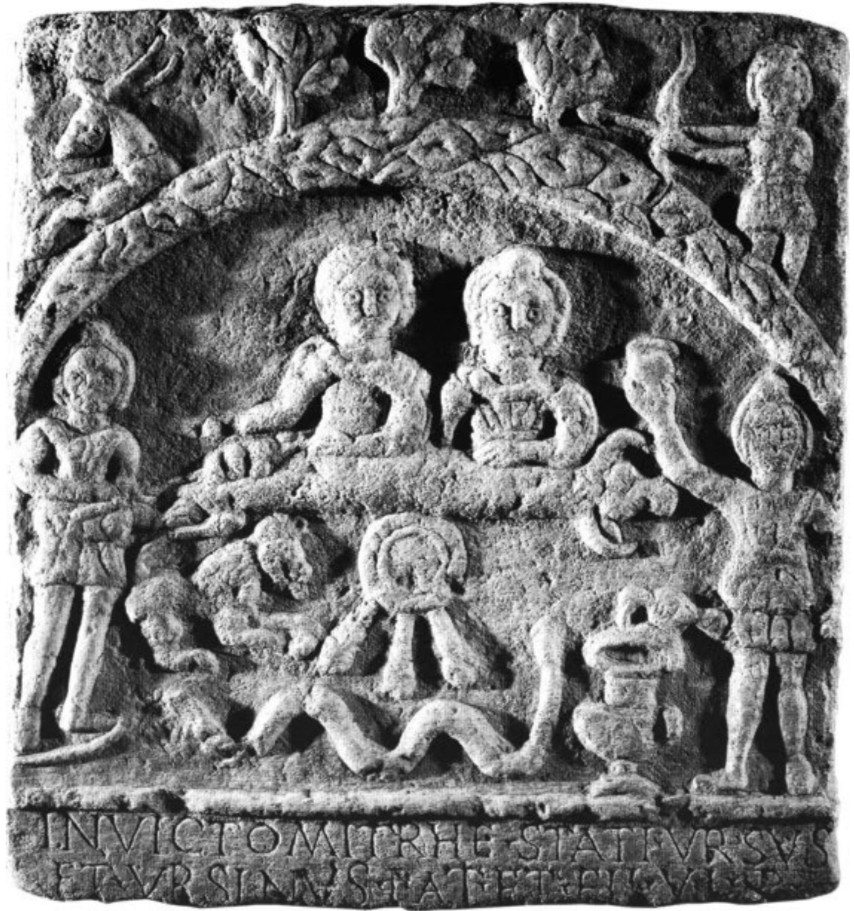
Mithras and Sol share a sacred meal accompanied by Cautes and Cautopates on a relief found in a cemetery from Croatia.
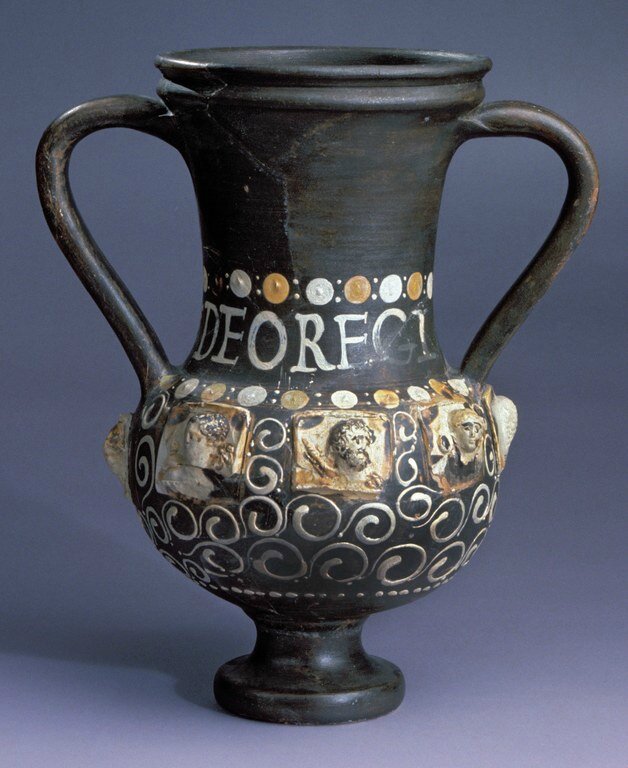
The vase bears an inscription to the god but also 'king' Mithras.
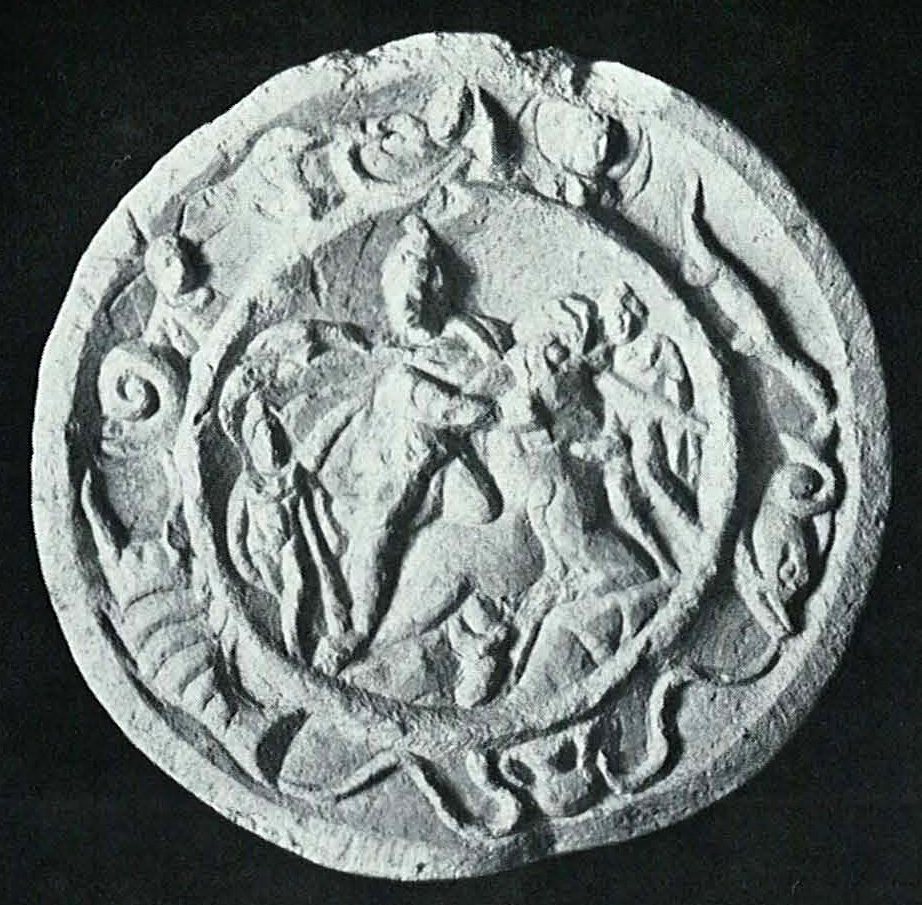
The round relief of Mithras killing the bull of Split is surrounded by a circle with Sun, Moon, Saturn and some unusual animals.
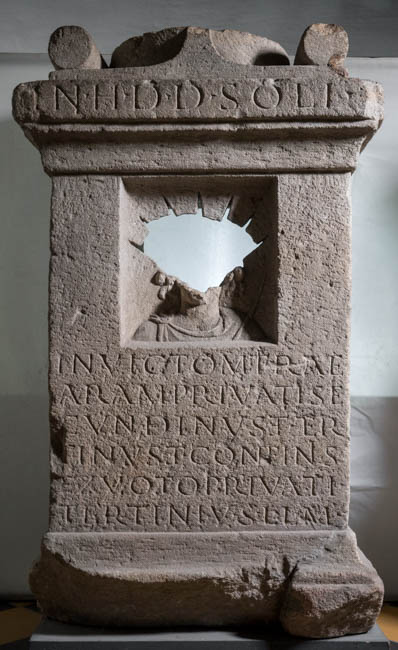
The altar of the Sun god belongs to the typology of the openwork altar to be illuminated from behind.
