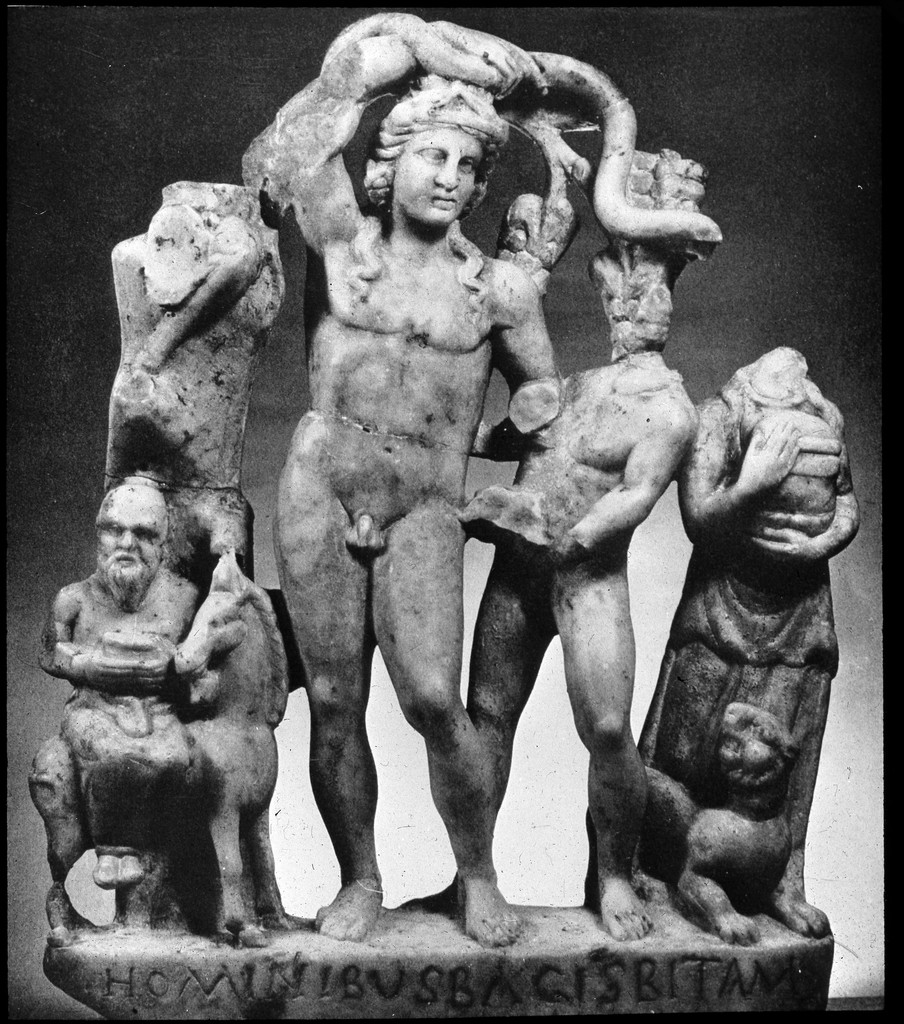
Jaime Alvar speculates that the Gran Mitreo de Mérida could have been located in this area, based on a series of materials unearthed by Mélida during the excavations of 1926 and 1927.
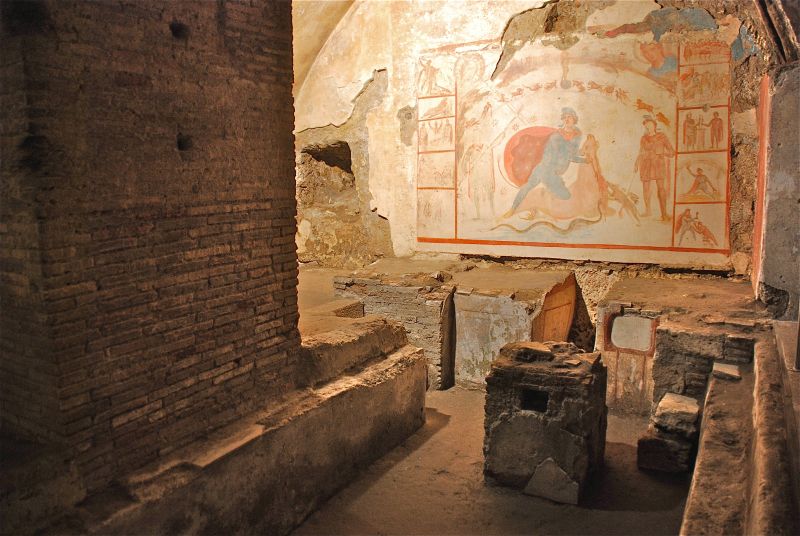
This volume collects the first results of the extensive and articulated research project dedicated to the Mithraeum of the Circus Maximus, the result of the Research Agreement stipulated in 2016 between the Capitoline Superintendence and the University of Trieste.
In this relief of Mithras as bull slayer, recorded in 1562 in the collection of A. Magarozzi, Cautes and Cautopates have been replaced by trees still bearing the torches.
W. Blawatsky et G. Kochelenko, Le culte de Mithra sur la côte septentrionale de la Mer Noire. Leyde, E. J. Brill, 1966. 1 16 X 24 cm, 36 pp., 1 carte, 16 pli., 1 frontispice (Études
PRÉLIMINAIRES AUX RELIGIONS ORIENTALES DANS L'EMPIRE VIII).
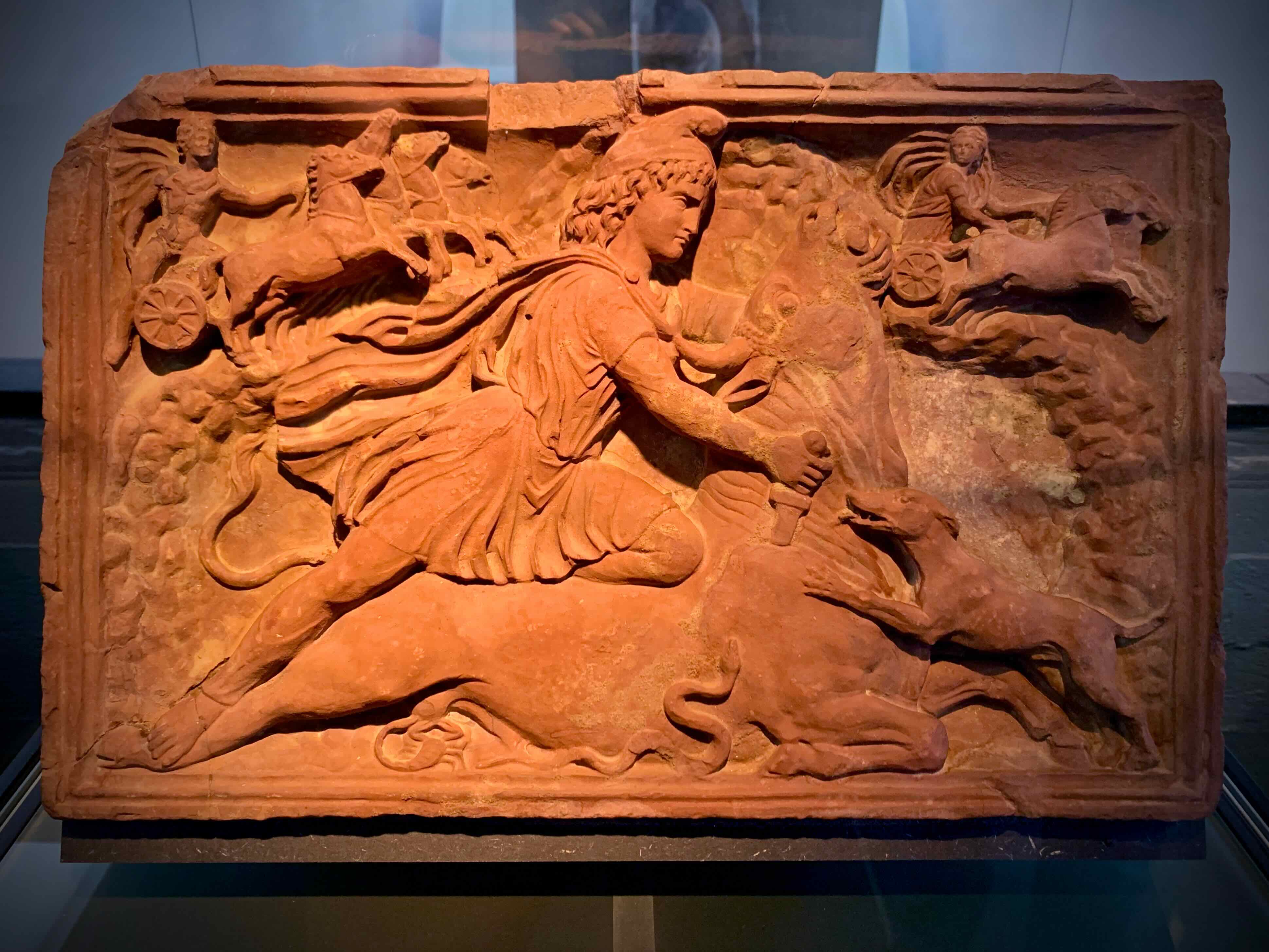
The relief of Mithras slaying the bull from Nida's Mithraeum III was found in two pieces in 1887, destroyed during an air raid on Frankfurt in 1944, and restored in 1986.
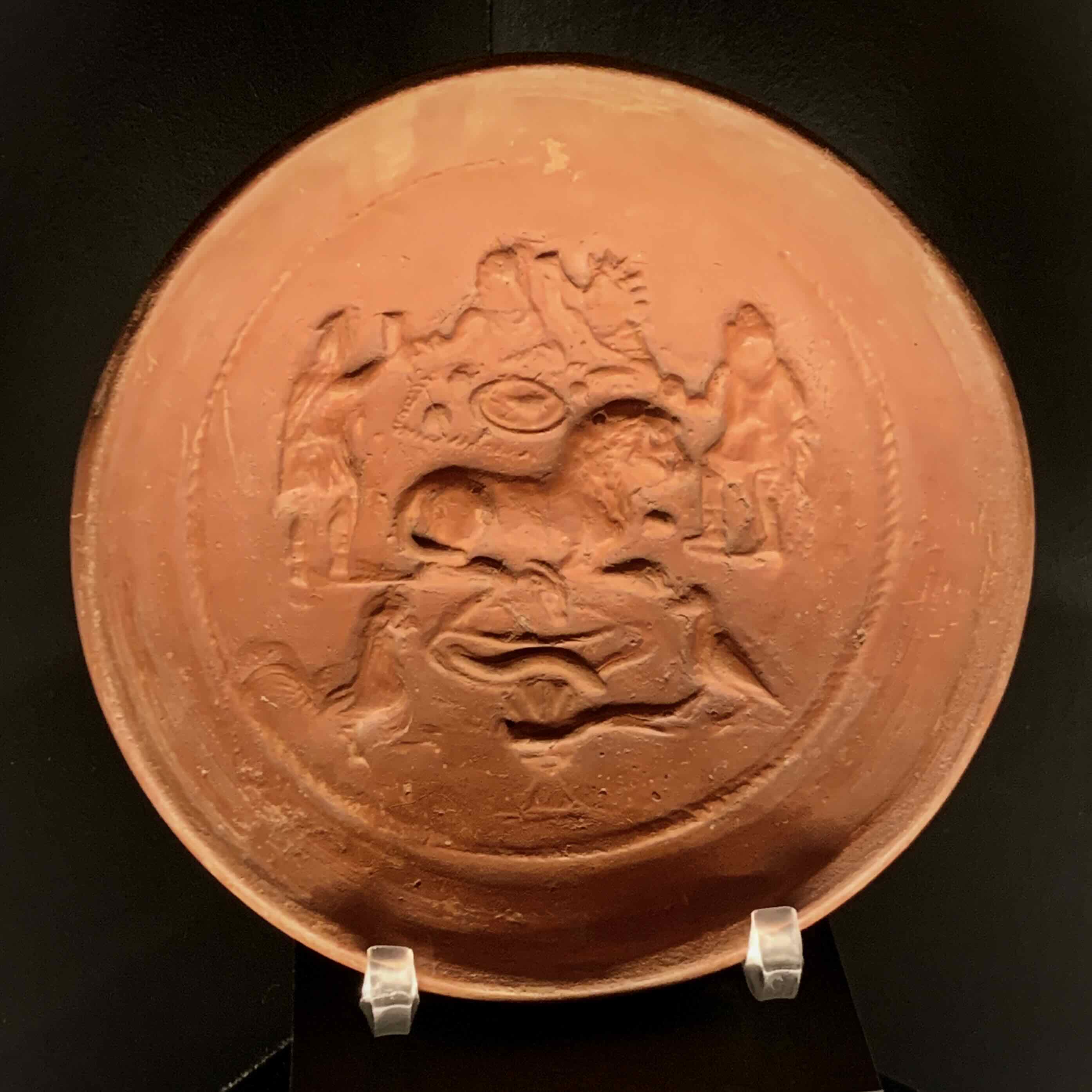
This terra sigillata was found in 1926 in a grave on the Roman cemetery of St. Matthias, Trier. An eyelet indicates that it could have been hung on a wall.