Biography
of Lucius Tullius Agatho
- Lucius Tullius Agatho is attested as a member of a Mithraic community (syndexios) at the Mitreo delle Sette Sfere.
- Attested in the 2nd – 3rd century.
- Attested at Ostia, Latium, Italia in 2nd century (TNMM 144).
- Attested at Ostia, Latium, Italia in 2nd – 3rd century (TNMM 487).
TNMP 109
Lucius Tullius Agatho is known from a single inscription discovered near the theatre of Ostia, probably associated with the Mithraeum of the Seven Spheres. The text records his dedication of an altar to Deo Invicto Soli Mithrae during the tenure of the pater Marcus Aemilius Epaphroditus. The monument belongs to a group of Mithraic inscriptions generally dated to the late second or early third century CE (CIMRM 338; Chalupa 2014, I, 394–396).
Nothing further is known about his life, occupation, or status. His Greek cognomen Agatho (from Greek Ἀγαθός, “good”) may suggest a servile or freedman background, as Greek cognomina are particularly common among slaves and freedmen in the Roman world. However, this remains a prosopographical hypothesis rather than a demonstrable fact, since freeborn citizens could also bear Greek names (Kajanto 1965; Solin 1982).
Agatho therefore remains one of the many Mithraic worshippers known solely through a dedicatory inscription, remembered for his gift of an altar to Mithras at Ostia.
Sources
- Chalupa, A. Římský kult boha Mithry: atlas lokalit a katalog nálezů I, Brno, 2014, pp. 394–396.
- Clauss, M. Cultores Mithrae, Stuttgart, 1992.
- Kajanto, I. The Latin Cognomina, Helsinki, 1965.
- CIMRM 338.
- Solin, H. Die griechischen Personennamen in Rom, Berlin, 1982.
References
- Ostia-antica.org. Regio II - Insula VIII - Mitreo delle Sette Sfere (II,VIII,6).
- Roger Beck (2017) If So, How? Representing “Coming Back to Life” in the Mysteries of Mithras.
- VAN HAEPEREN, Françoise (2019) Fana, templa, delubra. Corpus dei luoghi di culto dell'Italia antica.
- Vittoria Canciani (2022) Archaeological Evidence of the Cult of Mithras in Ancient Italy.
Attestations

Inscription of Tellius Agatho in Mitreo delle Sette Sfere
TNMM 487
This inscription found in the Mithraeum of the Seven Spheres mentions the Pater Marco Aemiliio Epaphrodito known from other monuments in Ostia.
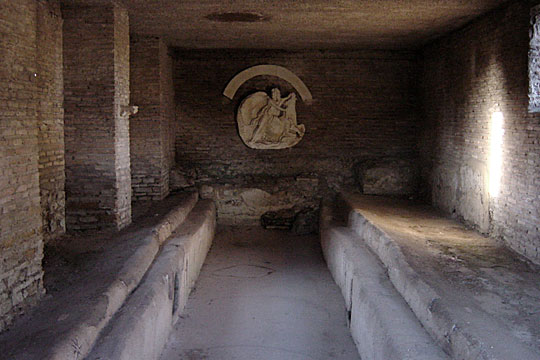
Mitreo delle Sette Sfere
TNMM 9
The Mithraeum of the Seven Spheres (Sette Sfere) is of great importance for the understanding of the cult, because of its black-and-white mosaics depicting the planets, the zodiac and related elements.
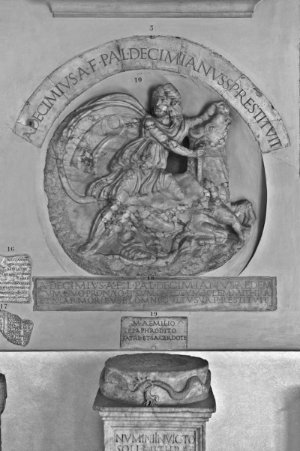
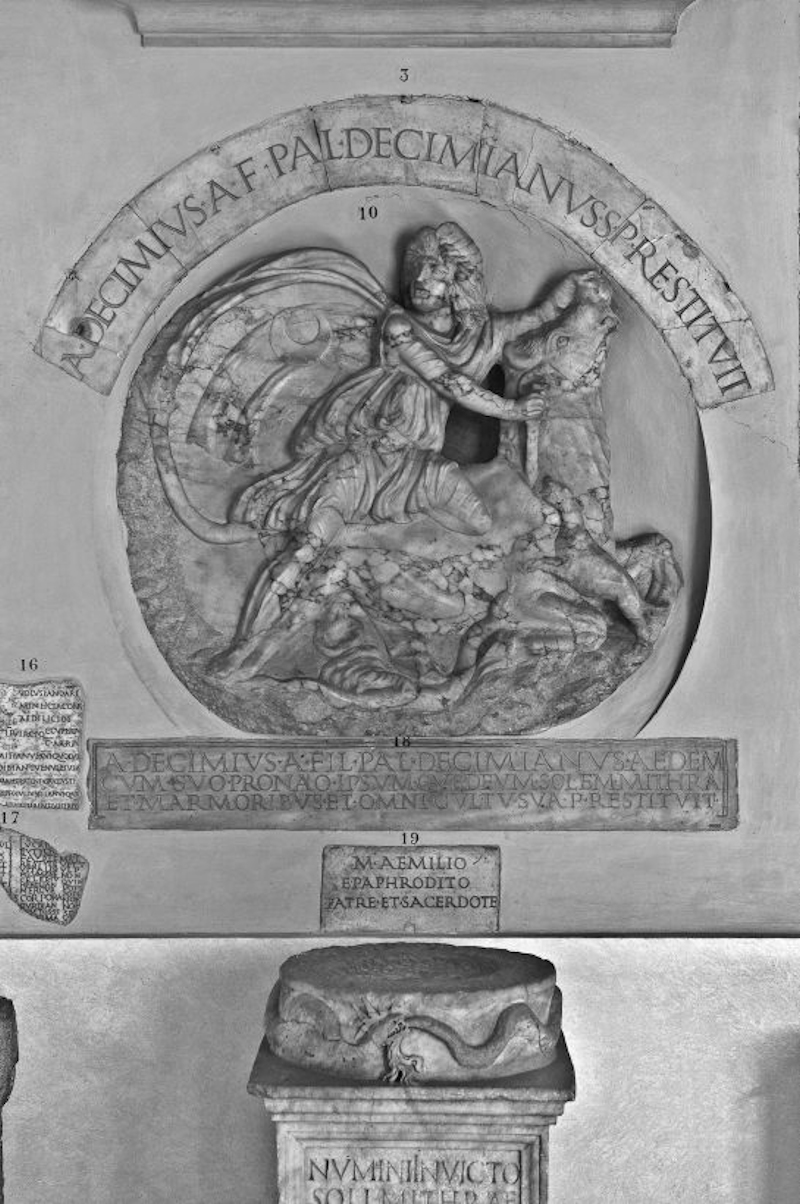
Tauroctony from the Mitreo delle Sette Sfere
TNMM 144
The relief of Mithras slaying the bull from the Mithraeum of the Seven Spheres was discovered in 1802 by Petirini by order of Pope Pius VII.
A. Decimius A[uli] f[ilius] Pal[atina] Decimianus aedem / cum suo pronao ipsumque deum solem Mithra / et marmoribus et omni cultu sua p[ecunia] restituit. //
M. Aemilio / Epaphrodito / patre et sacerdote.