Biography
of Gaius Valerius Vitalis
- Gaius Valerius Vitalis is attested as a member of a Mithraic community (syndexios) at the Mitreo Fagan.
- Attested at Ostia, Latium, Italia in 190 (TNMM 116).
TNMP 21
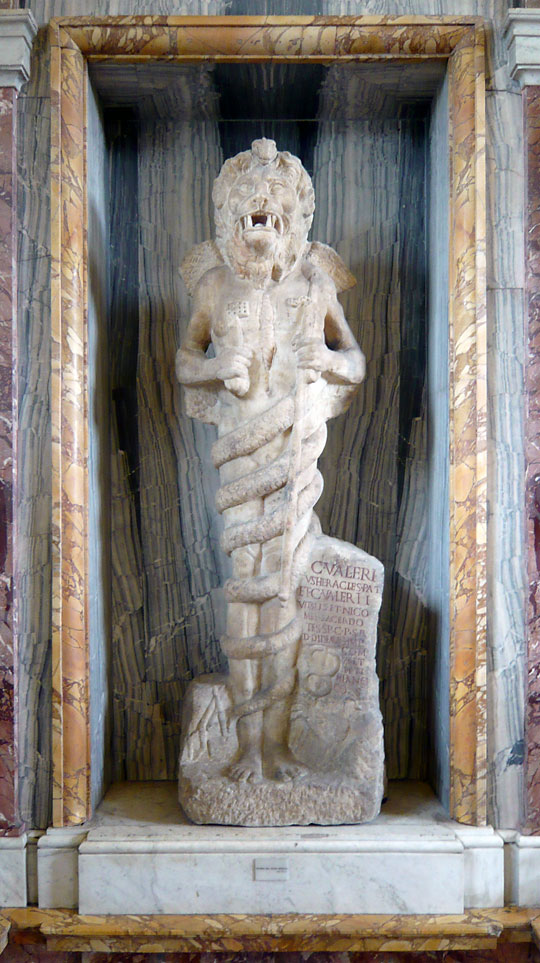
Caius Valerius Vitalis was a Mithraic priest (sacerdos) active at Ostia during the reign of Commodus. He is known from a dedicatory inscription engraved on the base of a monumental marble statue representing a leontocephalic deity, discovered in the Mithraeum of Tor Boacciana and dedicated on 13 August 190 CE. The inscription records that the monument was erected at the personal expense of the pater Caius Valerius Heracles together with the priests Caius Valerius Vitalis and Caius Valerius Nicomedes (C. Valerius Heracles pater et C. Valerii Vitalis et Nicomedes sacerdotes sua pecunia posuerunt). This evidence places Vitalis among the officiants of a Mithraic community whose leadership included both a pater and subordinate priests (TNMM 116; CIL XIV 65; CIMRM 312–313).
The dedication supported one of the most remarkable leontocephalic figures known from Ostia. The statue, approximately 165 cm high, depicts a lion-headed, winged deity entwined by six coils of a serpent, holding keys and a sceptre, with seasonal symbols represented on its wings. Additional attributes, including pincers, hammer, cock, pinecone and caduceus, have attracted considerable scholarly attention. Battisti notes that these motifs may reflect attempts to integrate Mithraic symbolism with the broader religious landscape of Ostia, evoking deities such as Vulcan, Attis and Mercury, although their precise meaning remains uncertain and debated (Battisti 2020, pp. 155–156).
Vitalis appears together with two other members of the same apparent family group, Caius Valerius Heracles and Caius Valerius Nicomedes, all bearing the nomen Valerius. While their exact relationship cannot be established, the inscription suggests a closely connected circle occupying important positions within the Mithraic community. Beyond his title of sacerdos and his participation in the dedication of the leontocephalic image, no further information concerning Vitalis’ career, social status or activities has survived.
References
- Regio I - Mitreo Fagan - Ostia-Antica.org.
- Gisèle Pineau (1995) Frugifer : Une divinité mithraique léontocéphale décrite par Arnobe.
- Arnobius (310) Adversus nationes (Against the Pagans).
Attestations
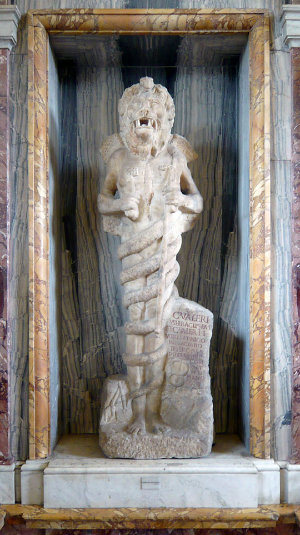
Leontocephalic deity from the Fagan Mithraeum
TNMM 116
Marble leontocephalic Aion/Arimanus from the now-lost Fagan Mithraeum at Ostia, dedicated in AD 190 by three members of the local Mithraic priesthood.

Mitreo Fagan
TNMM 98
The Fagan Mithraeum, also known as the Mithraeum of Tor Boacciana, yielded remarkable sculptures of lion-headed deities, several of which are now preserved in the Vatican Museums.