
Biography
of Aulus Aemilius Antoninus
- Aulus Aemilius Antoninus is attested as a Pater at the Mitreo delle Pareti Dipinte.
- Attested in the 2nd half of 2nd century.
- Attested at Ostia, Latium, Italia in 200 (TNMM 740).
TNMP 189
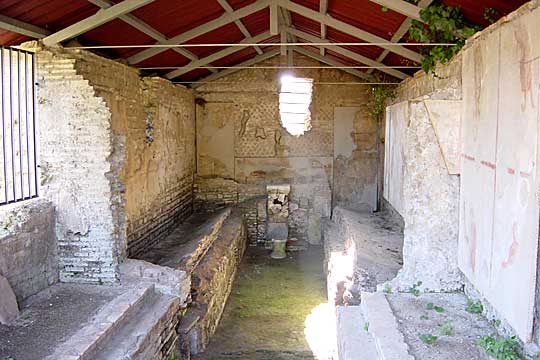
Aulus Aemilius Antoninus is known from a fragmentary marble altar discovered in the Mithraeum of the Painted Walls at Ostia. The inscription identifies him as a pater, and records his dedication of an altar to Cautes, one of the two torchbearers associated with Mithras. Beyond this monument, nothing certain is known about his life, profession, or social status. The inscription is generally dated to the late second or early third century AD.
Marcus Lollianus Callinicus in 126c, 127, 128; Caius Lucretius Menander in 130a; and Aulus Aemilius Antoninus in 139c. It should be noticed that in two cases these devotees are mentioned as pater using the eponymous form (127, 128) just seen in Umbrian cases and that in other two cases they are referred to with likely the same eponymous intention with the phrase ob honorem (130a, 137b). It is quite puzzling on the other hand the absence of the use of the term prosidens/praesidens. He appears also simply mentioned as pater in inscription 137b.
—Vittoria Canciani (2022) Archaeological Evidence of the Cult of Mithras in Ancient Italy
References
Attestations

Cippus of Antoninus from Ostia
TNMM 740
This small white marble cippus bears an inscription of a certain Pater Antoninus to Cautes.
[An]tonin[us] / pater / Cauti.
Pater Antoninus to Cautes.
Mitreo delle Pareti Dipinte
TNMM 2
The House of the Mithraeum of the Painted Walls was built in the second half of the 2nd century BC (opus incertum) and modified during the Augustan period.
