
Biography
of A. Sergius Eutychus
- A. Sergius Eutychus is attested as a member of a Mithraic community (syndexios), holding the office of Sacerdos at the Mitreo del Circo Massimo.
- Attested at Roma, Latium, Italia in 3rd century (TNMM 457).
TNMP 58
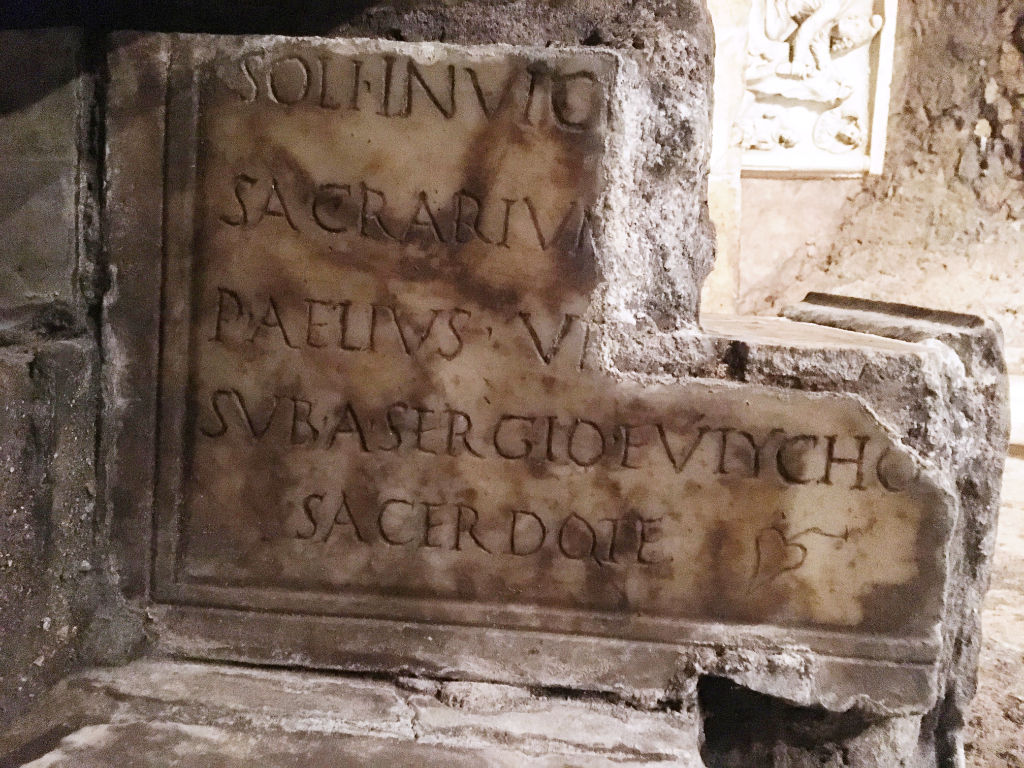
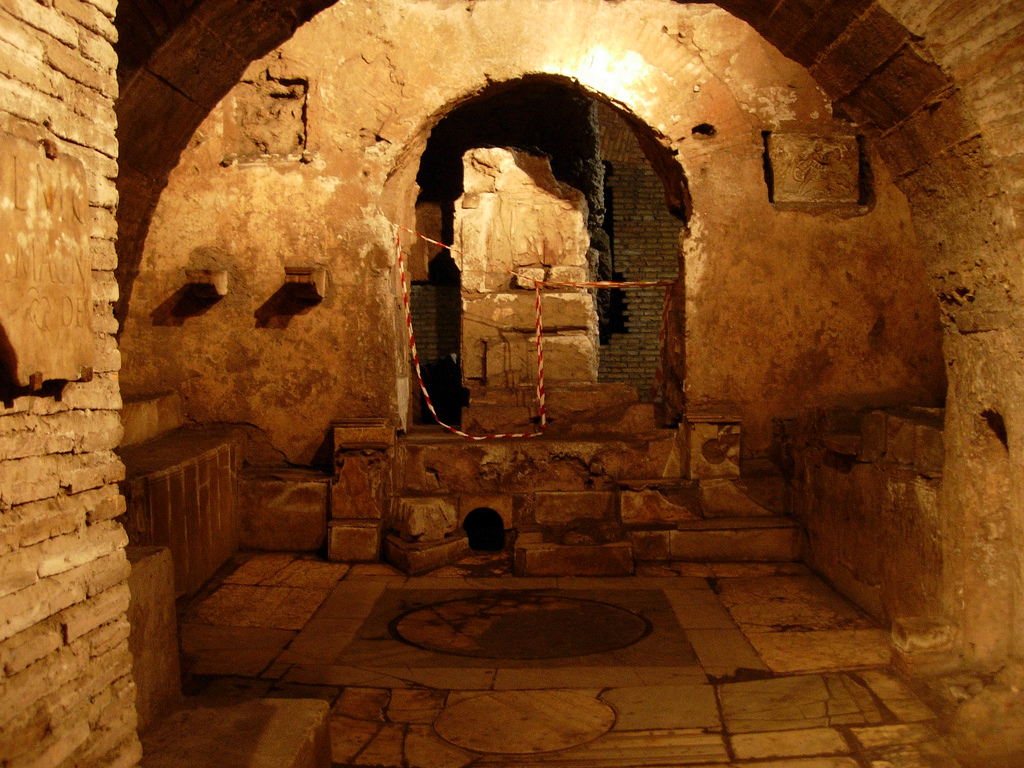
A. Sergius Eutychus is known from a single fragmentary marble inscription discovered in the mithraeum of the Forum Boarium, commonly known as the Mithraeum of the Circus Maximus. The white marble slab, later reused as the cover of a base attached to the main altar, records that Publius Aelius Ur(banus?) built a sacrarium dedicated to Sol Invictus Mithras “under A. Sergius Eutychus, sacerdos” (Canciani 2022, 198). This is the only inscription securely attesting Eutychus and identifies him solely by the title sacerdos (TNMM 457).
The inscription is generally dated to the late 2nd or 3rd century CE. However, Szabó et al. (2023) has argued that it probably belongs to an earlier phase of the Mithraic community, perhaps Hadrianic or immediately post-Hadrianic, predating the extensive remodelling of the sanctuary during the Tetrarchic period. He further suggests that earlier inscriptions, including that of Publius Aelius Ur(banus?), may have been transferred into the later sanctuary. Although Walsh (2016) proposed that Eutychus may have held the grade of pater, the inscription itself identifies him only as sacerdos, and no higher Mithraic rank is explicitly attested.
References
- Mitreo del Circo Massimo — Sovrintendenza Capitolina.
- Csaba Szabó (2023) Mithras exhibited. Perspectives of sensory museology in mithraic contexts.
- David Walsh (2016) Development, decline and demise: The Cult of Mithras ca. A.D. 270-430..
- Vittoria Canciani (2022) Archaeological Evidence of the Cult of Mithras in Ancient Italy.
Attestations
Marble slab with inscription of Aelius Urbanus
TNMM 457
The Mithraic fellow P. Aelius Urbanus mentions that he built the sacred area of the Mithraeum Circo Massimo.
Mitreo del Circo Massimo
TNMM 15
The Mithraeum near the Circus Maximus was discovered in 1931 during work carried out to create a storage area for the scenes and costumes of the Opera House within the Museums of Rome building.
