Your search Ay-Todor gave 1078 results.
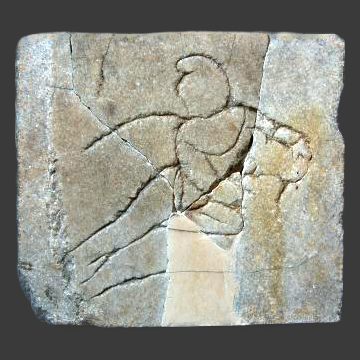
This unfinished Mithras tauroctonos without the usual surrounding animals was found in 1923 in Italica, near Seville, Spain.
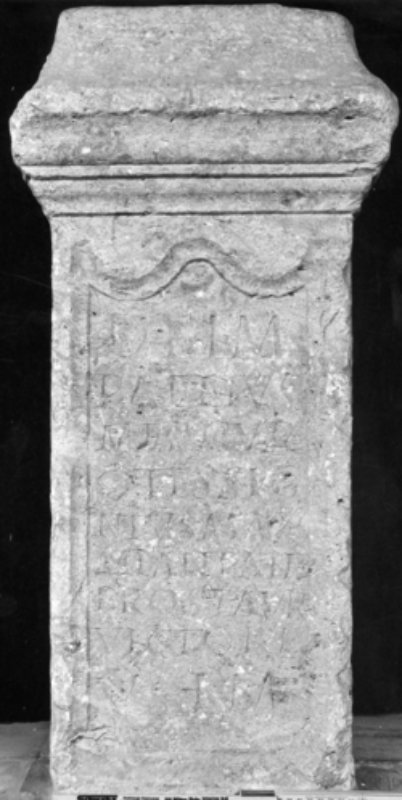
This altar to Mithras found in Aquilieia mentions several persons of a same community.

A subterranean room with a stucco depiction of Mithras slaying the bull, probably from the fourth century, discovered at Agurzano near Ponte Mammolo on the Via Tiburtina outside Rome.
An inscription to Sol Invictus Mithras found in the Vigna Patritii outside the Porta Pia in Rome, dedicated by Aelius Victorinus, a veteran of the emperors honourably discharged, with M. Aurelius Romulus as antistes and sacerdos of the cult.
A tauroctony relief from Rome, formerly in the Hoffmann Collection, showing Mithras slaying the bull with dog, serpent and scorpion, with the god's pupils fashioned from white enamel and the whole piece heavily restored.
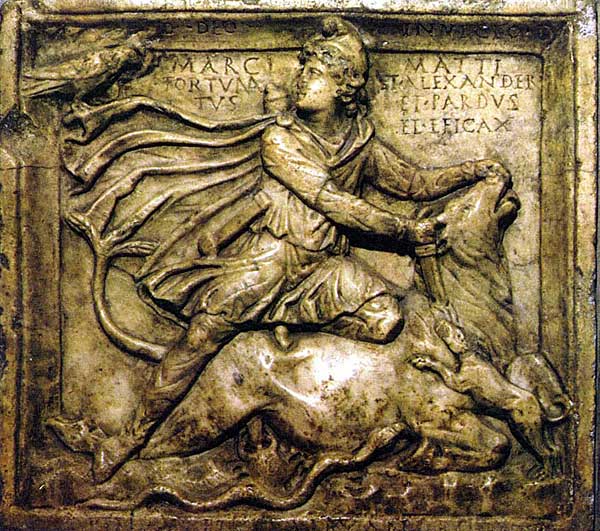
The relief marble of Mithras sacrifying the bull, exposed on the Hermitage Museum comes from Rome.

Mithraic relief from Rome reproduced in figure 169 of the corpus.

Roman Mithraic relief illustrated in figure 171 of Vermaseren’s catalogue.
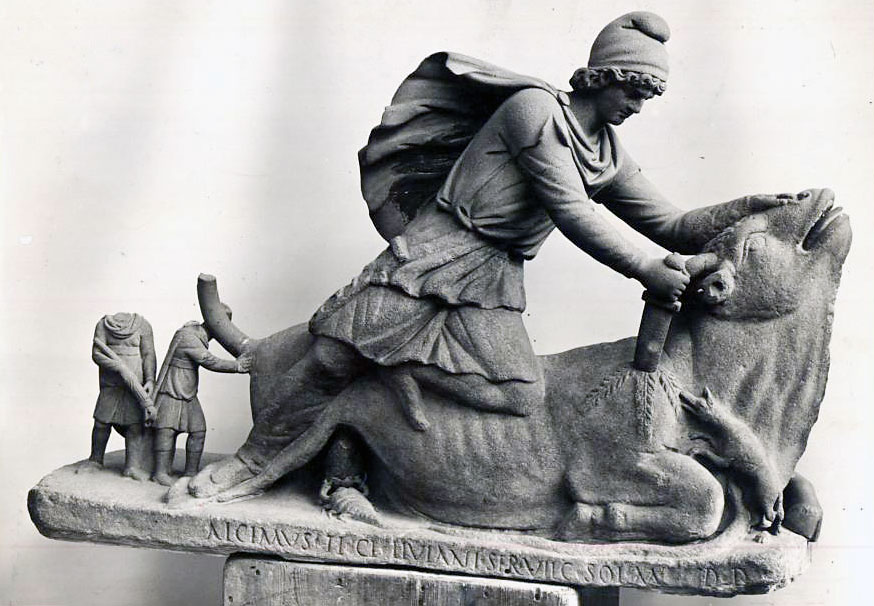
Marble head in the Museo Baracco, Rome, generally described as an Alexander but very probably representing Mithras with his eyes lifted towards heaven; the back of the head is finished obliquely with a small hole for fastening a Phrygian cap.
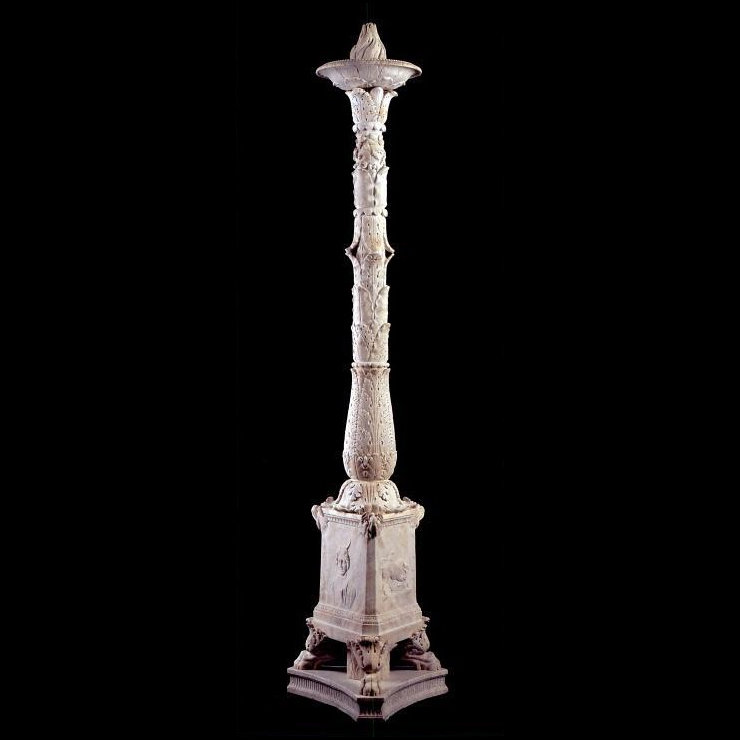
This magnificent candelabrum was found in Rome in 1803, in the Syrian Temple of Janicule.
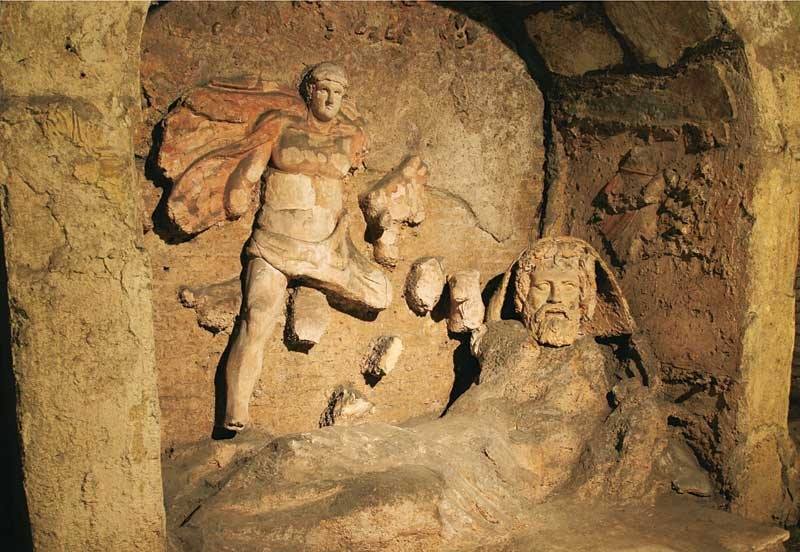
Even if only a few fragments remain, it is very likely that the main niche of the Mitreo di Santa Prisca contained the usual representation of Mithras killing the bull.
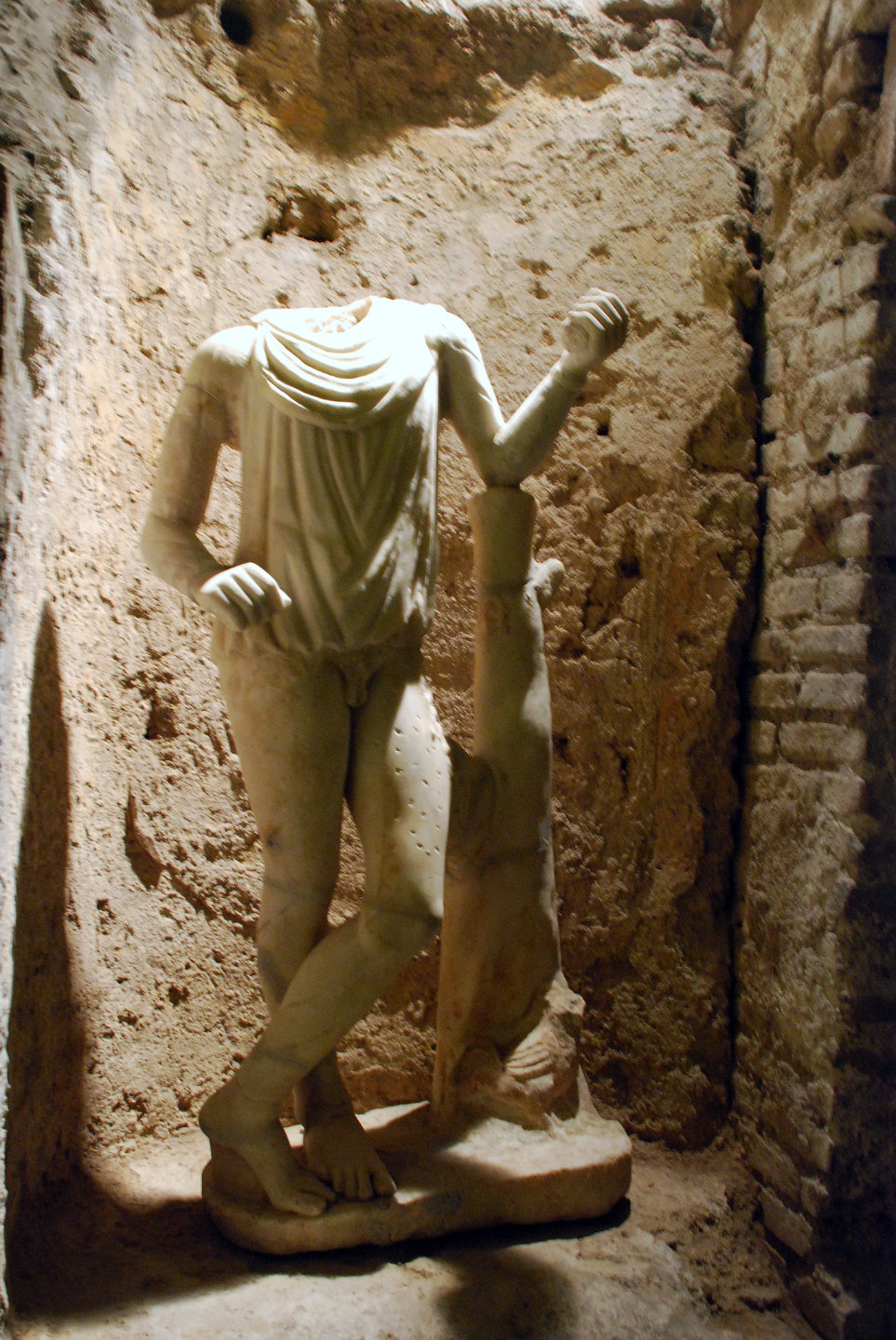
The marble statue of Cautes, found in the Mithraeum of Santa Prisca, was originally a Mercury.
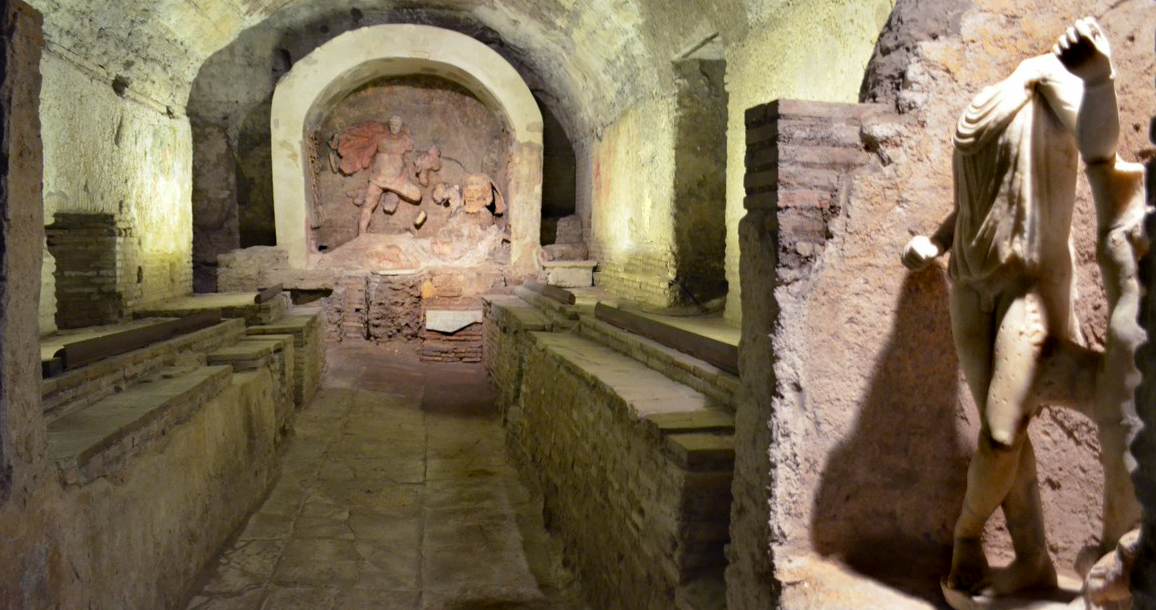
The Mithraeum of Santa Prisca houses remarkable frescoes showing the initiates in procession.
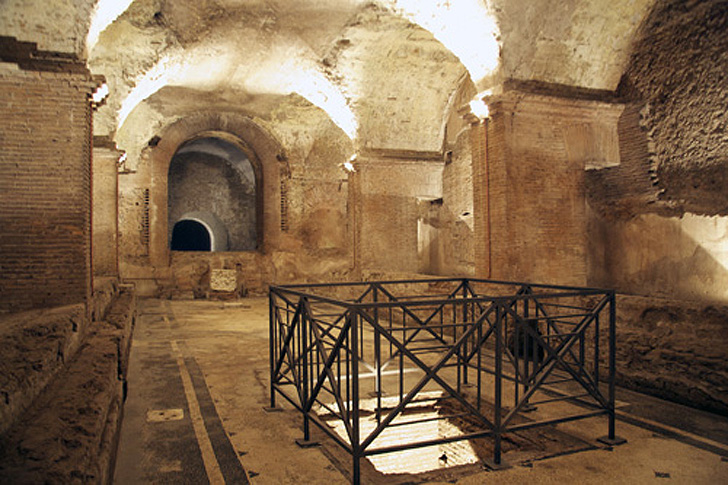
The Mitreo delle terme di Caracalla is one of the largest temples dedicated to Mithras ever found in Rome.
This monument was erected on the occasion of the elevation of a member to the Mithraic grade of Perses.

This white marble relief of Mithras killing the bull was found on the Esquilino near the Church of Saint Lucy in Selci in Rome.
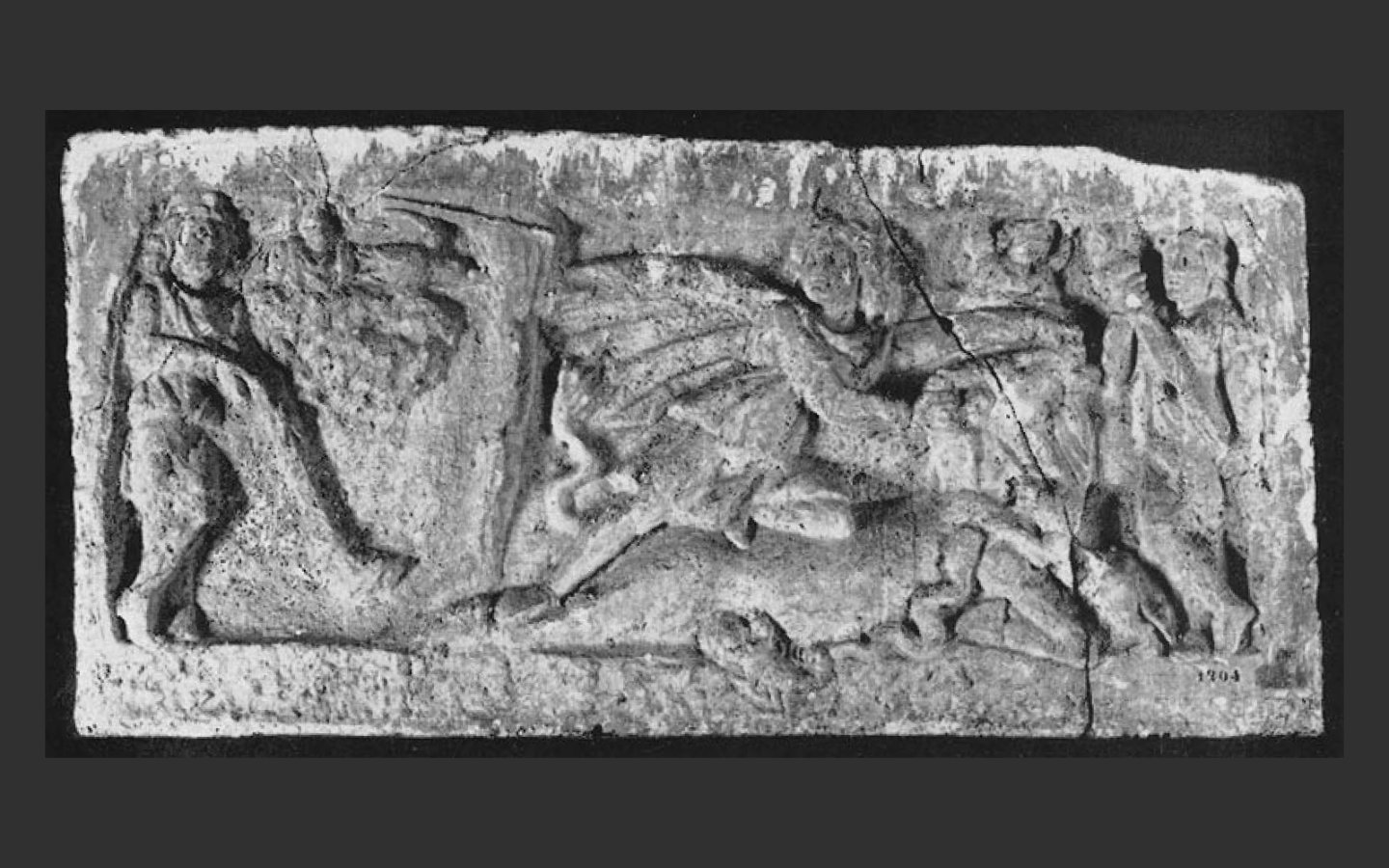
This relief of Mithras Tauroctonos from Rome bears the inscription of three brothers, two of them lions.
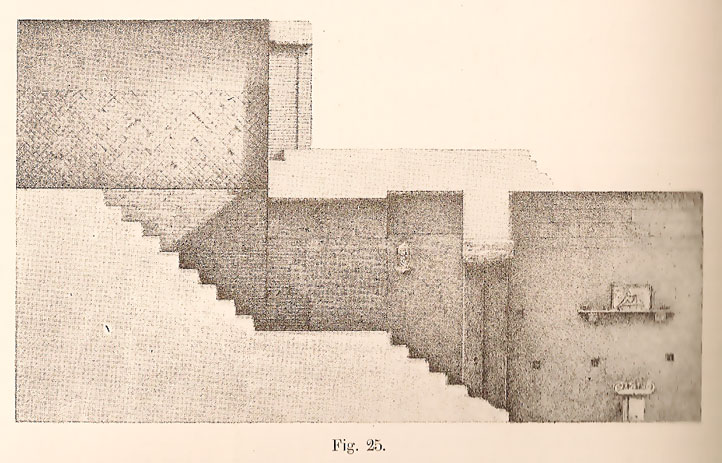
In a house from the time of Constantine, a Lararium was found with a statue of Isis-Fortuna. The Mithraeum was a door next to it, on a lower room.

This unusual mural depicting Mithras killing the bull was found near the Colosseum in 1668.
