Your search Bu Njem gave 1078 results.
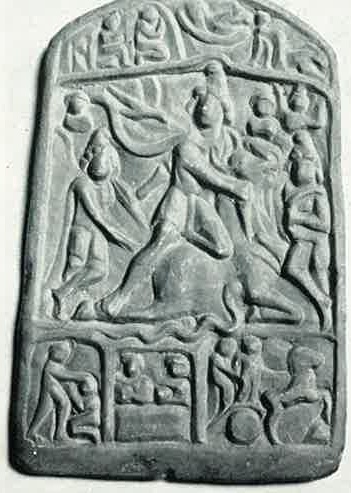
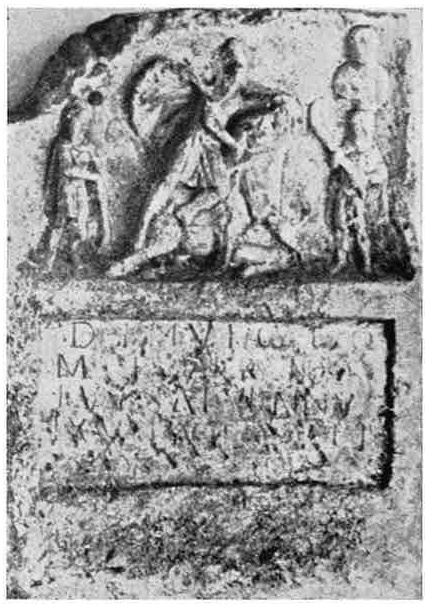
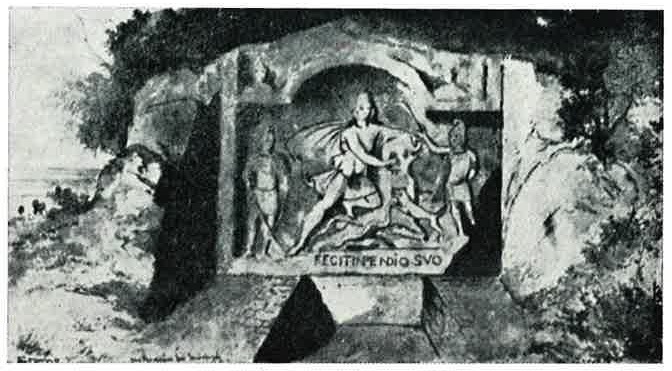
Limestone tauroctony relief found in a grotto at Nagy-Kovácsi, Pannonia Inferior, depicting the standard bull-slaying with flanking torchbearers and divine busts in the upper register.
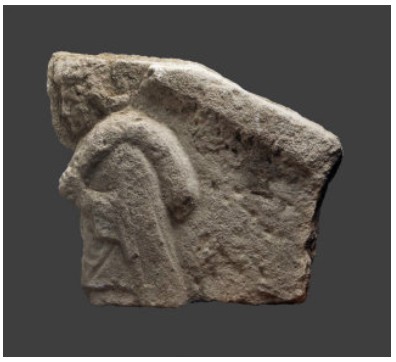
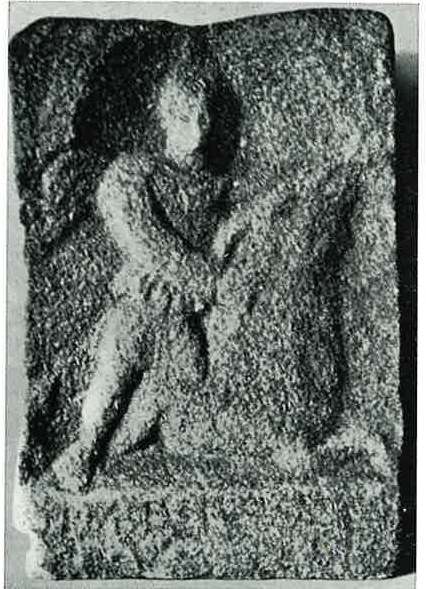
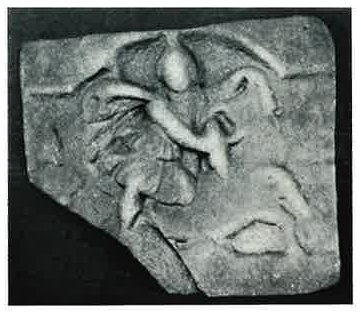
Fragment of a relief from Potz Neusiedl near Stix-Neusiedl, Pannonia Superior, brought to Eisenstadt in 1926, depicting part of a Mithraic bull-slaying scene.
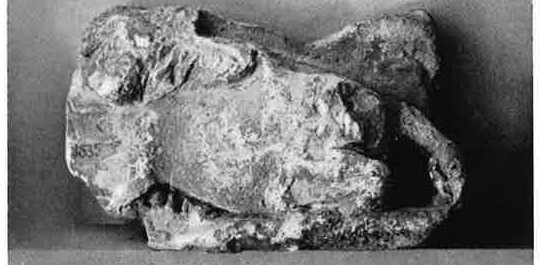
Fragment of a sandstone tauroctony relief from Schwadorf area, ancient Aequinoctium in Pannonia Superior, depicting Mithras killing the bull; the upper part of Mithras's body, the head, and parts of the bull are lost.
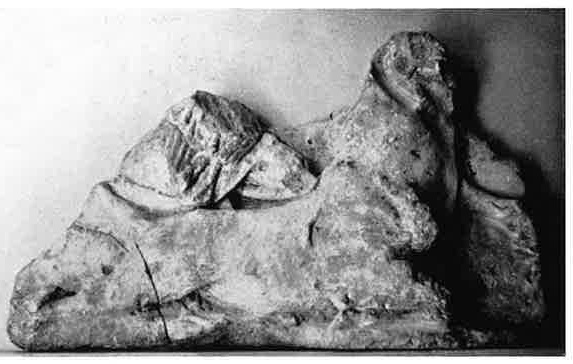
Fragment of a large sandstone tauroctony relief from Schwadorf, ancient Aequinoctium, depicting Mithras killing the bull; the upper part of the god's body, his head, the end of the tail, and the scorpion are lost.
Marble tauroctony relief from the Mithraeum at Sopron, ancient Scarabantia, depicting the standard bull-slaying scene with raven, dog, serpent, scorpion, and torchbearers.
Marble tauroctony relief from the Mithraeum at Sopron, ancient Scarabantia, depicting the standard bull-slaying with raven, dog, scorpion, and cross-legged torchbearers.

Large marble tauroctony relief from the Mithraeum at Sopron, ancient Scarabantia, depicting the standard bull-slaying with raven, dog, serpent, and scorpion, flanked by cross-legged torchbearers.
Marble tauroctony relief from the Mithraeum at Modrič, Pannonia Superior, with Cautopates and Cautes flanking the bull-slaying scene and a dedication inscribed in the lower border.
Marble tauroctony relief from the Mithraeum at Modrič, Pannonia Superior, depicting the standard bull-slaying with raven, dog, scorpion, and cross-legged torchbearers.
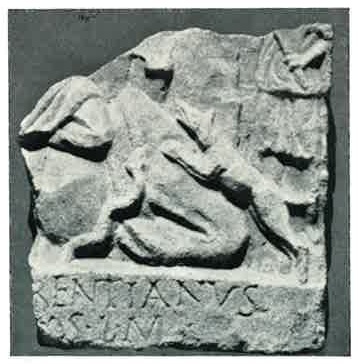
Right portion of a marble tauroctony relief from near Pregrade, Pannonia Superior, preserving Mithras killing the bull with dog, serpent, and scorpion; the greater part of the god and the bull's head are lost.
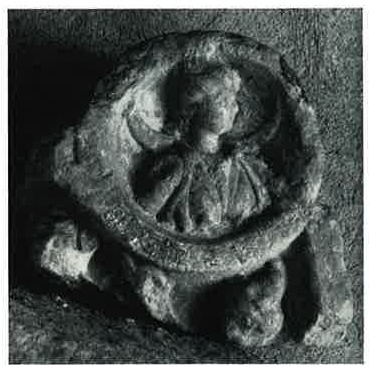
Inscription from Neviodunum, Pannonia Superior, with a head of Sol at its centre and a dedication to Iovi optimo maximo Soli invicto comiti Augusti; the Mithraic attribution is doubtful.
Left upper corner of a sandstone tauroctony relief from Celje, ancient Celeia in Noricum, preserving the bust of Sol, the head of a torchbearer, and the head of Mithras himself.
White marble relief fragment from near Klein-Wagna, ancient Flavia Solva in Noricum, preserving part of a tauroctony scene including the bull, Mithras's dagger, and the torchbearers.
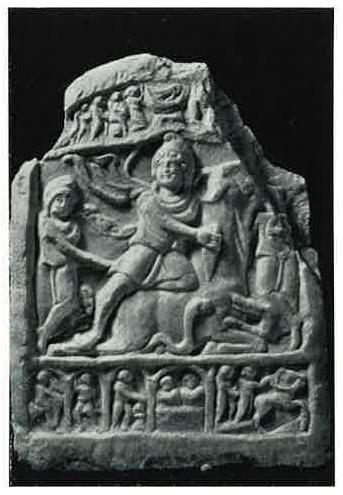
Small limestone tauroctony relief from Enns, ancient Lauriacum in Noricum, found about 100 metres east of the north-east corner of the castra, depicting Mithras killing the bull with dog and serpent and flanking torchbearers.
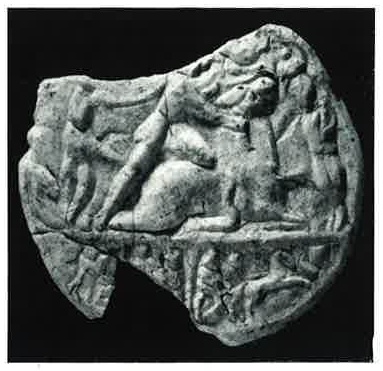
Small circular marble tauroctony relief from the Mithraeum at Linz, ancient Lentia, depicting Mithras killing the bull with dog, serpent, and scorpion, flanked by cross-legged torchbearers with a lion behind Cautopates; the lower section is divided into three subsidiary scenes…
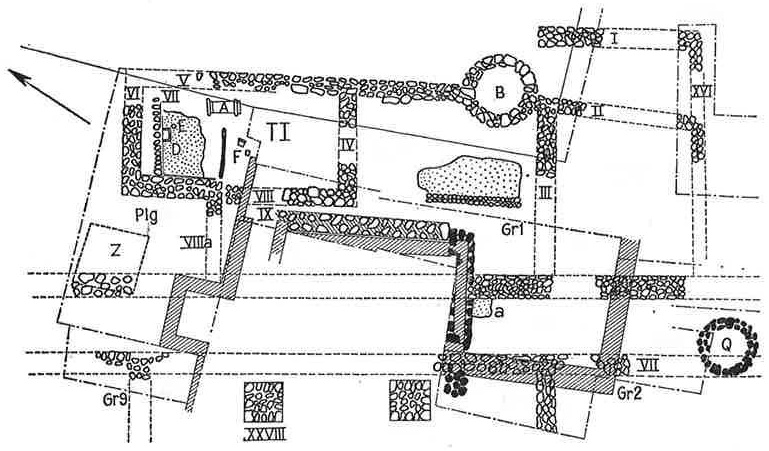
Mithraic sanctuary found in the Tummelplatz at Linz, ancient Lentia in Noricum, constructed within an existing building; the sanctuary yielded marble reliefs, an altar, cult pottery, and a silver votive object.
Marble epistylium in three fragments from the Mithraeum at Moosham, Noricum, decorated with a central tree, a flying hind pursued by a dog and an Amazon, a walking lion, and a horseman; bearing an identical inscription on both lateral tabulae.
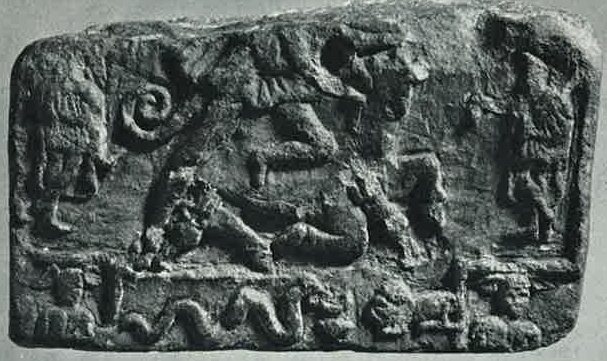
Small limestone tauroctony relief from Augst, ancient Augusta Rauricorum, depicting the bull-slaying with dog and scorpion, flanked by cross-legged torchbearers in Oriental dress; Cautes holds a pedum alongside the upraised torch.
The six divine names inscribed on the bronze hatchets from Thun-Allmendingen — Iovi, Neptuni, Minervae, Mercurio, Matribus, Matroni — reflecting the polytheistic religious landscape of the Mithraic community at this site.
Set of six triangular bronze votive hatchets from Thun-Allmendingen, each inscribed with the name of a deity: Iovi, Neptuni, Minervae, Mercurio, Matribus, and Matroni; forming a unique ensemble of polytheistic dedications within a Mithraic context.
