Your search Cabrera de Mar gave 1568 results.
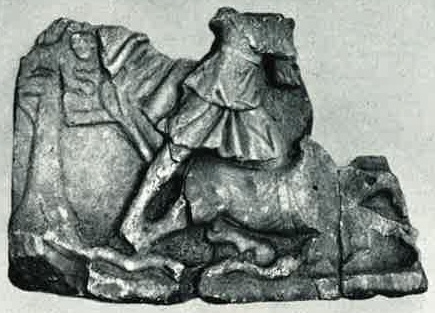
Three fragments of a large yellowish marble tauroctony from the Mithraeum at Sarmizegetusa, Dacia, depicting the damaged bull-slaying scene; at approximately 0.94 × 1.31 m one of the larger reliefs from the sanctuary.
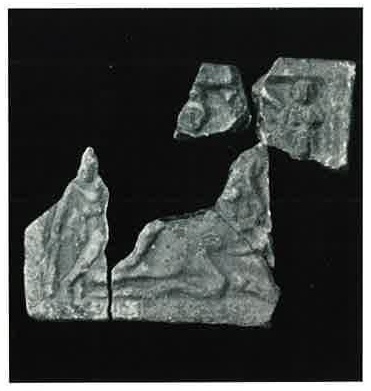
Five fragments of a whitish-yellow marble tauroctony from the Mithraeum at Sarmizegetusa, Dacia, with the central bull-slaying framed by a round border and the dagger of Mithras clearly visible.

Fragments of a bluish marble tauroctony from the Mithraeum at Sarmizegetusa, Dacia, possibly related to the preceding piece, preserving remnants of a bull.
Two greyish marble fragments from the Mithraeum at Sarmizegetusa, Dacia, preserving the torso of Mithras in tunic and cloak killing the bull with his right hand.
Two fragments of a rectangular white marble relief from the Mithraeum at Sarmizegetusa, Dacia, in the Lugoj collection, depicting Mithras killing the bull with the raven on the flying cloak.

Three greyish marble tauroctony fragments from the Mithraeum at Sarmizegetusa, Dacia, preserving the head of Mithras and the bull and parts of the subsidiary scenes.
Fragment of a white marble tauroctony from the Mithraeum at Sarmizegetusa, Dacia, in the Lugoj collection; the figures of Mithras and the torchbearers are only partially visible on the weathered surface.
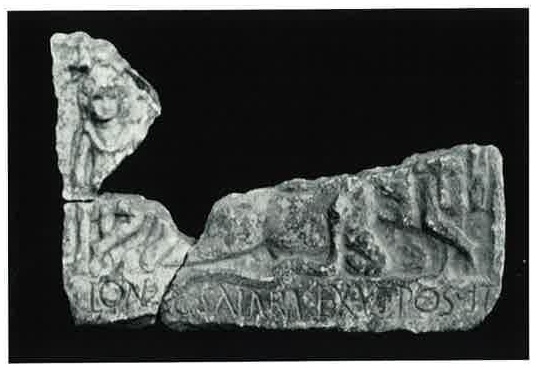
Three fragments of a rectangular bluish marble tauroctony from the Mithraeum at Sarmizegetusa, Dacia, preserving the lower and central portions of the bull-slaying with Cautopates.
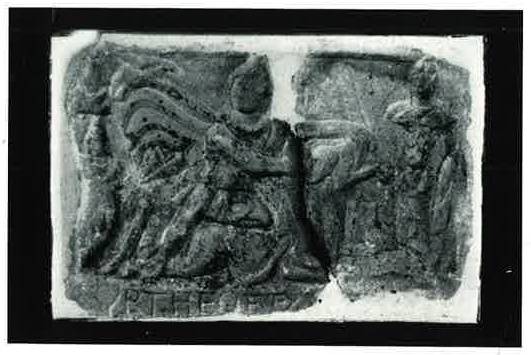
Yellowish marble tauroctony in two fragments from the Mithraeum at Sarmizegetusa, Dacia, executed in a primitive style with the bull represented obliquely.
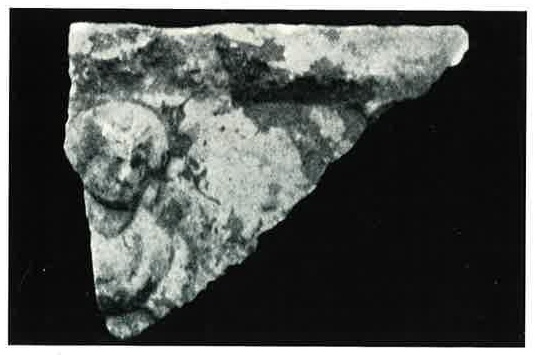
Left upper corner of a bluish marble tauroctony from the Mithraeum at Sarmizegetusa, Dacia, preserving the bust of Sol with his right shoulder lost.
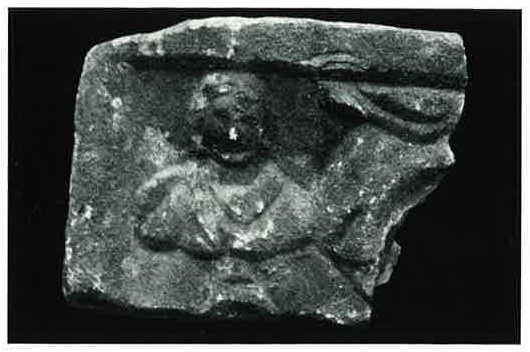
Three fragments of a yellowish marble tauroctony from the Mithraeum at Sarmizegetusa, Dacia, with the left upper corner showing Mithras's flying cloak and parts of the subsidiary scenes.
Right lower corner of a greyish marble tauroctony from the Mithraeum at Sarmizegetusa, Dacia, preserving the bull's knees and dewlap, the dog, part of the serpent, and the lower part of Cautes.
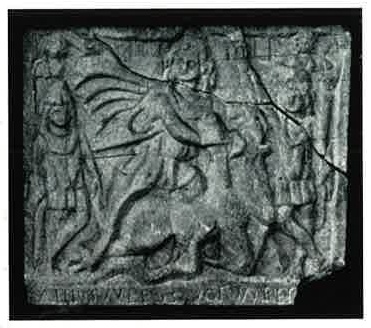
Bluish marble tauroctony relief from the Mithraeum at Sarmizegetusa, Dacia, depicting Mithras killing the bull with the dog, scorpion, and subsidiary scenes.
Inscription from the Mithraeum at Sarmizegetusa, Dacia, dedicated ex voto by Cassius Maximus, augur of the Colonia Sarmizegetusa, and Marcus Ulpius Gaius.
Fragment of a bluish marble tauroctony from the Mithraeum at Sarmizegetusa, Dacia, preserving the border of Mithras's tunic, the sheath of the dagger, and his right foot.
Fragment of a bluish marble tauroctony from the Mithraeum at Sarmizegetusa, Dacia, preserving the right lower corner with the bull's knee, the dog, and the lower part of Cautes.
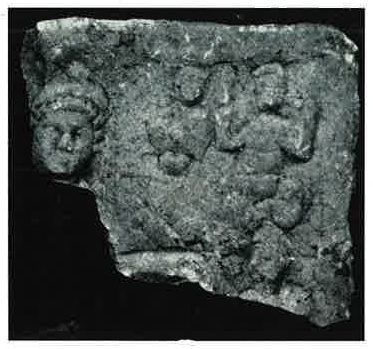
Two fragments of a bluish marble tauroctony from the Mithraeum at Sarmizegetusa, Dacia, preserving the torso of Mithras in the bull-killing posture.
Fragment of a bluish marble tauroctony from the Mithraeum at Sarmizegetusa, Dacia, preserving the lower part of Cautopates with crossed legs, downward torch, and embroidered girdle.
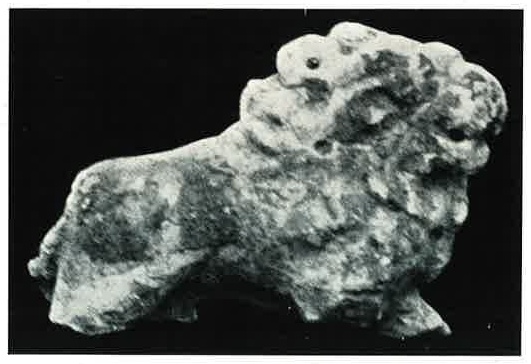
Fragments of a yellowish marble open-work tauroctony from the Mithraeum at Sarmizegetusa, Dacia.
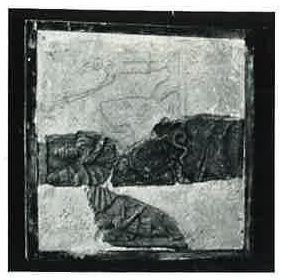
Four fragments of a bluish marble tauroctony from the Mithraeum at Sarmizegetusa, Dacia, with the central bull-slaying partially preserved including the Sol bust and a figure in Phrygian cap.
