Your search Franz-Valéry-Marie Cumont gave 236 results.
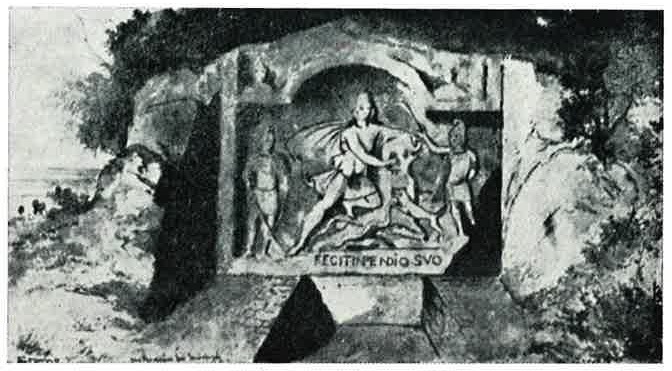
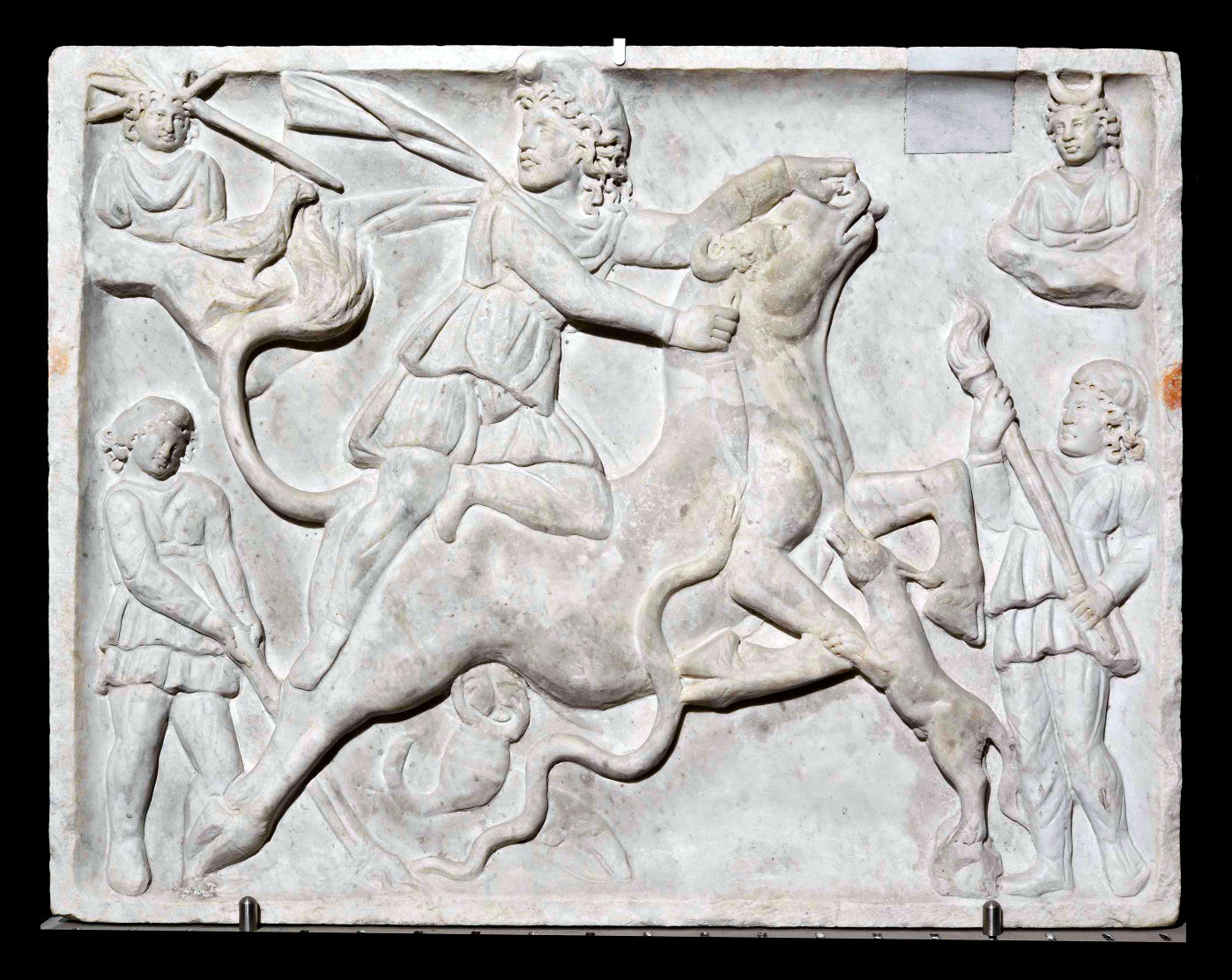
Marble tauroctony relief from the Mithraeum at Sopron, ancient Scarabantia, depicting the standard bull-slaying with raven, dog, scorpion, and cross-legged torchbearers.

Large marble tauroctony relief from the Mithraeum at Sopron, ancient Scarabantia, depicting the standard bull-slaying with raven, dog, serpent, and scorpion, flanked by cross-legged torchbearers.
Limestone relief fragment showing Cautopates beside traces of a tauroctony scene.
Dedication to Mithras mentioning Freio and Friatto.
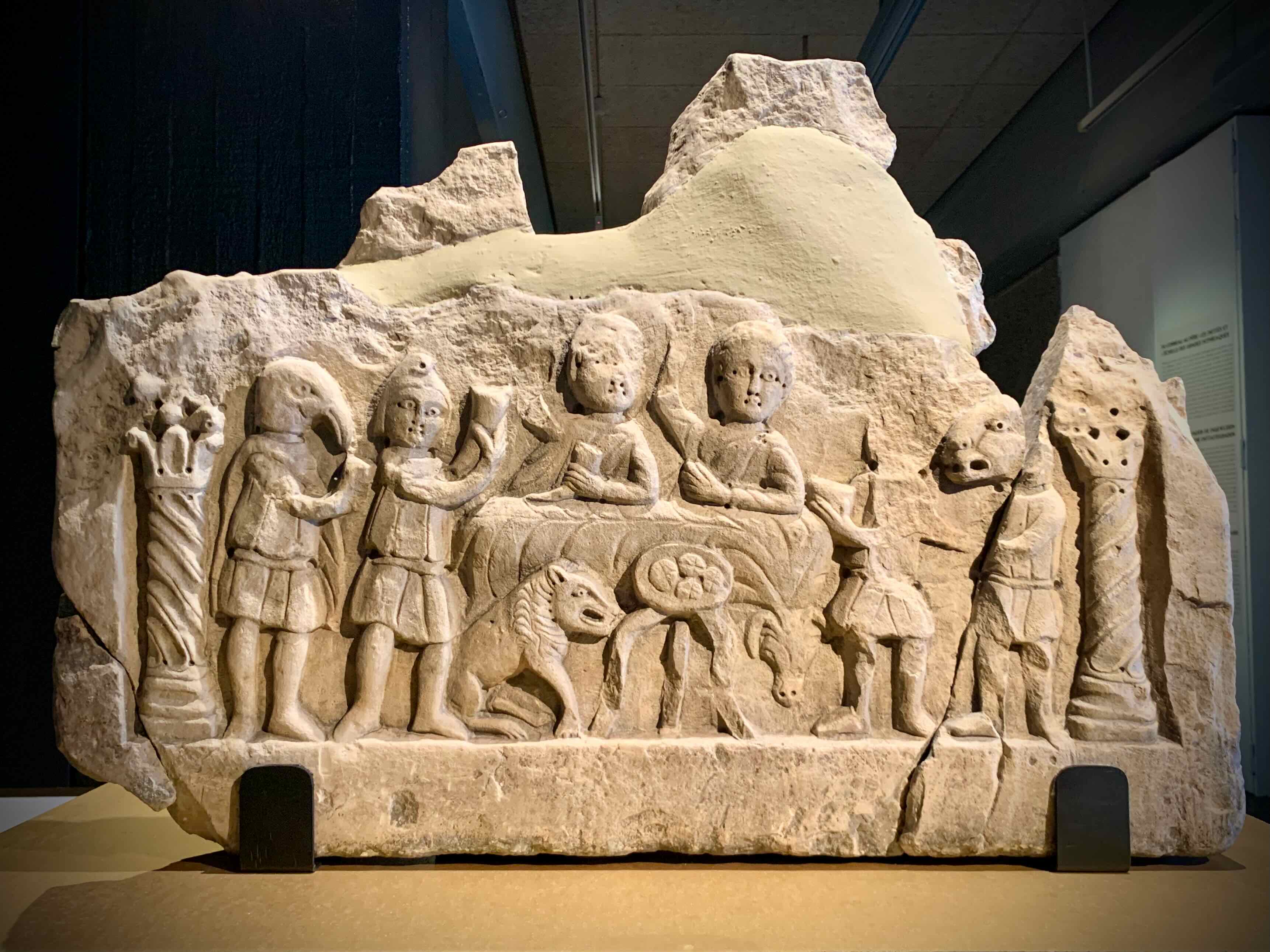
The mithraic relief of Konjic shows a Tauroctony in one side and a ritual meal in the other.
A Sol statue headless and lacking arms and feet, mentioned by Martelli as existing at Nersae alongside a fragmentary inscription, with no further details obtainable by Vermaseren or Cumont.
A lost Mithraic relief acquired near Rome and formerly held by the Lyceum Hosianum of Braunsberg in East Prussia, known only through a 1910 communication to Cumont; possibly identical with the relief from Macerata.
A stone statue probably found in Rome, depicting a naked Mithras emerging from the rock with his index finger raised to his lips and his right arm broken off, described by Cumont as an unfinished work never completed.
Marble tablet in the Vatican Musea, Galleria Lapidaria, with a dedication to the Invictus and Urania by two initiates of the Leo grade, the text divided by four feet pointing in opposite directions as a pro itu et reditu formula.
White marble statue of a standing cross-legged torchbearer in Eastern attire with traces of red painting, found in the Castra Pretoria in 1882; head, arms, and feet are lost and the monument could not subsequently be traced.
Fragment of a relief showing Mithras as bull-killer with unusual eagle-headed dagger handle and Sol in a quadriga, from Tivoli (ancient Tibur), known only through an inaccurate engraving by Barbault.
Polychromatic marble statuette of a cross-legged figure in Eastern attire, probably a torchbearer, found near the theatre ruins at Timgad.
Marble head with locks of hair and Phrygian cap, probably depicting Mithras as bull-killer, found under the threshold of the Iseum at Cyrene.
Limestone base bearing a dedication to Helios Mithras by Midon son of Solon, with a bust of Mithras in Phrygian cap, found at Savçilar on the border of Phrygia and Mysia, 78/77 A.D.
Sepulchral inscriptions from Lycaonia bearing the titles leo and aetos, previously interpreted as Mithraic grades but now understood as referring to tomb architecture.
Gold coin of the Scythian king Hooerkes, reverse showing Mithras (MIIPO) in tunic with lance and sword, north-west India, c. 87–129 A.D.
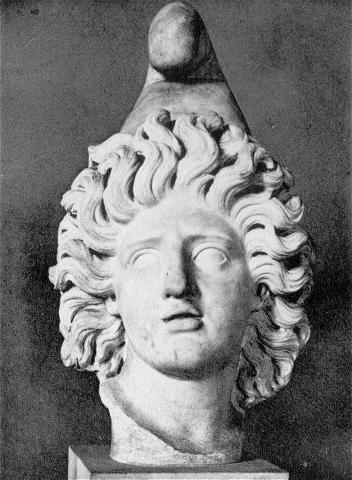
The head of Mithras had seven holes made for fastening rays.
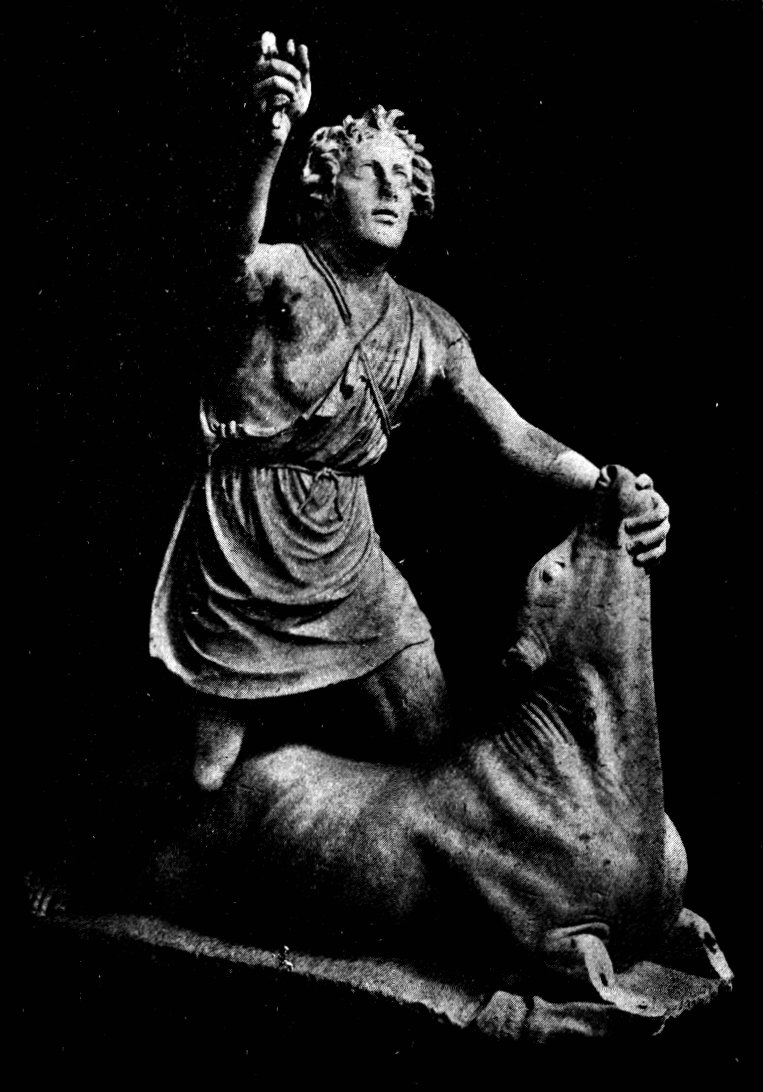
The person who commanded the sculpture may have been M. Umbilius Criton, documented in the Mitreo della Planta Pedis.
It is not certain that the marble relief of Mithras killing the bull was found on Capri, in the cave of Matromania, where a Mithraeum could have been established.
Inscription now preserved in the Palazzo Ducale of Urbino whose wording may point to the existence of a Mithraic community.
